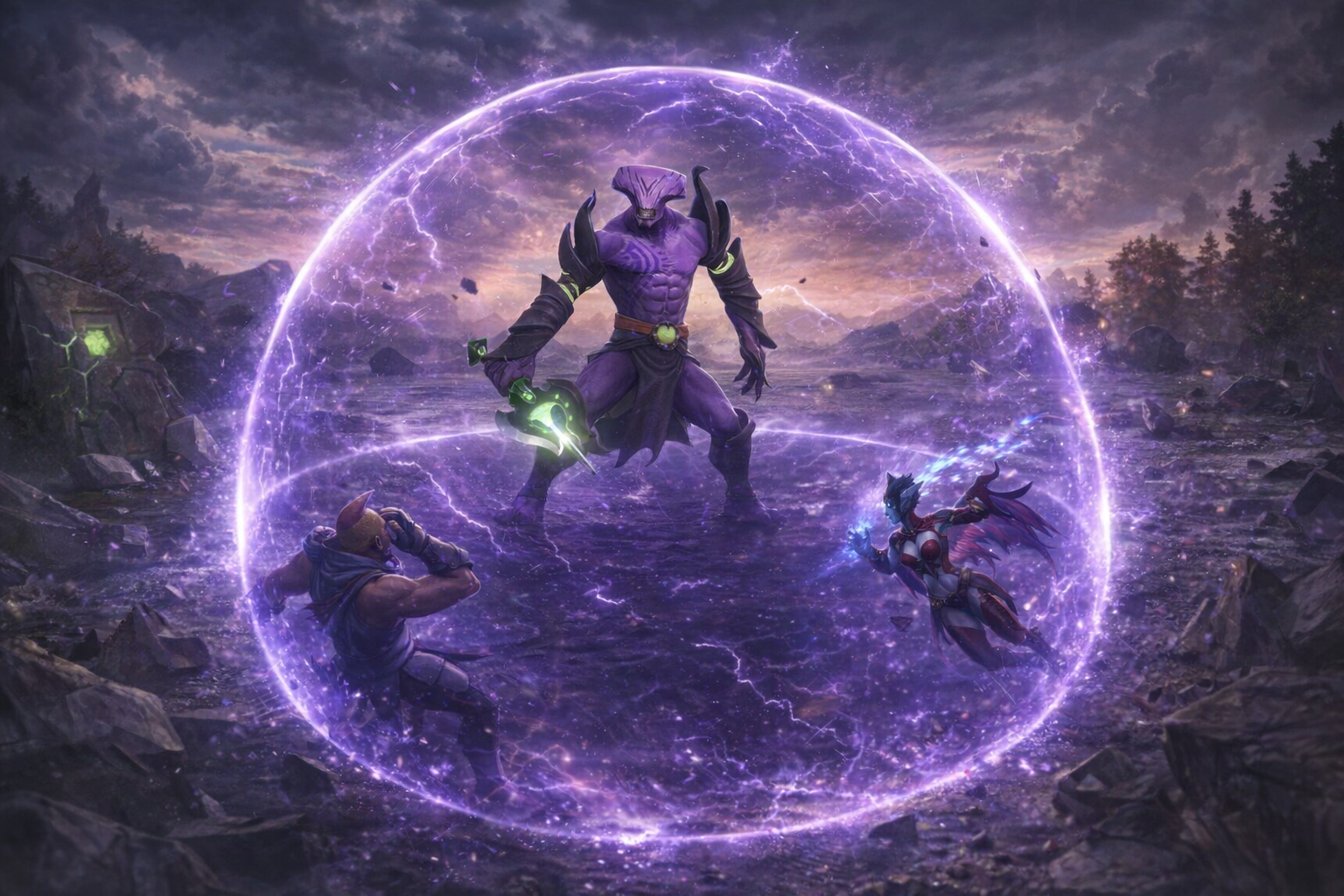
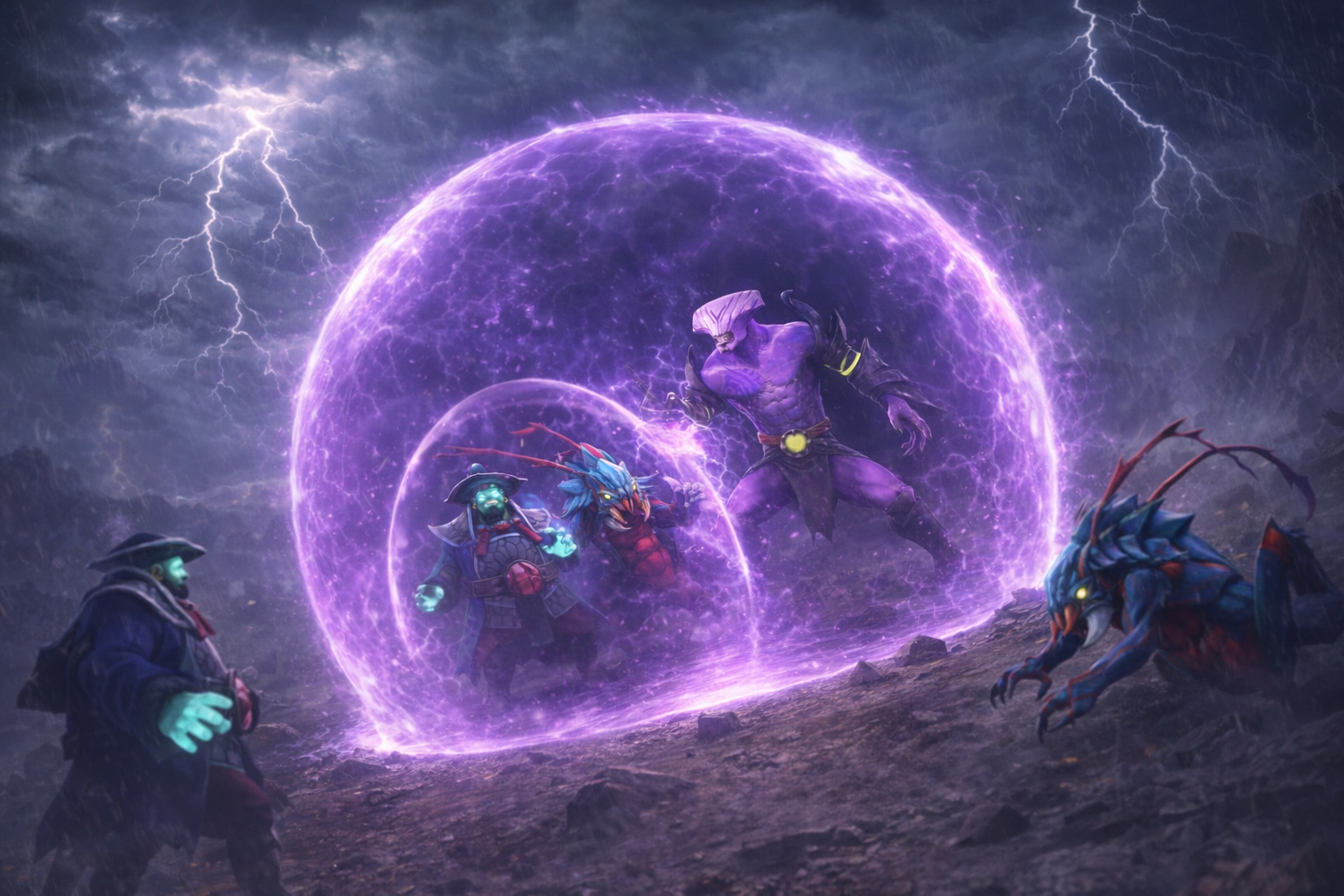
Faceless Void shows up in the first phase. You already feel the shape of the game. You need heroes that can play around Chronosphere, punish his lane, or at least function when the bubble drops. Then your final two cores lock in slippery, low-HP targets that turn every late-game fight into a highlight clip for the enemy carry.
You’ve lived that queue. The horn hasn’t even sounded and the match already feels uphill. That frustration is real, but the easy story around “bad drafting” misses what’s actually happening in ranked.
Why pub drafts go off the rails
Drafting in pubs looks cleaner on paper than it does in practice because ranked games aren’t built like captain’s mode. You don’t have a single voice, a clear plan, or five players working from the same priorities. You have role queues, comfort pools, hidden tilt, varying patch knowledge, and about twenty seconds for someone to decide whether they trust their own game or the abstract logic of the matchup chart.
That’s how you get self-countering picks. Not because players are blind. Because they’re solving different problems.
One player sees Faceless Void and thinks, “I need a hero who won’t get erased in Chrono.” Another sees the same pick and thinks, “I need my best hero because this game is going late.” A third is staring at the enemy support duo and only cares about surviving lane. The position five just wants wave clear because the lineup already looks greedy. All of those instincts can be rational in isolation. Together they often produce garbage.
Comfort beats theory more often than people admit
A huge chunk of pub drafting is hero comfort wearing a fake mustache labeled “strategy.” That sounds harsher than it is. Comfort matters. A player with hundreds of games on a hero often understands damage ranges, lane limits, farming patterns, and fight selection at a level no generic counterpick can replicate.
That’s especially true in Dota because counters are rarely binary. A lane can be bad and still playable if the player knows exactly where the edge is. A fight can look impossible until the specialist understands the one angle that changes it. Plenty of supposed counterpicks flop because the person picking them only knows the matchup from loading-screen wisdom.
This is why some players will happily pick into a matchup everyone else hates. They’re betting on execution over draft logic. Sometimes they’re right.
The problem starts when comfort gets stretched beyond its actual value. You can trust your signature hero without pretending every game is equally good for it. Void into mobile, fragile cores creates very obvious problems. Medusa into lineups that struggle to pressure her can warp the entire map. Tinker plus another slow, greedy core can drag your team into an economy contest it never wins. Even the best hero specialist still has games where the draft demands someone else on the roster bring tools the lineup doesn’t have.
Counterpicks are real, but lineup structure matters more
Too many pub arguments get stuck at the level of “X counters Y.” Useful drafting starts a level higher.
You’re drafting for lanes, tempo, damage profile, catch, tower pressure, save, Roshan control, teamfight shape, scaling, and who gets to show on waves. A single hero-to-hero interaction matters less than whether your five heroes can play the same game.
The real question: what does your draft do when the map opens?
A lot of self-countering last picks happen because the picker is focused on surviving one interaction instead of building a functioning game plan. They dodge the lane counter and walk straight into a lineup problem.
Say the enemy has Faceless Void. The wrong response isn’t just “pick heroes that die in Chrono.” The deeper issue is choosing cores that force every fight to happen on Void’s terms. If your damage dealers need free movement and extended skirmishes, Chronosphere becomes the axis of the game. Your whole lineup starts orbiting one enemy cooldown.
If your team instead has heroes that can frontline, counter-initiate, pressure towers early, or threaten fights while Void is farming, the matchup feels different. The answer doesn’t have to be a textbook hard counter. It has to create a game state where the enemy win condition is harder to access.
That same logic applies to greed. Picking another farming core into an enemy lineup that already outscales you isn’t just a “bad counterpick.” It can leave your team without a midgame play. You end up with three heroes who all need two items before they matter and supports trying to stall a map that is already shrinking.
Drafting well in pubs often means filling the missing function, not winning a theoretical one-on-one. Sometimes the glamorous last pick is the hero that gives your draft a stun, a building hitter, or a body that can stand in front.
Does last pick carry extra responsibility?
Yes. That’s the trade.
If you ask for last pick, you’re claiming information advantage. You’re saying the final reveal matters enough that the team should hold its flexibility for you. That comes with an obligation to improve the draft in some meaningful way.
That doesn’t mean last pick must always choose the mathematically cleanest hero. It does mean the pick should answer a real need. Maybe you close a lane. Maybe you secure scaling. Maybe you provide catch your team completely lacks. Maybe you pick a comfort hero that is strong enough in the game to justify passing on a cleaner fit.
What burns people out is the empty last pick. The one that uses all the draft privilege and solves nothing.
Last pick is a resource, not a reward
Pub players often treat last pick like a status symbol. Best role gets best information. Best information means best ego seat. Then they spend the last phase choosing as if the first eight heroes never appeared.
That’s where resentment comes from. If someone wants final pick and then locks a hero that could have been picked earlier with zero strategic cost, they’ve denied the rest of the team a chance to adapt. A support could have saved a lane. An offlaner could have chosen initiation. A mid could have pivoted into tempo. The whole draft got frozen so one player could indulge.
There’s no rulebook enforcement for that. There is still responsibility.
If you’re the final core, your job is to understand what your team already has, what it clearly lacks, and what the enemy is trying to do. You don’t need to draft like a coach. You do need to respect the information you were given.
Why bad picks still win all the time
Because pub Dota is messy, and execution crushes plenty of draft edges.
A lineup can look awful and still win through laning, map movement, spell usage, buyback discipline, and plain old enemy mistakes. Good drafts lose when players don’t hit item timings together, force bad fights, or ignore the one objective window they actually created.
That reality is what makes draft frustration so corrosive. You can be right about the pick and still wrong about the game. If you spend the next 35 minutes emotionally cashing in your “we lost in draft” receipt, you turn a disadvantage into a surrender.
Most ranked games are suboptimal from minute zero
This is the piece players hate accepting because it takes away the clean villain. Your teammates are making bad drafting choices. So are the opponents. So are you, just in less obvious ways. Someone is on autopilot. Someone is tilted from last game. Someone is first-timing a facet interaction they barely understand. Someone has a great hero for the match and no clue how to lane it.
That’s ranked. The chaos cuts both ways.
Once you accept that, draft quality becomes part of the environment rather than a moral failure. You still want a good lineup. You stop acting like a flawed lineup removes your agency.
How to stop tilting when the draft is ugly
Tilt from drafting comes from a control problem. The pick phase is short, visible, and irreversible. You can see the mistake forming and often can’t stop it. Then you have to live inside it for the next half hour.
The fix starts with reframing your job.
Your job after the horn is no longer to judge the draft. Your job is to identify the win condition that still exists. Every weird lineup has one. Sometimes it’s deathballing before the enemy carry comes online. Sometimes it’s splitting the map so the teamfight ult never catches enough heroes. Sometimes it’s sacking one lane to accelerate your strongest core. Sometimes it’s turning every smoke into a pickoff because five-on-five looks terrible.
The faster you move from “this draft sucks” to “this draft needs this kind of game,” the more MMR you save.
Practical habits that keep your head clear
Name the actual problem
Don’t mentally label the draft as “unplayable.” Be specific. Are you lacking tower damage? Do you have weak lanes? Is the issue that two cores die to one ultimate? Specific problems create specific adaptations.
Draft your own hero toward function
You can’t control four picks. You can control one. If the team is leaning greedy, choose a hero that comes online earlier. If your cores have damage but no catch, bring catch. If the lineup has no save, pick support items and positioning with that in mind. Salvaging drafts is one of the most bankable pub skills in the game.
Stop arguing after the lock-in
Nothing good happens here. The player won’t repick. You won’t feel better. The team starts minute one with blame already assigned, which means every missed last hit becomes proof of the original sin.
Build for the game you have
If the enemy has one giant teamfight button and your lineup hates clustered fights, itemize for survivability, vision fights, and spread formation. If your draft can’t outscale, bias toward early map pressure. Dota gives you a lot of room to route around a bad draft if you actually commit to the route.
The draft skill that actually climbs
Everyone wants teammates who counterpick perfectly. The climb usually belongs to players who understand draft elasticity.
That means recognizing which games require discipline instead of idealism. You won’t always get the sleek lineup with clean initiation, damage balance, and a natural objective flow. Sometimes your carry is stubborn, your mid is a spammer, and your support duo picked like they were in different matches. The useful player in those games is the one who sees the broken shape and fills the biggest hole.
This is where offlaners and supports quietly carry pubs. They’re often forced to draft with less information, yet they can still stabilize greed, give vision to fragile cores, start fights on their terms, or buy the utility that keeps the whole thing from collapsing. That isn’t glamorous. It wins ugly games.
Drafting well is partly social
There’s also a people skill piece that ranked players underrate. If you want better picks from strangers, the timing and tone matter. “We need stun” in the final seconds is useful. “Don’t grief with your hero puddle” gets muted for a reason. A calm suggestion before panic sets in has a real chance of shaping the draft. Once players feel judged, they default to comfort even harder.
That doesn’t guarantee a smart pick. It increases the odds that your team is solving the same puzzle.
What to expect from yourself
Expecting every teammate to draft coherently in solo queue is fantasy. Expecting yourself to read lineups better, adapt faster, and stop donating emotional energy to irreversible picks is realistic.
You’re allowed to be annoyed when someone burns last pick on a hero that warps the game against your own team. That read is often correct. The edge comes from what happens next. Strong pub players don’t treat draft frustration like evidence the match is beneath saving. They treat it like the first problem to solve.
That mindset won’t make bad picks disappear. It will stop them from beating you twice.