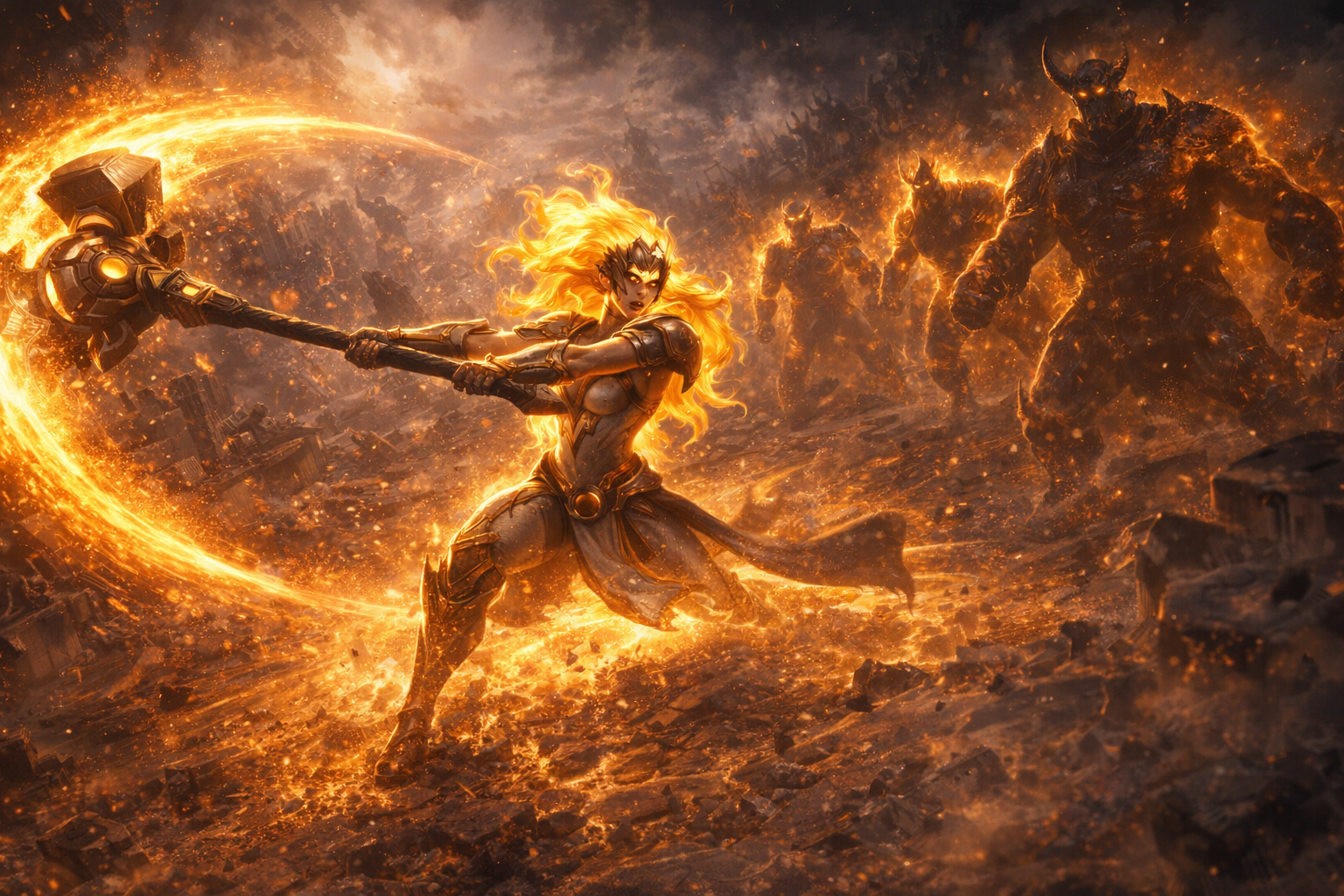
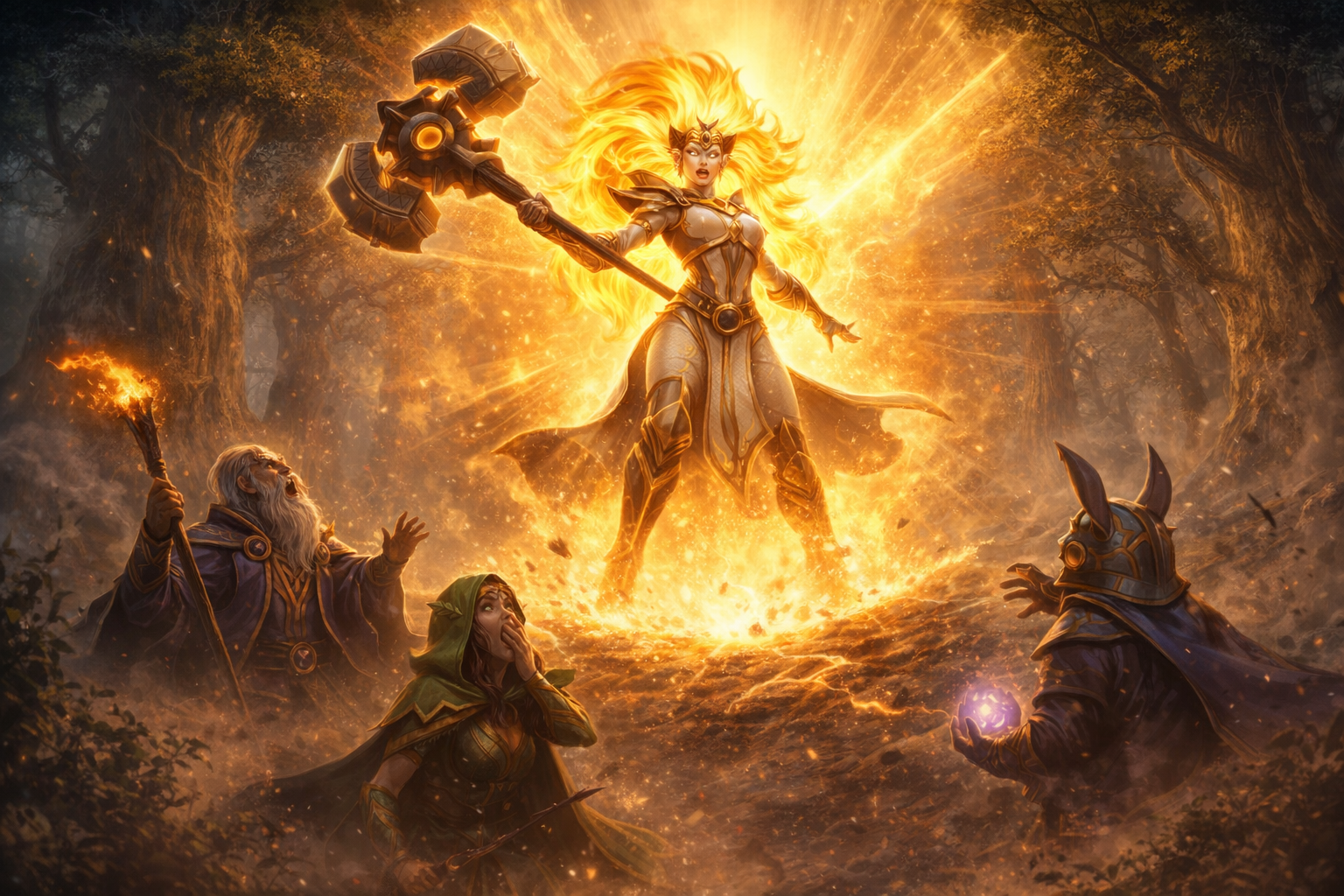
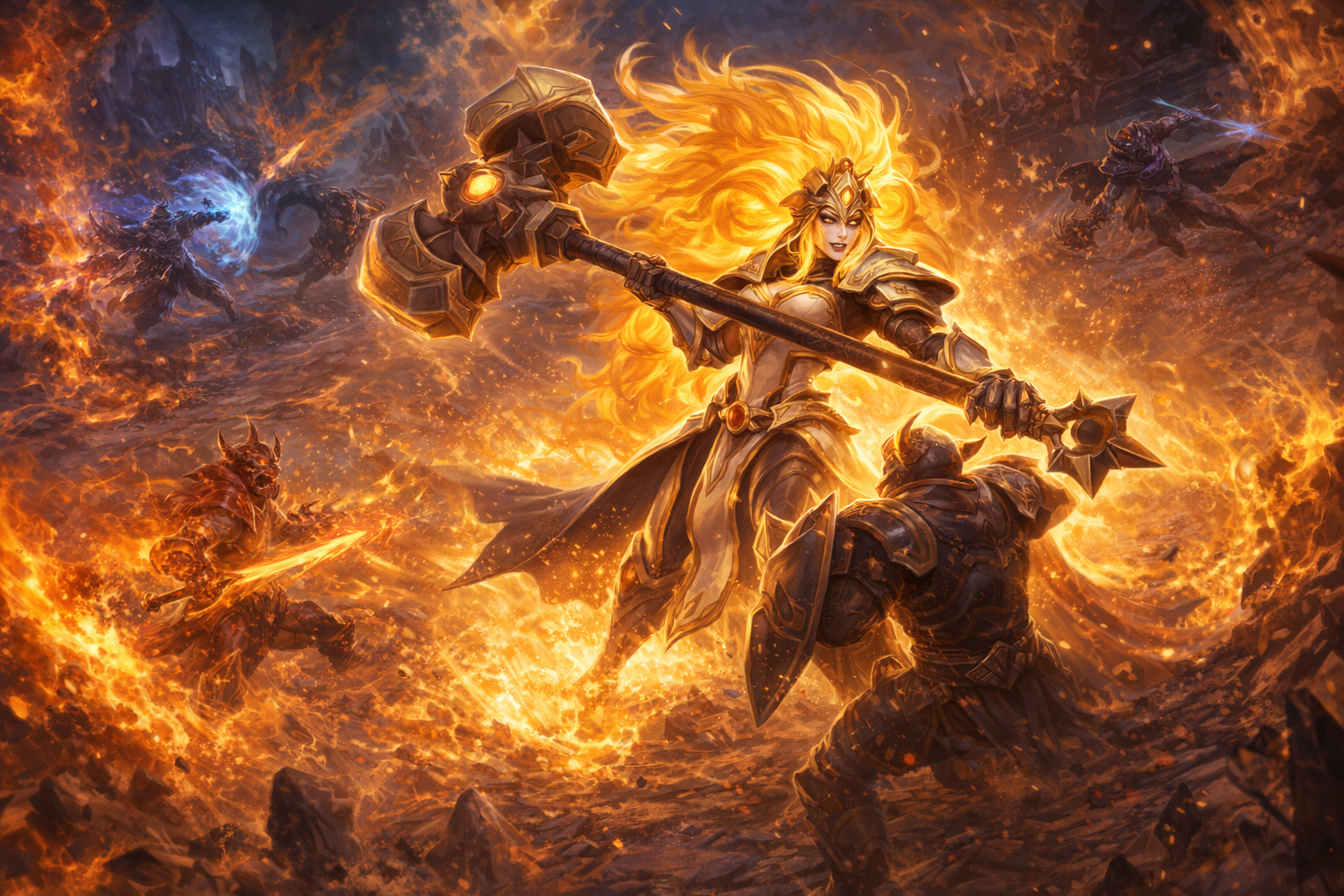
You know the game. You crush lane, hit your timings, show up to every skirmish, and for twenty minutes it feels like Dawnbreaker is playing a different patch from everyone else. Then the map tightens, BKBs come online, the enemy carry stops pretending to be mortal, and your glorious solar entrance turns into a one-way trip. You land in the middle of the fight, press Starbreaker, and die before the third swing matters.
That feeling is real. Dawnbreaker does fall off in a very specific way. The mistake is treating that drop as a mystery, or worse, trying to brute-force through it with the same build and the same teamfight pattern every game.
Dawnbreaker scales, just not the way you want her to
Dawnbreaker has one of the most deceptive growth curves in Dota. Early on, she looks like a classic scaling core because she lanes well, clears waves fast enough, abuses skirmishes, and turns any side-lane scrap into a numbers advantage with Solar Guardian. That creates the illusion that she is on a straight line toward late-game dominance.
She isn't.
Her power is tied to tempo, map access, and the threat of global reinforcement. She becomes terrifying when the enemy has to respect your arrival before a fight even starts. That kind of pressure wins the midgame because supports die quickly, towers become vulnerable, and isolated cores can get collapsed on before they have enough items to stand their ground.
Late game changes the terms. Heroes have more status resistance, more armor, more mobility, more survivability, and better ways to ignore your control window. Your spells still matter, but they stop deciding fights by themselves. You no longer get to land in the middle of five heroes and expect the combination of healing, damage, and disruption to carry the whole sequence.
That does not mean Dawnbreaker becomes bad. It means her job gets narrower and your execution needs to get cleaner.
The late-game trap: playing her like a front-to-back carry
The most common late-game mistake on Dawnbreaker is trying to manfight the enemy's hardest scaling core on equal terms.
That is where the hero starts feeling fraudulent.
If you build generic bruiser items and run directly at a six-slot carry, you're volunteering for the worst exchange on the map. Dawnbreaker deals meaningful damage and can absolutely punish fragile targets or poorly positioned cores, but she does not become an unstoppable right-click monster just because the game went long. A lot of carries are built to win exactly that sort of sustained, toe-to-toe engagement.
Starbreaker is a huge part of the problem here. It looks like a brawling spell because you are swinging in melee range, but the spell commits your body to a very readable animation. In earlier stages, that commitment is fine because the target dies, gets chain-controlled, or lacks enough damage to punish you before the sequence ends. Late game, every second you spend locked into that motion is a chance for the enemy to pop BKB, reposition, or simply erase you.
Against BKB cores especially, blind initiation with Starbreaker is often just feeding your own hero into their item timing. You're choosing a predictable line into the exact phase of the fight where they are strongest.
What Dawnbreaker actually wants late
Your late-game value comes from four things.
First, you threaten map-wide response. Solar Guardian still forces the enemy to think about every aggressive move they make outside full vision control.
Second, you punish backline positioning. Supports and utility heroes still hate playing against a hero who can appear on top of them and turn a 4v4 into a sudden collapse.
Third, you provide durable follow-up when your team starts the fight correctly. Dawnbreaker is excellent as the second wave.
Fourth, you convert farm into flexible utility. She can buy initiation, armor reduction, anti-magic, lockdown, or survivability depending on the game. That matters more than pretending she has one solved endgame build.
If you queue into late game expecting to be the strongest right-click body on the server, the hero disappoints you. If you treat her as a scaling tempo core with global reach and item-dependent utility, the picture gets much clearer.
Your build is probably too static
Bracer, Soul Ring, Phase Boots, Harpoon, BKB, Shard, Assault Cuirass, Aghanim's Scepter is a very recognizable Dawnbreaker path. It also becomes a trap if you buy it on autopilot.
Harpoon is strong when you need direct access to targets who otherwise kite you. Assault Cuirass is strong when the fight is about extended physical trading and your team benefits from armor swing. Aghanim's can be game-changing in the right fights. None of that makes them mandatory in the same order every match.
Dawnbreaker punishes lazy itemization because the hero has enough built-in utility that every slot should answer a real problem.
When you need to get on top of fragile heroes
Blink Dagger can be better than another stat item. Harpoon can still be correct. The point is access. If the enemy backline is deciding fights and standing just outside your natural reach, buy the tool that creates contact immediately.
When magic damage is the real threat
Mage Slayer can do serious work in games where spell damage is doing the heavy lifting. Dawnbreaker likes staying in the middle of skirmishes long enough to apply its value, and it can make the difference between surviving your first jump and exploding during it.
When the fight is about sustained brawling
Armor, attack speed, and repeated control matter more. AC has a place here. Basher upgrades can matter when you need another layer of lockout. Sange and Yasha can be valuable when the game is about sticking on targets and surviving long enough to keep hitting.
When targets need to die during your window
Desolator changes the texture of your damage. There are games where Dawnbreaker does her best work by deleting a vulnerable hero at the start of the fight rather than trying to outlast everyone after landing.
When utility beats greed
Some games ask for Shiva's Guard. Some ask for Abyssal Blade. The common thread is adaptation. You are buying for the fight that exists, not for the idealized fight where the enemy carry politely stands still and loses.
Farm matters more than people admit
A lot of Dawnbreaker games go wrong long before the first late-game teamfight. The hero feels active, so players spend too much time hovering around lanes waiting to cast ult and not enough time accelerating their own net worth.
That is how you end up with a hero who felt rich at minute ten and underfarmed at minute thirty.
Dawnbreaker has the tools to keep up if you respect the economy. Push lanes. Use Celestial Hammer to move between camps efficiently. Clear stacked or doubled-up farm patterns when the map allows it. Use your global presence as permission to farm more aggressively, because you can still join the fight if your team starts something on the other side of the map.
The best Dawnbreaker games have a rhythm to them. You shove a wave, take nearby camps, threaten a response with ult, and force the enemy to play around a hero they can't fully pin down. If you drift into passive grouping, you surrender one of the hero's biggest advantages.
Global heroes need selfish minutes too
There is a bad habit that shows up on every global hero in Dota: treating availability as obligation. Just because Solar Guardian is up does not mean every scuffle deserves your presence. Joining low-value scraps and sacrificing your own item progression is one of the fastest ways to hit the late game with a hero who looks active on the scoreboard and weak on the map.
Pick your spots. Join for tower defense, for real objective fights, for kills that open the map, and for moves that punish overextension. Let the meaningless noise happen without you when your farm route is more valuable.
How to use Solar Guardian without griefing yourself
The late-game Dawnbreaker player usually dies before contributing because of one decision: ulting too early, too centrally, or too predictably.
Solar Guardian feels like an initiation tool because it is dramatic and global. In many late fights, it works better as a counter-initiation spell or a targeted reinforcement onto a hero who has already started the engagement.
You want a landing zone where three things are true.
Your team has already forced attention forward.
The enemy has committed enough resources that they cannot casually disengage.
Your arrival puts you next to targets you can actually pressure.
Landing first into full enemy vision is often terrible. You give every core an obvious point to aim spells and attacks. You also invite instant BKB reactions, which strips a lot of practical value from your follow-up.
Landing second is usually stronger. Let your initiator start the mess. Let the enemy show where they are standing. Then arrive on the edge of the real fight, where you can heal an ally, threaten the backline, or create a split the enemy has to respect.
Starbreaker discipline wins more fights than courage
A lot of Dawnbreaker deaths come from forcing Starbreaker the moment you touch the ground.
That habit gets punished hard in late game.
Starbreaker is strongest when the target is already constrained, when BKB is down, or when you are hitting someone who cannot immediately burst you in return. It is much weaker as a hopeful opening into a farmed core who is waiting for exactly that animation.
Sometimes the correct play is to right-click first, hold the spell, and force a reaction. Sometimes it is to use the threat of Starbreaker to zone rather than committing it instantly. Sometimes it is saved for the support trying to reset the fight instead of the carry who is currently spell-immune and thrilled that you walked into melee range.
That patience feels unnatural because Dawnbreaker is an explosive hero. Late-game Dota rewards restraint. If you spend your key spell into the strongest defensive timing on the enemy team, you hand them the fight on a plate.
The Beastmaster problem is real, but probably not for the reason you think
Losing to a farmed Beastmaster can make Dawnbreaker feel awful. You show up with a durable melee core and get shredded by a hero many players still mentally file under aura offlaner.
That disconnect matters.
Beastmaster can scale into a serious physical threat, and he does it while bringing vision, control, and a screen full of units and summons that make melee commitment more awkward than it looks on paper. If he reaches a point where he has strong right-click scaling items, your default Dawnbreaker pattern becomes miserable. You have to enter his space, fight through his zone, and survive long enough to matter while he is already outputting real damage.
The answer is not some secret anti-Beastmaster button on Dawnbreaker. The answer is understanding the shape of the fight. You do not want to take an honest, stationary duel in the middle of everything he controls. You want better angle, better target selection, and better itemization for the actual threats on the map.
If Beastmaster is the biggest damage source, you need to ask whether your job is really to man up on him first. In many fights, your impact comes from killing or displacing the heroes enabling him, or arriving after his team has committed enough that he cannot free-hit with impunity.
Pub reality: why the hero feels worse than she is
Dawnbreaker suffers in pubs because her strengths depend on timing and fight structure more than raw spectacle suggests.
She loves teams that force sharp engagements, invade with purpose, and understand that a global core creates asymmetry on the map. She feels much weaker when your team drifts, takes messy half-fights, or expects you to be equal parts save hero, initiator, and late-game carry every single game.
That mismatch produces a lot of fake “fall off” games. You are still farming okay. Your spells still do useful things. The problem is that the match has become disorganized enough that your hero's clean midgame identity never gets translated into a winning late-game role.
You can fix part of that yourself. Shove one more wave before grouping. Call when your ult is available. Play around side lanes instead of standing mid waiting for action. Build for the heroes that actually decide fights. Choose landing zones that support a teammate or isolate a vulnerable target. Stop donating your body to BKB cores just because you have a button glowing.
Dawnbreaker does fall off from that terrifying early-mid peak. Plenty of heroes do. The difference is that Dawnbreaker still wins late games when you stop asking her to be the final boss and start using her as the hero who breaks the fight open from the right angle, at the right time, with the right item.