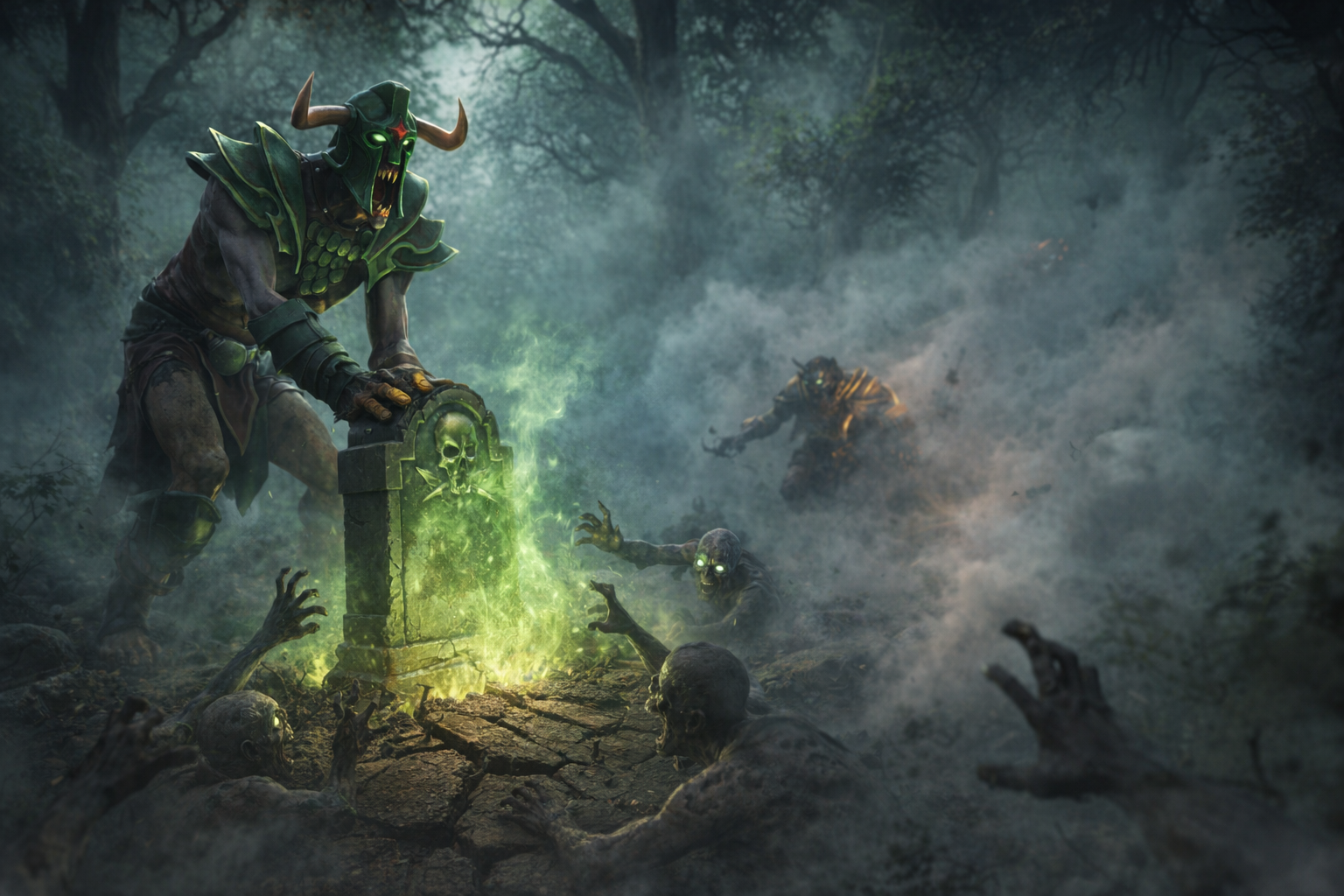
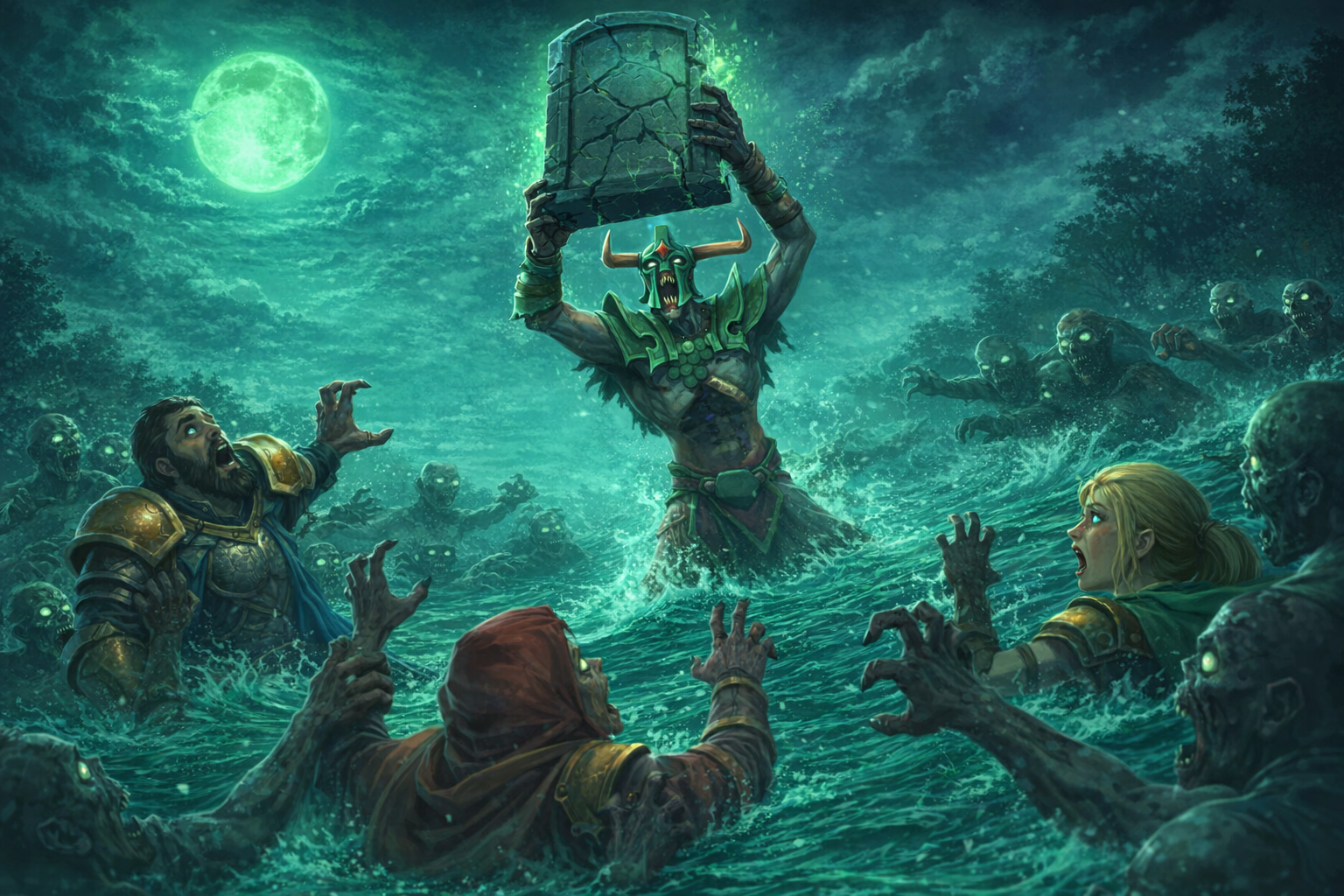
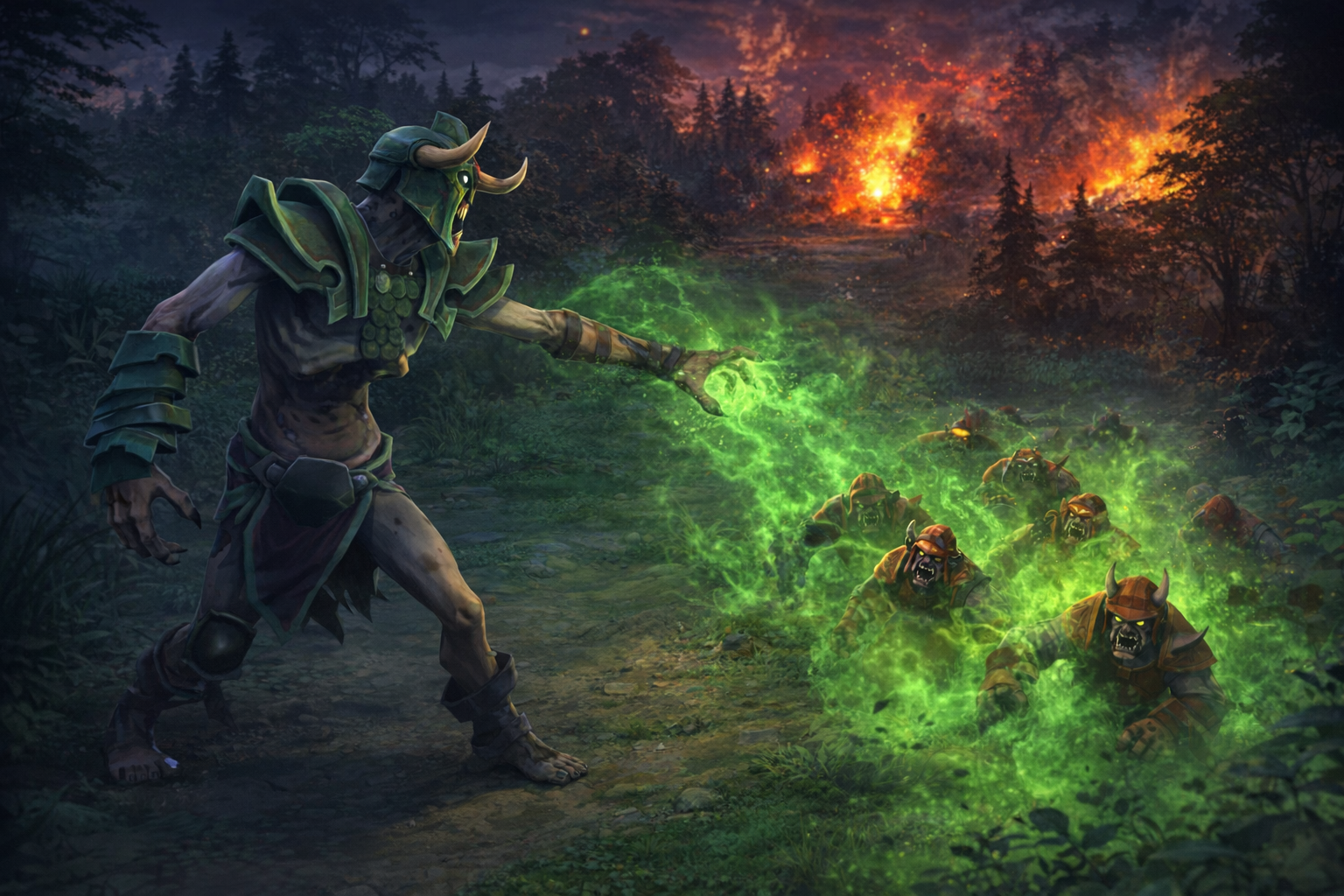
You hit level 10 on Undying while your carry is shoving one more wave near the safe lane tower. The Decay damage talent looks delicious: maxed Decay clips the ranged creep, the wave dies cleaner, your gold ticks up, and suddenly the hero feels less like a walking aura with bad posture. Two minutes later, your Tombstone is still cooling down when the enemy smokes into your triangle, your carry gets jumped, and the fight ends before Flesh Golem even matters.
That level 10 click snowballs because Undying is judged by one question in serious games: can your team take the next fight on its own terms? The Tombstone cooldown talent answers that question more often than a farming breakpoint ever will.
The Ranged Creep Bait Is Real
The Decay damage talent feels good because it solves a very visible problem. Support Undying often has awkward wave interaction. Decay is expensive enough to care about, Soul Rip depends on units, and Tombstone is too valuable to throw at a random lane unless the map is already collapsing. When a talent lets Decay delete the ranged creep at max level, your brain immediately sees efficiency.
That instinct makes sense in pubs. Dead ranged creeps mean faster lane shove, easier tower defense, and fewer miserable moments where you slap creeps with Undying’s wet cardboard attack animation. It also means solo experience when nobody else is nearby. For an underfarmed position five, that can feel like oxygen.
The problem is that pro-level support Dota treats that oxygen differently. Lane creeps are part of a team economy. If your carry, mid, or offlaner can safely take that wave as part of a larger farm pattern, your Decay last hit is rarely free value. It changes who gets the resource, who reaches the next item, and who controls the next timing. A support taking a wave because a talent makes it convenient can quietly damage the whole map plan.
That is the first split between pub logic and optimized play. In a pub, the wave may genuinely be abandoned. In a coordinated game, that wave probably belongs to someone with a BKB timing, a Blink timing, or a damage item that decides the next Roshan fight.
Tombstone Is Undying’s Real Ultimate
Flesh Golem is iconic, but Tombstone is the spell that makes teams change how they fight. It warps target priority. It punishes clumped heroes. It makes low-health enemies feel trapped even when they technically have distance. It forces awkward hits into a structure while Undying’s team gets to play the actual fight.
A good Tombstone is area denial, damage amplification through chaos, vision pressure in messy terrain, and tempo control in one button. The cooldown talent matters because Dota fights rarely happen on a neat schedule. The first Tombstone may be used to secure a pickoff near mid. The next objective fight may start before the base cooldown is comfortable. The enemy may bait it, disengage, then re-enter the map once it is down. A shorter cooldown closes those windows.
This is especially brutal around Roshan and high ground. Tombstone around a pit entrance changes how heroes walk in. Tombstone on a siege forces defenders to choose between hitting the building, killing the Tombstone, or committing spells into Undying’s team. When the cooldown is lower, Undying’s team can threaten those setups repeatedly instead of playing dead time after every serious skirmish.
That repeated threat is what the Decay damage talent cannot replicate. A cleared ranged creep gives you a little local tempo. A ready Tombstone changes whether five heroes are allowed to stand in an area.
The Shard Turns Cooldown Into a Save
The biggest modern reason to value Tombstone cooldown is the save interaction enabled by Undying’s Shard. With Shard, Tombstone gains a way to shelter an allied hero inside it. The exact fight impact is easy to understand if you have ever watched a carry survive the first burst by a sliver and then turn the fight with lifesteal, BKB, Satanic, or just teammates arriving half a second later.
Dota is often decided by the first target living through the initial jump. If the enemy spends Blink, disables, nukes, and positioning to erase your Luna, Morphling, Drow, or Ember, denying that kill breaks the entire fight script. Tombstone save does that while also placing the most annoying object in the engagement directly where the enemy already committed.
That combination is disgusting. A defensive spell that only saves can be played around. A Tombstone save also creates a battlefield problem. The enemy has to decide whether to finish the hero when they come out, hit the Tombstone, retreat through zombies, or keep chasing while Undying’s team counter-initiates. None of those choices feel clean.
Cooldown reduction increases the number of games where that save is available for the fight that matters. It can also matter inside long, staggered engagements. Some late-game fights are really two or three fights stitched together: a smoke breaks, someone buys back, teams reset around vision, then the real objective fight starts. A lower cooldown gives Undying a chance to contribute again before the map state is settled.
The talent is rarely flashy on the scoreboard. Nobody looks at postgame damage and says, “Great cooldown value.” The saved core remembers. The enemy initiator remembers even more.
Pro Supports Are Paid in Spell Availability
Support greed has changed over the years, but the principle remains harsh: your farm matters when it becomes fight impact. Undying with extra Decay damage farms a bit better. Undying with Tombstone ready more often changes the opponent’s ability to start fights.
That distinction defines high-level support itemization and talents. The best support choices tend to increase uptime on the thing your hero already does better than anyone else. Lion wants reliable disables and positioning. Disruptor wants the fight to happen inside his rules. Oracle wants the save to be there when the burst comes. Undying wants Tombstone available when heroes commit.
The Decay talent pushes Undying toward a side job. The Tombstone talent doubles down on his job description.
There is also the simple issue of opportunity cost. Supports in coordinated games spend a lot of time smoking, warding, breaking smokes, defending vision, standing behind cores, and showing on waves only when it is safe or strategically necessary. A farming talent asks for moments where Undying gets to stand in lane and convert mana into creeps. The Tombstone talent asks for the game to contain fights, which every serious Undying game already does.
The Hidden Value Is Draft Pressure
Undying is often picked to make lanes miserable and teamfights awkward. His presence discourages certain melee-heavy lanes, punishes heroes that want to stand their ground, and gives his team a strong early brawling identity. Once laning ends, the hero can fall into a trap where he feels strong only when Tombstone is available.
The cooldown talent smooths that weakness. Your team can defend one tower, move to ward the enemy jungle, then contest a rune or objective without waiting forever for your main spell. That changes how the draft functions. Undying becomes a more reliable tempo support instead of a hero who blows one major cooldown and then pings his team away from every fight.
There is a psychological layer too. Enemies track Tombstone. Good teams absolutely track it. If they see it used, they know a window has opened. Shortening that window makes their map calls worse. They have less time to force a tower, invade deep vision, or start Roshan with confidence.
A talent that reduces enemy certainty has value beyond the tooltip.
Why Pubs Still Love the Decay Damage
Pub Dota creates different incentives. Your carry may ignore a dangerous wave for thirty seconds, then flame when the tower dies. Your mid may farm the triangle while a free lane crashes into your tier two. Your offlaner may be dead, muted, or both. In that environment, the Decay talent can be practical.
If nobody is taking waves, someone has to. If your lineup lacks wave clear, maxed Decay with the damage talent can help hold lanes without committing Tombstone. If your team refuses to group, Tombstone cooldown loses some value because no one plays around it anyway. Pub supports often need to patch holes that a coordinated team would never create.
That does not make the Decay talent secretly superior. It makes it situationally comfortable. There is a difference.
The trap is picking it out of habit because the creep interaction feels clean. A level 10 support talent should be judged by the next meaningful fight, not by the next ranged creep. If your team has a core farming nearby, leave the wave. If a tower is under pressure and no core can show, clear it. If Roshan is the next fight, Tombstone cooldown usually has more impact than your personal gold curve.
The Decision Point You Should Use In-Game
When you hit level 10, ask what your next five minutes look like.
If your team wants to group, contest vision, defend towers, smoke, or play around Roshan, the Tombstone cooldown talent is the clean choice. You are increasing the uptime of the spell that makes Undying worth picking past the lane.
If the game is fragmented, your cores are unavailable to clear waves, and your team desperately needs lane shove to avoid bleeding towers, Decay damage has a place. That place is much more common in chaotic pubs than in structured games.
Shard timing should push you even harder toward Tombstone cooldown. Once Tombstone becomes a save, the talent stops being only about teamfight area control. It becomes about denying the enemy’s best initiation. That is one of the most valuable things a support can do in Dota, because burst lineups are built around clean first kills. Make the first kill messy and the whole fight gets ugly for them.
The Real Lesson Behind the Talent
Undying’s level 10 choice is a small example of a larger support rule: visible farm value can seduce you away from invisible fight value. The game makes creep kills feel rewarding immediately. Cooldown uptime rewards you later, often in a fight where nobody notices the talent directly.
That is why the Tombstone talent keeps showing up in serious builds. It respects what Undying is picked to do. It protects the team’s farm allocation. It makes the enemy’s initiation less reliable. It keeps your strongest spell closer to ready during the parts of the game where one bad fight becomes Roshan, map loss, barracks, or the ancient exploding while someone types “no tomb?”
The ranged creep dies either way eventually. Your carry during the smoke gank may get only one chance.