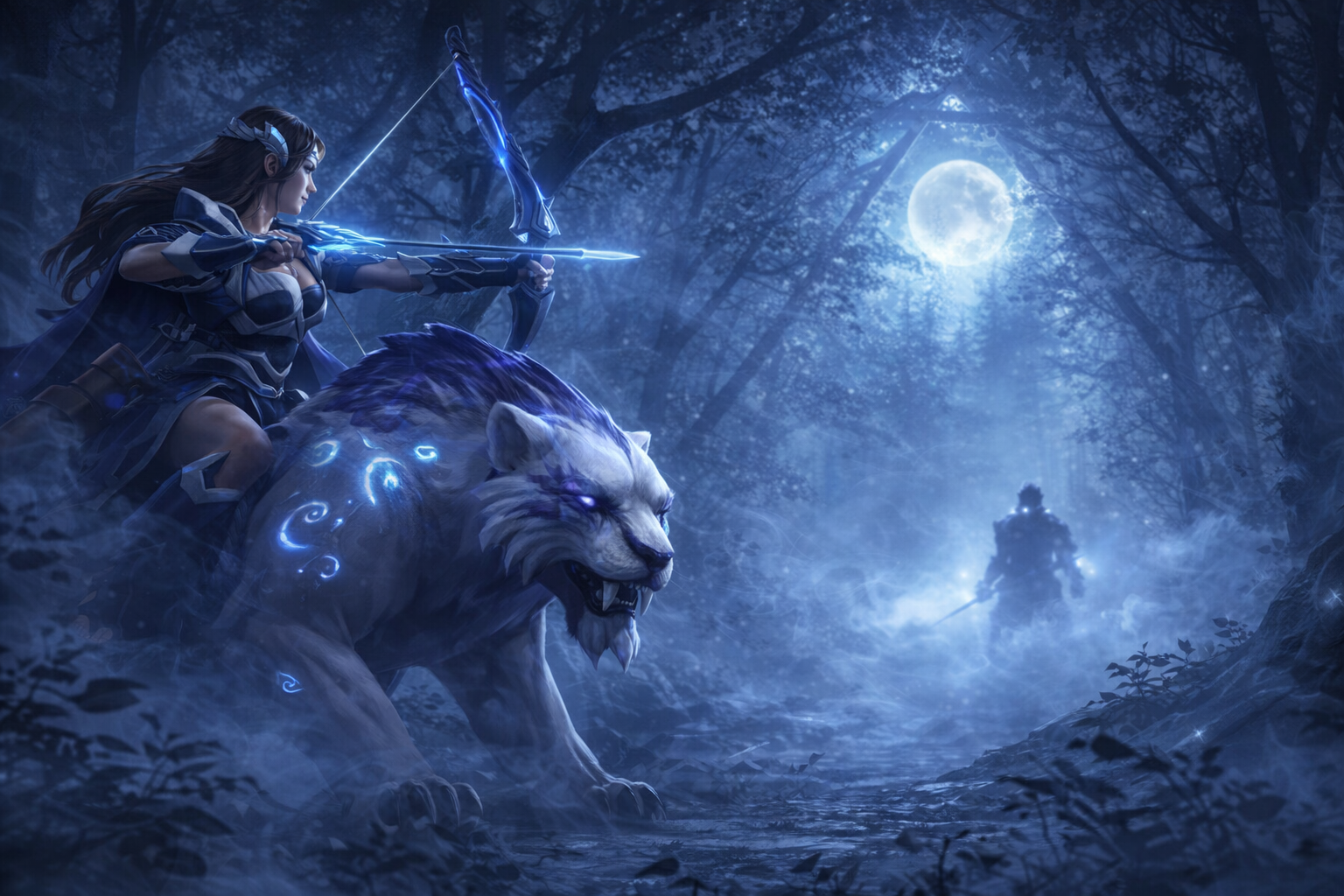
Why TI Mirana Wins Before the Arrow Is Even Cast
Mirana support means accepting that your strongest spell often belongs to someone else first. You smoke through your triangle, your offlaner blinks in, the stun lands, and suddenly Sacred Arrow looks like the most broken disable in Dota. Then you queue her in a pub, your cores draft four heroes with slows and vibes, and every arrow becomes a prayer fired into fog. That gap between pro Mirana and pub Mirana is the whole story.
Mirana’s rise on the biggest stage makes sense once you stop treating her like a highlight hero. She succeeds when the draft gives her clean jobs: extend lockdown, abuse numbers advantages, protect tempo with Moonlight Shadow, and stay alive while doing it. In coordinated games, that package is disgusting. In pubs, the same hero can feel like a ranged creep with a cosmetics budget.
The Hero Never Needed Raw Buff Worship
Mirana has spent long stretches feeling underwhelming because her best moments are conditional. Sacred Arrow is one of the most punishing follow-up spells in the game, but raw arrows are unreliable against good players. Leap makes her slippery, yet it can also bait bad Mirana players into surviving fights they contributed nothing to. Moonlight Shadow can win the map, though it requires teammates who understand timing, positioning, and detection pressure.
That combination creates a weird public perception. When Mirana wins, the game looks clean. When she loses, she looks useless. There is rarely a middle ground where everyone agrees she did a quiet job well.
Pro teams love heroes that can fill multiple small gaps without demanding the whole draft bend around them. Mirana gives long-range follow-up disable, scouting patterns through movement, lane harassment, and a global invisibility tool that changes how the enemy is allowed to move. She also avoids a lot of the classic support death traps because Leap gives her a way out of bad angles.
That survivability matters. A support who can ward aggressively and live is already changing the game. A support who can show on a wave, threaten a rotation, then vanish into the trees while forcing enemy detection is annoying in exactly the way high-level Dota rewards.
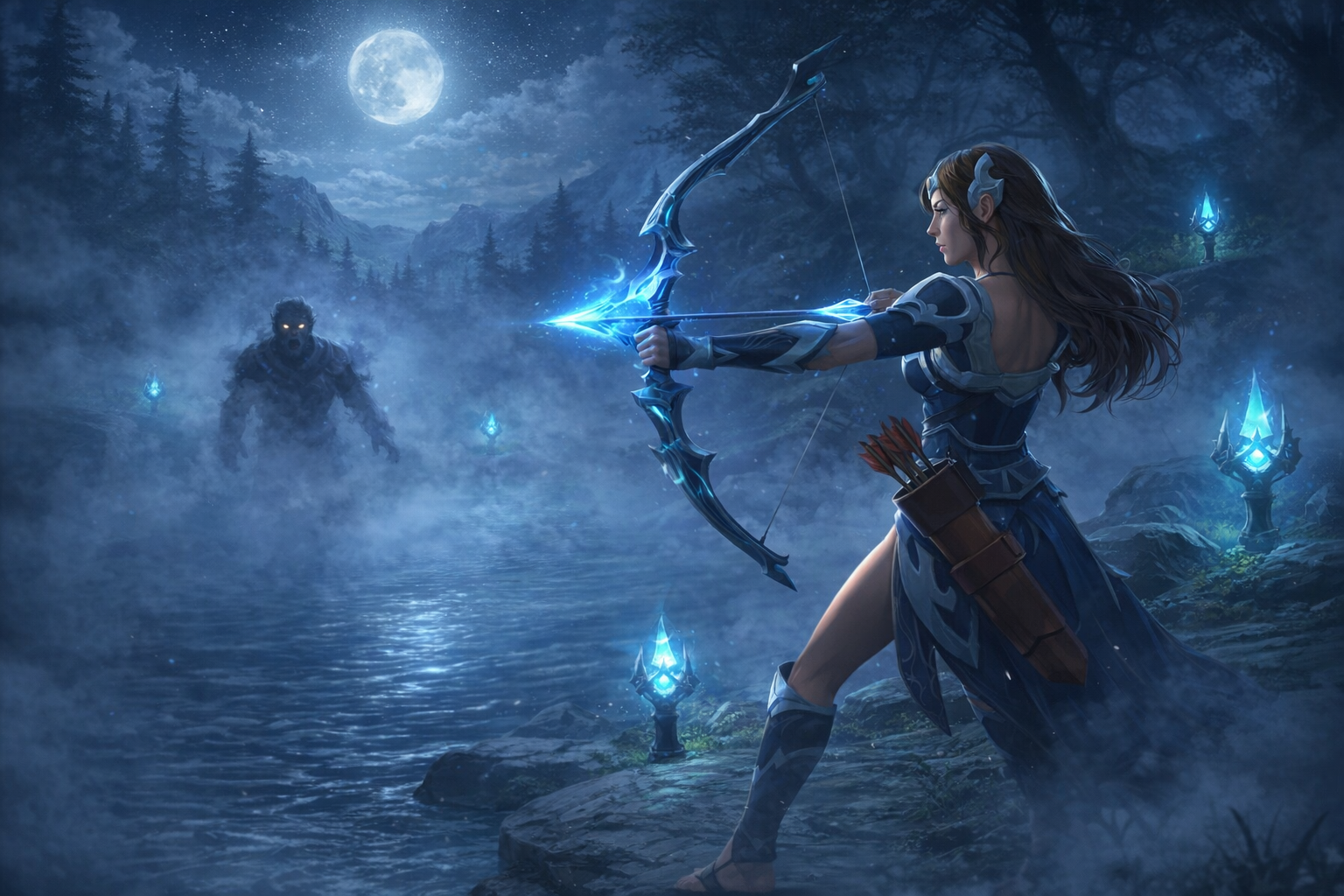
Sacred Arrow Is a Follow-Up Spell First
The biggest Mirana lie is that you are supposed to land raw arrows all game. Sure, sometimes the enemy mid walks in a straight line while checking their courier and donates a free kill. Take the gift. Build your game around repeatable plays instead.
Sacred Arrow gets stronger the longer it travels, rewarding vision control and angles, but its most dependable use is after someone else has already restricted movement. Stuns are best. Roots and strong slows can be enough. Terrain can do part of the work. Choke points around ramps, river entrances, tower paths, and jungle corridors turn Arrow from a lottery ticket into a skill check the enemy often fails before they see it.
This is why Mirana looks so much better beside heroes with reliable initiation. Dragon Knight presses stun, Mirana extends it. Batrider drags someone, Mirana makes the pickoff lethal. Clockwerk traps a target, Mirana fires through the cage angle. Even a simple lane stun can create kill pressure from level one in a way that raw harassment supports struggle to match.
Without that setup, Mirana has to manufacture her own reliability through positioning, itemization, or patience. That is much harder in the first 20 minutes, which is exactly when support impact matters most. If your first meaningful arrow combo requires a Rod of Atos or Eul’s Scepter, you have already played a slower game than the hero wants.
Those items can be correct. They are salvage tools and sometimes legitimate build choices. They also admit something uncomfortable: the draft failed to provide what Mirana needs naturally.
Moonlight Shadow Is the Pro-Level Drug
Sacred Arrow gets the clips. Moonlight Shadow wins the grown-up Dota.
Global invisibility changes the enemy’s map math. It lets your team cross dangerous space, reset after a bad reveal, collapse on a split-pusher, or turn a defensive posture into a smoke-like movement without spending a Smoke of Deceit. It also taxes enemy supports. Sentries and Dust become mandatory, and every missing hero carries extra threat.
The spell gets much stronger when teammates move together with purpose. A pro team can call the exact moment: shove mid, disappear, wrap behind the safe lane tower, kill the farming core, reset into vision. In pubs, Moonlight Shadow often becomes a panic button after two heroes are already stunned and dying. That still has value, but it wastes the part of the spell that pressures the map before contact.
Good Mirana players use Moonlight Shadow proactively. They cast it before crossing common warded zones. They use it when the enemy expects a standard rotation. They protect cores moving into contested farm. They force the opposing team to either respect invisible movement or spend gold and attention covering every entrance.
Detection does counter invisibility. It also costs inventory slots, gold, and mental bandwidth. That tax is real, especially when the game is already fast.
Why TI Mirana Makes Sense
Tournament Dota rewards flexible supports who do useful things without demanding last pick treatment. Mirana fits that mold because she can lane in different pairings, scale into utility, and give her team a way to start or extend skirmishes across awkward distances.
She also plays well in games where tempo matters more than sitting behind a tower waiting for the enemy to overextend. A Mirana lineup wants to connect heroes. If the offlaner hits a timing, she is nearby. If mid gets a rune, she is in the fog. If the enemy carry shows on a greedy wave, she helps turn that information into a kill.
That is the macro distinction. Weak Mirana follows the game. Strong Mirana makes the map feel smaller for her team.
Her laning also has enough tools to avoid being a liability. Starstorm gives burst damage in close trades. Sacred Arrow can secure specific creeps or punish predictable movement. Leap lets her take sharper trading angles than many supports, provided she does not spend charges like a tourist. She can contest vision and pull paths without instantly dying to every rotation.
None of that requires Mirana to be the highest win-rate support in pubs. Pro priority often comes from controlled conditions. If a hero becomes excellent when drafted with discipline and played with coordination, captains will value it even while the average ranked game turns the same pick into grief theater.
The Pub Problem: First-Pick Mirana Is a Social Experiment
Blind-picking Mirana support in ranked asks strangers to solve your hero for you. Sometimes they do. Often they pick Phantom Assassin, Sniper, Queen of Pain, and a soft offlaner with no reliable disable, then everyone spends 35 minutes pretending the draft had a plan.
Mirana can function in those games, but her ceiling drops. You lose the easy arrow chains. You lose early smoke threat. You lose the clean punishment on enemy cores who step up to waves. The hero becomes more dependent on enemy mistakes and your own item timings.
That is where frustration comes from. A farming position five Mirana who arrows jungle creeps while the lane collapses is painful to play with because the hero’s value is supposed to arrive through pressure. Sitting behind the carry and waiting for level six while contributing occasional chip damage gives away the part of the game where supports decide lane texture, rune control, and early map access.
If you pick Mirana early, communicate like an adult. Ask for stuns. Ping the type of lane you want. If your team ignores it, adapt quickly instead of role-playing as a pro support in a draft that lacks the required pieces.
The Build Should Answer the Game, Not Your Mood
Mirana’s item flexibility is real. That flexibility also creates a trap where players buy whatever feels fun instead of whatever fixes the lineup.
If your team lacks catch, setup items become more attractive. Rod of Atos gives a direct way to hold targets for Arrow and can later contribute to stronger control paths depending on the game. Eul’s Scepter can create setup while also helping against silences or dangerous debuffs. These items are especially tempting when your draft gives you no reliable initiator.
If your team already has lockdown, you can spend gold on keeping people alive and enabling the heroes who actually stand in front. Force Staff remains one of the most dependable support items in Dota because positioning wins fights before damage numbers matter. Glimmer Cape can buy crucial seconds against magic burst and chaotic jumps. Solar Crest-style utility can be valuable when one core is clearly the engine of the game.
Greed has a place, mostly when the game is already stable. Mirana can scale better than many supports because she uses mobility and attack range well, but rushing into damage items while your team lacks saves or catch usually creates a scoreboard hero: decent KDA, low actual control over the match.
The rule is simple. If your item does not help your team take the next fight or survive the enemy’s next timing, you need a better reason than vibes.
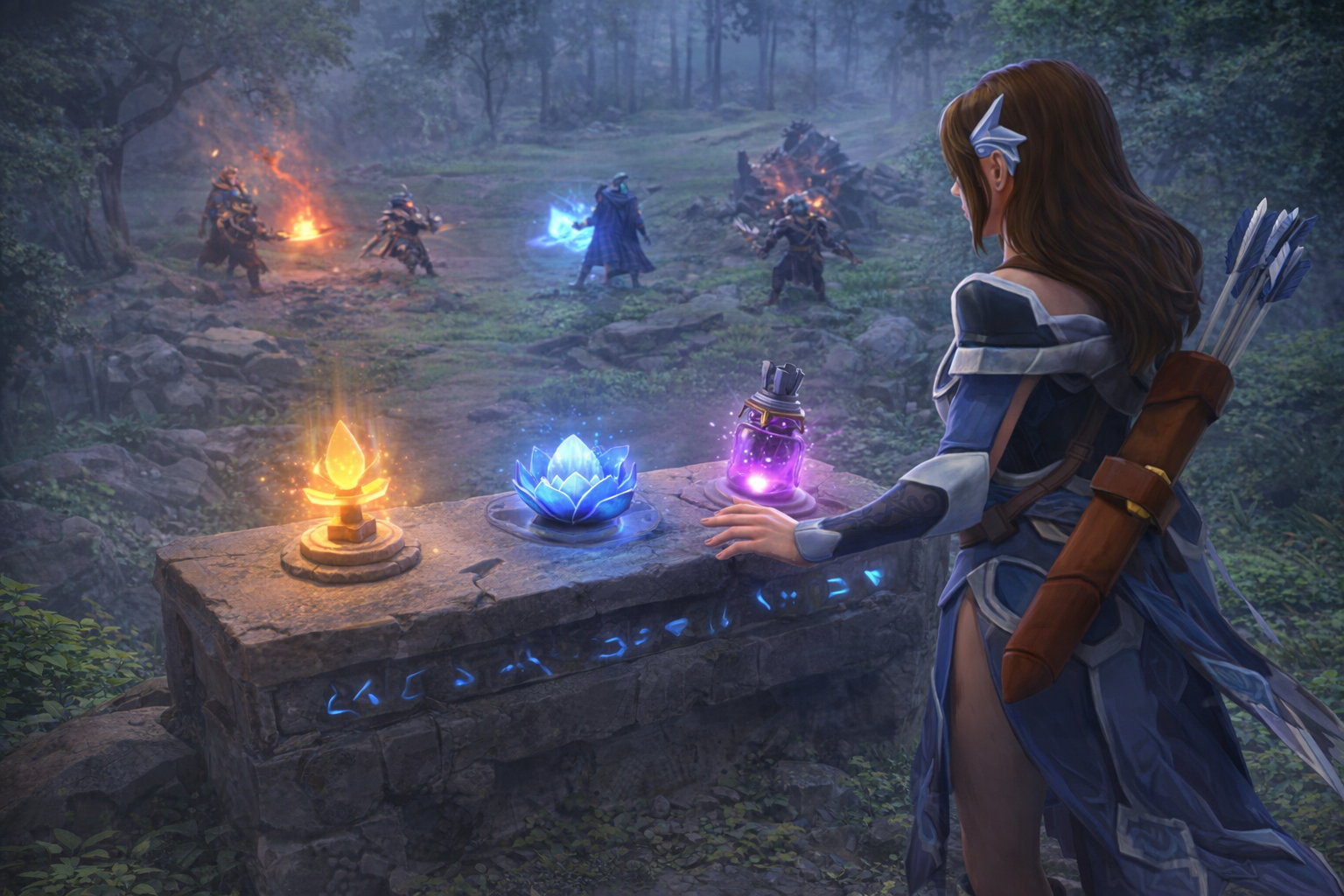
Mid Mirana Is Real, But It Changes the Draft Math
Core Mirana will always have believers because the hero feels incredible when ahead. She farms waves safely, rotates with burst damage, and can transition into right-click threat while still bringing Arrow and Moonlight Shadow. A mid Mirana on a hot streak can make the pick look like secret tech.
The cost shows up in draft structure. If Mirana takes a core slot, the team still needs reliable initiation, building damage, frontline presence, or hard control from somewhere else. When those boxes are covered, core Mirana can use her mobility to snowball the map. When they are missing, she becomes another slippery ranged hero waiting for someone else to start the fight.
That is the same support issue in a different costume. Mirana shines when her team supplies the first layer of control. She turns one catch into a kill and one kill into map pressure. Asking her to be the only dependable catch usually leads to awkward fights where everyone is poking, leaping, and slowly losing objectives.
How to Actually Play Her in Ranked
Start by deciding who your partner is. Mirana without a partner is a wandering skillshot. Mirana with a stun buddy is a tempo support.
In lane, trade around your cooldowns and health pool rather than fishing for miracle arrows every wave. Use Leap to take favorable angles, then preserve enough mobility to survive the return move. If the enemy support walks through predictable paths, punish that. If the offlaner or carry has setup, hold Arrow until the setup begins. Patience wins more lanes than theatrical fog shots.
Once lanes break, attach yourself to the hero making moves. That might be your offlaner with a Blink Dagger timing, your mid with rune control, or a roaming support who brings the disable you lack. Your job is to make every stun more lethal and every enemy escape path feel unsafe.
Ward for arrows, not just for general vision. A ward that sees the enemy farming a camp near a narrow exit can be worth more than a decorative cliff ward that sees nothing actionable. Mirana loves information that turns into a line. If you can see the path, you can aim the spell. If your initiator can reach the target, you can chain the kill.
Use Moonlight Shadow before the obvious fight starts. Cast it to move into the enemy jungle, to protect a core crossing a warded lane, or to turn a fake retreat into a wraparound. When you save it only for emergencies, you reduce a map spell into a defensive shrug.
Against prepared opponents, assume detection exists. Moonlight Shadow should create uncertainty and movement advantage. It should never become permission to walk in a straight line through the most warded part of the map.
Playing With Mirana Without Losing Your Mind
If your teammate picks Mirana, you can make the game easier instantly by drafting reliable control. Even one dependable stun changes her entire early game. The difference between Mirana paired with a point-and-click setup and Mirana paired with five heroes hoping the enemy misclicks is massive.
In game, give her angles. If you stun someone, think about where the arrow line is. Avoid dragging targets randomly sideways when Mirana is clearly lining up follow-up. Communicate smokes and rune moves, because she wants to be present before the fight begins rather than arriving after spells are spent.
Also, accept that some arrows will miss. The spell has travel time, terrain weirdness, fog interactions, and human beings on both sides. Judge the Mirana by whether she is creating attempts from good conditions. A missed arrow after a clean stun is an execution error. A missed raw arrow from max range into open space is a planning error.
There is a difference.
The Real Lesson From Her Big-Stage Success
Mirana’s surge at elite level should influence pubs, but copying the pick without copying the structure is how ranked drafts become comedy. The hero is powerful when the lineup gives her setup, when Moonlight Shadow is used as a macro weapon, and when item choices solve the game in front of her. She punishes teams that move carelessly and rewards teams that layer disables with discipline.
Pick her when you can connect with someone. Build her to cover what your draft lacks. Play the first 20 minutes like a support whose job is to create kills and protect map movement, rather than a semi-core waiting for permission to matter.
Mirana has always had the tools. The difference at the highest level is that those tools are placed in a draft that knows exactly what job each one performs. Bring that part into your pubs, and the hero stops looking like a coin flip with a bow.