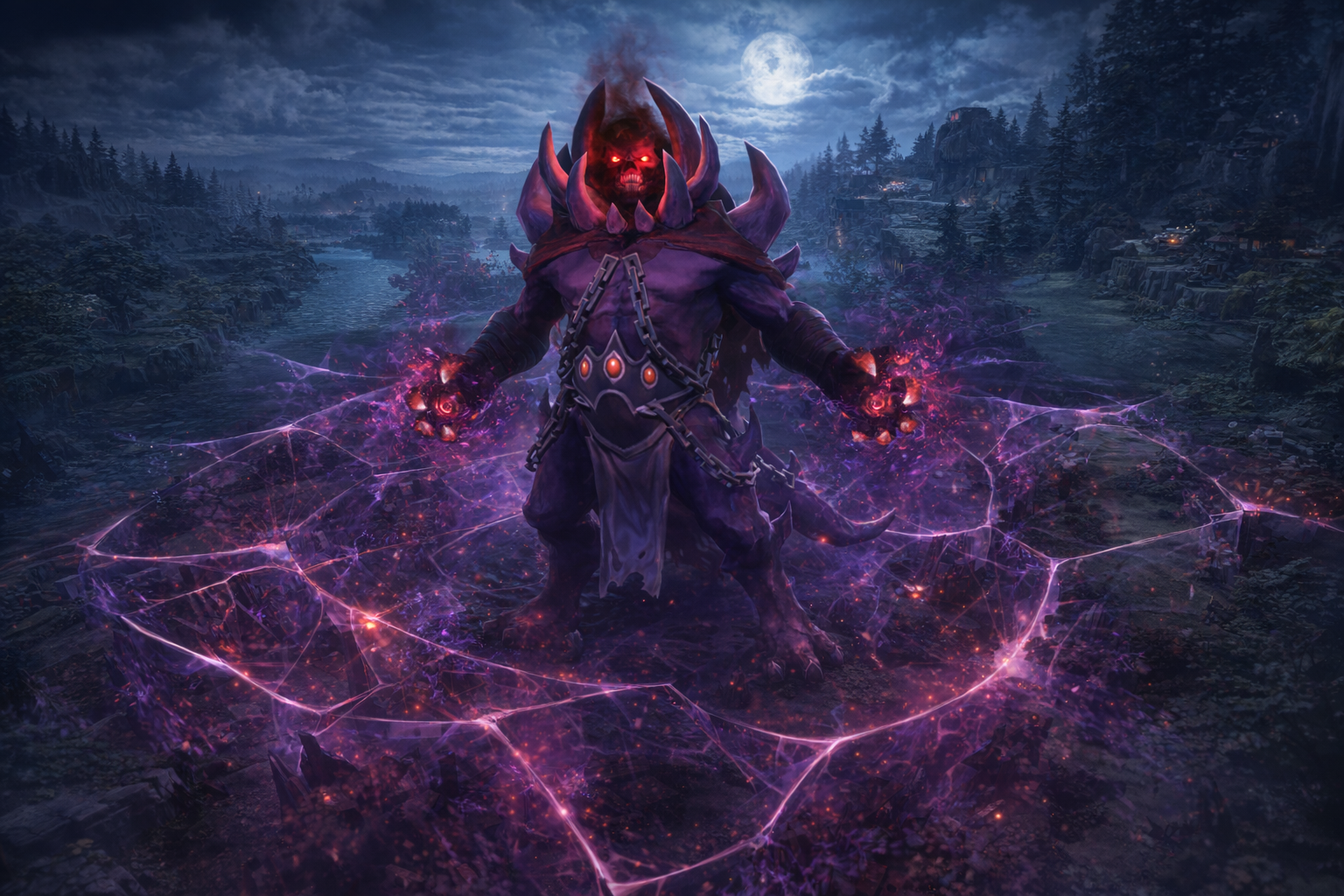
The myth is that Shadow Demon only shows up when illusion carries are popular. You hear the name, you picture a niche counterpick, and you move on to the heroes that actually decide drafts. Then a pro game starts, Shadow Demon disappears in first phase, and another team spends the next 35 minutes drafting like the hero still exists anyway. That disconnect is the whole story.
Shadow Demon earns bans because he changes too many parts of Dota at once for a position five. He pressures lanes in a way that forces honest play, he turns every jump lineup into a risk, he stacks camps absurdly well, and he carries one of the cleanest late-game answers to committed cores in the game. The current priority around him has less to do with one shiny buff and more to do with the simple fact that his toolkit keeps lining up with what teams want to do and what they need to stop.
The Real Reason Teams Respect Him
Shadow Demon brings draft leverage. That matters more than raw lane winrate or flashy scoreboard impact.
A lot of supports do one job very well. Some bully lane. Some save. Some scale with items. Some enable tempo. Shadow Demon touches all of those boxes enough that you can slot him into a huge range of lineups without feeling like you gave something up. He lets a draft stay flexible while quietly attacking the enemy draft from multiple angles.
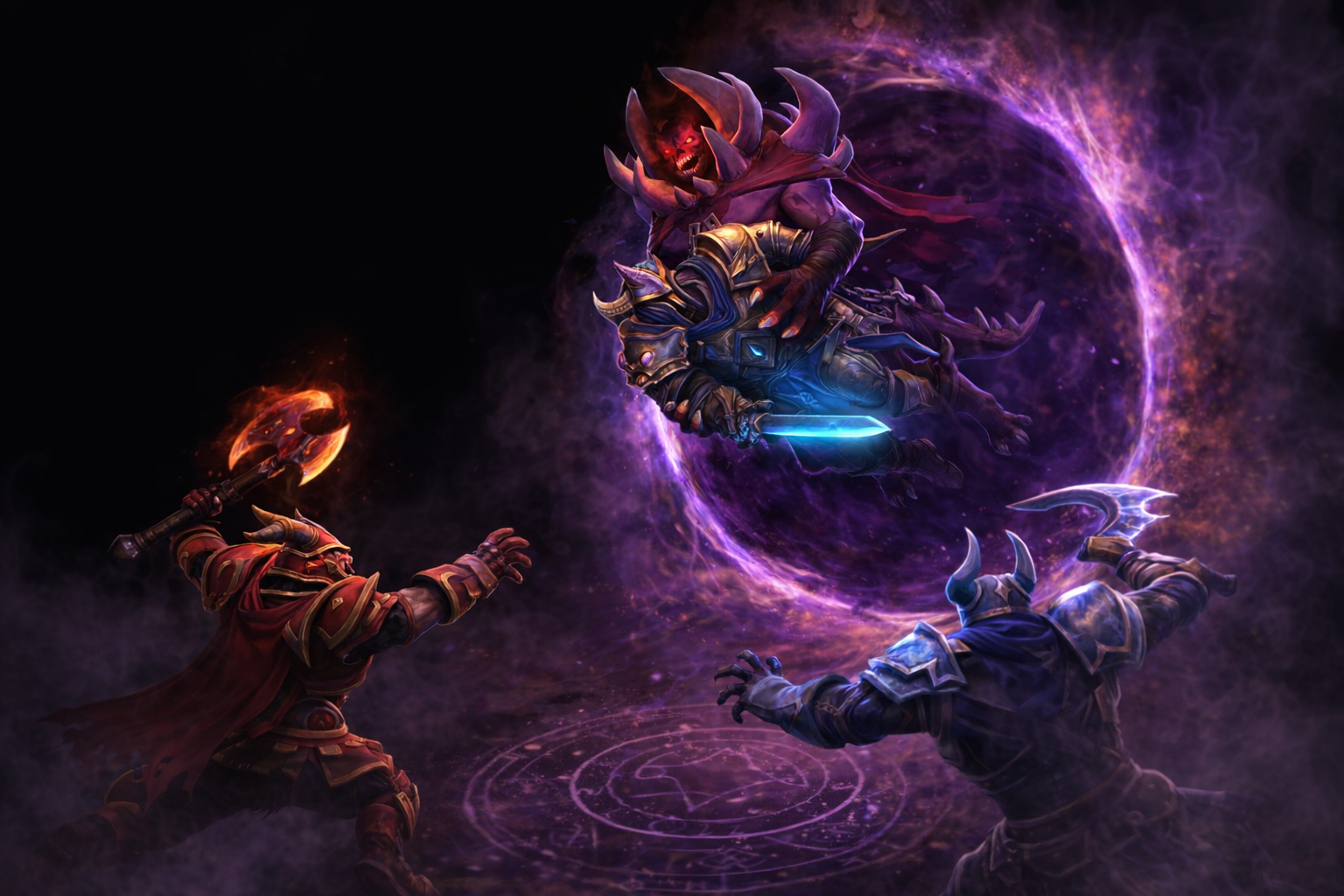
The first thing to understand is that Disruption is not just a save spell. It is a draft tax. The moment Shadow Demon enters the game, every lineup built around instant initiation has to account for the target disappearing at the exact moment the fight was supposed to be won. That changes how valuable your Blink heroes feel. That changes how much confidence you have in your burst chain. That changes when you want to commit BKBs, ultimates, and body position.
A support who forces that much hesitation before fights even start will always be high value in pro play.
He Stops Lane Cheese and Forces Straight Dota
The anti-skip effect
One of Shadow Demon’s biggest strengths never looks dramatic in clips. It shows up in what the enemy support is no longer allowed to do.
Lane-skipping position fours thrive when they can drag waves, break lane structure, and force the offlane into weird farm patterns. That style creates chaos. Chaos is useful when your lane would lose if played normally. Shadow Demon is one of the cleanest answers to that whole approach.
He punishes wave pulls and awkward pathing because Disruption gives his lane immediate catch and setup. He threatens follow-up damage through Shadow Poison stacks. He makes it dangerous for enemy supports to get cute with lane geometry. Instead of turning the lane into a side quest, the opposing support often has to stand there and actually play the matchup.
That sounds small until you watch what it does to a draft. A team that wanted to dodge a weak lane now has to hold ground. A carry who expected the wave to arrive in a comfortable spot has to last-hit under pressure. An offlaner who counted on support movement now has to tank a more stable lane than planned.
Shadow Demon doesn’t need to crush lane outright to create value. He just removes escape routes from bad lane plans.
Stable damage, reliable setup
He also has a lane pattern that remains useful even when he isn’t snowballing. Shadow Poison gives him reach, stack potential, and kill threat if the enemy oversteps. Disruption creates setup for any lane partner that can hit a timing window during the banish. Once he reaches level six, the lane can suddenly convert into kills against targets that were comfortable a minute earlier.
That stability matters. Coaches love supports who are rarely dead picks in lane. You can draft Shadow Demon early and still expect him to contribute in a normal lane, a pressure lane, or a defensive lane.
A Save That Breaks Modern Teamfights
The easiest way to lose a fight in current Dota is to overcommit onto the wrong target at the wrong second. Shadow Demon punishes that mistake brutally.
Disruption breaks the rhythm of initiation. Your team jumps a core, every spell lands on schedule, and then the target is gone. Cooldowns are running. Positioning is exposed. The fight has split into two separate moments, and the second one often favors the team with Shadow Demon because they knew it was coming.
This is why he feels miserable to play into for blink-and-blow-up lineups. Those drafts rely on certainty. They want clean information and immediate payoff. Disruption injects dead time into the center of the engagement, which means the aggressor has to keep making decisions after the point where the fight should have already been decided.
That dead time is gold for the defending team. It buys rotation windows. It lets your counter-initiation move in. It gives your saved core a chance to re-enter with cooldowns and protection. Against some lineups, that one spell turns the enemy’s best opening into a trap they set for themselves.
Demonic Purge Is a Carry Problem
If Disruption is the draft tax, Demonic Purge is the late-game audit.
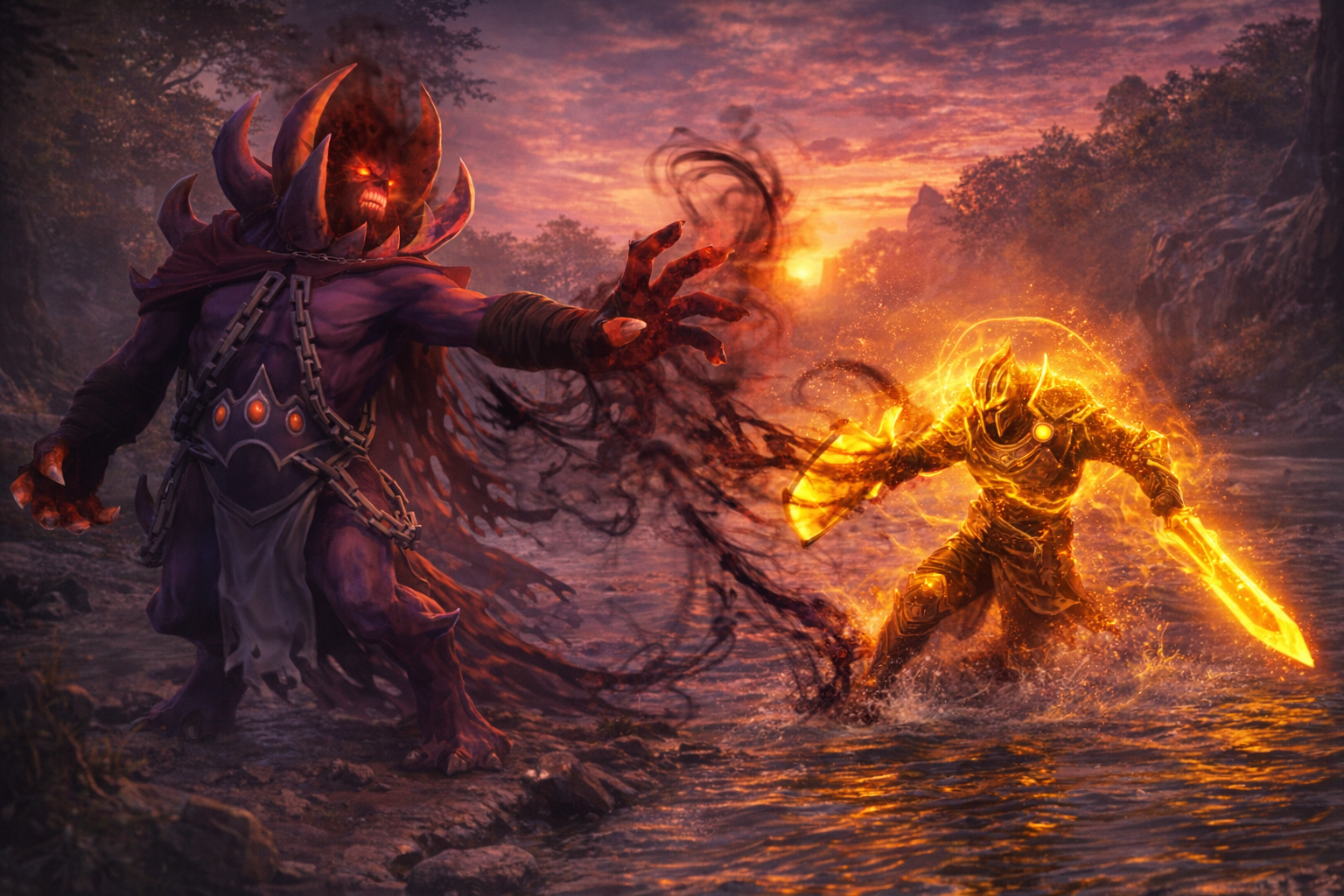
Carries love predictable combat rules. They farm toward a timing where they can activate immunity, sprint at a target, and trust their movement and attack rhythm to carry the fight. Shadow Demon messes with that confidence in a very direct way. His ultimate keeps applying pressure through purge and slow, and it specifically punishes heroes who need to stay glued to a target or rely on layers of buffs to function smoothly.
That makes him a headache for a huge portion of position one pools. Any core that wins fights by committing hard and staying on top of people hates being peeled off and stripped down. Any hero that depends on a key self-buff or movement spike suddenly has to play under a timer they don’t control.
The important part here is that the answer comes from your five. You are not asking your draft to spend a core slot solving a carry problem. You are not forcing a weird offlane pick or a mid with awkward lane matchups. Your support already covers it.
That freedom is a massive reason for first-phase respect. Shadow Demon lets the rest of the draft breathe.
The Farming Trick That Pros Never Ignore
Support economy without greed
One reason the hero keeps showing up at the highest level is that he converts downtime into teamwide net worth efficiently. Shadow Poison stacks camps fast. That means your support is creating resources while still offering lane presence, save potential, and fight control.
This matters more in coordinated play than many pub players realize. A support who can accelerate jungle income without needing dedicated farm priority helps the whole map function. Carries get cleaner camp access. Stacks become real objectives instead of hopeful ideas. Recovery patterns are stronger after rough lanes.
You feel this in games where the team with Shadow Demon never seems poor enough to be punished. Their cores find the extra gold. Their support reaches key utility faster than expected. The game stays structurally healthy.
For a position five, that is premium value.
Why the Hero Keeps Surviving Patch Notes
The common reaction whenever Shadow Demon rises is to search for one patch line that explains everything. Sometimes that line exists. Sometimes it doesn’t. This hero often survives balance changes because his pro value comes from role compression more than from one overtuned number.
If a lane tool gets weaker, he still has save and purge. If a support economy trick gets toned down, he still punishes initiation and certain carry archetypes. If one part of the kit is less oppressive at level one, teams still trust what the hero does at six, at fifteen minutes, and in the last fight around Roshan.
That sort of resilience is rare. Many support picks vanish the moment their lane dominance drops. Shadow Demon sticks around because his usefulness is spread across the whole match.
There is also a meta angle. He looks better when zoo isn’t overwhelming the map and when highly mobile, constant-gap-close heroes are less able to trivialize his spacing. In those environments, he gets to play Dota on his terms. He can stand in the fight at proper range, protect the target that matters, and force enemy cores through layers of inconvenience they cannot bypass cleanly.
The Innate and Why People Underestimate It
The discourse around Shadow Demon often gets stuck on the obvious spells, which leaves the quieter parts of the kit underrated. His newer package added another reason to respect him in drawn-out fights and high-attack-speed situations.
That doesn’t mean he becomes some pseudo-carry support who takes over games through right-clicking alone. It means opponents have one more thing to solve when fights drag on and one more reason that he scales better than people expect from a hard five. That scaling matters because Shadow Demon games often go late. Save supports naturally stretch fights and punish bad commits, and stretched fights create room for every extra point of value in the kit to matter.
You don’t first-ban him because the innate wins lane by itself. You ban him because the whole hero keeps paying dividends after the laning phase ends.
Why Pubs Feel Different
This is where pub players can get misled.
A first-ban pro hero is not automatically a pub monster. Coordinated teams extract the maximum value from save supports because they position around them, bait spells with intention, and punish overcommitment immediately. In pubs, your offlaner may dive past vision, your mid may jump before you are in range, and your carry may get disrupted with no plan for how to re-enter the fight.
That gap is real. It does not mean Shadow Demon is weak in pubs.
It means his value changes shape. In pubs, he still crushes certain carry matchups, still ruins many initiation patterns, and still creates absurd stack value. He also asks for cleaner spell discipline than some supports. If you panic-disrupt the wrong target, you save the enemy. If you stand too far back, your strongest spell exists only in theory. If your team cannot play around banish timing, a huge part of your draft advantage evaporates.
The pub upside is simple: you get a support who can salvage chaotic fights and make enemy cores feel terrible. The pub downside is that you need a pilot who understands spacing, target priority, and when a save is actually a setup.
That makes him one of those heroes whose win impact can feel invisible until the game reaches a point where every fight revolves around one core staying alive for two more seconds.
What Drafts Hate Seeing Him Across the Screen
Jump lineups with committed cooldowns
Any lineup that relies on one clean opening suffers into Shadow Demon. If your plan is to blink, dump resources, and erase a hero before the fight begins, he turns your best sequence into a coin flip.
Carries that need contact time
Heroes that win through sticking on top of targets hate purge, kiting, and interruption. Shadow Demon removes comfort from every prolonged chase.
Buff-reliant cores
When a core’s effectiveness depends on maintaining key effects, purge support becomes brutal. Even if the target survives, the tempo of the engagement shifts.
Drafts that need lane manipulation to survive
Supports and offlanes that want to bend lane rules with pulls and skips get dragged back into standard trading patterns, where Shadow Demon is far more comfortable than many of them are.
Why First-Phase Bans Make Sense
First-phase bans are about fear of constraint. Teams remove heroes that force too many downstream decisions.
Shadow Demon belongs in that class because he narrows your options from minute zero to the last high-ground fight. He touches lane structure, map economy, save mechanics, initiation timing, carry matchups, and scaling. You can still beat him. Plenty of games do. The problem is that drafting into him demands respect in too many places, and that respect costs flexibility.
That is what first-ban material looks like. A support who keeps your lanes honest, your jumps uncertain, your carry uncomfortable, and your whole draft slightly worse before anyone has even loaded into the map.