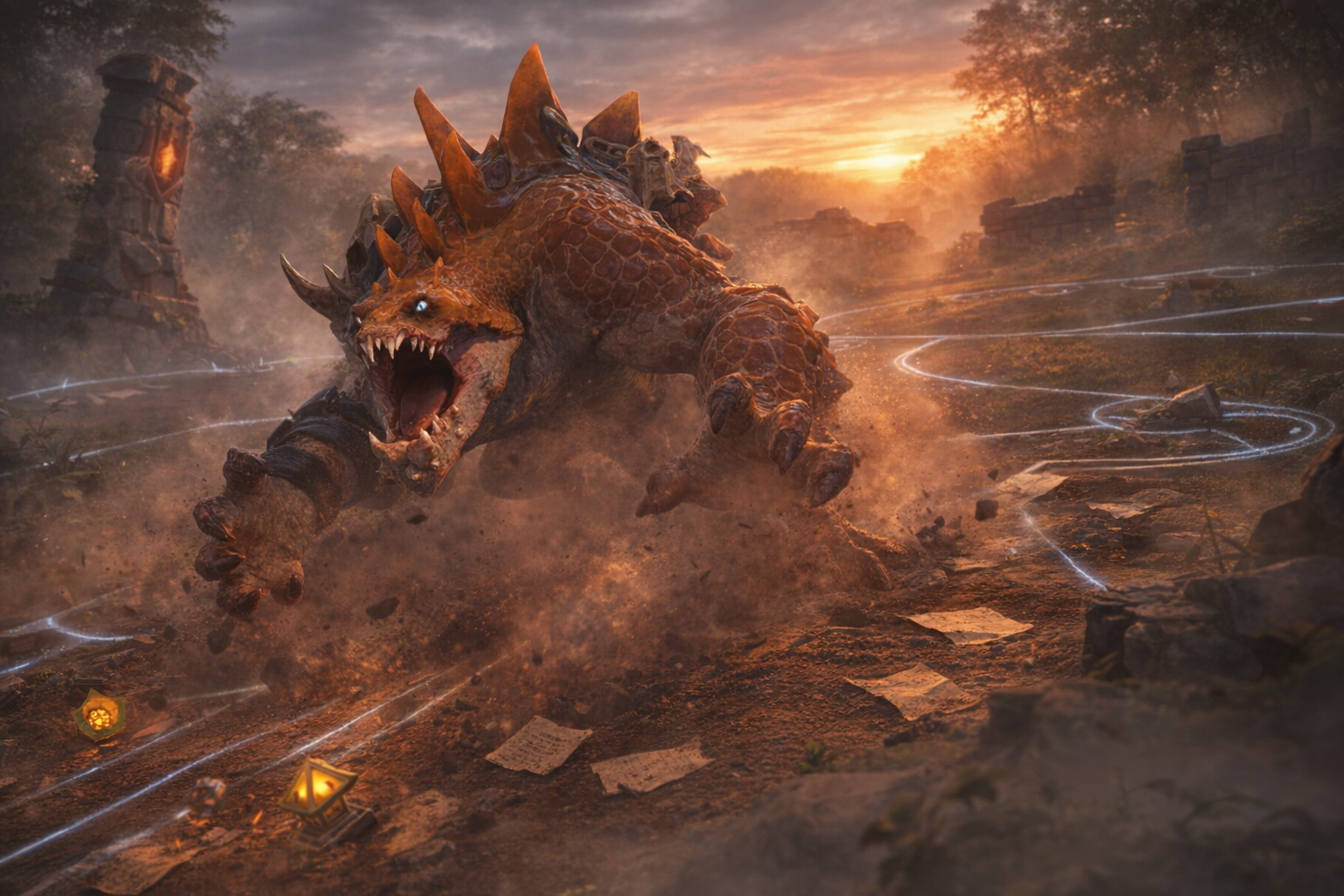
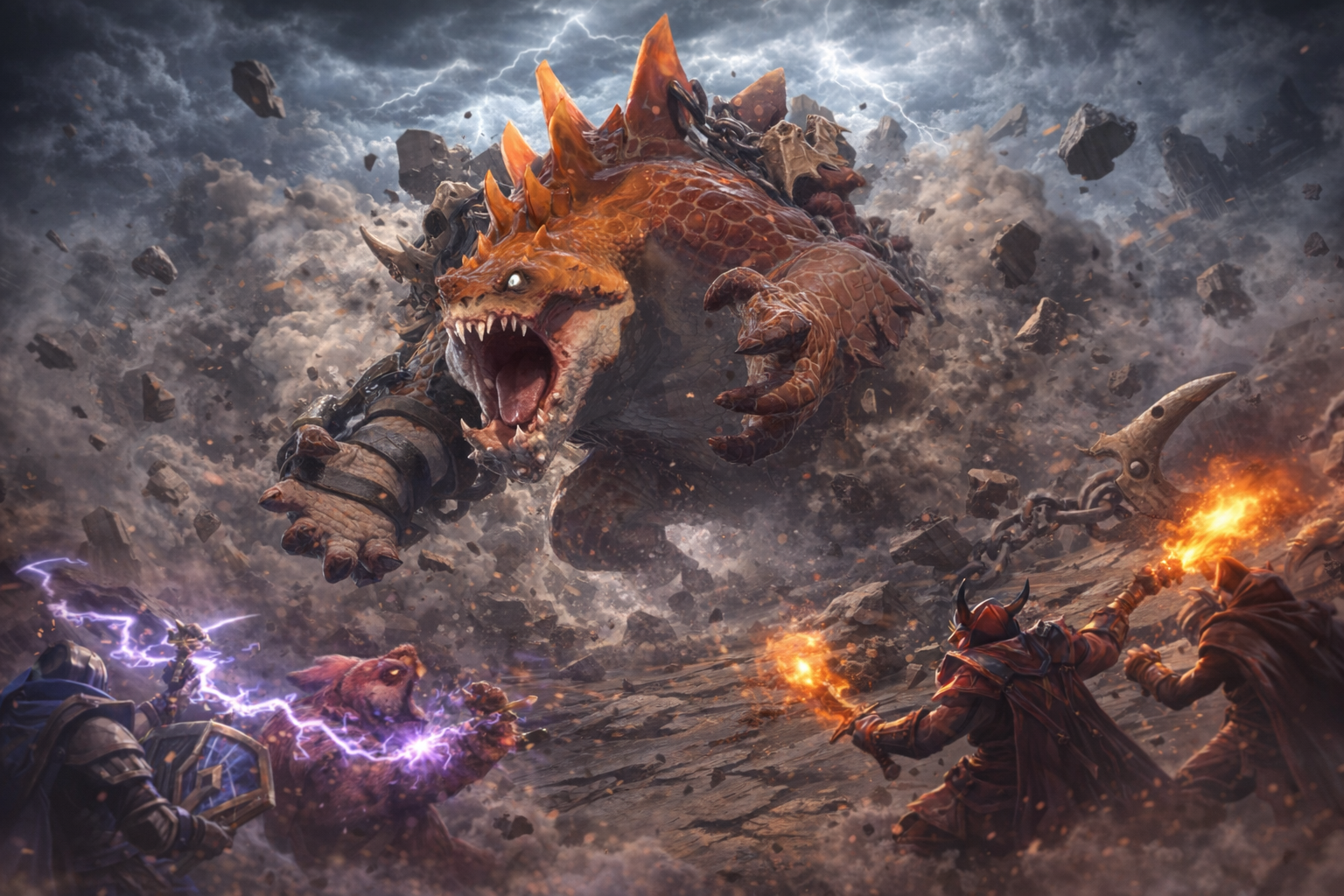
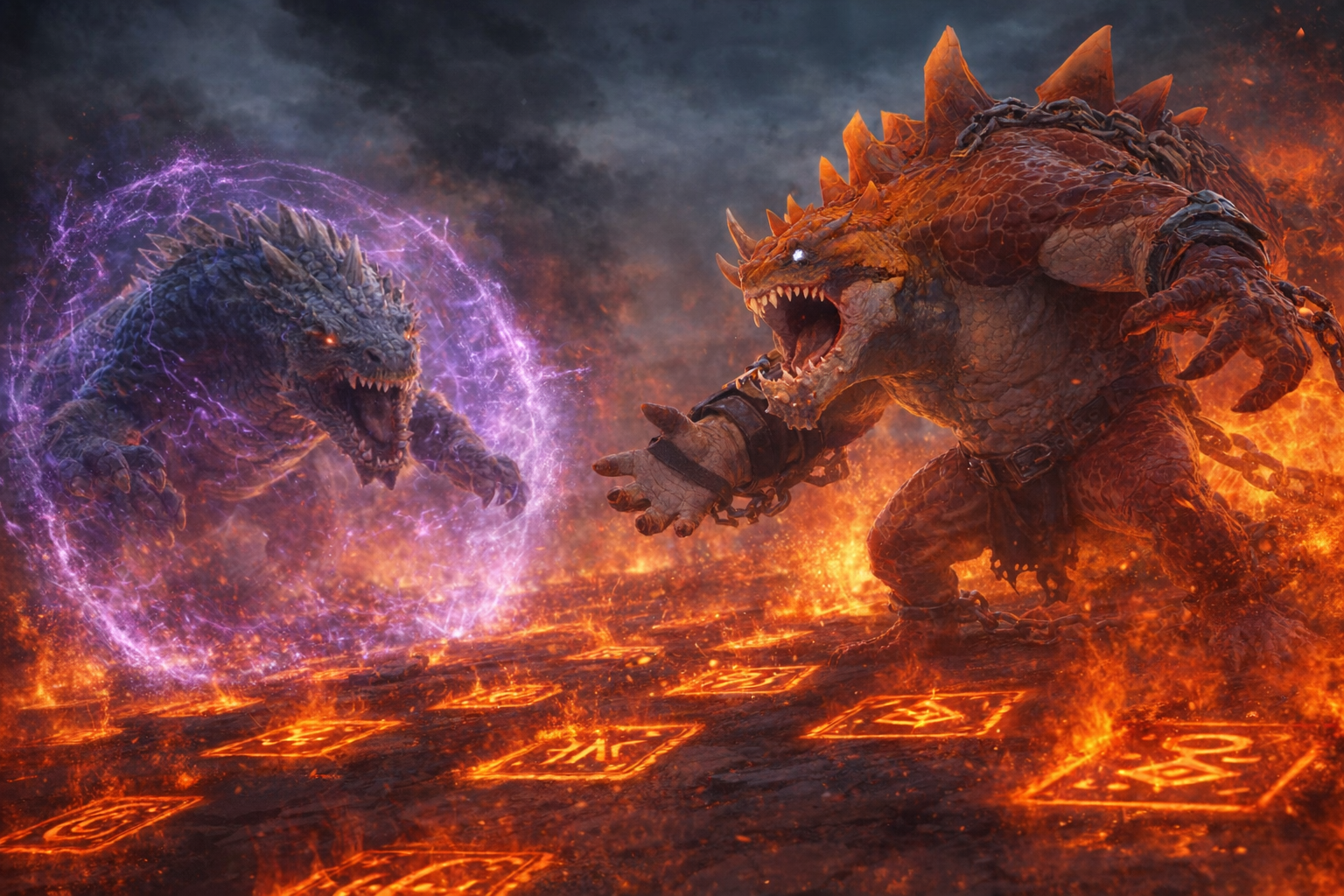
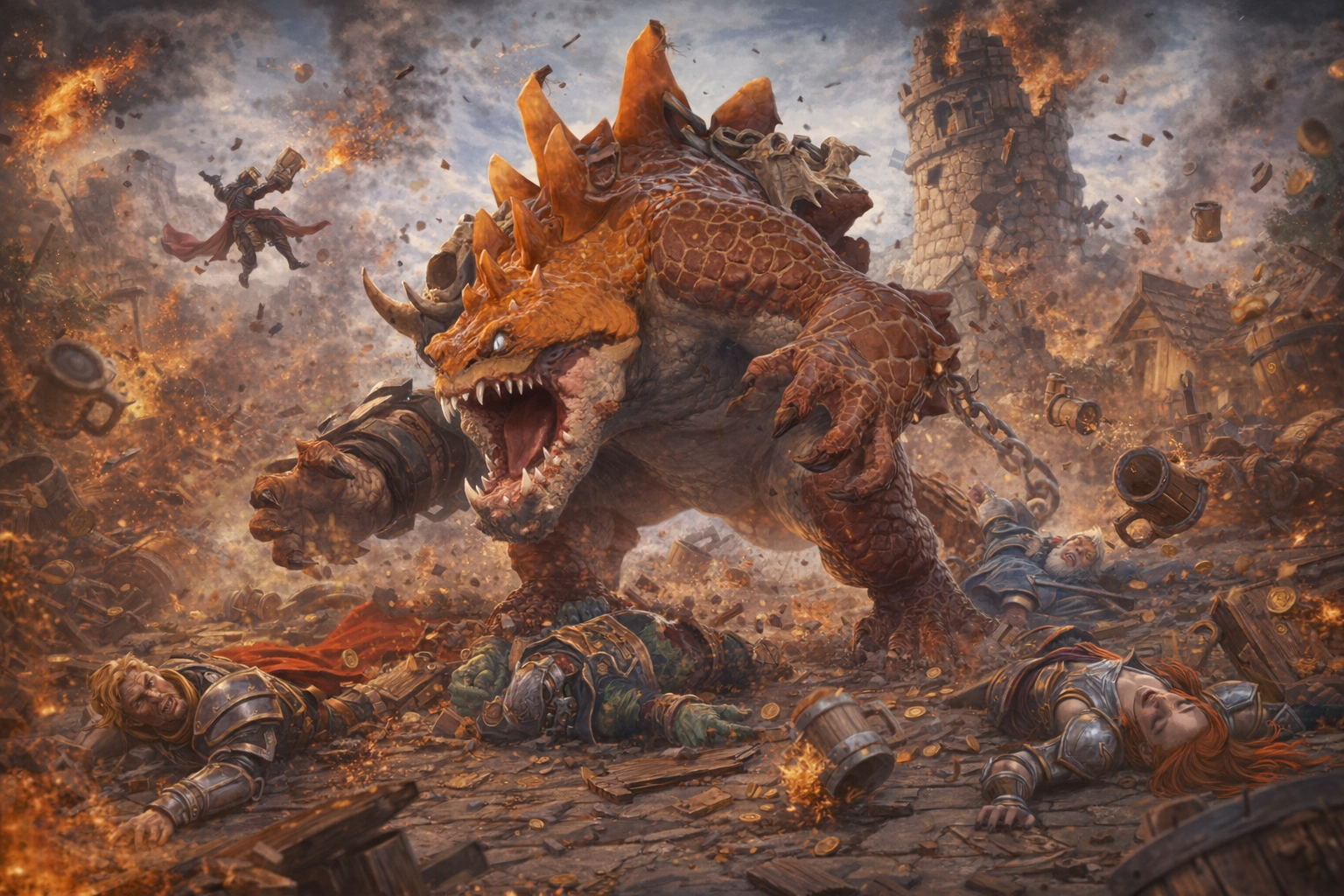
You know the game. Primal Beast hits level two, charges from fog, clips your support, and suddenly the lane feels like it belongs to a zoo animal with a haste rune. Ten minutes later he has Phase Boots, he’s trampling through your mid tower fight, and your team is pinging each other instead of casting spells. In pubs, the hero still creates that familiar feeling: if he gets on top of you, the screen becomes noise.
So why has he mostly disappeared from serious tournament drafts?
The short answer: Primal Beast still has violence, but pro Dota asks for reliability. His best games require momentum, farm, clean initiation angles, and enemies who can’t easily stop his movement. The current environment gives him fewer of those gifts.
The Old Appeal: A Flex Pick That Broke Formation
Primal Beast became scary in competitive Dota because he solved a lot of draft problems at once. He could play offlane. He could go mid in the right matchup. He brought early pressure, tower dive threat, and a way to start fights without waiting for a Blink Dagger timing.
That last part mattered. A lot.
Many offlaners need an item before they become real threats. Primal Beast only needs levels and a path. Onslaught lets him enter from weird angles, Trample turns movement into damage, and Pulverize gives him a point-and-click commitment tool once he gets close enough. When the hero was overtuned, that package made him obnoxious: he could crush lanes, invade early, drag supports into terrible fights, and scale into a disruptive frontliner who demanded multiple answers.
He was especially valuable when teams wanted tempo without drafting a fragile tempo hero. Primal Beast could run at you, soak spells, and still force reactions. If the enemy supports were greedy or the carry needed time, he made the game feel short.
That version of the hero was draftable because his floor was high. Even if the game wasn’t perfect, he created chaos.
Now the floor has dropped.
His Kit Still Hits Hard, But It Has Clear Failure Points
Primal Beast looks simple when he’s winning. Charge in. Trample. Roar. Grab someone. Repeat until Ancient falls.
The mechanics punish sloppy enemies, but they also expose him brutally against prepared ones.
Onslaught is powerful because it starts fights from distance and punishes poor positioning. It also announces commitment. Once Primal Beast goes in, he usually has to keep going. If he gets rooted, stunned, silenced, displaced, or forced to turn awkwardly, the whole sequence loses value.
Trample is the real pub-killer. It rewards staying on top of targets and punishes heroes without instant escape. In coordinated games, teams protect against that with spacing, saves, roots, and disciplined spell usage. The difference between trampling three panicked heroes in a pub and trampling a support who instantly gets Force Staffed away is enormous.
Pulverize can look like a guaranteed kill button, but it asks Primal Beast to stand there and channel in the middle of everyone. That is a dangerous ask in pro games. The target can be saved. Primal can be interrupted. The enemy can counter-initiate. A spell that feels oppressive in a messy fight becomes fragile when five players are waiting for it.
That’s the tension with Primal Beast: his kit is explosive, but every explosive move has a handle opponents can grab.
Refresher and the Death of the Double-All-In Fantasy
A huge part of Primal Beast’s previous late-game identity came from repeating his commitment. When he could reliably go in, spend his major defensive and offensive tools, refresh, and do it again, he became a nightmare to fully answer. You had to survive the first impact while still holding enough control for the second.
Changes around Refresher-style play hit heroes like Primal Beast hard because his late-game fights often depend on one massive window. He wants to crash in with defensive immunity or durability, force every spell out, then keep fighting through the reset. When that pattern becomes slower, more expensive, or less reliable, his margin for error shrinks.
This matters more for Primal Beast than for some other initiators. A Tidehunter with Ravage still brings one clean, enormous teamfight button. A Centaur can initiate, disengage, and give his team a global movement tool. Primal Beast’s value is tied to staying active inside the fight. If he can’t keep going after the first wave, he can look like a strength hero who donated his body for vision.
Late game Primal Beast also has an awkward relationship with scaling. He can become durable. He can buy meaningful utility. He can threaten supports. Yet he doesn’t always provide the same hard inevitability as cleaner late-game cores or aura carriers. If a hero needs a lot of gold to remain relevant, pro teams ask a ruthless question: why give him that gold instead of picking a hero who reaches a stronger, safer timing?
The Offlane Problem: He Wants Farm in a Role That Often Gets Starved
Primal Beast offlane has a real economic issue right now. The hero wants boots, survivability, and often a major spell-immunity timing before he can force premium fights. He also likes having Aghanim’s Scepter in games where the break effect matters. That shopping list gets expensive fast.
Offlane in high-level Dota is rarely a peaceful farming role. You’re expected to pressure the carry, survive bad matchups, connect to fights, defend towers, and buy team items when the draft demands it. If the lane goes poorly, Primal Beast can recover in the jungle, but that recovery has a cost. While he’s hitting creeps, another offlaner might already be defending objectives, enabling supports, or giving the team auras.
That’s where the hero feels clunky in pro drafts. He needs gold to become the unkillable animal people remember, but the games where he gets that gold cleanly are less common. If he falls behind, his initiations become desperate. If he delays his defensive item, he gets controlled. If he rushes defense, his damage can feel underwhelming. If he tries to solve everything, the timing arrives too late.
In pubs, enemies often feed into his recovery. They chase him through jungle paths, clump for Trample, or ignore his next smoke timing. Pro teams choke those windows. They ward his farming routes, shove lanes before objectives, and force him to reveal early.
Underlord Is a Miserable Matchup for Him
Underlord being popular is terrible news for Primal Beast.
Pit of Malice is one of those spells that makes Primal’s game feel unfair in the other direction. Primal Beast wants to move through fights. Pit punishes movement through a zone. It disrupts the clean Onslaught entry, makes Trample paths awkward, and turns choke points into traps. A hero built around momentum hates being told to stand still.
Underlord also tends to make lanes and early fights ugly for melee strength heroes. He can contest waves, reduce physical pressure in fights through his kit, and occupy space without panicking. Primal Beast wants opponents who break formation when he runs at them. Underlord creates zones where running forward becomes a liability.
The matchup also affects drafting. If Underlord is already a strong, stable offlaner in the meta, picking Primal Beast becomes harder to justify. You risk selecting a hero that has to work much harder for similar map impact while being directly annoyed by a common answer.
That kind of pressure pushes heroes out of tournaments quickly. Pros don’t need a hero to be unplayable before they drop it. They only need several better options with fewer draft penalties.
Necrophos and Ranged Cores Make the Game Feel Long
Necrophos is another headache because he punishes the exact fantasy Primal Beast wants to live. Primal likes being a huge health pool in the middle of the fight. Necrophos is comfortable in extended engagements and pressures tanky frontliners who rely on surviving through the first round of damage.
The lane can also become annoying. Primal wants to bully. Necrophos sustains, contests, and makes trades feel less clean. Later, Reaper’s Scythe threatens heroes who depend on soaking damage and escaping with low HP. That changes how aggressively Primal can play around the edge of a fight.
Long-ranged carries create a different problem. Drow Ranger is the obvious example. She doesn’t want to stand in the Trample blender. She wants to hit from distance, punish approaches, and use silence or positioning to make Primal’s entry messy. If Primal Beast has to spend everything just to reach a ranged core, the fight can already be lost before Pulverize starts.
This is one of the biggest differences between pub fear and pro evaluation. In a pub, a Drow may stand too close, panic Gust too late, and die with Hurricane Pike unused. In organized play, the ranged core is positioned behind layers. The first hero Primal reaches may be the wrong one, and the correct target may never be available without a perfect flank.
Break Is Useful, But No Longer Enough to Carry the Pick
Primal Beast’s Aghanim’s Scepter giving access to break has been a major selling point in some metas. Break is powerful when certain passive-dependent heroes dominate drafts. In those environments, Primal offers initiation plus a specific answer, which makes him easier to justify.
The issue is that break value fluctuates hard. If the strongest heroes of the patch don’t demand break every game, Primal loses part of his draft argument. You’re left judging him on lane, tempo, scaling, and reliability. Right now, that comparison is rough.
Aghanim’s also costs real money. If your offlaner needs Phase Boots, a defensive timing, and then Aghanim’s before his full utility comes online, you’re asking the game to cooperate. Pro teams prefer cleaner item curves. They like heroes whose first big item instantly changes the map or whose aura build makes the whole lineup stronger without needing a perfect fight.
Primal can still buy the right items and look unstoppable. The problem is the path. Competitive Dota punishes long paths.
Why He Still Feels Broken in Pubs
Pub Primal Beast thrives on hesitation.
Players split too late. Supports hold disables for the “perfect” moment and die with them. Cores farm one extra wave near fog. Teams fight in narrow jungle entrances where Onslaught becomes impossible to dodge. Nobody buys enough save items early because everyone expects someone else to solve the problem.
That’s why the hero can feel unbeatable even when pros ignore him. His counters require habits that pubs often lack: spacing, instant disables, layered saves, and patience. You don’t counter Primal Beast by admiring his HP bar. You counter him by ruining the first two seconds of his fight.
Roots are brutal. Silences before he gets his sequence off are brutal. Force Staffs and displacement effects waste Trample time. Long-range damage forces him to commit from awkward angles. Vision catches his wind-up before it becomes a disaster. Heroes that can stand their ground through his first burst or punish his retreat make him think twice before going full animal.
The biggest pub adjustment is psychological. Stop treating him like a raid boss. He wants you to scatter badly or clump stupidly. Hold formation with enough distance that Trample doesn’t hit multiple heroes, but enough connection that saves and stuns arrive instantly. If he uses Onslaught from vision, punish the landing. If he channels Pulverize, interrupt or save the target. If he misses the first impact, he becomes much less scary.
Itemization helps too. Force Staff remains one of the cleanest support answers to many melee divers because distance ruins their math. Eul’s-style saves can buy time when used well. Ghost, glimmer, defensive dispels, and spell immunity all matter depending on the hero and timing. The exact answer changes game to game, but the principle stays the same: deny continuous contact.
The Pro Verdict: Too Much Work for Too Little Certainty
Primal Beast hasn’t vanished because the hero lost all damage or because pros forgot how to play him. He vanished because his draft case got narrower.
His lanes are less guaranteed. His item timings are demanding. His all-in pattern has been nerfed enough that failed initiations are easier to punish. Popular heroes can zone, kite, or outlast him. Underlord in particular makes his movement-based gameplay feel miserable. Necrophos and long-ranged carries pressure his durability and target access. Break utility still matters in some games, but it doesn’t automatically justify the pick.
That leaves Primal Beast as a situational weapon. Give him a good lane, enemies with limited control, supports he can actually reach, and a draft that benefits from early brawling, and he can still look disgusting. Put him into roots, saves, and ranged cores with clean formation, and he becomes a lot of effort for a fight that another offlaner could start more safely.
For pubs, that means two things can be true at once. Primal Beast can farm your ranked games because players disrespect his timings and feed into his movement. He can also sit outside tournament drafts because top teams remove the chaos he depends on.
The hero is waiting for the meta to give him easier lanes, weaker counters, or a stronger reason to rush his expensive utility again. Until then, he’ll keep doing what he does best below the pro level: punishing every player who thinks “he probably can’t reach me from there.”