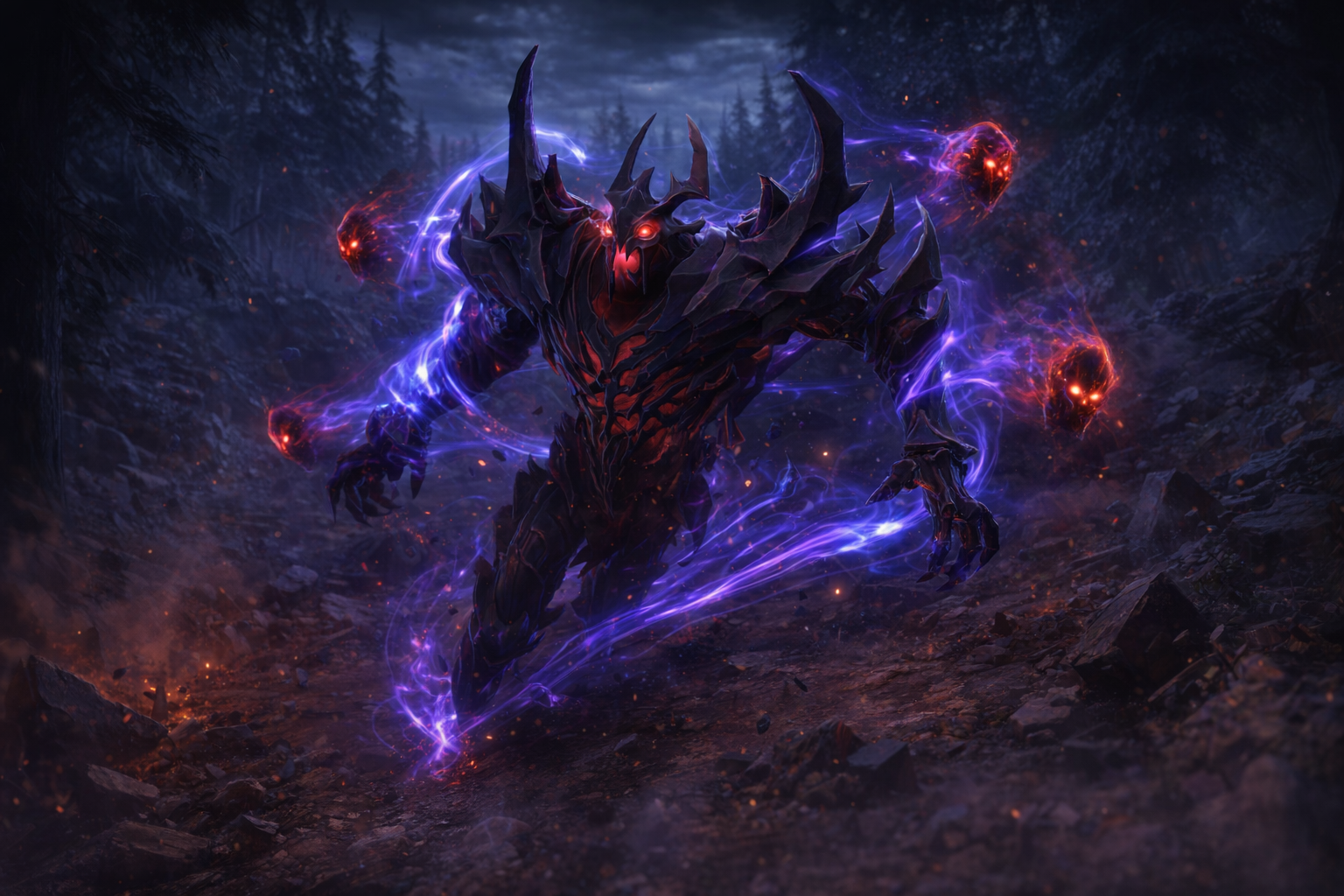
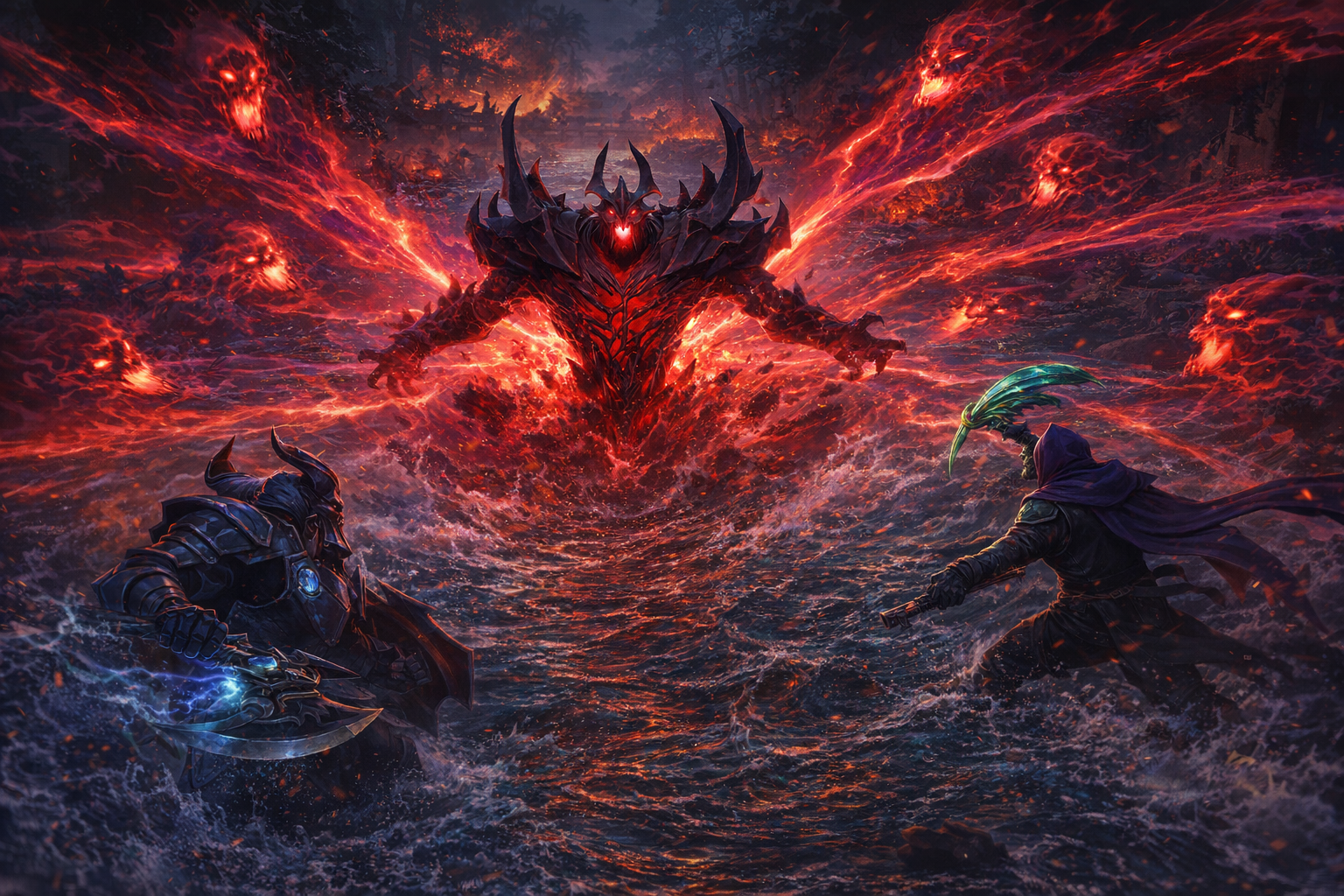
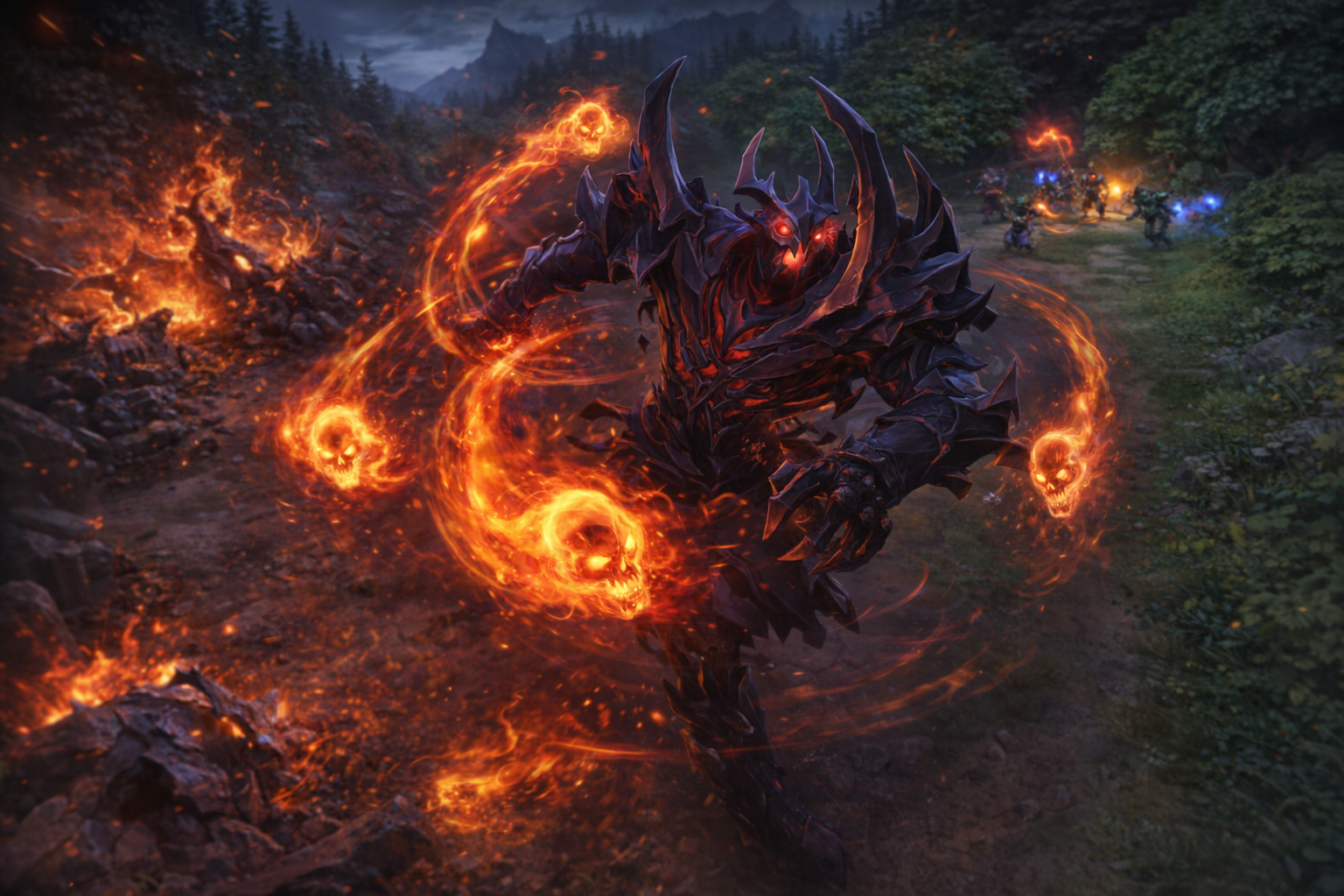
You know the game. Lane goes well enough, souls start stacking, the jungle melts, and suddenly Shadow Fiend looks like he’s about to take over the map. Then the first real midgame fight hits. You show up with right-click items, get kited for two seconds, hesitate on Requiem, and the whole hero suddenly feels way clumsier than the net worth says he should.
That gap is where Kaya and Yasha has slipped into carry SF builds. It looks strange if your brain still files K&Y under spellcaster SF, but the item solves a very specific problem: right-click Shadow Fiend still wins fights with spell tempo before he wins them with raw DPS. The build makes that timing smoother, faster, and much harder to punish.
The old carry SF script is too linear
For a long time, physical SF had a familiar flow. You stabilized lane with cheap stats, picked up early farming help, accelerated through stacks, and aimed for the point where your attacks started erasing heroes. It worked because Shadow Fiend farms fast and scales brutally with levels and souls.
The weakness has always been in the space between "farms insanely fast" and "actually takes over fights." Early physical SF can hit hard, but he is still fragile, still vulnerable to jump, and still dependent on standing his ground long enough to deliver damage. In real games, that window gets messy. Teams smoke into your triangle. Side lane skirmishes break out before your next major item. A support gets caught and the fight starts on bad terms.
That version of SF often feels rich and awkward at the same time.
Kaya and Yasha patches over that awkwardness. It gives the hero a real midgame combat identity before the full right-click package is online. You farm fast, you cast better, you move better, and your ult stops feeling like a luxury button you only press in perfect conditions.
The real value: Requiem becomes a live weapon
Faster spell usage matters more than people admit
The biggest misunderstanding with K&Y on carry SF is treating it like a mana item first. Mana helps, sure. Shadow Fiend always appreciates being able to shove waves, farm camps, and throw spells without feeling dry. But that’s not the headline.
The headline is that Shadow Fiend is one of those heroes where small improvements to how quickly your spells come out completely change how fights feel. Requiem of Souls is the center of that conversation.
On physical SF, every moment spent stuck in cast point is a moment where you are not attacking. That alone matters. More importantly, a faster, smoother Requiem means the spell becomes reactive instead of ceremonial. You can punish dives. You can turn on heroes collapsing on you. You can join a skirmish and threaten fear without needing the entire fight to be pre-staged around your channel timing.
That changes how enemies approach you. A carry SF with a credible, snappy Requiem is much scarier to jump than one who looks like he has to plant his feet, pray for space, and hope nobody cancels his impact.
The fear is worth more than the damage in a lot of fights
People still talk about SF ult like the spell’s value starts and ends with the nuke. That misses how many midgame engagements are decided by control and panic. The fear zone breaks formations, ruins commits, forces bad movement, and creates the small pocket of safety Shadow Fiend needs to keep hitting.
On a carry build, that is gold. You are not looking for flashy one-shots every fight. You are looking for the moment where the enemy initiation loses shape and your team gets to stand in the better spots.
Kaya and Yasha supports exactly that style. You get to play as a tempo core with a real area-control button, then continue scaling into the right-click monster everyone expects later.
Hybrid SF is the point, not a side effect
The hero stopped fitting into clean boxes
Shadow Fiend itemization used to invite arguments built around hard categories. Magic SF. Physical SF. Pick your side and commit. Current play patterns are much more fluid.
That’s why K&Y makes sense. It lets carry SF function as a hybrid hero during the phase of the game where being one-dimensional gets punished hardest. You still farm like SF. You still threaten towers and objectives through damage. You also contribute more immediately to active fights, especially before your heavier damage items arrive.
This matters because modern games rarely give you a clean 20-minute farming seminar. Side lanes collapse early, supports rotate constantly, and every team wants to chain tempo through wisdom runes, power rune fights, tormentor setups, or simple map pressure. A carry who only wants to AFK until his ideal physical timing is leaving value on the table.
Kaya and Yasha gives SF permission to show up.
You keep your transition open
The nice part is that the item does not trap you in a magic build. That’s the whole appeal. You aren’t announcing that your game will peak around spell burst and then taper off if the first big fight fails. You are buying a bridge item that keeps your farming sharp and your teamfight presence real while you continue moving toward physical dominance.
That flexibility is huge on a hero whose games can swing based on lane outcome, stack access, and whether the enemy draft can easily sit on top of him.
If the map is active and you need to scrap early, K&Y helps. If the game stretches, Shadow Fiend still becomes Shadow Fiend.
Why pro players like it in tempo games
It smooths out the dangerous middle minutes
The reason this build keeps showing up in high-level play is simple: pro games punish dead timings. If your carry spends too long being a greed machine with no clean fight contribution, good teams squeeze the map until your item progression stops mattering.
SF always farms fast enough to tempt greed. That temptation gets people killed.
Kaya and Yasha gives earlier fightable stats and utility on a hero who otherwise risks feeling like a glass cannon with a delayed trigger. You can farm the dangerous parts of the map faster, connect to skirmishes more confidently, and actually convert early levels into pressure.
That last part matters more than it sounds. Shadow Fiend’s level progression is often as important as his gold progression. When your build helps you join successful fights instead of skipping them, you hit later level-based spikes in better shape.
The level-based payoff is still physical
A lot of carry SF logic still points toward later physical scaling. That hasn’t changed. Your stronger right-click moments still come from getting the levels and damage pieces that let your attacks overwhelm fights.
K&Y fits because it acknowledges that the road to that point matters. Plenty of SF games are decided before the pure right-click fantasy fully comes online. If your early-mid game item lets you survive, contribute, and collect the next wave of resources faster, it is doing carry work even if it doesn’t look like a traditional DPS purchase.
What the item actually gives you in pubs
The build feels better because the hero feels less stiff
Pub players often underrate "feel" because it sounds vague. In Dota, feel is usually mechanics wearing a human face. If a hero turns faster into fights, reaches camps quicker, gets spells off under pressure, and transitions between farming and fighting with less friction, that translates into real MMR.
K&Y does that for SF.
You notice it in the map movement first. Camps and waves chain together more cleanly. Rotations cost less. Chasing into cleanup kills becomes realistic instead of optimistic. Then you notice it in fights, where Shadow Fiend stops behaving like a hero who needs a handwritten invitation to cast his ultimate.
For pubs, that matters even more than in coordinated games. Fights break out randomly. Your supports overstep. Enemy offlaners dive towers for sport. A carry SF who can arrive and instantly represent fear plus follow-up damage is a lot more useful than one who is still waiting for the "real" right-click timing.
It protects you from the classic SF pub failure state
Every Shadow Fiend player knows the disaster pattern: good first ten minutes, excellent farm, one ugly death, then another fight where you can’t stand your ground, and suddenly the whole game feels like you are carrying a gold lead made of paper.
K&Y helps prevent that collapse by making your contributions less binary. You are still vulnerable. This hero will never stop being punishable when caught. But your fights stop relying purely on uninterrupted attack time.
If the enemy jumps you, Requiem is more accessible. If the fight starts crooked, your spell presence can still create space. If your team needs you before your inventory is fully online, you’re not just bringing auto-attacks and a dream.
When you should actually buy it
Good K&Y games
The item shines when the game will force interaction before your heavier physical slots arrive. Think active enemy drafts, frequent early objective fights, or lineups that want to run at you before you are comfortable standing still and hitting.
It also looks strong when your team benefits a lot from you joining skirmishes early. If your supports and offlaner can start engagements and you just need a safer, cleaner way to connect, the build makes sense. You arrive with better spell impact and enough scaling baked in to keep your progression honest.
This path also fits games where your lane and early farm are good enough that you can afford a tempo purchase without falling behind. Shadow Fiend with momentum uses hybrid items far better than Shadow Fiend trying to recover from a wrecked start.
Worse K&Y games
There are still matches where you want to be greedier and more direct with physical scaling. If the map is likely to stay quiet, if your team already has plenty of midgame fight control, or if the enemy lineup gives you unusually clean right-click windows, traditional damage progression can be stronger.
The trap is copying the item as a default and forgetting why it works. Kaya and Yasha is not there because the shop glows when you lock SF. It is there because the game state asks for a bridge between tempo casting and future DPS.
The hidden lesson: carry SF is a timing hero, not just a farm hero
This build is useful beyond the item itself because it forces a better understanding of what carry Shadow Fiend actually does. Too many players still approach the hero like an equation: stack camps, collect items, right-click everyone later. That version exists, but it’s incomplete.
Shadow Fiend is one of the best examples in Dota of a hero whose timing profile matters more than his raw net worth profile. He spikes in phases. Souls matter. levels matter. ult access matters. item flow matters. Your job is to connect those phases without giving the enemy a clean window to break you.
Kaya and Yasha helps stitch the phases together. You get farm speed, spell comfort, movement, and a much more believable midgame presence. Then you pivot harder into physical damage once the game reaches the point where your attacks can decide fights on their own.
That is why the item keeps showing up on so-called right-click SF. The build understands that carry Shadow Fiend rarely wins by being only one thing for the entire match. He wins by being dangerous earlier than expected, richer than he should be, and much easier to lose track of once the game opens up.
If you’ve been skipping K&Y because it looks like a detour, read the game in front of you. A lot of the time, it’s the road.