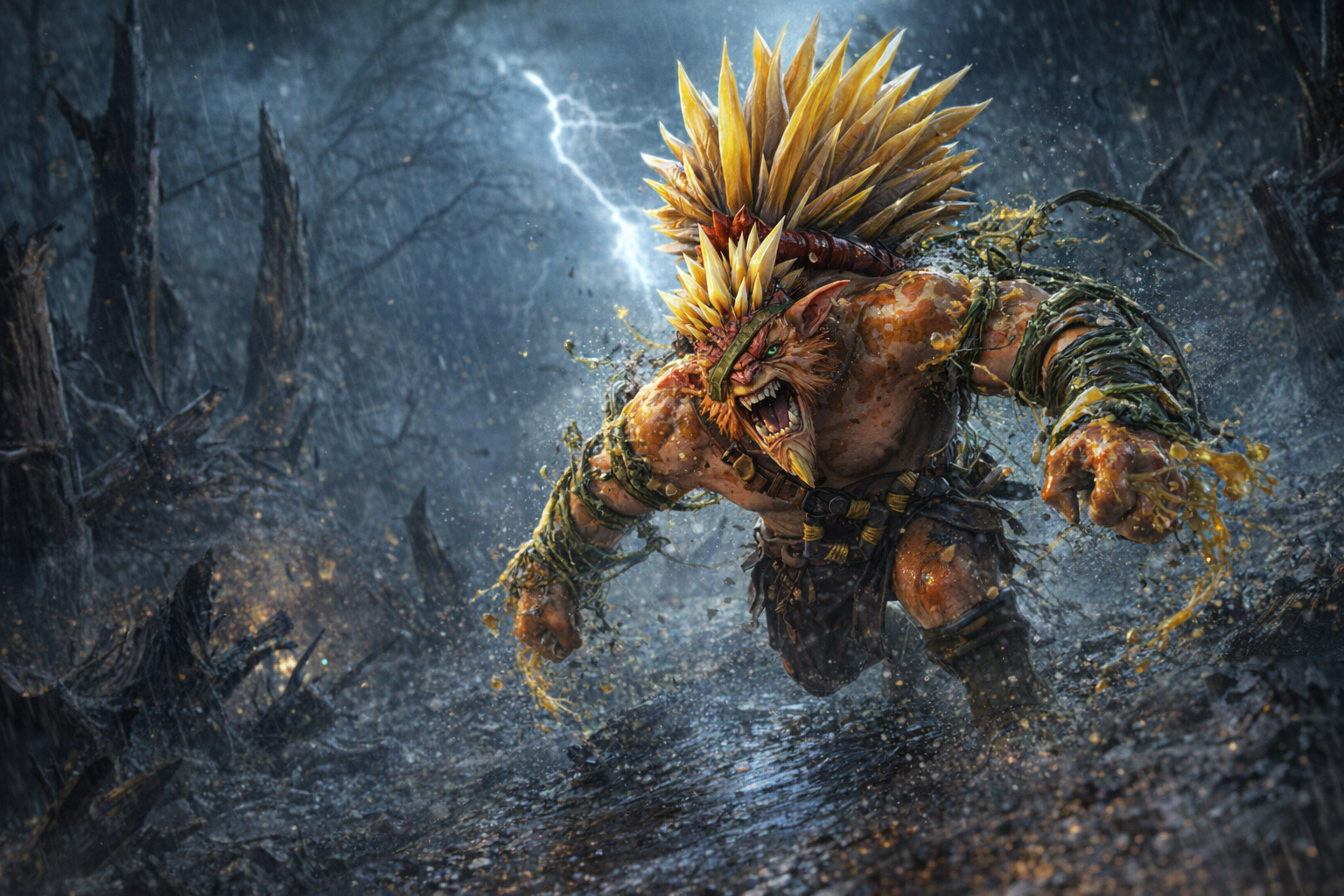
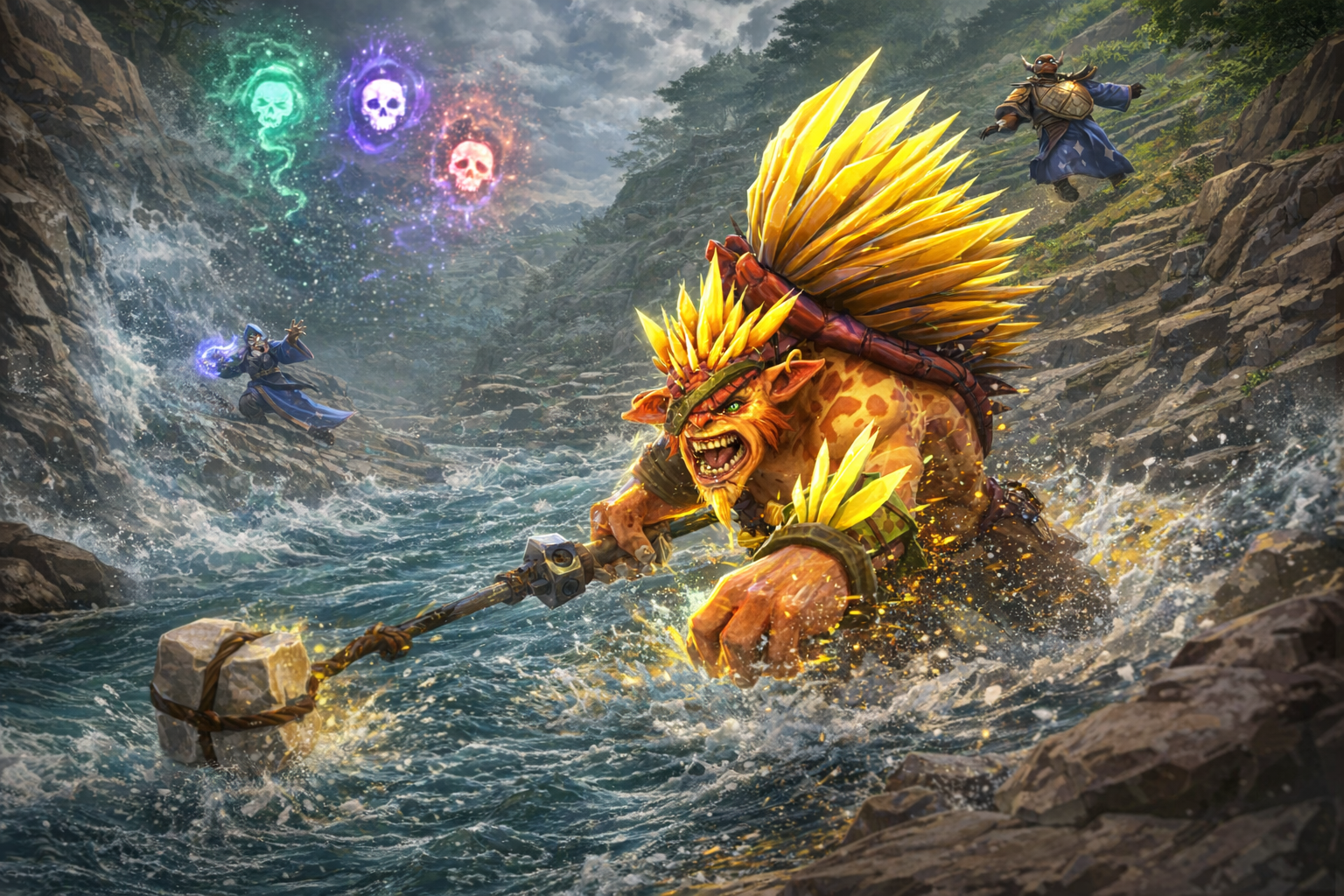
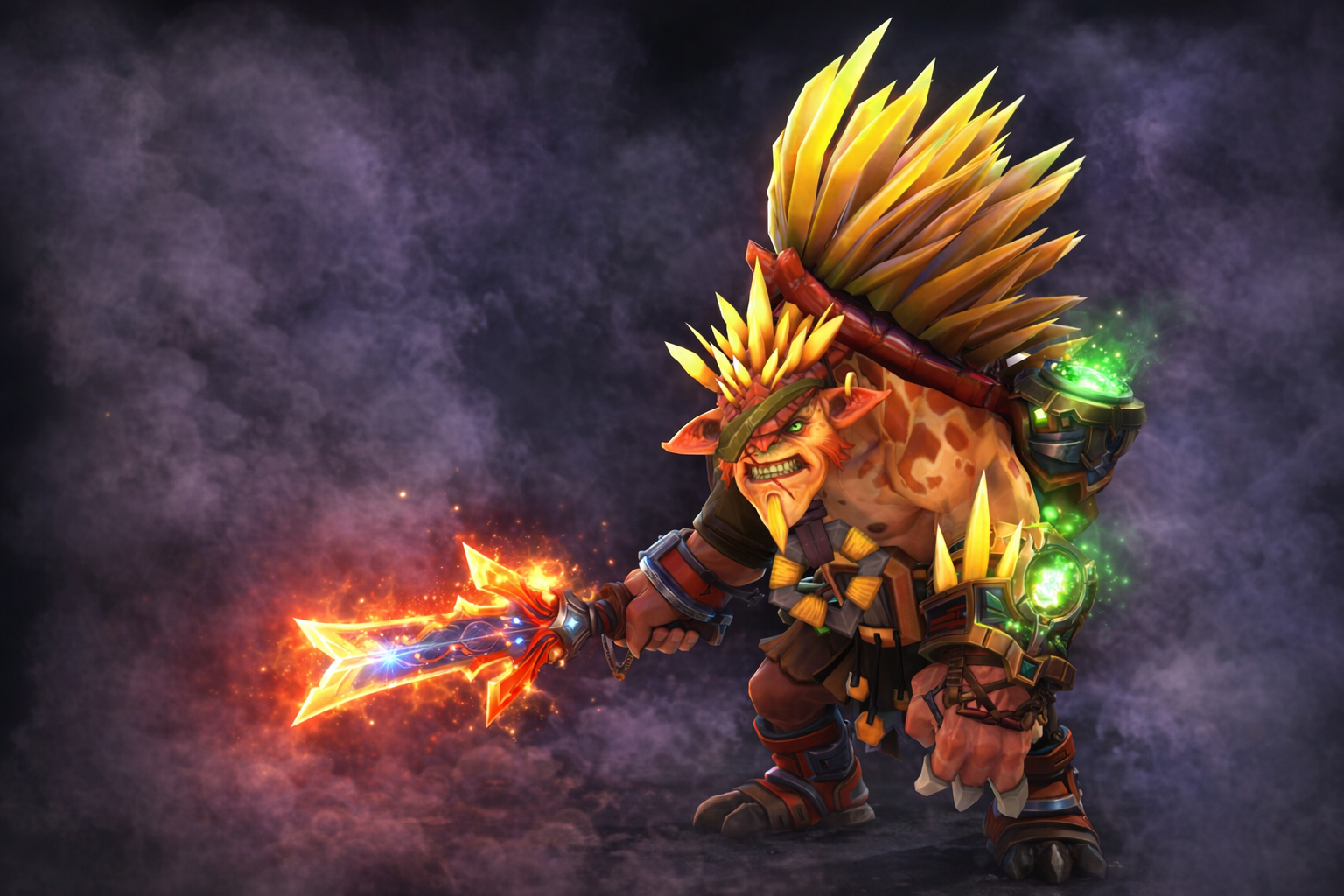
You know the game. Lane went well, your Vanguard timing was clean, the enemy supports already regret walking into quills, and every fight starts the same way: you run at people, they panic, then somebody finally remembers that kiting exists. Suddenly you're getting slowed, rooted, silenced, poked from just outside your comfort zone, and all that raw HP you dreamed about doesn't help you stay on top of anyone.
That moment is where Bristleback itemization stops being about looking tanky and starts being about functioning. Heart is the big obvious prize. Sange and Yasha is the item that often lets you actually play Dota on the way there.
The Bristleback trap: surviving without connecting
Bristleback is one of those heroes that makes players overvalue visible durability. More health feels correct. More regeneration feels correct. If your job is to stand in front, soak spells, and keep spraying damage through Quill Spray and Goo, then a giant HP item looks like the purest version of the plan.
The problem is that Bristleback rarely loses fights because he was short one chunk of max health. He loses fights because he gets managed. He gets slowed enough to stop sticking. He gets controlled long enough for the enemy to reposition. He gets forced into awkward angles where his back passive matters less and his damage output drops because he can't stay in the middle of the mess.
Bristle wins extended contact. Anything that helps you maintain contact has absurd value, even if it doesn't scream "raid boss" in the inventory.
What Sange and Yasha actually does for Bristle
Sange and Yasha is one of those items whose value gets underestimated because none of its benefits arrive with fireworks. You buy it and everything just feels smoother. On a hero like Bristleback, smoothness is brutal.
Movement speed turns pressure into kills
Bristle is at his best when every step forward threatens a bad trade. Bonus movement speed matters more on heroes who already want to live in people's faces, because each extra bit of pace helps you stay in quill range, keep Goo stacks relevant, and punish bad positioning before the enemy can reset.
Heart gives you bulk. Sange and Yasha helps you arrive.
That distinction matters a lot in real games. If the enemy lineup has mobile cores, support slows, force repositioning, or just enough disengage to buy two seconds, then being faster changes the entire fight. You don't need to kill a target in one burst on Bristle. You need to keep the fight dirty and close for long enough that their resources run out first.
Status resistance is the hidden headline
The biggest reason Sange and Yasha shows up on Bristleback is status resistance. That's the stat that keeps your game from falling apart when the enemy finally stops pretending they can manfight you.
Bristleback hates any form of control that creates distance or delays his damage cycle. A shorter disable means less time spent standing still while your target escapes. A shorter silence means you get back to casting. A shorter root or slow window means fewer wasted seconds where you're alive, tanky, and doing almost nothing meaningful.
This is why Sange and Yasha often feels stronger than its raw survivability would suggest. The item doesn't just keep you alive. It preserves your uptime. On Bristleback, uptime is damage, threat, and tankiness all folded together. If you're moving and casting, you're harder to kill, because your passive matters more when you're angled properly and your constant spell output punishes anyone trying to stay near you.
The stat spread is all usable
Bristle loves items where every piece contributes. He wants health. He likes damage well enough because he still right-clicks during chases and brawls. He appreciates attack speed more than people sometimes admit, especially in messy extended fights where every extra hit helps apply pressure and makes your hero feel less one-dimensional.
Sange and Yasha gives a broad package that doesn't get wasted. There isn't some awkward component that sits dead in your inventory while you wait for the active to matter. You buy it and the hero immediately feels more complete.
That matters in midgame Dota, where small efficiency edges decide whether your lead expands or stalls.
Why Heart can be weaker than it looks on timing
Heart is still a great Bristle item in plenty of games. The point isn't to demote it. The point is to understand what you're buying when you rush it.
Heart gives a massive health swing and the kind of regeneration that makes siege, resets, and prolonged map pressure much easier. In games where the enemy struggles to threaten you through your existing armor, damage reduction, and positioning, Heart can make you feel immortal.
But timing matters. A midgame Heart can also be clunky in games where the enemy answer to you is kiting rather than bursting. If they aren't close to killing you anyway, then spending a huge amount of gold on even more max HP doesn't solve the real problem. You become harder to bring down while still being vulnerable to the same spacing issues.
That's why Sange and Yasha frequently shows up first in strong games. It keeps your pressure window open. It's cheaper, it arrives earlier, and it upgrades the exact things that help Bristle convert momentum into map control.
You win a lane, pick up your survivability pieces, and then ask the next question: do you need more raw life, or do you need to stop enemies from slipping the leash? A lot of the time, the second answer is the one that actually wins fights.
Sange and Yasha is a tempo item disguised as comfort
When the game is going well
If you're ahead, Sange and Yasha often functions as a "keep rolling" purchase. You already have enough tankiness to front line. You already force reactions. What you need is a way to keep showing up first, staying connected, and punishing every skirmish before the enemy finishes their answers.
Heart is often stronger once the game has already stabilized into bigger, slower fights around towers, Roshan, and high ground. Sange and Yasha is better at keeping the midgame violent.
That tempo angle matters a lot on Bristle because his strongest games often come from making the map feel unplayable early. Enemy supports can't hold a lane. Side camps get invaded. Objectives become awkward because every fight drags on in your preferred range. An item that helps you chase one more screen, shrug off one more disable, and keep the pressure constant can easily generate more practical value than a greedier durability spike.
When the enemy draft wants to kite
If the enemy team has multiple slows, long-range poke, and heroes that want to disengage and re-engage, Sange and Yasha starts looking much less optional.
Bristle hates being treated like a large creep. He wants commitment. He wants bodies nearby. He wants panic. Kiting drafts try to deny all of that. They force you to spend half the fight moving instead of damaging, then turn back once your target selection and angle are compromised.
Sange and Yasha helps break that pattern. You become less miserable to play into slows and control. You cover distance better. You spend fewer total seconds waiting to resume your actual job.
That doesn't mean it solves every anti-Bristle problem. Some games still demand a Black King Bar, a dispel, or a more specific answer. It does mean the item addresses a very common way people beat the hero in normal pubs.
The pub-level mistake: treating itemization like a script
A lot of Bristleback players fall into one of two habits.
The first is buying every durability item they can think of and becoming impossible to kill but easy to ignore.
The second is copying a replay build without asking what problem the item solved in that game.
Sange and Yasha sits right in the middle of those mistakes because it looks generic. Players see broad stats and assume it's a luxury flourish. On Bristle, it can be a very practical fix.
If you're already surviving the first round of spells, your next priority often isn't more survival. It's making sure survival converts into damage and presence. The item helps with that conversion.
That said, there are plenty of games where you should skip it. If the enemy can actually burst you through your current inventory, then more anti-kite utility may not be enough. If you desperately need a specific defensive answer, buy the answer. If your team needs an aura item to function, buy the aura item. Bristleback has room to adapt, and rigid build worship usually punishes this hero harder than most because his effectiveness changes so much based on whether enemies can disengage cleanly.
How to decide in your own games
Buy Sange and Yasha when your hero already works
This is the cleanest heuristic.
When you're able to walk into fights, cast spells, and force attention, Sange and Yasha often amplifies that state better than a slower luxury purchase. It improves the chase. It softens disable chains. It makes every fight feel a little more unfair for the enemy.
Think of it as an accelerator. Your engine is already running. The item helps you stay in the sweet spot where Bristleback overwhelms people through constant contact.
Skip it when you need a direct answer
There are games where broad efficiency gets crushed by a specific problem. Maybe the issue is break. Maybe it's heavy magic damage. Maybe you need debuff management. Maybe your team composition demands that you buy an aura before anything else.
Sange and Yasha is strong because it enhances Bristle's natural game. It loses value when the match asks you to patch a hole rather than sharpen a strength.
Don't confuse comfort with inevitability
Heart often feels amazing the second you finish it. You get the huge HP pool, the sustain, the confidence to posture anywhere. That feeling is real. It just isn't automatic proof that it was the best timing.
A lot of games are decided before Heart gets to express its full value. If Sange and Yasha lets you win two earlier fights, hold enemy territory, and keep control of the map, then the cheaper item may have done more heavy lifting even if Heart still ends up in your inventory later.
Why the item feels so good on this specific hero
Bristleback has always been a hero built around friction. He wants the enemy's decisions to feel bad. Ignore him and you lose space. Commit on him and you get stuck in a long ugly fight. Focus someone else and he keeps waddling through the middle spraying damage until the whole thing collapses.
Sange and Yasha increases that friction.
You slow him and it matters less. You stun him and the window closes faster. You try to retreat and he's still there. You try to keep the fight clean and he keeps dragging it back into the mud.
That's why the item keeps showing up before Heart in games where Bristle is already online. It turns a durable frontliner into a durable frontliner who is much harder to manage. And in Dota, being unkillable is nice. Being unavoidable wins more fights.