TI Teams Are Still Bleeding Games on the Map
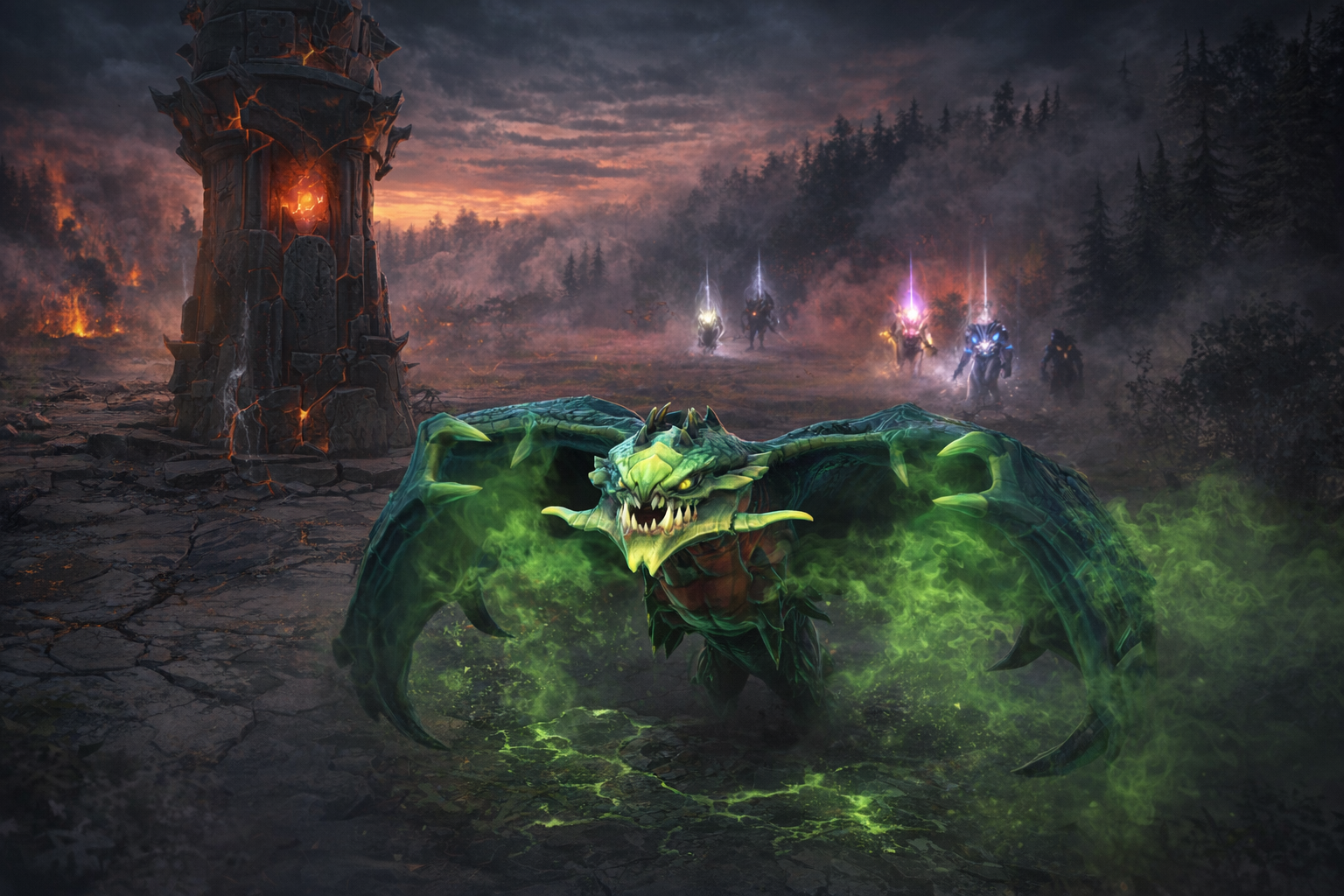
People hear macro and picture some grand chessboard where captains see twelve moves ahead. In practice, it looks like your Viper waddling into a tier-two with one defensive ward behind him, two lanes pushing into his own towers, and every enemy TP still available. The spellcasting can be perfect and the net worth lead can be real, but the second he dies there, the whole game snaps back to even. That is the TI macro problem: elite teams still win fights they never should have taken and lose maps they were supposed to own.
TI-level Dota has never been cleaner mechanically. Supports body-block camps by instinct, cores drag waves under pressure, mid players squeeze value out of every bottle refill and rune spawn. Yet the map still exposes teams that look untouchable in skirmishes. The gap between good Dota and championship Dota often lives in the boring seconds before anything explodes.
Macro Is the Part Before the Clip
The highlight reel starts when a support gets deleted or a carry turns a fight with one perfect spell immunity timing. Macro starts earlier: which lane was pushed, which hero was showing, whose TP was available, where the next creep wave would be, whether Roshan mattered yet, whether the enemy wanted you to hit that tower.
That last part decides games.
A tier-two tower is rarely just a building. It is a trap with a health bar. When a team walks into it without controlling the nearby wave paths and vision pockets, the defending side gets to choose the angle. They can smoke from the triangle, wrap from mid, TP behind the tower, or simply glyph long enough for the fight to become miserable. The attacking team feels active because it is hitting an objective. The defending team feels blessed because five enemy heroes have voluntarily stood in the one part of the map where the comeback fight is easiest to start.
This is why “we got a tower” can be a low-quality objective. If the price is a core death, two buybacks, lost Roshan control, and reset lanes, the tower was bait. Elite teams know this in theory. Under tournament pressure, with a lead burning a hole in their pocket, they still drift into the old pub instinct: win fight, hit nearest thing, hope the map agrees.
The map does not care about your momentum.
The Difference Between Pressure and Exposure
Pressure means the enemy has to answer you on bad terms. Exposure means the enemy gets to answer you on good terms.
A pushed side lane applying chip damage to a tower while your team controls the river is pressure. A core hitting that same tower while two allied waves are dead and the enemy supports are missing is exposure. The visual looks similar: hero attacking building. The strategic meaning is completely different.
Good macro turns every enemy response into a concession. If they defend top, they lose mid vision. If they smoke into your triangle, their safe lane gets shoved into the tower. If they bring the carry to a fight, Roshan becomes vulnerable. The best teams are brutal because they make every choice feel wrong.
Weak macro offers the opponent one clean answer.
That is what makes some high-level throws so painful. The mistake rarely looks insane in isolation. A hero farms one more wave. A team pokes a tower for a few extra hits. A support places a deep ward without the next wave shoved. A mid hero shows in front of the objective before the rest of the team is actually ready to connect. Each decision is small enough to defend. Together, they turn a winning map into a forced fight without the conditions that made the team strong in the first place.
Dota punishes that harder now because heroes cross the map quickly, supports scale, and one lost fight can flip vision across an entire quadrant. The old fantasy of slowly strangling a team while casually farming all three lanes has fewer safe windows. If you give a top team a clean smoke angle, they will turn your “pressure” into a tombstone.
The Mechanical Details That Actually Matter
Macro talk gets vague fast, so strip it down to mechanics you can verify during a game.
Lane state decides whether your move is real
If your lanes are pushed, your smoke has threat behind it. If your lanes are shoved into you, your smoke has a timer and the enemy knows where you probably came from. Creeps are free information. Every wave tells the enemy where someone recently stood, where someone must go next, and whether an objective can be taken after a kill.
That is why a five-man smoke from a dead map often feels desperate. Even if it finds a kill, the team may lack the wave position to convert. The victim dies, buys time, and the map returns to its previous shape. A clean macro move starts with the lanes already doing work.
TP cooldowns define commitment
You cannot evaluate a tower hit without checking who can join. A hero farming the opposite side of the map may be irrelevant if their TP is down. A support showing bottom may still be the first hero in the fight if they have a tower to TP to and a short path through fog.
Great teams track this constantly. Shaky teams behave as if enemy heroes are glued to their current lane. That is how a harmless-looking siege becomes a collapse. The defending lineup had more bodies available than the attackers respected.
Vision is about entrances, not pretty wards
A ward that sees the tower is often less valuable than a ward that sees the path to the tower. The danger usually arrives from the side, from behind, or through a smoke that breaks on the wrong hero. Offensive vision around objectives should answer the question that matters: where can they start the fight from?
This is also why sentries and positioning matter as much as the observer itself. A deep ward that dies instantly gives false confidence for one move and then leaves the next one blind. At TI, that is enough to lose the sequence.
Roshan changes the value of every fight
When Roshan is relevant, random brawls become expensive. A team that wins a skirmish near the pit can gain a second life on a core, map control, and the confidence to force the next structure. A team that dies on the wrong side lane before Roshan often loses far more than hero gold.
The best macro teams herd opponents away from the pit before taking it. The worst version is wandering into Roshan because it “feels available” while lanes are unclear and enemy initiation is missing. That is how you get the classic pit disaster: five heroes clumped, cooldowns awkward, vision shallow, and the enemy delighted.
Drafts Can Hide Bad Map Play
A broken-looking draft can cover a lot of sins. If your lineup has superior initiation, stronger lanes, and an easy Roshan hero, you can make sloppy map moves and still win because the enemy lacks the tools to punish. That does not mean the macro was good. It means the draft had enough brute force to survive the mistakes.
This creates a dangerous feedback loop at tournaments. A team wins a game after taking several low-quality fights, then treats the result as proof that the choices were sound. Against weaker opposition, that works. Against a team with better smoke discipline and cleaner wave management, the same habits get exposed in one brutal ten-minute stretch.
Draft also changes what “correct” macro looks like. A lineup with long cooldown ultimates wants different map states than a lineup built around constant skirmishing. A split-push core changes the enemy’s defensive responsibilities. A hard scaling carry may justify giving up outer space if the team can preserve key farming zones and avoid chain deaths.
The mistake is copying the shape of a move without understanding why the draft allowed it. Five heroes walking top after a won fight can be a brilliant chokehold with one lineup and a donation with another. The minimap may look identical for three seconds. Then the spells get cast, and the truth arrives.
The Ego Problem Around Tier-Twos
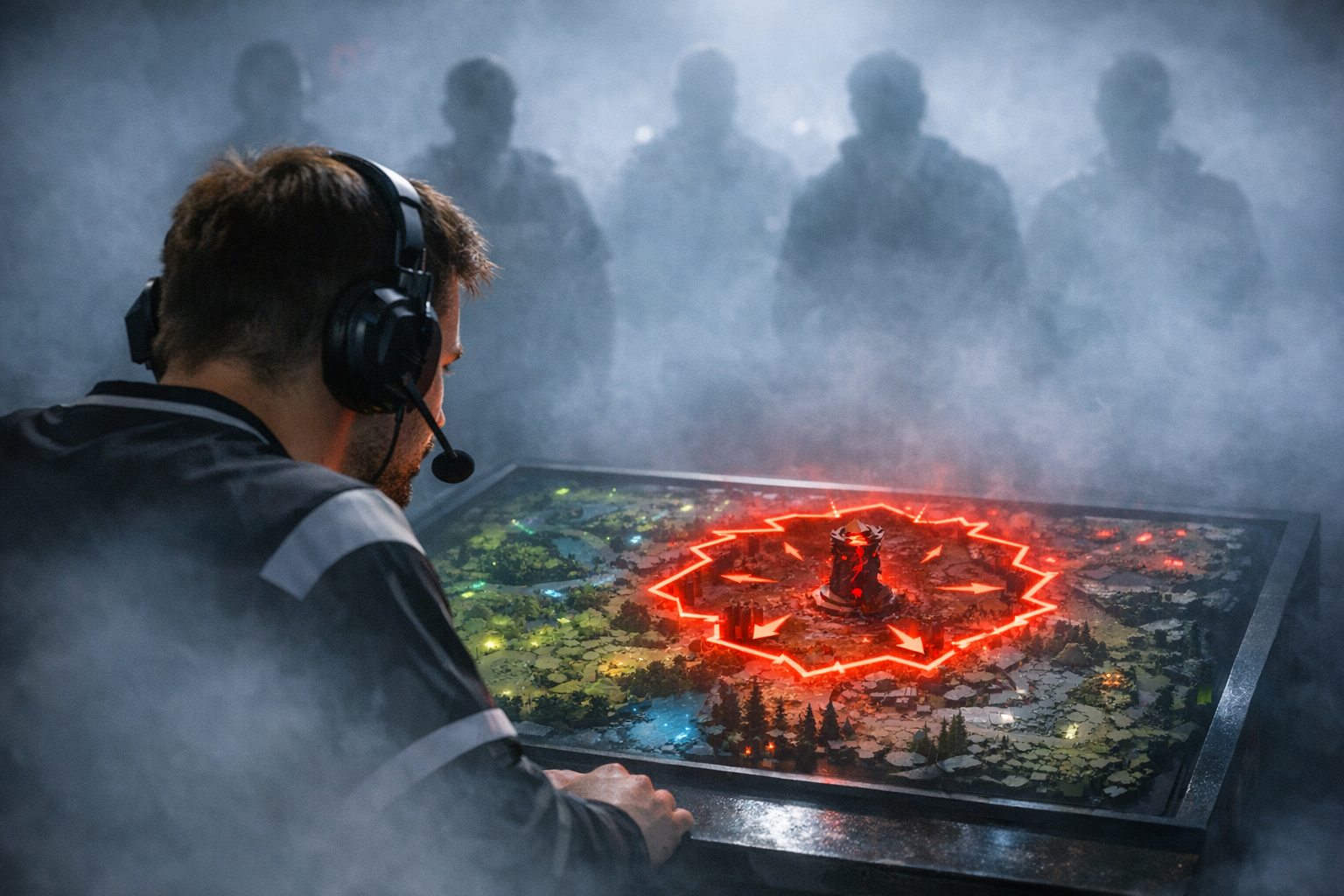
Tier-two towers are where ego goes to die.
After winning lanes, teams want tangible proof. They want the tower, the outpost access, the enemy jungle, the feeling that the map has been conquered. That urge is natural. It is also exactly what a disciplined defending team wants to exploit.
The problem with tier-two pressure is distance. You are deeper than you feel. Your supports are farther from safe exits. Your cores may be hitting a building instead of controlling the angle. Your retreat path can be cut by one smoke. If the enemy has strong catch, one hero showing too long becomes the opening.
The clean way to approach that tower usually involves suffocating the nearby farm first. Push the adjacent lane. Take away the ward line. Force a hero to reveal somewhere else. Make the defender choose between losing resources and defending under bad information. By the time the tower falls, it should feel like paperwork.
The messy way is the familiar one: win a fight, sprint to the nearest tier-two, hit it until the enemy respawns, then act surprised when the counter-initiation lands. That sequence has thrown games in every bracket since forever. The only difference at TI is that the punishment arrives with better spell usage.
Why Elite Teams Still Get It Wrong
The obvious answer is pressure, but that word gets used too cheaply. The deeper issue is that macro decisions happen through imperfect information while the clock is screaming.
A captain may know the correct map theory and still lack one crucial detail: the enemy smoke timing, the exact ward status, whether a core is willing to buy back, whether the next wave will arrive soon enough. A player may understand that hitting the tower is risky, then stay for two more attacks because the building is low and adrenaline is loud. A team may call retreat, but one hero’s pathing creates a half-second hesitation and suddenly the fight is on.
There is also the curse of elite mechanics. When you believe your players can outfight anyone, bad map states look playable. Sometimes they are. The very best teams can win fights from ugly positions because their spell layering is absurd. That makes discipline harder, not easier. Success teaches greed unless the review process is ruthless.
A top coach’s value shows up here. The job is not telling pros that dying at a tier-two is bad. They know. The job is identifying the earlier decision that made the death likely: the unpushed lane, the missing ward, the unused smoke, the wrong hero showing first, the failure to respect a buyback timer. Macro review is autopsy work. The corpse on the tower is only the last frame.
What This Means for Your Pubs
Your pub team will never execute TI macro cleanly. Good. You do not need that level of precision to steal the concept.
Start with one habit: before hitting a tier-two, look at the other lanes. If both are pushing into you, someone has to fix them. If enemy heroes are missing and your wards see nothing useful, stop pretending the tower is free. If Roshan is alive or about to matter, ask whether dying here gives it away.
Use your hero’s job honestly. A tanky offlaner standing in front is different from your mid Viper slow-walking under a tower with no exit. A support breaking smoke on purpose is different from a support face-checking because nobody wanted to buy detection. A carry hitting a building with defensive spells ready is different from a carry farming the enemy jungle while the team postures on the other side of the map.
Pubs also overvalue grouping after a won fight. Five heroes marching together feels coordinated, but it can drain the map if no waves are prepared. Often the stronger play is sending one hero to shove the next lane while the rest secure vision or reset cooldowns. The enemy respawns into a worse map instead of a single obvious defense.
Communication can stay simple. “Push mid first.” “Wait for next wave.” “They can TP behind.” “Roshan after lanes.” These calls win games because they slow down the dumbest impulses. You do not need a lecture on map theory during a ranked match. You need five seconds of restraint before your team feeds into the one tower the enemy can defend.
The Championship Edge Is Boring Until It Wins
The cleanest Dota often looks uneventful. A team takes a ward hill and the enemy never contests. A wave is shoved before a smoke and the kill turns into Roshan. A tier-two falls after the defending team has already been starved out of the area. The crowd may remember the fight, but the game was won when the losing side had no good path to start one.
That is the part even elite teams can still sharpen. Macro is not some solved layer reserved for analysts and coaches with pause screens. It is the live discipline of refusing the tempting move until the map supports it. At TI, where every player can punish a loose click and every team has rehearsed its best fight patterns, that discipline becomes the difference between a clean close and another core dying under a tier-two while everyone watching knows exactly what went wrong.