The Scepter Upgrades That Refused to Die
You queue into a pub and people obsess over the fresh stuff: the new facet, the latest lane matchup tech, the item build some pro ran twelve hours ago. Then a fight breaks out and the game flips because an ancient Scepter upgrade still does exactly what it has been doing to Dota players for years. A stun chains longer than it should, a spell keeps firing, a teamfight button gains one more brutal layer. The shiny patch notes get the headlines. The fossils still decide games.
Aghanim’s Scepter has changed more than almost any other system in Dota. It used to be a rare luxury, then it became a design playground, then a core identity piece for entire heroes. Plenty of upgrades have been rewritten, replaced, split off into Shards, or folded into base kits. A few survived all of that. Those are the interesting ones, because they show what Valve recognized early: some hero fantasies were already complete, they just needed one extra switch flipped.
When Scepter Was Still a Weird Luxury
Back in older Dota, Scepter didn’t carry the same default expectation it does now. You didn’t look at every draft and casually assume half the heroes had a meaningful timing around it. On many heroes it was pure indulgence, a late-game flex, or a win-more purchase for lineups already ahead on map control.
That older design space matters because the earliest Scepter upgrades had to justify themselves in a harsher environment. They weren’t competing with modern expectations where every hero gets some elaborate mini-rework packed into one item. They had to feel impactful enough that you would spend a huge amount of gold on them when BKB, survivability, or raw right-click scaling often looked more practical.
The upgrades that endured usually did one of two things.
They either amplified a signature spell in a way that was instantly legible, or they added an ability that fit the hero so naturally that it became part of how players mentally picture the hero. That second category is where nostalgia gets dangerous. People remember the version that stuck, not always the version that arrived first.
Ogre Magi and the Myth of Permanence
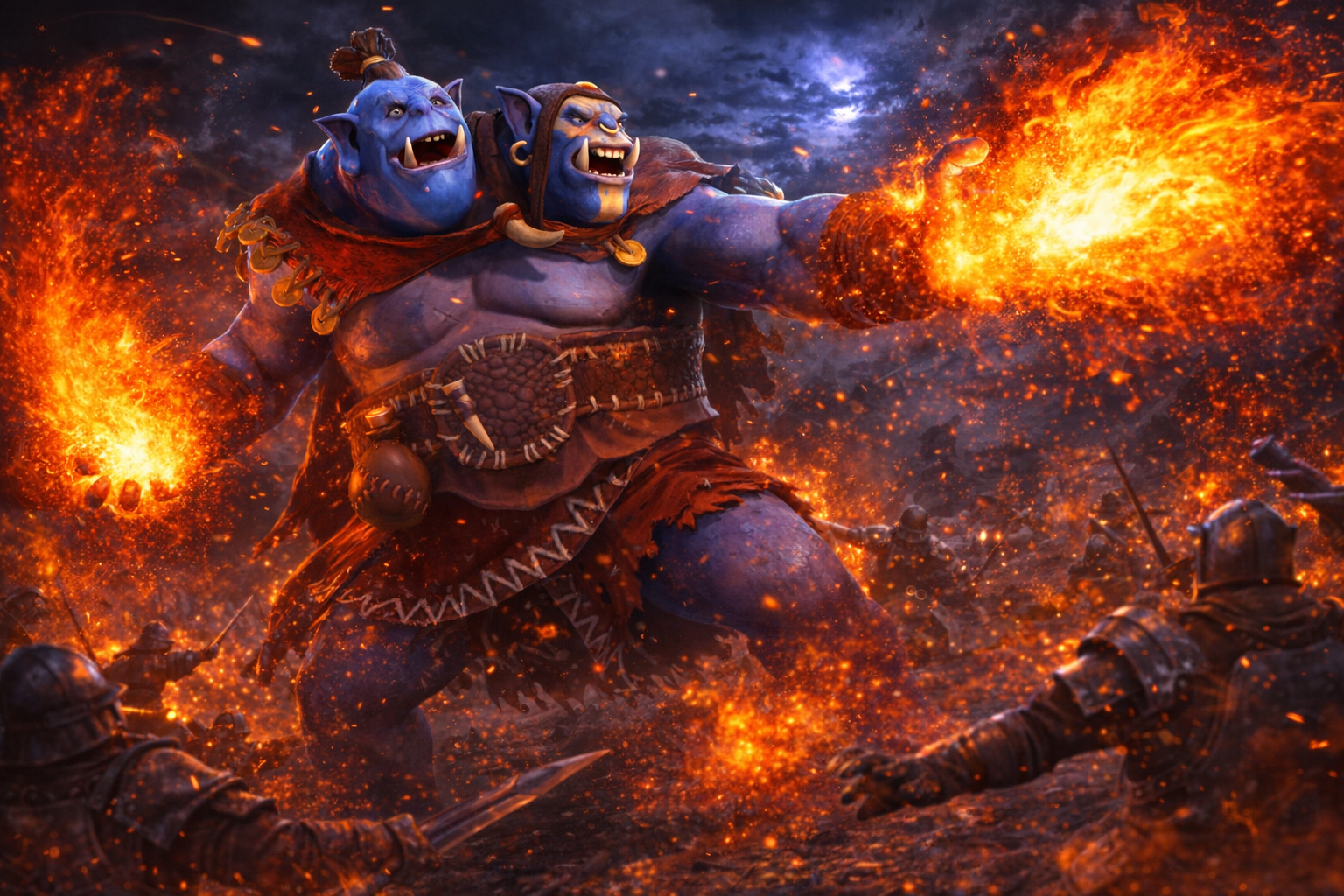
Ogre Magi always comes up in this conversation because his Scepter identity feels prehistoric. For a lot of players, Aghanim’s Scepter on Ogre is inseparable from the hero. That makes sense. Very few upgrades have shaped the feel of a hero as strongly for as long.
The catch is that Ogre’s Scepter history isn’t one clean line. The iconic modern association is Unrefined Fireblast, later joined by further improvements to his regular Fireblast. Older versions of the upgrade did different things. That matters if you’re trying to identify the oldest Scepter ideas still alive in the game rather than the oldest hero who happened to have some kind of Scepter interaction.
What survived isn’t every exact implementation. What survived is the design principle that Ogre’s Scepter should lean harder into dumb, excessive spell output. That principle has remained rock solid while the details shifted around it. You buy the item because you want the hero’s natural chaos to become even more oppressive. That idea has proved immortal.
There’s a broader lesson there. Some Scepter upgrades persist through exact mechanics. Some persist through role and fantasy. Ogre belongs to the second group. The modern version still feels ancient because the hero has been carrying that “one more fire spell, and maybe several more if Multicast feels like it” energy for ages.
Warlock’s Upgrade Stayed Familiar Because the Spell Never Lost Its Job
Warlock is one of the clearest examples of an old Scepter concept remaining recognizable across eras. The details changed. Numbers moved around. The exact stun behavior evolved. None of that changed the reason the upgrade exists.
Chaotic Offering is one of those spells that already lands with enough weight that any augmentation feels dramatic. A Scepter upgrade attached to it doesn’t need to be cute. It just needs to make the drop more punishing and the follow-up more miserable. Warlock players have been cashing in on that basic promise forever.
That longevity comes from design discipline. The upgrade doesn’t ask you to reconceptualize the hero. It sharpens the thing you already drafted him to do. You want the fight to begin on your terms, you want the enemy formation broken, and you want your summons to matter after impact instead of serving as decoration.
Warlock’s oldest surviving Scepter DNA is exactly that: make the giant teamfight spell even more of a problem. It stayed relevant because Dota never stops rewarding reliable initiation and area control in messy engagements. When teams clump on stairs, defend high ground, or posture around Roshan, old-school Warlock value never goes out of style.
Luna’s Upgrade Was Ahead of Its Time
Luna deserves more credit in this conversation because her Scepter upgrade hit on a design idea that became much more common later: let the hero temporarily break the usual limitations of a familiar spell and turn it into a spectacle.
Her old Scepter identity was tied to Eclipse becoming far more threatening through repeated Lucent Beam output. Even as the exact behavior around range and targeting evolved, the core image stayed intact. You press the button and the sky starts machine-gunning people.
That’s a genuinely durable piece of design because it scales with what Luna already wants to be doing. She thrives when she can force compact, high-damage engagements around timings. A Scepter-enhanced Eclipse turns ordinary positioning errors into instant panic. Supports explode, cores get chunked before they can commit, and fights become impossible to read because each extra beam changes whether you can stand your ground.
The reason this upgrade still feels modern is that it anticipated where Dota item design would go. It didn’t add random utility. It gave a classic ultimate a different ceiling. Players understand that immediately. They always will.
Disruptor Proves Simplicity Ages Better Than Gimmicks
There are flashier Scepter upgrades in Dota. There are more creative ones too. Very few have aged as well as Disruptor’s.
Static Storm with mute became one of those brutally clean design calls that permanently altered how players respect a hero. Before that extra layer, the spell was already a serious zone of control. Once the Scepter version entered the picture, the ability crossed into true punishment territory. Heroes trapped inside weren’t just taking damage and getting silenced. Their item-based escape valves disappeared.
That one addition fundamentally changes target priority, smoke movement, choke-point fights, and high-ground defense. A lot of upgrades claim to create “new options.” Disruptor’s actually changes enemy behavior before the spell is even cast. That is elite-tier design longevity.
You see it in pubs all the time. A carry who would normally trust one defensive item suddenly has to treat vision and spacing like life-or-death details. An offlaner can’t assume they’ll get their panic buttons off. A support caught on the edge of the storm goes from mildly inconvenienced to completely dead.
Simple upgrades survive because players never stop understanding why they matter. Disruptor’s Scepter is one sentence long in your head, and every part of that sentence wins games.
The Hard Part: What Counts as the “Same” Upgrade?
This is where the history gets messy and interesting.
There are really two ways to judge old Scepter upgrades. One approach asks whether the exact mechanic is still present. The other asks whether the original concept still defines the modern upgrade. Those are different standards, and they produce different winners.
If you use the strict standard, some heroes fall out quickly because their upgrade was replaced or transformed too heavily. If you use the broader standard, a hero like Enigma gets a stronger case. His Scepter identity has long revolved around adding another layer of area denial and punishment around Black Hole windows, even though the exact attachment and implementation changed over time.
That distinction matters because Dota’s history is full of partial inheritance. An old Scepter idea might migrate from one spell to another. A signature bonus might become base-kit, then return in altered form. A mechanic can survive while its delivery system changes completely.
For veteran players, this is why memory gets slippery. You remember the feeling first. You remember that Luna Scepter meant chaos, Warlock Scepter meant bigger teamfight consequence, Ogre Scepter meant excess, Disruptor Scepter meant no buttons for you. The patch-by-patch lineage is more complicated than the emotional truth.
Why These Upgrades Lasted While Others Vanished
The old survivors share a few traits.
They complete a hero fantasy fast
A lasting Scepter upgrade usually clicks in one cast. You don’t need a paragraph of explanation. The hero already wants to do the thing. The item lets them do more of it, do it harder, or make it harder to answer.
They matter in every skill bracket
A lot of clever mechanics die because they only sing in coordinated games. The old durable upgrades punish mistakes that appear everywhere. Bad spacing. Greedy item usage. Standing too close to a teammate. Farming one wave too far out. Timeless pub sins keep timeless Scepters relevant.
They create respect before execution
The best upgrades don’t just improve a spell after it lands. They reshape movement and decision-making beforehand. Disruptor does that. Warlock does that near objectives. Luna does that whenever your team is grouped in a way that invites commitment. These effects live in the enemy’s head.
They age well across balance eras
Numbers rise and fall. The core use case remains. That’s why some old upgrades survive years of systemic changes. They are attached to recurring truths about Dota rather than niche patch gimmicks.
Pub Dota Still Gets Ruined by Ancient Design
You can feel these old upgrades most clearly in pubs because pub Dota is full of partial information and delayed reactions.
Your team smokes into a stair fight without perfect ward coverage. Warlock gets the drop and your formation shatters. You chase one support too deep, get glimpsed back, and Static Storm turns your inventory into decorative art. You posture against Luna with clumped heroes and suddenly a skirmish becomes an Eclipse disaster. You let Ogre get rich enough to become a walking spell casino and your backline starts losing entire fights to chain control and burst.
These aren’t museum pieces. They remain functional because public games still revolve around overextension, panic, impatience, and uneven vision. Ancient Scepter concepts keep cashing those checks.
There’s also a draft lesson buried in all this. Players spend a lot of energy trying to sniff out the newest abuse case while ignoring old upgrade timings that are still brutally reliable. If your lineup struggles to disengage, old Warlock and Disruptor Scepter paths become terrifying. If your supports can’t survive compact fights, Luna’s window gets much nastier. If your spell immunity usage is sloppy or delayed, Ogre and Disruptor punish you in very different but equally humiliating ways.
Dota’s Best Item Design Leaves Fossils You Still Fear
Dota has never lacked for experimentation. Some experiments disappear for good reason. Others leave behind a permanent scar on how a hero is understood. That’s what the oldest surviving Scepter upgrades really represent.
They are proof that the strongest ideas in this game do not need constant reinvention. Give a hero one upgrade that deepens the thing players already love or hate about them, and it can survive for more than a decade with only minor surgery. That kind of design outlasts metas, map changes, and whole waves of system overhauls.
The next time somebody tells you the patch is only about whatever got added last week, look at the old Scepters still lurking in inventories. Dota keeps moving forward. Some of its deadliest ideas got there a long time ago.