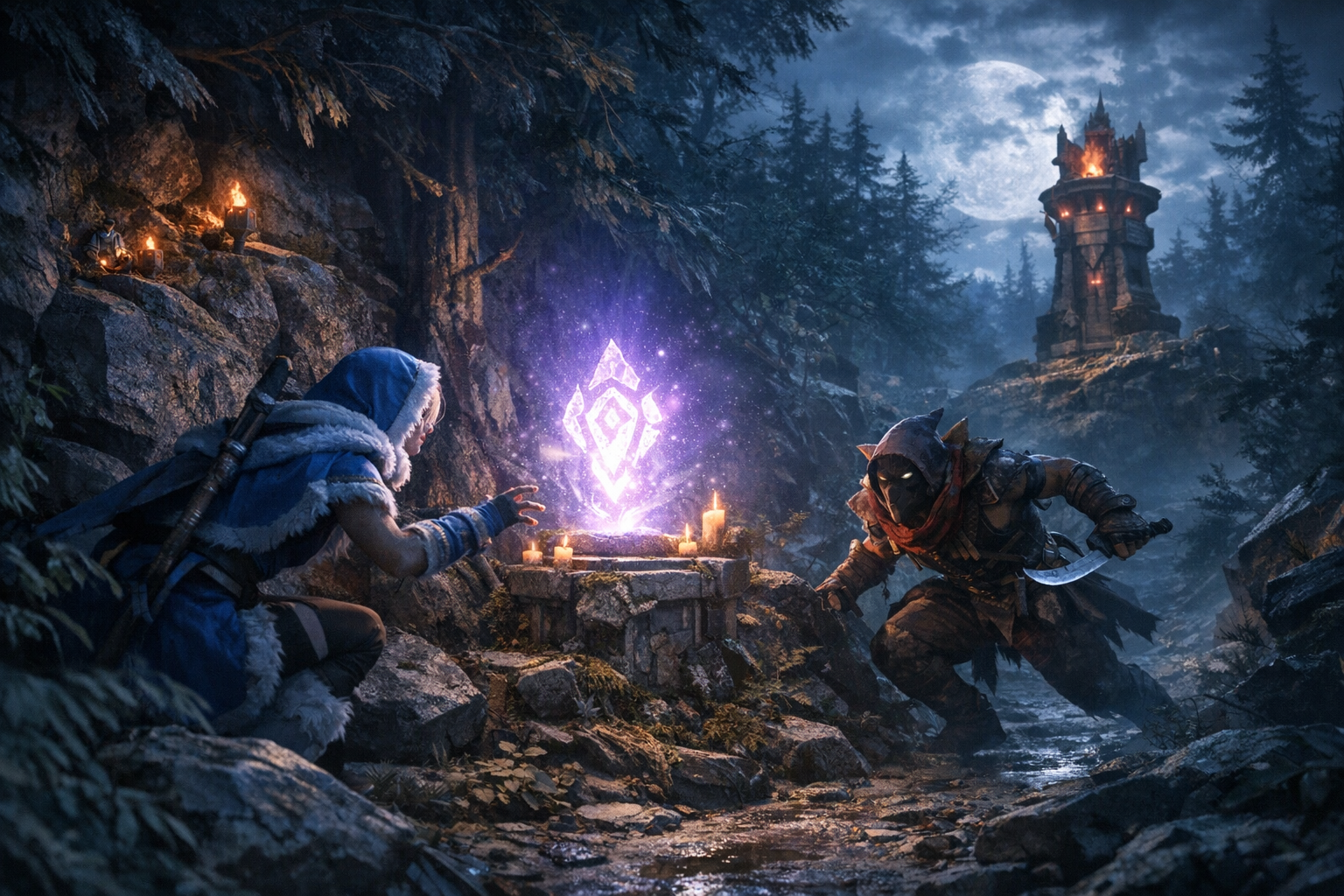
You’ve seen this game. Lanes break, both supports are underleveled, your five is still staring at level 5 when night hits, and the enemy pair suddenly has ultimates for the first real move of the match. A minute later your safelane tower is gone, your jungle is smaller, and everybody starts talking about draft or lanes or who missed a stun. Meanwhile, a chunk of that game was decided by two little pickups near the edge of the map that half the lobby treated like decorative scenery.
Wisdom runes are one of the cleanest skill checks in Dota. They reward planning, map reading, lane priority, support movement, and basic respect for timings. If you want one habit that wins more games than it should, especially below the very top end, start treating wisdom runes like real objectives instead of side errands.
Why This Objective Warps Games
Wisdom runes don’t feel dramatic. There’s no giant health bar, no teamwide gold burst splashed across the screen, no announcer moment that tells everyone to care. That’s exactly why they’re so brutal. Their impact hides inside level timings, and level timings decide who gets to play Dota first.
A support hitting level 6 on time changes the texture of the map. Suddenly the smoke move has real kill threat. Suddenly the tower defense has a big spell online. Suddenly your mid can invade with backup instead of dragging two underfarmed supports behind him and praying they contribute something before dying.
When one team consistently secures wisdom runes and the other team treats them casually, the level gap shows up fast. It’s not always flashy. Sometimes it’s just a support with enough levels to survive one extra spell cycle, or a save hero unlocking the button that actually stops a dive. Sometimes it’s a roamer getting ult exactly for the first night move. Those margins snowball because Dota punishes late arrivals. If your supports come online later, every move after that gets harder.
Experience still decides who gets initiative
Gold is obvious, so players worship it. Experience is subtler, so players forget it until they’re staring at a support duo that somehow feels impossible to fight. That feeling usually has a source.
The team with better support levels gets to start plays instead of reacting to them. They can hold towers longer. They can connect to side lanes with real threat. They can punish greedy farming patterns. Even the cores benefit indirectly because they spend less time babysitting weak heroes and more time pushing the game where they want it.
That’s why wisdom control translates into wins so often. Not because the rune itself is some magical auto-win token, but because it accelerates the most timing-sensitive heroes on the map.
The First Wisdom Runes Set the Tone
The early wisdom rune fights matter more than most players admit. A lot of games are effectively split by whether both teams arrive prepared or one team remembers at the last second and sends whichever support is least busy.
At stronger levels of play, this timing gets treated like a real appointment. Lanes are shoved with purpose. Heroes start drifting early. Vision gets placed with the objective in mind. TPs are held for the play instead of burned five seconds earlier for some low-value skirmish. That’s not overthinking. That’s just respecting how much one level can change the next three minutes.
At weaker levels, wisdom often becomes a convenience check. If someone happens to be nearby, great. If not, maybe next time. That’s a huge leak.
What the first contest really buys you
If your support pair reaches key levels earlier, your first tower pressure gets cleaner. Your first smoke has better odds. Your reaction to enemy rotation improves. Nightfall often becomes the point where this is obvious. Supports with ultimates at that timing turn ordinary moves into tower trades or clean kills. Supports who are still crawling toward level 6 become baggage.
This is why the first two rune windows feel so disproportionate. They land right when supports are trying to graduate from lane assistants into actual map pieces. Helping your side make that jump first is one of the highest-value things you can do with a tiny amount of coordination.
The Biggest Mistake: Treating Wisdom Like a Support Chore
This objective belongs to the whole team. Supports usually pick it up, but cores decide whether it is free, contested, or impossible.
That distinction matters. A mid who shoves one extra wave before moving, an offlaner who drags attention toward the enemy tower, or a carry who simply communicates that the opposing four has left lane can create the window that secures the rune. You don’t need to abandon your game. You need to understand that objective control starts before somebody clicks the thing.
A lot of mids already know the exact travel time from lane to rune. That’s not obsessive behavior. That’s practical Dota. If you can influence the fight by arriving on time, you should know your route and your timing the same way you know bottle refills or power rune windows.
Thirty seconds early is on time
The best preparation for wisdom doesn’t happen on the spawn. It happens earlier.
You want lanes in a state where leaving costs the least. You want likely approach paths visible. You want to know whether the enemy support is missing because they’re warding, rotating, or already camping the rune area. You want to decide whether you’re contesting directly, trading sides, or punishing their movement somewhere else.
If your team starts thinking about wisdom only when it appears, you’re already reacting. Dota loves proactive players and taxes everyone else.
When “Getting Both” Means More Than the Rune
There’s a trap in the way people talk about any objective with a strong win correlation. If one team gets every wisdom rune on both sides of the map, that team usually already controls the game. They have lane priority, vision, stronger fights, and the confidence to spread heroes correctly. The rune is part of the domination, not a standalone explanation for it.
That doesn’t reduce its importance. It clarifies where the value comes from.
Securing your own wisdom consistently is a habit. Stealing the enemy one is often a reward for map control. There’s a massive difference between those two. If you’re looking for practical MMR gains, the low-hanging fruit is making sure your side stops donating free runes. That alone changes a surprising number of games.
Trying to grab both every time without the map state for it turns a good objective into a bad death. You’ve seen that too: one greedy hero walking into enemy triangle-adjacent space with no ward, no shove, no backup, and no read on missing heroes. Free experience becomes free feed.
Secure first, steal when the map allows it
That should be your default hierarchy.
Protect your own side. Read whether the enemy can contest. If they can’t, great. If they overcommit on one side and the map elsewhere is stable, then you look at a steal. If your team is ahead and choking the map properly, enemy wisdom becomes one more pressure point. If the game is even or unstable, forcing both sides can throw the tempo you were trying to build.
Why Lower Brackets Bleed So Much Value Here
The lower you go, the more objectives get judged by how loud they are. Wisdom is quiet. That makes it easy to ignore even though it pays out in one of the most precious resources in the game.
The usual pattern is simple. Players underestimate support levels, overestimate the cost of small rotations, and assume somebody else will handle it. Then the same team is confused when the enemy support suddenly has an ultimate for every important fight.
There’s also the bracket-specific truth that raw execution errors can swallow strategic edges. A support being one level up doesn’t guarantee perfect spell usage. A team that collects every wisdom rune can still botch a high ground push. Dota at lower levels is messy. That chaos doesn’t erase objective value. It just means the advantage shows up through more windows to recover rather than immediate punishment.
If your games are full of mistakes, that’s even more reason to collect reliable edges. You can’t control whether your carry decides to dive tier two with no BKB. You can control whether your supports are stronger before that bad decision happens.
How to Actually Play Around Wisdom in Pubs
You do not need pro-level choreography to abuse this. You need repeatable habits.
Mid players: your movement matters most
Mid has the best mix of access and influence. If you’re playing mid, learn your hero’s route, know when you can push and leave, and stop pretending the lane is sealed off from side objectives. One clean shove before the spawn can buy your support the space to collect safely or let you arrive first for a contest.
Even showing for a second in fog-adjacent areas changes enemy behavior. Supports hate walking into unknown territory when a mid could be collapsing on them. Use that pressure.
Offlane duos: this is your neighborhood
The wisdom rune near your offlane side should never feel accidental. This is your half of the map. Your offlaner and support can make that area miserable for the enemy if the lane is played with the timing in mind. Pulling the wave into a good spot, preserving enough resources to posture, and keeping tabs on enemy support movement all matter.
If your lane is winning, convert that into rune control. If your lane is losing, at least make the enemy work for it. Don’t lose the lane and the objective for free.
Supports: stop arriving blind
Walking in alone with no information is how you turn a good mechanic into a death timer. Use smoke if the map calls for it. Ask for a ward before the spawn instead of after you die. Ping earlier. If your core can’t move, say so and plan for a trade or a safer route.
A lot of pub supports already understand the value. The real difference-maker is whether they demand help in time.
Carries: your job is often indirect
Carry players love to believe every minute must be spent hitting creeps. Good carry play includes creating pressure that forces awkward enemy choices. If you shove a lane at the right moment, the enemy has to decide whether to defend farm, show on wave, or abandon control around the objective. That opens windows for your team.
You don’t need to personally guard every wisdom rune. You need to make it harder for the enemy to take it cleanly.
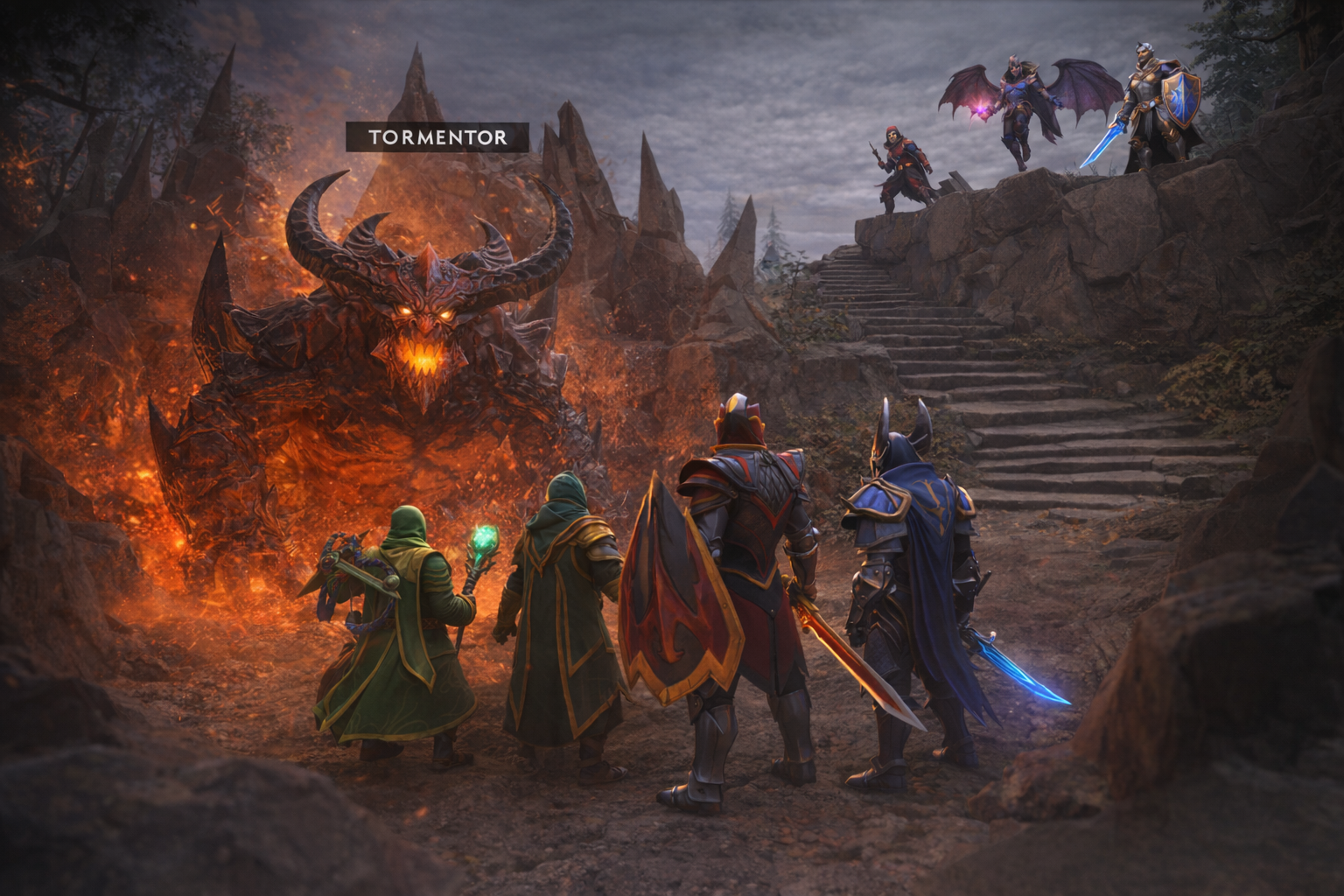
The Tormmentor Comparison, and Why Players Misread It
Wisdom runes and Tormentor get grouped together because both are side objectives that a lot of pubs mishandle. The comparison only goes so far.
Tormentor asks for commitment. You need heroes in the area, enough health and damage to take it cleanly, and some confidence that the map won’t punish the attempt. The reward can be huge, especially for supports, but the setup cost is real. If your team is scattered, weak, or blind on the map, forcing it can be worse than skipping it.
Wisdom asks for much less. The cost to secure your own side is often a shove, a read, and one or two heroes moving with purpose. That’s why wisdom is such an accessible rank-up lever. It delivers value without demanding a full team ceremony.
Players also make a common mistake with Tormentor by reducing it to the shard’s price tag. The question is rarely whether the shard has a sticker price. The question is whether your team can convert an objective into timing, inventory acceleration for support utility, or pressure while the enemy is elsewhere. Sometimes Tormentor is excellent. Sometimes it’s bait. Wisdom is far more consistently worth your attention because the entry cost is lower and the timing impact is immediate.
What High-Skill Games Understand That Everyone Else Should Copy
The cleanest difference between stronger and weaker games isn’t some secret macro doctrine. It’s respect for small timings.
High-skill players know that objectives begin before they spawn. They know that the wave state is part of the objective. They know that vision placed with a timing in mind is worth more than random defensive wards tossed out of habit. They know that support levels are part of the fighting strength of the lineup, not a side detail.
That knowledge is transferable to any bracket. Your teammates won’t always cooperate. Fine. You can still be the player who pings the timer early, shoves the correct wave, saves the TP, and recognizes when the enemy has already telegraphed their move. Plenty of games are decided by one team behaving like the map has appointments and the other team freelancing every minute.
The hidden snowball
Dota has obvious snowballs and hidden ones. Obvious snowballs are core net worth leads and towers falling. Hidden snowballs are support level leads that turn every smoke, defense, and skirmish just a little cleaner. Those hidden leads often create the obvious ones a few minutes later.
That’s the piece many players miss. Wisdom runes rarely feel like the kill shot. They feel like the setup. Then the setup becomes better fights, then better fights become tower control, then tower control becomes map ownership, and suddenly the game feels impossible to play from the other side.
If You Want the Shortcut, Build the Habit
The easiest way to gain MMR in Dota usually sounds boring because fundamentals always do. Wisdom rune control sits in that category. It doesn’t require god-tier mechanics. It doesn’t require a cheese pick or some one-patch gimmick. It asks whether you can recognize a high-value timing and act before the game forces you to.
If you want a simple upgrade, start with this. Track the spawn. Think about it early. Push your lane with purpose. Move before the rune appears. Secure your side first. Steal only when the map gives permission. Get your supports to their real hero timings faster, and your whole team gets to play sharper Dota.
That edge is sitting near an offlane tower every game. Most lobbies still leave it there.