The Four Habits Keeping Your MMR Flat
You’ve had this game before. You spot two heroes missing, your wave is shoved past the river, and your brain gives you the correct answer instantly: back up, reset, farm somewhere sane. Then you hit one more creep, maybe one more camp, and die to the rotation you already predicted. Ten seconds later you’re staring at the death timer like the game betrayed you.
That moment is the ladder in miniature. Most players don’t stay stuck because Dota is too complicated for them to understand. They stay stuck because they repeatedly violate things they already know, then call the result bad luck, bad teammates, or a rough patch. Improvement usually starts in uglier places than theorycrafting. It starts with honesty.
The gap between knowing and doing
Dota players love information. Guides, matchups, lane concepts, efficiency routes, power spikes, smoke timings, map states. All useful. None of it matters if your hands keep overruling your eyes.
A huge share of stalled players already recognize danger in real time. They see enemy heroes disappear. They understand which side of the map is unsafe. They know their TP is down, their support is showing somewhere useless, and the lane they’re standing in is bait. Then greed takes over because the camp is right there and the wave looks free and the game feels recoverable if they just squeeze a little more gold out of the map.
That decision pattern shows up in every bracket because it isn’t a knowledge test. It’s a discipline test.
Greed is rarely hidden
Most bad deaths in replay review are obvious before they happen. You can pause the screen three seconds earlier and the answer is already there. Enemy supports are off map. Mid is missing. Vision is weak. Your hero has no business being on that line. You know it, but you still tell yourself a story:
- they’re probably showing top
- this camp is fast
- I’ll leave after this wave
That internal bargaining is where MMR leaks out.
A lot of players ask for more advanced map movement advice when they need a rule simple enough to obey under pressure. If two or more enemy heroes are missing and you’re extended on a dangerous side of the map, leave. No flourish. No greed tax. No extra creep pack because your BKB is close. The point of a rule like that isn’t intellectual elegance. The point is removing negotiation from the moment where you usually lose.
Mechanical skill can hide a rotten decision tree
This is why players with solid last hitting, decent spell usage, and years of experience can still plateau hard. Their mechanics are carrying a strategic leak. Every game contains a few spots where survival is worth more than a small burst of farm. If you fail those spots over and over, the game keeps forcing you to recover from a self-inflicted wound.
And Dota punishes that harder than people admit. A death late in the laning phase or early in the map-spread phase does more than remove your hero from the map. It hands away information, opens towers, gives confidence to supports, changes warding freedom, and often turns your team’s next minute into damage control. One greedy death can flatten the tempo you spent five minutes building.
Winning lane doesn’t mean diving for proof
A second trap ruins lanes that were already won: the need to convert advantage into a kill immediately.
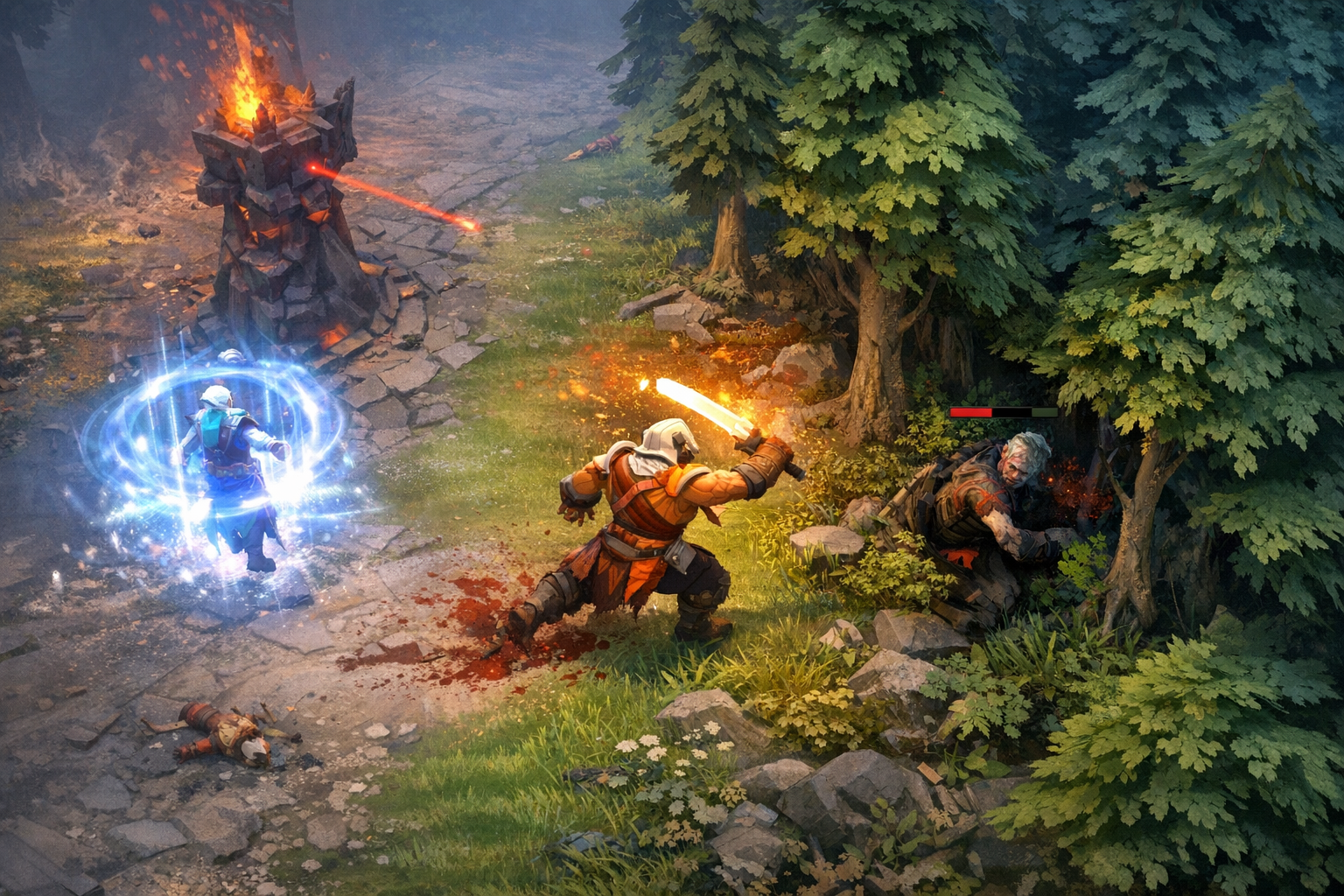
You chunk the enemy to critical HP. They’re trapped under tower. They can’t walk up to the wave without risking death. The lane is yours. Then the hunger kicks in. You dive, draw tower shots, eat the TP response, trade badly, and suddenly the opponent returns with health, regen, and a lane that exists again.
Players throw away won lanes because they don’t value denial of access enough. They still think in terms of combat resolution when the lane is already strategically solved.
Low HP is a prison sentence in lane
An enemy sitting at a sliver of health under tower is not surviving. They’re losing creeps, losing freedom, and losing the ability to contest equilibrium. That state is often worth more than the raw gold from killing them because it keeps the pressure active.
Once you die in the dive, you reset all of that.
The opponent gets to refill. The lane state can bounce. Your own TP gets taxed. Supports are forced to react. What looked like a flashy conversion becomes an equalizer handed over for free.
This mistake happens because players overvalue visible rewards. The kill popup feels real. The denied wave feels abstract. Dota’s economy doesn’t care about your emotions. A lane where the enemy cannot play is often more profitable than a lane where you force a risky kill attempt to prove you’re ahead.
Pressure is a resource
The strongest lane players understand that pressure compounds. If your opponent is too low to contest, every creep becomes awkward. Their support has to spend time babysitting. Their regen gets strained. Their jungle access gets delayed. Their next move is narrower.
That’s the lane win. Protect it.
You don’t need to force every advantage into a body on the ground. Sometimes the best move is the boring one: hold the wave where it hurts, hit creeps, threaten without committing, and make the enemy choose between bleeding slowly or calling for help. If help comes, you already got what you wanted. You created a response.
Grinding doesn’t beat math
A lot of ranked ambition collapses because players misunderstand what climbing actually requires. They look at the target MMR, count how many games they can fit into a week, and assume volume will drag them upward eventually.
Volume helps when your win rate is already strong. Volume is a treadmill when it isn’t.
Small edges decide the timescale
The difference between hovering around even and actually climbing is brutal over large samples. A tiny positive win rate feels encouraging in the short term because your medal occasionally moves. Over months, that same win rate can leave you effectively standing still.
That’s the quiet trap of autopilot queueing. You feel active because you’re playing a lot. You feel committed because you’re spending time. But ranked improvement isn’t paid out by hours alone. It’s paid out by edge.
If your win rate is barely above break-even, the climb becomes absurdly long. If your win rate jumps meaningfully, the same destination suddenly looks realistic. That should change how you treat every game. The goal isn’t to consume matches. The goal is to become the kind of player who wins a larger share of them.
Autopilot is the real MMR sink
Most players don’t need a thousand more games. They need one identified pattern removed from their play.
That could be farming unsafe dead lanes after supports show. It could be forcing last-pick hero comfort into bad drafts. It could be taking one tilted fight after every won objective. It could be refusing to buy your own detection because “someone else should.” The specific leak varies. The structure doesn’t. A recurring mistake survives because it feels normal.
Real improvement starts when you stop reviewing losses as broad emotional experiences and start treating them like repeated transactions. Where did gold swing? Which death changed map control? Which call ignored available information? Which lane decision reset an advantage?
That approach is less glamorous than talking about hidden meta tech. It works far more often.
Your queue state follows you into the game
Dota players love to act as if matchmaking is a weather system and they’re just getting hit by whatever storm rolls in. The truth is uglier. The emotional state you queue with changes the game you are capable of playing.
Tilted players don’t only type more. They interpret worse. Every missed stun from a teammate becomes proof. Every bad lane partner becomes a sentence. Every ambiguous move on the minimap gets read in the most hostile way possible. Your decisions get tighter, then sloppier. You stop using information and start using mood.
You carry your own atmosphere
Queue angry and you become easier to provoke, easier to distract, and easier to bait into bad moves. A support taking one ranged creep suddenly matters more than the wave state. A teammate’s ping feels personal. You chase arguments while objectives disappear.
Queue calm and the same game looks completely different. You still get griefers sometimes. You still get odd drafts and miserable lanes. You just retain enough bandwidth to play Dota instead of playing your own irritation.
That matters in pubs because so many games are decided by who stops functioning first. Mechanical execution drops when your attention is fragmented. Communication gets shorter and meaner. You stop making cooperative plays because you’re busy keeping score against your own team.
Don’t queue for emotional extraction
A lot of bad sessions begin before the draft. You queue because the previous game annoyed you. You queue because the day was bad and you want the match to fix your mood. You queue because you feel owed a win.
That mindset turns the game into a hostage situation. Every setback feels unacceptable because the match wasn’t just a game, it was supposed to repair something. Dota rarely rewards that expectation.
If you aren’t ready to focus, don’t treat the queue button like a coin flip that might rescue your evening. The ladder is full of players handing away MMR before horn because they entered the game already angry.
Why these mistakes show up at every bracket
The most uncomfortable truth in ranked is that many universal mistakes survive because they are emotionally satisfying in the moment.
Unsafe farm feels efficient. Diving for the kill feels decisive. Spamming games feels productive. Queuing tilted feels inevitable.
Each one gives you a short burst of relief or excitement while quietly damaging results over time. That’s why better habits feel strange at first. Backing off from an exposed wave feels passive. Holding pressure instead of diving feels cowardly. Ending a session instead of chain-queueing feels soft. The ladder rewards those choices anyway.
What this changes in your pubs tomorrow
If you want pub impact right away, strip the problem down.
Pick one recurring self-inflicted loss condition and enforce a rule against it for twenty games. Just one. Maybe it’s no farming beyond the river when multiple heroes are missing. Maybe it’s no tower dives once the lane opponent is already forced out. Maybe it’s no instant re-queue after a game where you’re visibly tilted.
You’ll learn something annoying very quickly: most of your “unlucky” games had a point where you had full agency and ignored it.
That’s good news. Agency is climbable.
The romantic version of improvement is mastering every matchup and understanding every macro branch. The practical version is cleaner. Stop donating deaths you predicted. Stop resetting lanes you already won. Stop confusing game count with progress. Stop queueing in a state where your judgment is already compromised.
The ladder gets a lot simpler once you stop beating yourself on the easy parts.