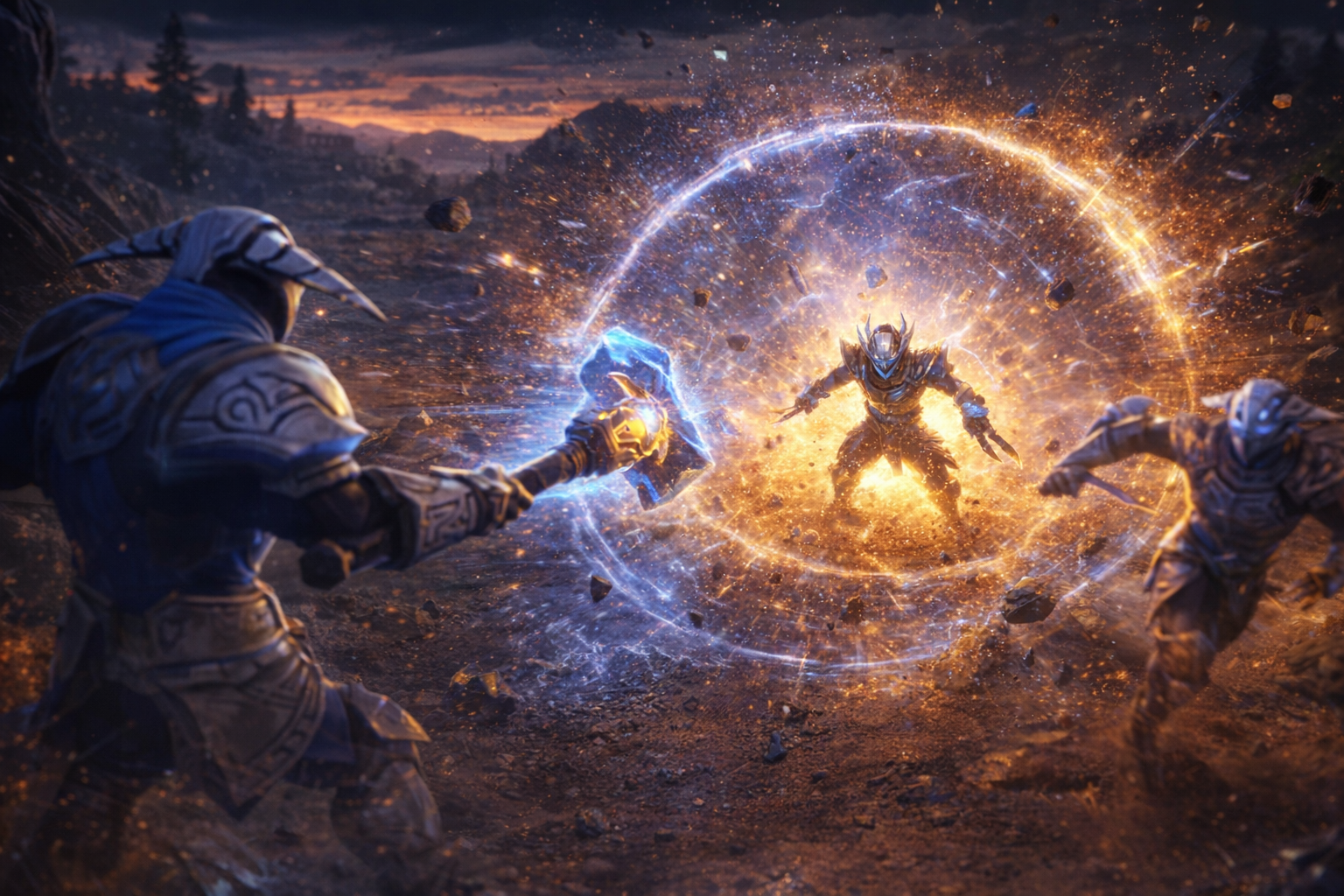
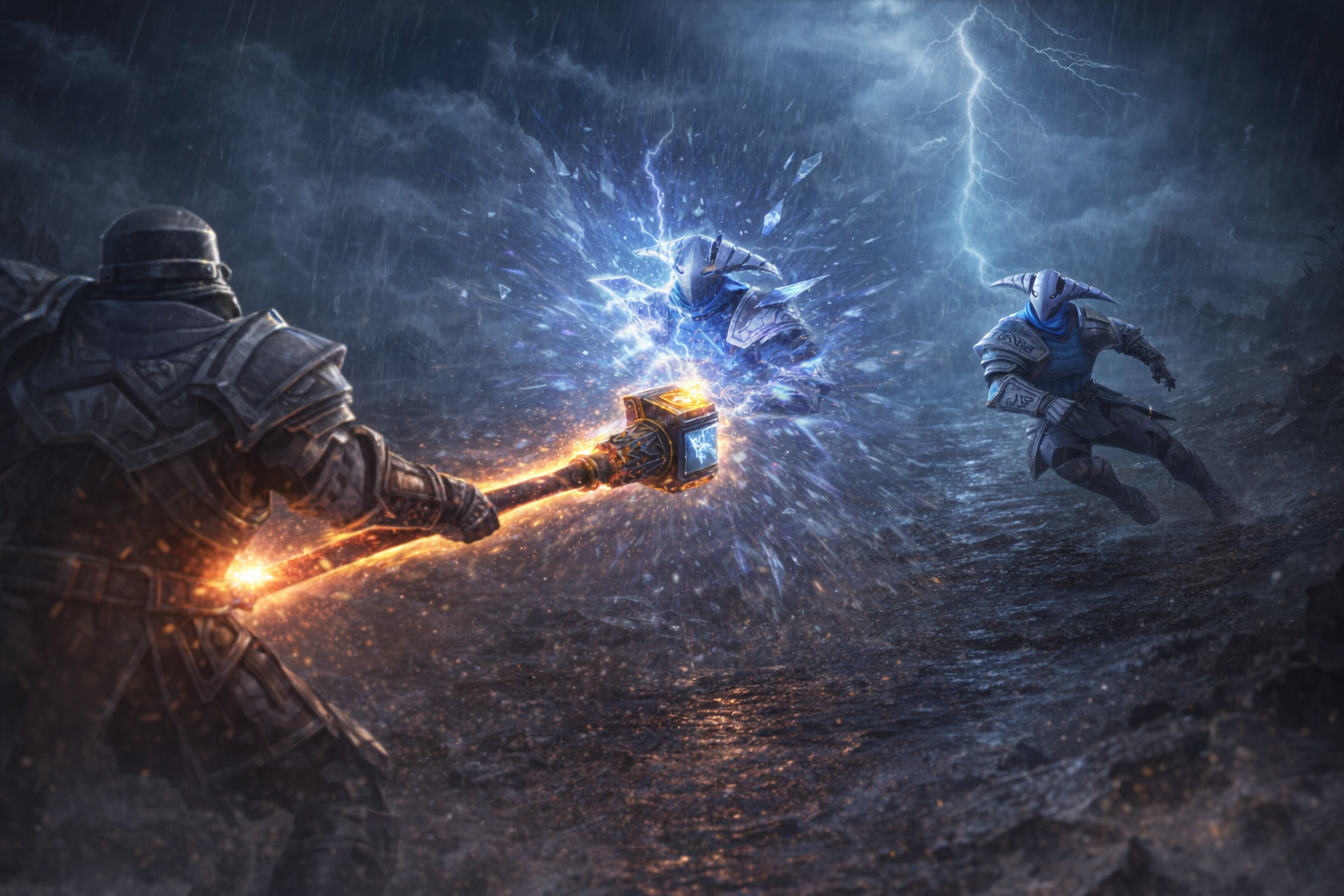
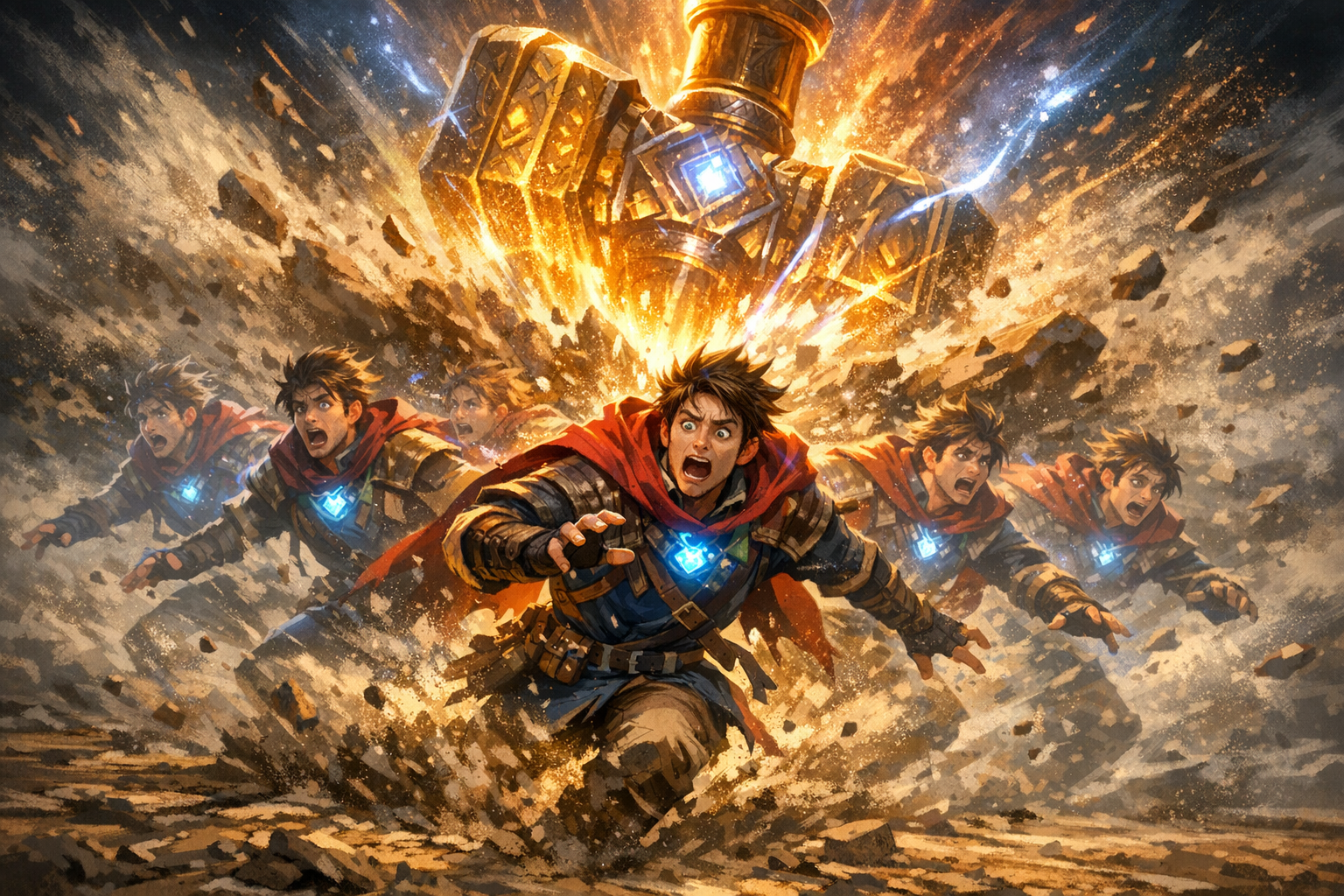
If you're trying to climb MMR through cleaner carry play, start with one repeatable habit: stop treating every incoming projectile like free Manta value. You've lived this sequence. Sven winds up, the hammer is already in the air, your fingers do the automatic Manta tap, and half a second later you're staring at your hero stunned anyway while your illusions jog forward like unpaid interns. That moment feels wrong until you understand the rule Dota is actually using.
A lot of misplays come from players mixing up three different ideas that look similar in a fight: dodging with invulnerability, disjointing a projectile, and physically moving out of an area where the spell will land. Storm Hammer sits right in the middle of that confusion. Once you separate those mechanics, the interaction stops feeling random and starts becoming something you can plan around.
The habit that saves MMR
The useful system here is simple: before you press Manta, ask which of these questions applies.
Does the incoming spell get removed from you when you disjoint it?
Does the spell still resolve even if the projectile loses its target?
If it still resolves, can your hero actually leave the impact area in time?
That mental check matters far beyond Sven. It sharpens how you use Manta, Blink, invis, sleight-like repositioning, Wind Waker, and every panic button that feels magical until Dota's rules remind you they're not.
Storm Hammer is a projectile, but that doesn't make it disjointable
Sven's stun creates one of the oldest traps in the game. You see a flying projectile, so your brain tags it as something you can break the same way you break a basic attack or many targeted spells. Dota doesn't work off visual logic alone. Every projectile has its own behavior, and some of them keep going as intended even after the original target interaction changes.
Storm Hammer has long belonged to that category. The hammer travels toward its target, but losing the target along the way does not simply erase the spell. If you use a disjoint mechanic, the projectile can lose its lock, yet the stun still resolves where it was going to connect. That's why a clean Manta timing often still leaves you stunned. You succeeded at one layer of the interaction and failed at the part that actually mattered.
That distinction is the whole story.
Disjointing versus dodging
What Manta actually gives you
Manta Style has a brief frame where your hero becomes untargetable and creates illusions. Players often call this a dodge, and in casual play that's fine, but mechanically you need to be more precise if you want consistent decisions.
Manta can do two separate jobs:
It can make some projectiles lose you as their target.
It can let you avoid effects during that tiny untargetable window.
Those are related, but they are not the same thing.
Against a projectile that fully depends on staying attached to you, Manta can feel amazing. The spell vanishes, your hero keeps running, and you look like a genius. Against Storm Hammer, the target lock breaking isn't enough by itself because the spell still creates its stun where the impact happens.
Why the stun still lands
Think of it like this: the hammer is carrying an impact point, not just your player ID. When the projectile reaches the end of that path, the area effect still occurs. If you're still standing there, you get hit. Your illusions existing does not rewrite that endpoint.
That is why players describe Storm Hammer as something you can't just Manta dodge on the way in. The important part isn't whether the projectile can be separated from your hero. The important part is that the spell still produces a stun at the destination.
The tiny loophole players mistake for a rule
There is a reason some people swear they dodged it.
They didn't cancel Storm Hammer. They got out of the landing zone.
If the projectile loses direct attachment and the stun happens at the previous location, a very fast reposition can carry your hero outside the area before impact. That's a real interaction. It just isn't reliable in most normal situations because Storm Hammer travels quickly and is usually cast from close enough range that you have very little time to leave.
That means the following can be true at the same time:
Manta disjointed the projectile behavior.
Storm Hammer still resolved.
Your hero escaped because you moved far enough, fast enough.
Those three facts sound contradictory until you realize disjointing and avoiding the final AoE are separate events.
Why Blink behaves differently than players expect
Blink introduces another layer of confusion because it creates massive instant reposition. If you Blink at the right moment, you can absolutely make the projectile lose your hero. The problem is identical to Manta's problem, only cleaner to visualize. The stun still happens at the original arrival point.
If you Blink far enough away, you won't be there when the hammer lands. Great. You escaped.
If you use a shorter reposition, or if the game state pins you in the same area, the spell can still catch you because the impact zone remains dangerous. That's why players often remember the dramatic part, "I blinked it," and forget the rule that actually saved them: they changed location enough to leave the endpoint behind.
This is also why mobility spells that continue your movement quickly after the disjoint can sometimes work better than a stationary panic Manta. The spell isn't asking whether you broke targeting. It's asking whether your hero is still inside the stun area when the effect resolves.
Dota loves exceptions, and you need to learn them on purpose
A lot of mechanic confusion comes from trying to infer rules from animation. Dota is full of spells that look like they should obey the same logic and absolutely do not.
Some targeted projectiles disappear when disjointed. Some lose the original target but still do something at the last known endpoint. Some continue because the projectile is mostly presentation and the spell logic is already committed. Some spells are famous precisely because they refuse to follow the instinct players built from dealing with more ordinary projectiles.
That doesn't make the game inconsistent in a useless way. It means your rank-up system needs a practical catalog of exceptions.
When you add a hero to your pool, spend ten minutes learning which enemy spells fall into each bucket:
Pure target-dependent spells
These are the dream Manta interactions. Break the connection and the threat is gone.
Spells with a committed impact
This is where Storm Hammer lives. The projectile can stop caring about your hero specifically while the effect still happens where the game decided it would happen.
Spells that require invulnerability timing instead of disjoint timing
These punish lazy panic presses. You need the exact untargetable frame or another defensive state, not a generic "projectile in the air" reaction.
That habit gives you a much more useful read than memorizing isolated trivia. You're building categories.
Pub impact: why this matters more than one Sven interaction
In pubs, wasted Manta uses lose fights before the stun even lands. Manta is one of the most overloaded decision buttons in the game. You buy it to split push, dispel, farm faster, confuse target priority, break certain projectiles, and create a brief survivability window. If you're pressing it under the false assumption that every flying spell can be neutralized, you're burning one of your strongest cooldowns for theater.
That mistake shows up constantly on agility carries and certain universal heroes that lean on Manta to stay slippery. The player thinks they have a reactive out against a telegraphed disable, then finds out they only created two illusions before getting chain-stunned anyway. The actual punishment comes after that. No Manta means no dispel for the follow-up silence, no extra bodies for the fight, no split pressure thirty seconds later.
Understanding Storm Hammer cleans up your entire defensive decision tree. When Sven has angle and range, your plan needs to start earlier. Position outside initiation range. Hide behind creeps and frontline bodies when that changes the cast options. Force Sven to commit onto a worse target. Save hard reposition for the hammer instead of cosmetic Manta timing. Treat Manta as a tool for the parts of the fight it reliably solves.
The defensive answers that are actually worth respecting
If your goal is surviving Sven's initiation, the best answer is the one that changes your location or your state enough that the stun no longer matters.
Distance before cast
This is the dull answer and the one that wins the most games. Sven wants a clean line to start. If your positioning already accounts for the threat radius, the interaction never becomes a reaction test.
Large instant reposition
Blink-type movement can save you because it relocates your hero away from where the impact will happen. The value comes from leaving the zone, not from some magical property of disjoint alone.
Wind Waker and similar hard defensive states
This is the kind of solution that players joke about because it feels extravagant until a game actually reaches that stage. A strong defensive cyclone-style answer can trivialize committed initiation if you have the item, the timing, and the presence of mind to use it.
Team saves
The pub obsession with solo outplay often hides the obvious answer. If your support can protect you after the stun, the exact disjoint interaction matters less than the fight structure around it. Saves, counter-initiation, and vision do more work than fancy button presses when Sven is the one choosing the engagement.
Why this interaction feels worse than it is
Part of the frustration is psychological. Manta has trained players to expect reward from crisp timing. You press it at the last possible moment, the game makes a satisfying sound, illusions appear, and your fingers tell you that you did the skillful thing. When Storm Hammer still connects, it feels like the game cheated.
The truth is harsher and more useful: the timing was clean, the read was wrong.
Dota is full of moments where execution gets too much credit and spell knowledge gets too little. This is one of them. The player with average mechanics and accurate categories will save more Manta usages over a hundred games than the player with flashy reactions and shaky assumptions.
That gap turns into MMR because it affects every phase. Laning skirmishes, triangle invasions, high-ground holds, desperate Roshan fights. Once you stop handing away Manta to spells it doesn't really answer, you arrive at the important fights with a real defensive option still available.
Build your own spell map
If you're serious about ranking up on illusion heroes, ranged agility cores, or any hero that treats Manta as a key layer of survivability, build a short private list. Put the common enemy spells into buckets: fully disjointable, committed impact, requires invulnerability, irrelevant because you should pre-position instead. Update it whenever a patch changes behavior or a hero rework reshuffles old assumptions.
That sounds dry until it saves you from one lost fight after another.
The bigger lesson from Storm Hammer is that Dota rewards exact language. "Projectile" doesn't automatically mean disjointable. "Disjointed" doesn't automatically mean harmless. "Dodged" often hides several mechanics under one sloppy word. Clean up the language in your own head and your decisions get cleaner with it.
The next time Sven throws the hammer, don't ask whether Manta looks cool there. Ask what the spell still does after the target breaks, and whether your hero can leave the place where that answer matters.