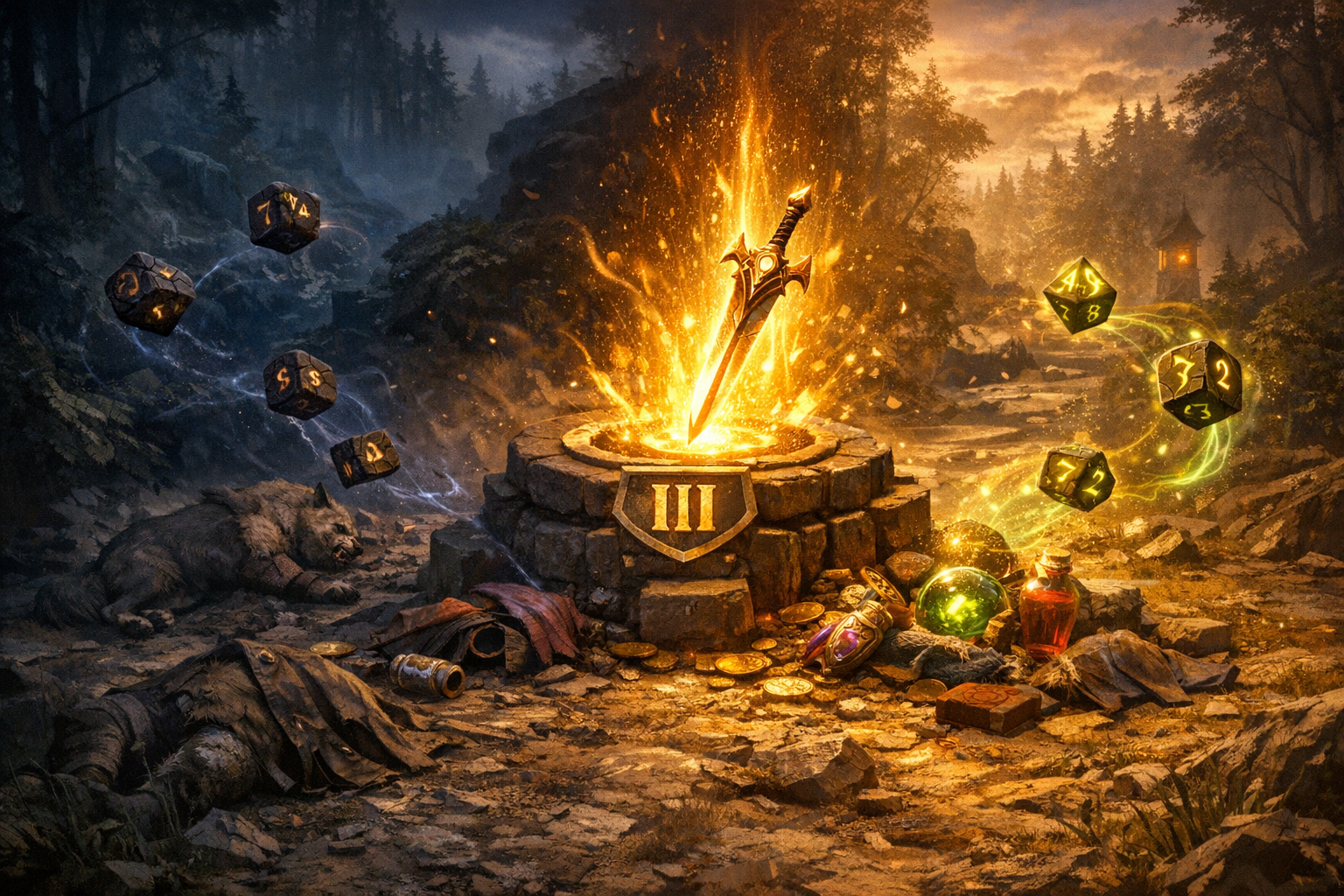
Stop Letting Neutral Items Roll the Midgame
Neutral item RNG feels awful when the game is already on a knife edge. You clear a camp, open the tier, and the item your hero actually wants just never appears. Meanwhile the enemy mid suddenly hits a clean timing with the perfect neutral and every fight after that feels like you are playing into an invisible net worth swing. Dota has always had chaos, but this kind of chaos lands differently because it sits inside your item build, the one part of the game where players expect control.
That is the real problem with neutral items right now. The system has grown from a goofy jungle bonus into a serious part of hero power, yet the access model still treats it like a little surprise box.
Neutral Items Have Outgrown the Gimmick
Neutral items made more sense when they felt like strange side rewards. You got a little stat stick, a cute utility piece, maybe something situationally annoying for the other team. They created variety without taking over the identity of a hero.
The current version carries much more weight. A neutral item can push a farming pattern, fix a lane recovery problem, turn a spellcaster into a damage threat, or give a frontliner the exact kind of durability he was missing. The neutral slot now functions like a real build slot, even though you never shop for it in the normal way.
That tension is what makes the randomness feel worse with time. Dota players can accept plenty of variance. Rune spawns, Roshan timing, neutral camp layouts, fog interactions, chaotic teamfights: the game is built on imperfect information and improvisation. Itemization sits in a different mental bucket. When you decide your hero needs Blink, BKB, Force Staff, Manta, Pipe, or Lotus, the shop does not roll dice at you. You farm, you buy, you execute.
Neutral items break that contract. They say your build has one slot where the game itself may simply deny the obvious answer.
The Mechanical Pain Point: Narrow Best-in-Slot Tiers
The system would feel much healthier if every tier gave most heroes several genuinely comparable options. Sometimes that happens. A hero opens the tier, sees two or three usable items, and makes a real choice based on the game state. Do you want tempo, survivability, damage, or mobility? That is Dota.
The frustration begins when a tier has one item that perfectly solves your problem and the alternatives feel like consolation prizes.
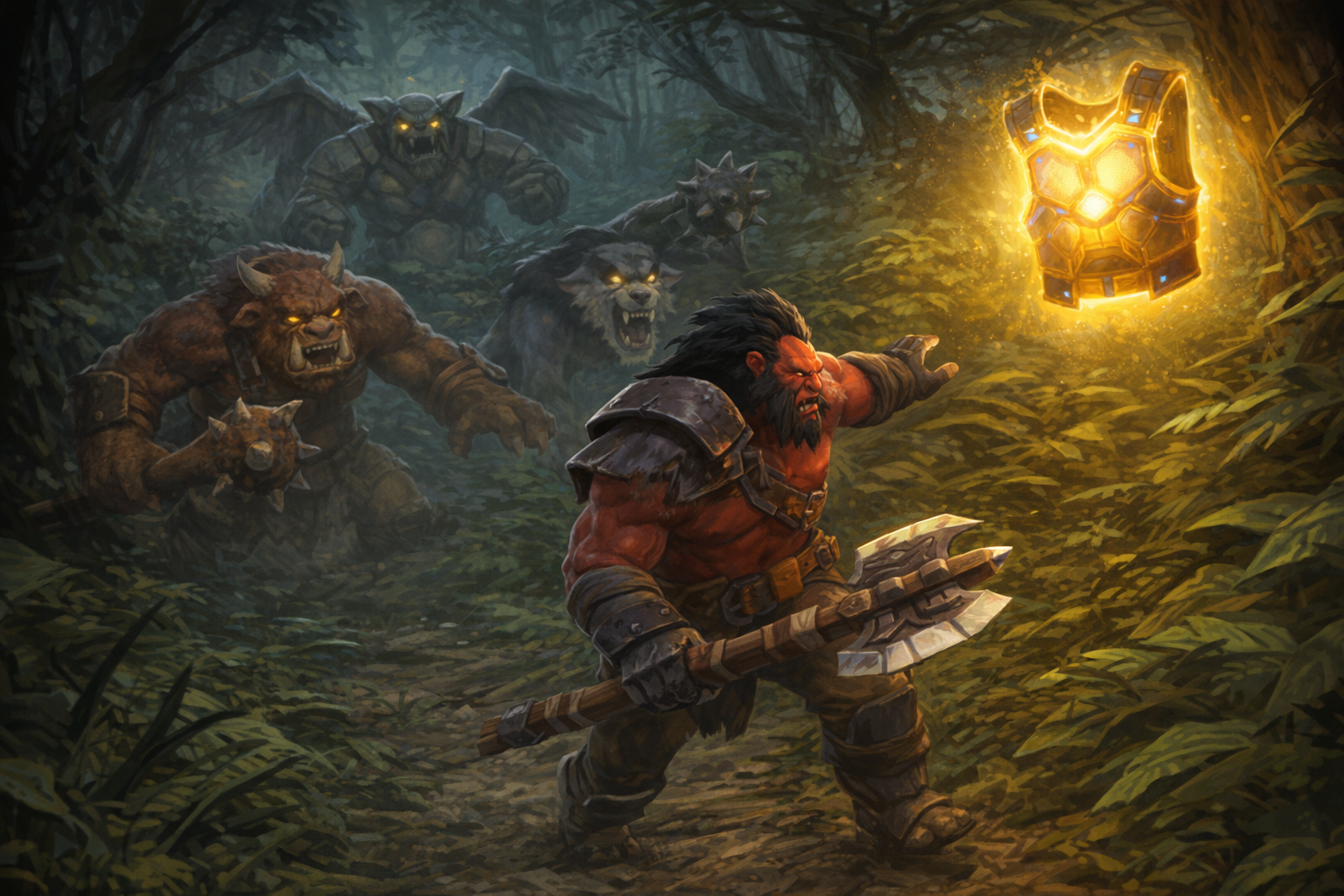
Take Axe. When his lane goes rough, a defensive jungle-friendly neutral can meaningfully change the pace of his recovery. That can be the difference between crawling toward Blink and actually getting to play the map. If the item never appears, you still have to recover, but now you are doing it with a tool that may have little connection to the problem in front of you.
Slardar shows the issue even more clearly because his neutral preferences shift with game state. If he is ahead, early attack-speed or manfight tools let him keep running at people. If he is behind against heavy ranged pressure, a defensive option can help him stop bleeding and reach his initiation timing. Later, a damage-focused neutral can make his shard-backed pickoff pattern feel disgusting against fragile supports. If the game asks him to be the body in front, he may want a more durable option instead.
Those are meaningful branches. The random pool can chop off the branch your game is pointing toward.
For spellcasters and spell-scaling cores, the same issue gets louder. Conjurer's Catalyst is the obvious example because its impact can become extremely visible in long fights and messy games where spells are flying constantly. When a hero that already wants to cast over and over gets that kind of item, the neutral slot stops feeling like a bonus and starts feeling like part of the hero’s damage engine. If your team is struggling to handle illusions, summons, or durable cores, the right spell-amplifying neutral can swing fights in a way the scoreboard does not explain cleanly until you look at damage after the game.
That is where the salt comes from. The losing side can make plenty of mistakes and still point to one truth: the enemy got access to a tool your side never had the chance to choose.
Valve Spent Years Reducing Combat Casino Moments
Dota has moved away from some of its older pure-proc weirdness over time. A lot of chance-based combat effects have been reshaped into more predictable patterns, counters, or systems players can track. The direction has generally favored readable outcomes over random spikes, with a few exceptions where the randomness is part of a hero’s soul.
Phantom Assassin critting someone into another dimension will always feel like Phantom Assassin. That hero is built around the threat of a sudden deletion. The enemy plays around it with armor, positioning, saves, kiting, break effects, and the ancient Dota ritual of saying balanced hero after dying in one animation.
Neutral item RNG has a different identity problem. It belongs to everyone. It affects heroes whose kits were never designed around chance-based item access. You can draft a lineup with a clear plan, lane into specific matchups, hit your first two item timings cleanly, and then watch the neutral tier hand your hero a set of options that barely relate to the game.
That feels out of step with modern Dota’s broader design direction. Randomness works best when it creates texture. It feels cheap when it decides which side gets the obviously superior tool for the current game.
The Best Defense of RNG Is Real, but Limited
There is one strong argument for keeping neutral item randomness: surprise is fun.
Opening a tier and adapting on the fly has a little loot-drop dopamine. It pushes players away from solving every hero into the same static route. A perfect deterministic system risks turning neutral items into another solved shop page where every Zeus picks the same spell item, every Slardar picks the same damage item, every tank picks the same defensive item, and every support grabs the same safety tool until a patch forces the spreadsheet to change.
Random access also acts as a balance valve. If the strongest neutral for a hero appeared every single game, the top end would get ugly fast. Some items only look remotely fair because the perfect user does not always see them. Remove the randomness and Valve has to balance every neutral as if its best abuser will get it on schedule whenever the tier unlocks.
That is a serious design cost. Guaranteed access would expose the busted combinations immediately. Pub players would copy the obvious picks. Pro players would refine the timing windows. The weak neutrals would disappear from serious use unless they filled a very specific niche.
Still, that defense only holds when the random choices are close enough in power. If a tier contains one item that feels like a hero’s dream and several items that feel like inventory lint, the surprise becomes a punishment roll.
Bad RNG Removes Agency Instead of Creating Adaptation

The difference between good and bad randomness is agency.
Good randomness asks you to adapt. Maybe you planned to fight, but the map state favors farming. Maybe the rune spawned top and your support rotation changes. Maybe a messy fight breaks out around a ward you did not expect. You respond with movement, spell usage, target choice, buybacks, smoke paths, and item decisions.
Bad randomness closes doors without asking anything interesting from you. If the enemy spellcaster gets a premium damage neutral and your comparable hero gets a pile of awkward options, the adaptation may be as thrilling as taking the least bad item and pretending it was a choice.
The shop analogy makes the issue obvious. Imagine loading into a game and each player gets a personal shop with a random portion of the item pool missing. Axe queues Blink, but Blink is absent, so he has to invent a Force Staff or Harpoon game. A support needs Glimmer, but the shop offers other defensive items instead. A carry wants Manta against silence, but the game says try something else.
That would be absurd because item access is how Dota lets players solve problems. Neutral items are smaller than shop items, but the principle is the same once their power becomes high enough. When a neutral provides a major solution and access is random, the game is letting the slot solve problems for one player while another player is left improvising around an absence.
Dormant Curio captures this frustration in a quieter way. The item asks you to accept weakness now for a better neutral outcome later. That trade can be interesting in slower games where the tempo gives you room. The feel-bad moment arrives when the later tier still refuses to offer what you were saving for. You paid the opportunity cost and the payoff whiffed. That kind of gamble sounds clever on paper and miserable when your high-ground defense depends on it.
Pubs Feel the Damage More Than Captains Mode Ever Could
Neutral item RNG hits pubs with extra force because pub Dota already struggles to coordinate around uneven power spikes.
In organized games, teams can identify who has the good neutral, route farm toward the next timing, smoke around a sudden item advantage, or delay fights when the enemy hit a better tier. In pubs, someone sees a shiny item and runs uphill. Someone else refuses to swap. A support quietly takes the least terrible option because the cores got priority. The enemy team’s perfect neutral becomes obvious only after your backline disappears before casting a spell.
The psychological impact matters too. Dota is a game where players tolerate suffering when they can trace it to decisions. You lost lane because you mismanaged creep equilibrium. You died because you skipped a defensive item. You threw because you chased past the tier two like a raccoon after a sandwich. Fine. Pain with a lesson is still pain, but at least it teaches.
Neutral item misses often teach very little. The lesson becomes hope the pool is kinder next time. That is poison for player trust.
The biggest pub impact appears in close games. In stomps, neutral item RNG is background noise. The winning team was already winning. In balanced games, one perfect tier-four or tier-five neutral can become the extra shove that turns a defense into a wipe. The item may contribute through raw damage, survivability, control, or simply letting one hero do his job with less risk. When the other side’s comparable tier offers nothing as clean, the match feels like it tilted on a slot nobody could plan around.
Guaranteed Access Would Create Its Own Problems
Giving every player access to every neutral item in the tier sounds clean. It would also turn neutral balance into a knife fight.
The strongest hero-item pairings would become mandatory. If a caster always has access to the premier spell option, that option must be balanced around constant availability. If a bruiser always gets the ideal brawling neutral, his midgame assumptions change. If a defensive neutral becomes the obvious answer into certain drafts, it becomes part of counter-pick math before the horn even sounds.
That future may still be better than the current lottery, but it needs honest balancing. Valve would have to flatten the outliers or redesign neutrals around sharper tradeoffs. The best neutral choices should carry costs beyond opportunity cost. More damage should mean less safety. More durability should mean less reach. More farming speed should mean weaker fighting. If every tier becomes an armory, the items must compete through tradeoffs rather than raw best-in-slot dominance.
A softer version could preserve variety without full randomness. Let players see a wider pool. Add a limited reroll. Allow teams to unlock additional options through some map action. Use hero-agnostic categories so every tier guarantees at least one defensive, offensive, and utility direction without promising the exact best item. There are plenty of systems that keep adaptation alive while reducing the number of dead rolls.
The worst middle ground is the current feeling of high-impact items gated by narrow random access. That makes balance look easier than it really is because overpowered neutrals hide behind availability. Then, when they appear on the right hero, they feel illegal.
The Standard Should Be Simple
Neutral item randomness earns its place when every offered item creates a plausible decision. It fails when the correct answer is obvious and missing.
Dota does not need every system to be perfectly deterministic. The game would be sterile if every match followed the same clean script. Randomness has a place when it changes how you navigate the map, when it asks for adaptation, when it gives you a weird tool and invites you to make something happen.
The neutral slot has become too important for lazy variance. If Valve wants neutral items to remain powerful, access needs to become more reliable. If Valve wants access to remain random, the items need to be closer in power and broader in usefulness. Pick one pressure point and balance around it.
Right now, too many games reach the same sour moment: you know what your hero needs, the tier opens, and the game simply declines. That is a lousy feeling for a system that is supposed to make itemization more interesting.