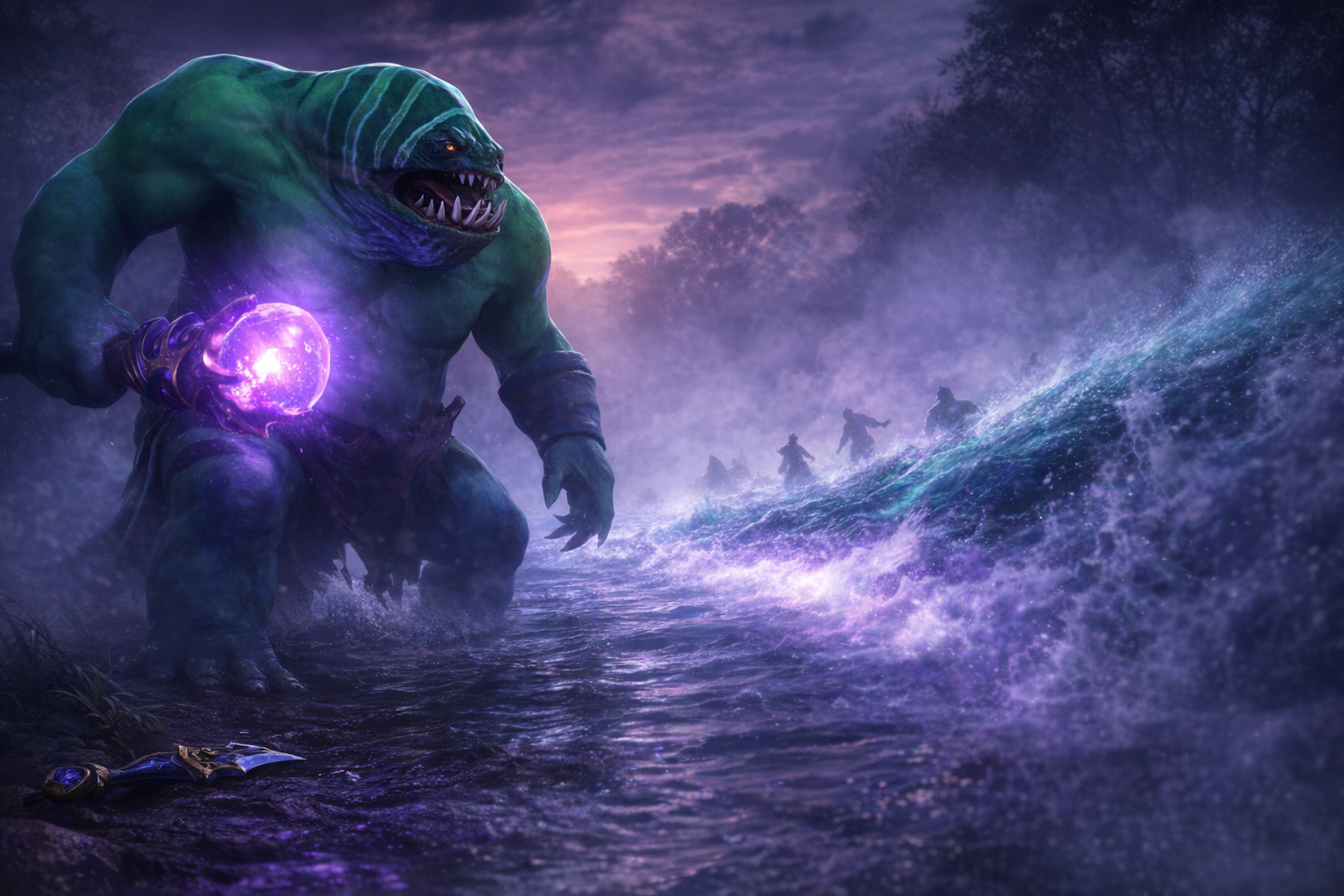
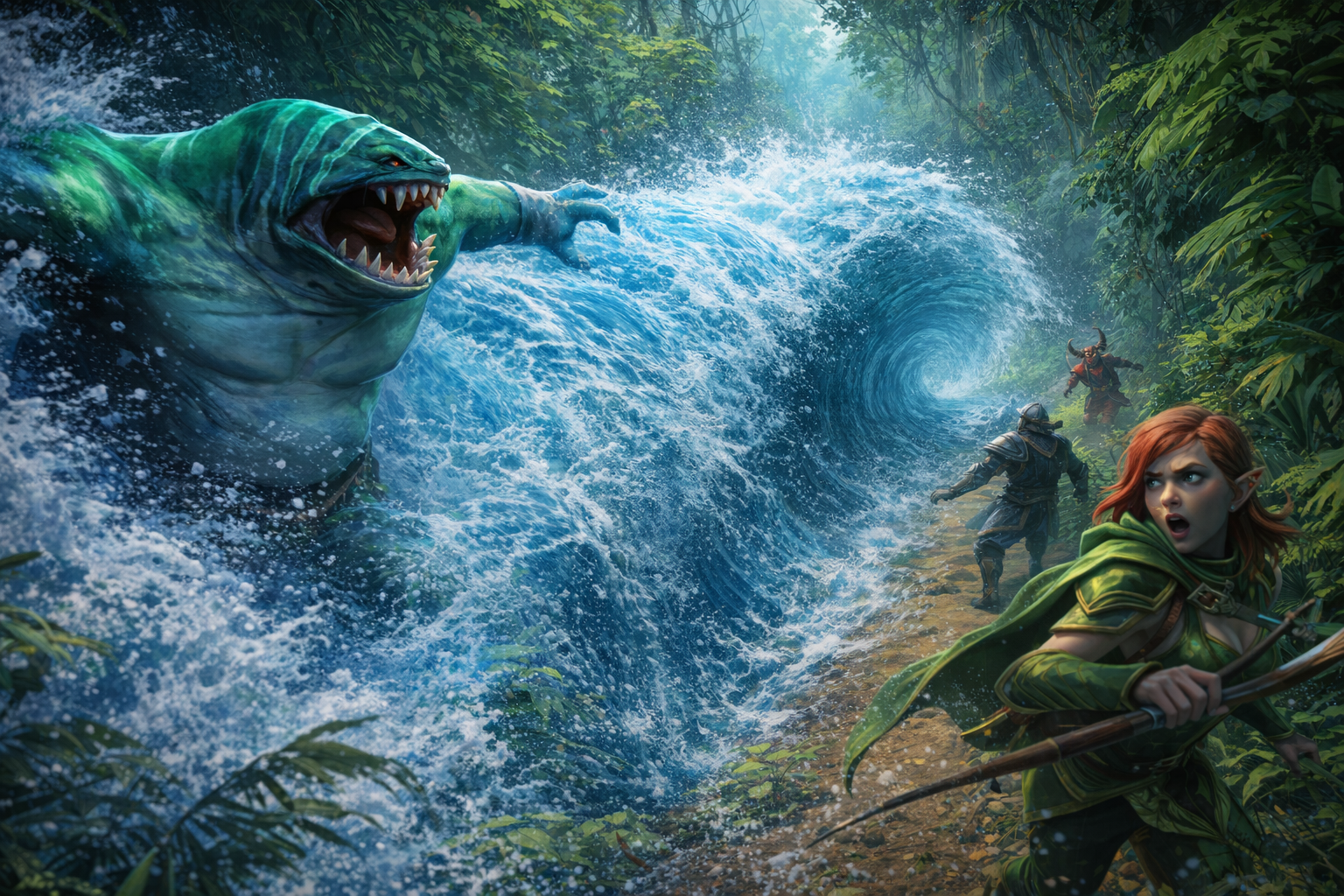
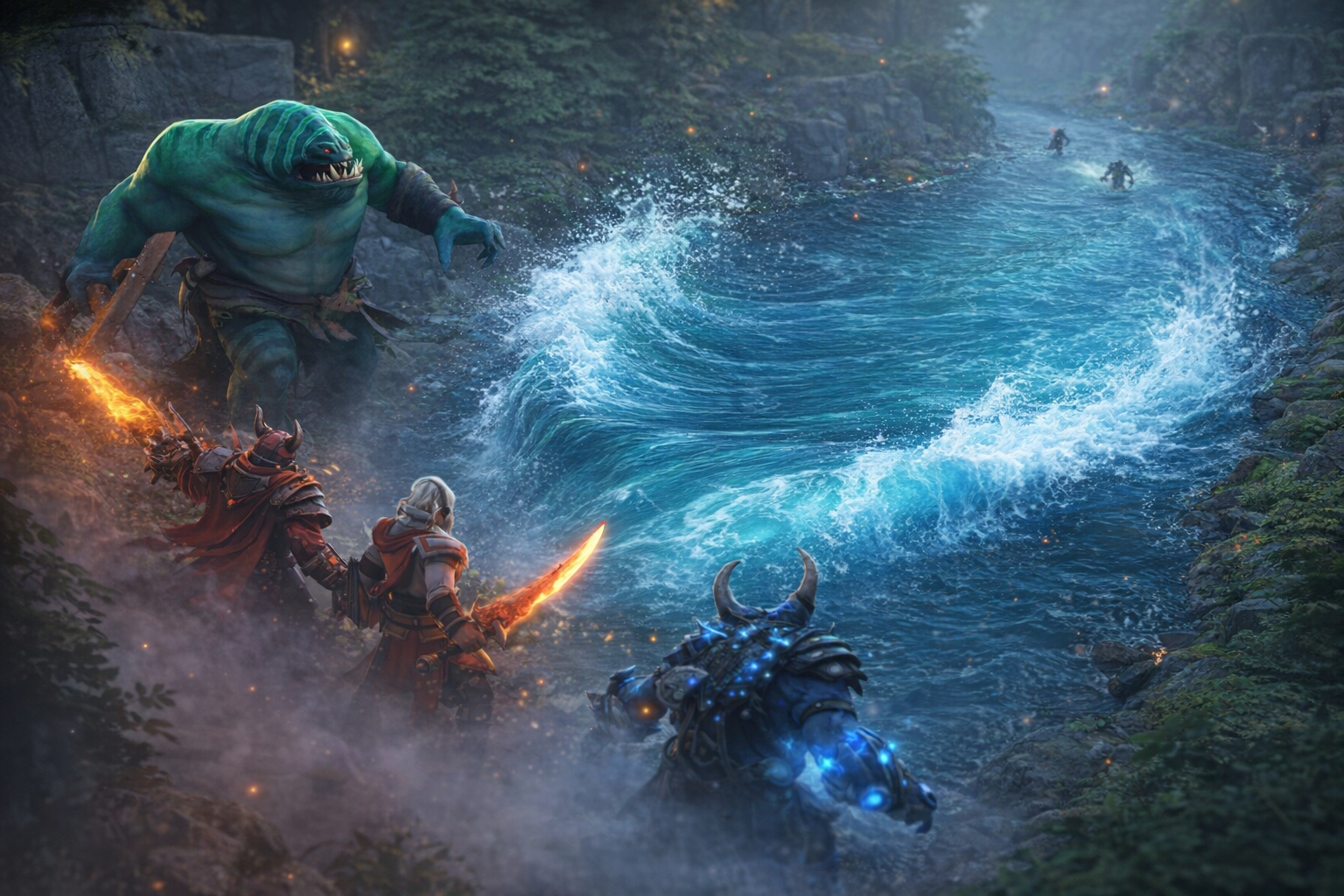
You've had this Tide game before. Lane ends fine, Ravage is up, and every fight still feels like you're waddling into a courtroom with five enemy lawyers ready to object. You buy the big purple stick because the pros did it, throw a few Gushes, then wonder why your team wanted a Blink or aura ten minutes ago. The gap is in how the item changes Tidehunter's job.
Aghanim's Scepter on Tidehunter turns him from a hero waiting for the perfect Ravage into a hero who can pressure the map between cooldowns. That distinction matters. If you buy it and keep playing like your only spell is Ravage, the item will feel underwhelming every time.
Why the Scepter Timing Makes Sense
Classic Tidehunter itemization is easy to understand: survive lane, buy team items, get Blink, press Ravage when the enemy formation gets greedy. That version still wins games. It also has a familiar weakness: between Ravages, you often become a walking threat marker rather than an active problem.
Aghanim's Scepter fixes that dead space. It gives Tide a long-range, area-based Gush that can affect multiple units and be cast without committing his body. Suddenly, you can shove lanes, poke into fog, interrupt Blink Dagger timings, slow retreats, and soften heroes before anyone has committed a major cooldown.
That is a very different value profile from a fast Blink. Blink asks one question: can you start the decisive fight? Aghs asks a more annoying one: can the enemy even move around the map cleanly while Ravage is sitting in the background?
Top-level Dota values that second question a lot. Teams punish face-checks, protect vision, play around cooldowns, and understand how much one cancelled Blink can change a fight. A spell that reaches across a huge area and gives Tide something meaningful to do every wave has real draft value.
What Aghanim's Actually Changes
Without Scepter, Gush is a targeted spell. It is useful, sure: damage, slow, armor reduction, setup for your team. The problem is delivery. Tide has to be close enough, the spell hits one target, and the hero often wants to spend that positioning budget on Anchor Smash, body-blocking, or Ravage.
With Aghanim's Scepter, Gush becomes a ground-targeted area spell with enormous reach. The exact strength comes from combining several small advantages into one obnoxious package:
It can hit multiple enemies instead of one.
It applies Tide's slow and armor reduction over a wide area.
It lets him interact with heroes from far outside normal frontliner range.
It damages units, which means it can cancel Blink Dagger when it connects.
It helps check dangerous areas without Tide walking in first.
The Blink-cancel part is the one that wins fights quietly. A Tide with Aghs can throw Gush across a ramp or toward a suspected smoke angle and ruin the enemy initiator's timing before the fight even begins. Against heroes who depend on clean Blink entry, that matters more than another chunk of raw tankiness.
The scouting angle is also easy to undervalue in pubs. You do not need a spell to hard-reveal the entire map for it to give information. A long-range Gush thrown into a common fog pocket can show reactions, connect with hidden units, break Linkens in some situations, force movement, and tell your team whether a hill is playable. That information saves wards, saves supports, and saves Tide from doing the dumbest possible thing: walking uphill because nobody else wants to.
The Farming Spike Is Real
Aghs also changes Tide's economy. That matters because Tide is one of those offlaners who can look rich or poor depending entirely on whether he is allowed to touch waves.
Gush plus Anchor Smash clears creep waves and many neutral camps quickly. The Scepter upgrade gives you a way to start that process from much farther away, which means you can farm dangerous lanes without standing in the most obvious stun range on the map. You can defend towers from distance, push out a side lane before grouping, and take camps while moving toward your team.
That is why the item can be rushed without feeling like pure greed. It accelerates itself. If Tide gets Scepter at a reasonable timing and immediately starts clearing waves, defending shoved lanes, and forcing enemies to respond, the gold investment becomes part of your map control.
The catch is mana. Aghs Tide wants to cast constantly, and constant casting has a cost. If your build has no mana support, no team sustain, and no plan beyond one big fight, the item will feel clunky. The successful version usually includes enough mana economy to make Gush a repeated pressure tool rather than a decorative button you press twice and regret.
The Teamfight Value Comes Before Ravage
The biggest pub mistake with Aghs Tide is waiting for the same perfect moment you would wait for with Blink Ravage. The item is strongest before the fight fully starts.
Throw Gush through a choke. Hit two heroes while they are posturing around Roshan. Force a support to reposition before your carry commits. Strip armor from the enemy frontliner so your physical damage cores can actually chew through them. Slow a retreating hero long enough for your mid to land the real disable.
That is the point: Aghs Tide makes fights uglier for the enemy before Ravage enters the conversation.
Ravage is still the hammer. Nobody drafts Tide because they are emotionally attached to medium cooldown poke. The Scepter gives you a way to make the enemy formation worse, drain resources, and create hesitation. Once heroes spread out to dodge Gush, they may become harder to catch with Ravage, but they also stop playing the compact formation they wanted. Once they group to force through it, Ravage becomes terrifying again.
That tension is good for Tide. He likes forcing bad choices.
The Talent Tree Trade-Off
The Aghs build naturally pushes you toward Gush-enhancing choices. If your item build turns Gush into your main active spell, talents that improve that spell gain value. Taking a purely defensive branch while spending major gold on a spell upgrade can leave the hero split between two plans.
That does not make the defensive talent bad. Tide still gets drafted to stand in front, soak damage, and make enemy cores hate their lives. In games where you are the only real wall between your backline and a fed carry, extra durability can be the correct call.
The mistake is treating the talent choice as automatic. If your Scepter timing is early and your team wants to fight around repeated long-range Gushes, lean into the spell. If the enemy lineup is built to jump past you and erase supports, your item and talent choices need to respect that job.
When Rushing Aghs Is Actually Good
A fast Scepter shines when your team already has another way to start fights. If your Spirit Breaker, Puck, Earth Spirit, or support duo can create the first contact, Tide does not need to spend his first big gold timing on Blink every game. He can play the second layer: long-range slow, armor reduction, counter-initiation, and Ravage when the enemy overcommits.
It is also strong when the enemy relies on Blink Dagger positioning. Axe, Centaur, Earthshaker, Sand King, and similar heroes hate taking random long-range damage before they find their angle. Even a single cancelled Blink can turn a clean enemy initiation into five seconds of awkward shuffling.
The item feels excellent in games where lanes need to be shoved from distance. Some drafts cannot walk up to waves safely because the enemy has instant catch. Aghs lets Tide perform the boring but vital job of keeping lanes out while still being near enough to join his team.
It gains extra value when your lineup deals physical damage. Gush's armor reduction applied over an area can turn a skirmish quickly, especially when your carry or mid wants targets softened before committing. Tide does not need to kill anyone himself. He needs to make enemies easier to kill while being miserable to engage into.
When the Rush Gets Punished
Aghs first can lose games when your team desperately needs immediate initiation. If nobody else can start, a Tide without Blink may watch perfect fights happen just outside his reach. Long-range Gush helps, but it does not replace a guaranteed Ravage angle.
It can also be too slow when your team needs early auras or defensive utility. Some games are decided by whether your group survives the first wave of magic damage or whether your carry can stand ground under pressure. In those games, forcing a Scepter because it looked good on stage can leave your team with pretty waves and dead heroes.
Spell immunity timings matter as well. Gush is annoying, but enemy cores with strong defensive timings can reduce the window where poke decides the fight. If the enemy plan is to press BKB and run straight through you, your build needs enough follow-up control, positioning, or team durability to handle that moment.
The worst Aghs games are the ones where Tide buys it while behind, lacks mana, has no Blink, has no aura, and still walks into fights first. That version offers the enemy a large green hero with expensive inventory slots and no clear purpose.
How to Play It in Pubs
If you rush Aghs in a pub, announce the plan through your play. Push the unsafe wave from range. Throw Gush into common smoke paths before your supports face-check. Use it to cancel Blink heroes before your team walks into a fight. Cast it early enough that the slow and armor reduction matter, rather than saving it like a mini-Ravage.
Positioning changes too. Aghs Tide can stand slightly behind the first body in some fights because his spell reaches so far. That does not mean hiding in the trees while your supports die. It means you can preserve the threat of Ravage while still contributing damage and control.
Your best fights often start with a Gush that makes the enemy move badly. A support gets clipped and has to retreat. A Blink initiator loses the angle. A carry gets slowed while crossing a choke. Then your team enters on better terms.
Your worst fights start with you walking uphill, eating every spell, pressing Ravage late, and wondering why the 4200 gold item did not save the game. Aghs gives you range. Use the range.
The Real Reason Pros Like It
Pro players value repeatable impact. Ravage is massive, but it is tied to a long cooldown and can be played around. Aghs gives Tide a spell that influences every wave, every approach to Roshan, every tower defense, and every awkward standoff where neither side wants to commit first.
That consistency is the appeal. Tide becomes a hero who pressures space without spending his ultimate. He farms faster, defends better, scouts safer, and makes enemy positioning more stressful. The Scepter also scales with player discipline: the better your team is at using small information and small slows, the more oppressive the item becomes.
In pubs, the ceiling is lower because teams waste information constantly. Someone will see a Gush connect in fog and still hit jungle creeps. Someone will watch an enemy Blink get cancelled and farm the nearby small camp. That does not make the item weak. It means the buyer has to turn those moments into calls: go now, back now, defend this wave, smoke through this angle.
Aghs Tide rewards active offlane play. Buy it when you can use Gush as a map spell, a farming spell, and a fight-shaping spell. Skip or delay it when your draft needs a simpler job from you: Blink in, press Ravage, keep the team alive. The item is powerful because it expands Tidehunter's role. Treat it like a stat stick and it will feel exactly as disappointing as your next missed Ravage.