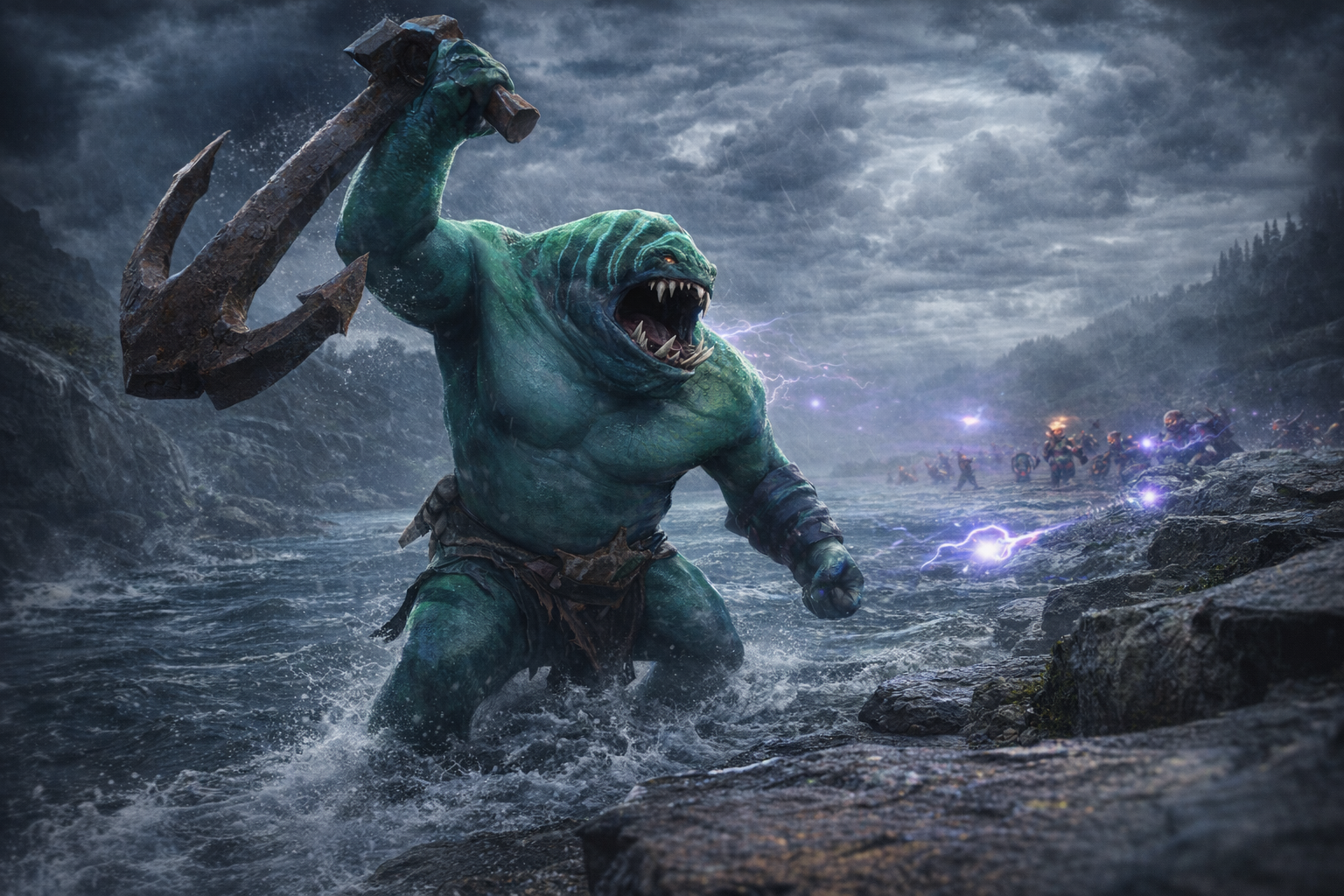
You lock Tidehunter, walk into lane feeling enormous, and then spend the next five minutes getting pecked to death by a ranged carry and a support with actual spell damage. Every creep feels expensive. Every step forward costs a chunk of your health bar. By minute six, the lane has turned into that miserable offlane ritual where you stare at the wave, tank a little too much harassment, and pretend the next Anchor Smash will fix it.
That experience makes people say Tide is weak in lane. What Tide actually is, in practice, is brutally matchup-dependent. Put him into the right lane and he looks like a raid boss. Put him into the wrong one, especially with a support that contributes very little pressure, and he turns into a giant green creep with a teamfight ult.
Tide's lane strength is real, but it's conditional
Tide gets labeled as a "tank," and that shorthand causes a lot of bad expectations. You see high base durability, damage reduction from Anchor Smash, and the passive protection from Kraken Shell, so you assume you can stand in lane and absorb whatever comes at you. That part is only half true.
Tide's lane is strong when he can walk up, threaten repeated trades, and force the enemy to respect his body. He wants lanes where his presence changes how the carry farms. He wants lanes where stepping up for a last hit means getting hit by Anchor Smash, maybe getting slowed by Gush, and then having your damage gutted while Tide keeps lumbering at you.
Against melee carries, this gets ugly fast. They have to enter your space to farm. That gives you clean access to Anchor Smash. If your support adds any real follow-up, those trades become punishing instead of annoying.
Against ranged carries, the picture changes. They don't need to enter your space nearly as often. They can chip away at you while keeping the wave in a spot that feels terrible. Tide still has tools, but those tools need setup, lane partner help, or enemy mistakes. If none of that shows up, you spend too much of the lane paying health for creeps.
What actually makes Tide dangerous
Anchor Smash is the lane
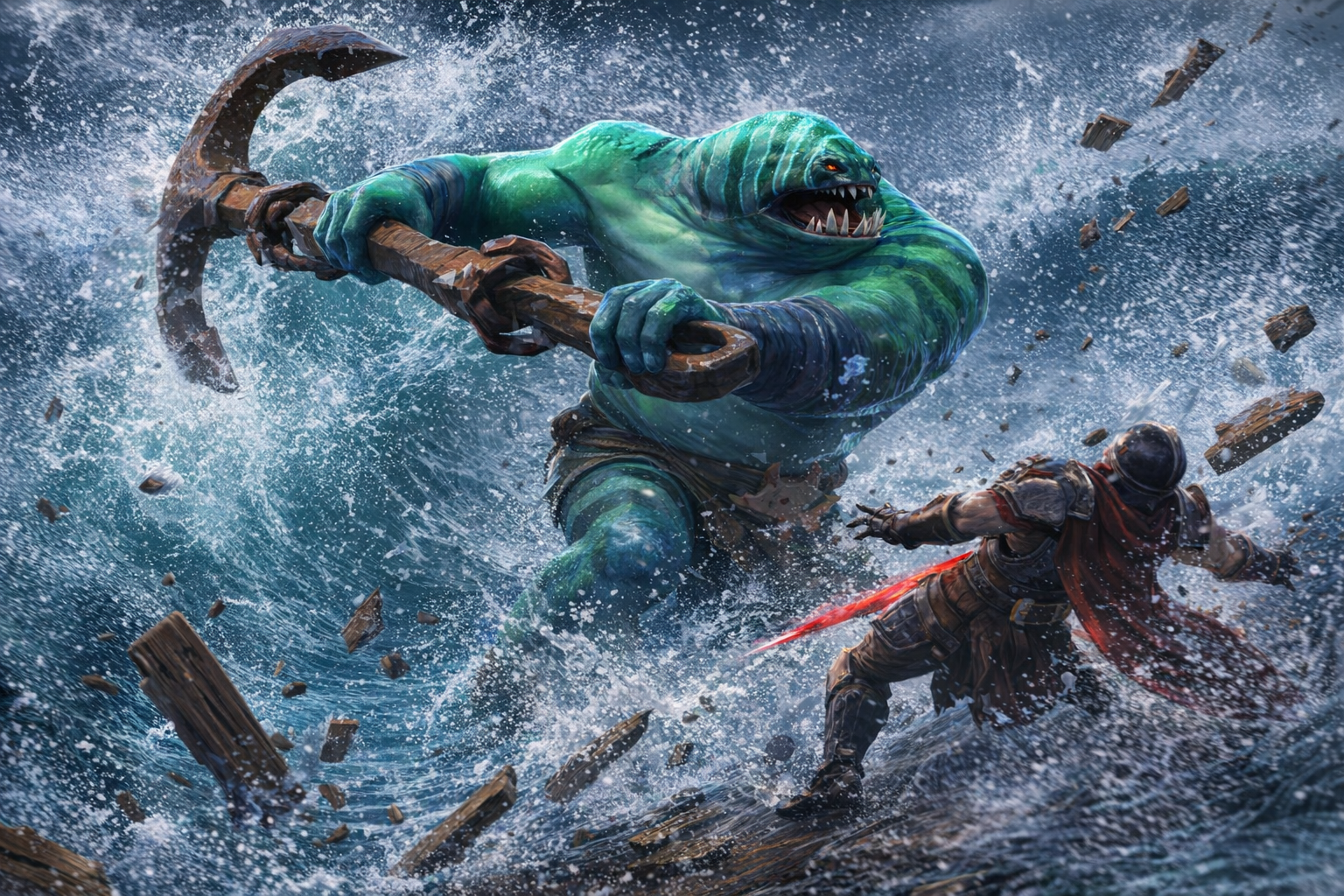
A lot of offlane heroes win by finding a spell combo. Tide wins lane by making basic attacks feel worthless for the enemy and expensive for anybody standing near the wave. Anchor Smash does several jobs at once. It secures farm in contested lanes. It damages heroes while you farm. It weakens return trades by reducing right-click threat.
That combination is why melee cores hate him. You don't need a fancy outplay sequence when one button both clears the wave interaction and drags the enemy carry's damage through the floor.
The mistake a lot of players make is treating Anchor Smash like a farming spell first and a trading spell second. In lane, it needs to be both whenever possible. If you're only using it to collect creeps after taking free harassment, you're already playing from behind. Tide wants the enemy to feel every wave.
Gush changes whether Tide is just annoying or actually lethal. Without it, a ranged hero can often shrug off your approach, kite back, and resume farming once Anchor Smash is down. With it, you can close enough distance to make the trade stick, especially if your support can add damage or control.
That doesn't mean every lane demands early heavy investment in Gush. Some lanes are won through repeated Anchor Smash usage and simple body presence. Some lanes need the slow immediately because without it, the enemy never has to respect your movement. That choice depends on who is in front of you and who is standing beside you.
A common failure point with Tide is skill usage that ignores the lane's actual interaction. If your support has no way to capitalize and the enemy duo outranges you safely, greedier points in passive and wave control can be fine. If the lane turns on catching one squishy ranged hero out of position, Gush becomes far more valuable because it creates the only real opening you have.
Kraken Shell protects you, but it doesn't erase bad lanes
Kraken Shell gives Tide staying power. It makes physical chip damage far less efficient than it is against most melee offlaners. That matters a lot in lanes where the carry is trying to whittle you down with ordinary right-clicks.
Players go wrong when they treat that durability as universal. Tide shrugs off a lot of physical harassment. Magic burst and repeated spell damage are another story. When the enemy support is the real source of lane pressure, Kraken Shell stops feeling like an answer and starts feeling like a partial refund.
That's why some lanes feel strangely awful even when the enemy carry seems passive. The carry is farming from range. The support is doing the real work. Tide can trade into one source of pressure much better than he can trade into two that hit him from outside his preferred range.
The support matchup often matters more than the carry
People fixate on the ranged carry because that's the hero visibly hitting you every time you approach the wave. A lot of Tide lanes are actually decided by the support standing next to that carry.
A support with meaningful magic damage, disables, or relentless ranged harassment changes Tide's job completely. Suddenly you aren't just trying to solve lane distance. You're trying to walk into a zone where every attempt to contest creeps triggers a spell exchange you don't want.
Shadow Shaman is a great example of the kind of support that makes Tide miserable. He threatens control. He punishes over-commits. He adds enough magical pressure that your natural tankiness doesn't feel nearly as impressive. Pair that with a ranged carry who doesn't have to expose themselves, and Tide's lane can become stale in the worst way. You aren't getting clean kill windows, and you're bleeding too much health to posture freely.
By contrast, a lane with a melee carry and a softer support can become Tide territory very quickly. The carry has to approach the wave, the support can't punish every movement, and your repeated Smash trades start shaping the whole lane.
Your own support can decide whether Tide looks broken or useless
Tide is one of those offlaners whose lane reputation swings wildly based on the hero beside him.
If your support brings a stun, burst damage, or even reliable right-click pressure, your Gush into Anchor Smash sequence has real teeth. The enemy carry can't casually farm through it because one misstep turns into a hard trade or a kill. Tide doesn't need a lot of help to feel threatening, but he does need some lane relevance next to him.
If your support is passive, greedy, or simply weak in direct lane combat, the burden shifts entirely onto Tide to create pressure. That can work in favorable melee matchups. It looks grim against ranged cores backed by a real support. Your hero is durable, yet durability without threat just means you die slower while losing the lane.
This is where people misread the hero. They remember games where Tide marched at the enemy duo and forced the lane into chaos, then expect the same result with a support that doesn't trade, doesn't threaten kills, and doesn't stop the enemy from spacing correctly. Tide's best lane patterns rely on the enemy respecting what happens if they stand their ground. Without credible follow-up, that respect vanishes.
The lane pattern you actually want
Trade when you're touching the wave anyway
Tide gets paid when farming and harassing happen in the same action. You walk up to secure creeps with Anchor Smash and clip a hero at the same time. That's efficient. That's what makes the lane feel oppressive for the other side.
When you have to choose between a clean last hit and eating a full ranged support combo for the privilege, the lane has already shifted away from Tide's comfort zone. You're now rationing health and cooldowns instead of dictating trades.
Force commitment windows
Tide loves moments where the enemy has to stay in place a little too long. Melee last hits. Supports contesting pulls. Ranged heroes stepping up because they assume your damage is low or your support can't punish. Those are the spots where Gush creates contact and Anchor Smash cashes it in.
If the enemy duo can take every creep interaction from absolute safety, your lane becomes attrition. Tide can survive attrition for a while. He doesn't necessarily win it.
Know when the lane is dead
One of Tide's biggest strengths is that he can recover farm without requiring some miracle lane turnaround. He clears waves well enough. He can take stacks and jungle camps at a reasonable pace once he has levels. He remains useful because his teamfight contribution always has value.
That means you shouldn't force some heroic fantasy in a lane that clearly isn't giving you anything. If the enemy support is owning the lane, your own support can't help, and the carry farms from range without ever exposing themselves, stop pretending you're one good click away from dominance. Get what farm you can. Cut the losses. Transition earlier.
Tide is durable enough to salvage bad lanes. He isn't magical enough to reverse every one of them on demand.
Why ranged carries feel so bad against Tide
Ranged carries attack the exact part of Tide's lane plan that he needs most: reliable access.
A melee carry gives you proximity for free. A ranged carry charges you for it. Every step forward invites harassment. Every failed attempt to connect gives them another wave where they farm comfortably and you spend resources trying to matter.
That doesn't mean Tide auto-loses to ranged carries. It means he needs one of several conditions to be true. The ranged hero has poor positioning. The support matchup favors aggression from your side. Your own support supplies catch or burst. The wave stays in a place where you can actually threaten movement. If none of those are present, you get the classic dead lane where Tide can exist but not impose himself.
Medusa is a particularly annoying kind of ranged carry for this lane dynamic. She doesn't need to overextend much to get value, and if the support next to her controls space well, Tide spends more time absorbing poke than creating pressure. The carry itself may not be the loudest source of lane misery. The support often turns the lane from manageable to suffocating.
The pub misunderstanding around Tide
Tide gets drafted in pubs as a comfort blanket. Big body. Teamfight ult. Hard to kill. Easy concept. That creates a weird expectation that the lane phase will naturally sort itself out because the hero is sturdy.
Pub games punish that laziness. If you pick Tide into a lane that outranges you, chips you with spells, and doesn't fear your support, your body alone doesn't solve the problem. You still need a lane plan. You still need to recognize whether your hero is there to dominate the lane, stabilize it, or escape it.
The players who make Tide look oppressive usually understand one simple thing: lane power is tied to the enemy's ability to stand near him. If they can. he looks ordinary. If they can't, he feels absurd.
That matters beyond the first ten minutes because your item timing and level progression depend on whether you turned lane pressure into farm or spent the entire phase repairing damage taken for basic creep access. Tide with a real start becomes a threat that can show up to fights and front-line confidently. Tide from a losing lane still offers Ravage, but the rest of the hero arrives slower and with much less map presence.
So, is Tide weak in lane?
He is strong in the lanes that let him touch you. He is rough in the lanes that kite him, pressure him with magic, and pair that pressure with a support who actually contributes. That isn't a contradiction. That's the hero.
If you're losing hard into ranged carry lanes, the fix usually isn't some generic "play safer" advice. Look at the support matchup first. Look at whether your own lane partner gives you any reason to skill and play for aggression. Look at whether you're using Anchor Smash as a real trading tool or just a sad broom for under-contested creeps. Then decide early whether the lane is winnable or whether your job is simply to get out with enough farm and levels to matter later.
Tide doesn't need every lane to be good. He just needs you to stop asking him to be the same hero in all of them.