Most low-MMR players treat mid like a sacred role queue altar: pick a spirit, bottle the runes, rotate at six, repeat until somebody throws. That habit leaves a lot of free MMR on the table. Some of the nastiest mid heroes in Dota are the ones that turn the lane into something awkward, ugly, and deeply inconvenient for the opponent. If you learn what these unconventional mids are actually trying to do, you stop drafting for tradition and start drafting for damage.
Mid has always rewarded heroes that hit one of two marks. They either control the first ten minutes through wave access and rune pressure, or they convert solo levels into map pressure faster than the enemy can answer. The classic mids do that in familiar ways. The weird ones do it by changing the rules of the lane.
Why weird mids keep stealing games
A conventional mid matchup usually follows a script. Both heroes want ranged creep control. Both care about bottle timing. Both posture around rune spots. Both expect the lane to be decided by spell trades, right-click efficiency, and who rotates first.
Unconventional mids break that script in different ways. Some heroes make the lane physically miserable through raw stat pressure. Some shove waves so fast that the enemy mid is forced into defensive farming patterns immediately. Some hit level six with a game-warping ultimate that creates side-lane advantages without sacrificing their own farm. A few simply exploit the fact that many mid players have no muscle memory for the matchup. They know how to lane into Ember. They do not always know what the first four waves against a mid Undying are supposed to look like.
That matters more than people admit. Dota is a game of repeated situations, and weird mids create situations the other player hasn’t practiced.
What makes an unconventional mid actually viable
A weird mid pick still needs real midlane tools. If the hero can’t secure experience, can’t access farm, and can’t affect the map before the game slips away, then you’re griefing with extra steps.
Wave control comes first
The lane starts with creep equilibrium and ranged creep pressure. If your hero can’t interact with the wave, you’re signing up for a bad time. That interaction can come from direct nuke damage, durable body presence that lets you stand in the wave, or a farming pattern where you clear mid and immediately take nearby camps.
That is why certain offlane-style heroes translate surprisingly well. They may not look like textbook mids, but they can force the lane under tower, punish the enemy for walking up, and turn each shoved wave into extra jungle gold.
Solo levels must unlock something meaningful
Mid gets privileged experience. If your hero gains a fast level six and the result is “I continue farming the same camps slightly faster,” the pick needs extraordinary lane dominance to justify itself. If that level six creates global pressure, tower threat, kill threat, or a timing that the enemy lineup can’t comfortably meet, the pick starts to make sense.
Your item timing has to arrive before the game moves on
This is where a lot of weird mids fail. The lane looks okay, the hero farms decently, and then the first real item timing comes too late to matter. Mid has less patience for delayed impact than side lanes do. You’re occupying the most experience-rich lane on the map. The game expects a return on that investment.
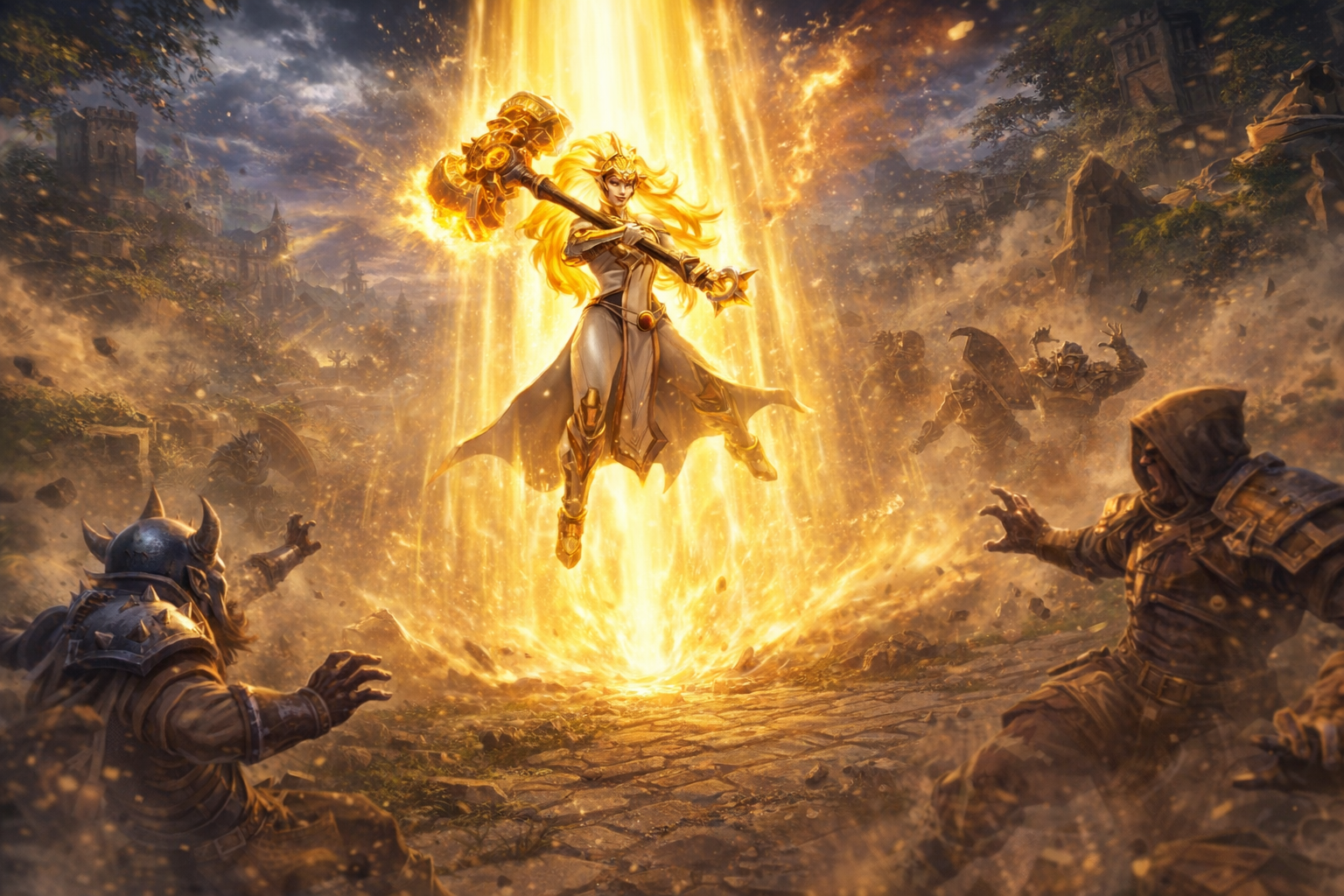
Dawnbreaker mid turns level six into a cheat code
Dawnbreaker is one of the cleaner examples of a weird mid that still obeys mid fundamentals. The lane works because she can push quickly, sustain through attrition, and convert farm into immediate side-lane presence.
The big attraction is simple: solo experience accelerates her global impact. A fast level six means you can punish dives and turn skirmishes without the usual cost mid heroes pay when they leave lane. That changes how your side lanes are allowed to play. Teammates can posture more aggressively when they know a fully leveled mid Dawnbreaker can arrive from anywhere.
Her farming pattern also fits the role. She can clear the wave, move to a nearby camp, and come back without losing the lane entirely. Mid rewards that kind of tight route efficiency. Bottle helps with lane sustain and rune usage, and mana support from early items lets her keep spamming wave clear instead of choosing between fighting and farming.
The catch is that Dawnbreaker mid needs discipline. If you get addicted to teleporting into every noisy fight on the map, your net worth collapses and the hero turns into an underfarmed utility core. Pick your jumps. Join fights where your arrival changes the outcome, then return to the central farm pattern that made the pick strong in the first place.
Shadow Demon mid wins through discomfort
Shadow Demon mid sounds like pub theater until you play against somebody who understands exactly how oppressive the hero can be in lane. Then it starts to feel less like a gimmick and more like a personal insult.
The appeal comes from repeated harassment, lane manipulation, and a toolkit that scales into meaningful catch and save utility later. Midlane magnifies all of that because the opponent is alone. There’s no support behind them to smooth out every awkward trade.
A good Shadow Demon mid player drags the lane into a style many mids hate. The hero can force bad positioning, create pressure through spell threat, and turn routine wave contests into exchanges the opponent never wanted. Once the lane becomes uncomfortable, rune fights get worse, rotations get riskier, and the enemy mid can’t freely execute their normal game.
What separates a real Shadow Demon mid from a novelty pick is pace. You need to leave the lane with more than decent farm and some annoying spell usage. You need active impact. That can mean enabling kills, protecting a core from a committed jump, or making every early skirmish around your team feel harder to enter for the opponent. The hero offers a lot of playmaking depth if you’re sharp. He also offers a lot of ways to look useless if you fall behind and spend the next fifteen minutes pretending utility counts as tempo.
Axe mid is a lane bully with a timing problem
Axe in mid has one very obvious selling point: some heroes simply do not want to lane into a tanky nuisance who is happy standing near the wave and turning every creep interaction into chip damage. If the matchup gives him room to pressure, he can make the lane feel cramped fast.
The issue is what comes after that.
Axe mid raises a hard question every offlane player who experiments with it eventually runs into: when does your first major timing actually arrive, and is it soon enough to justify taking mid? Midlane demands earlier relevance than offlane does. A delayed initiation timing hurts more when the hero had access to solo experience and central farm all game.
That doesn’t make Axe mid bad. It makes the pick matchup-dependent and lineup-dependent. If your draft already has enough early movement and your job is to dominate the lane, choke the enemy mid’s comfort, and come online as the map opens, Axe can work. If your side lanes are begging for immediate rescue and your lineup needs the mid hero to start fights early, the timing can feel clunky.
Axe also benefits heavily from opponents misunderstanding the lane. Some mids will overtrade into him. Some will stand too close to creep waves. Some will hand him favorable early patterns for free. Better players will drag the lane around his weaknesses, punish his lower mobility, and force him to reveal whether he actually has a route to impact or just a route to being tanky in the middle of nowhere.
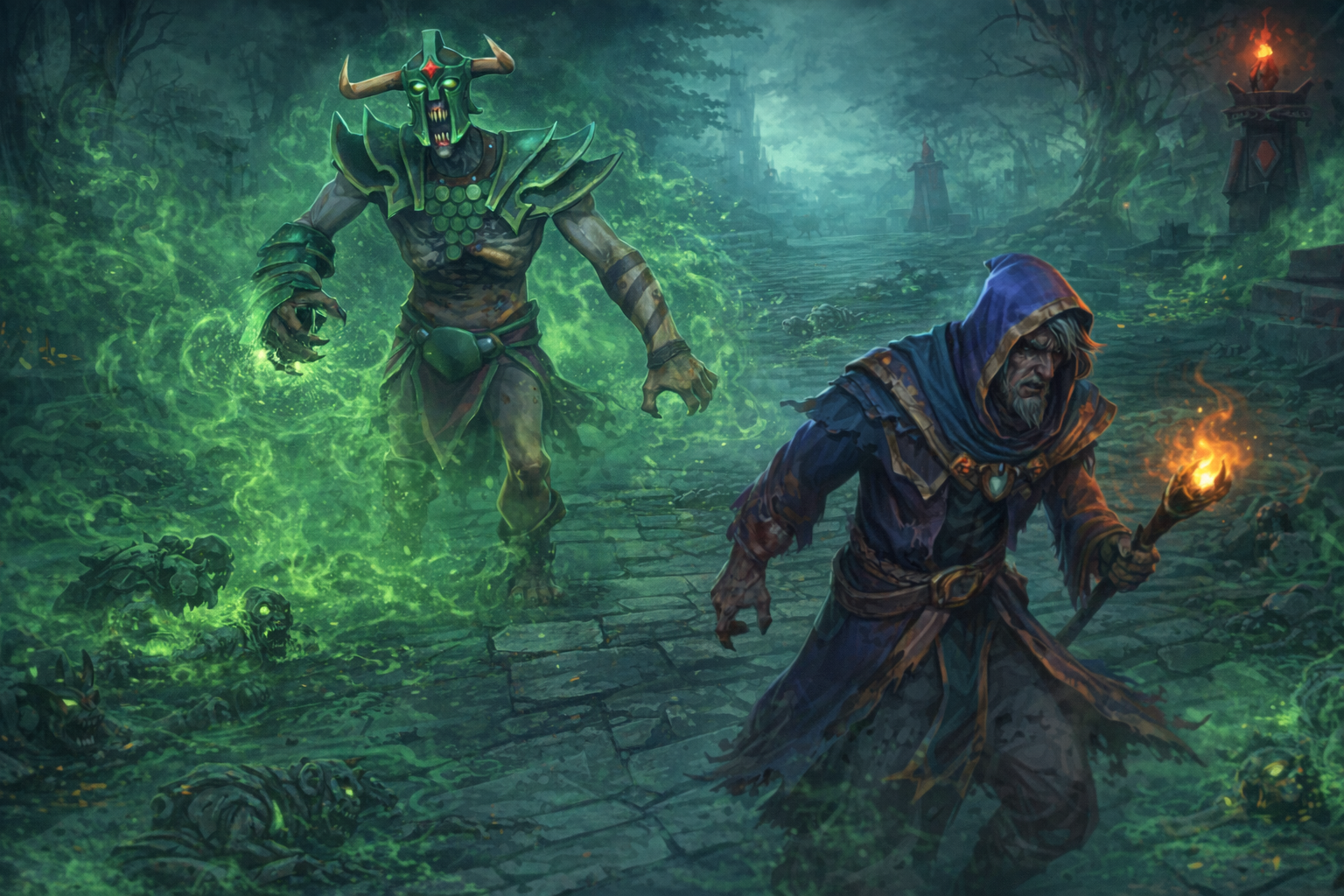
Undying mid is pure lane violence
Undying mid doesn’t ask for your respect. It takes your strength and leaves you trying to last-hit with a worse hero than the one you drafted.
That is the whole fantasy. Midlane isolates the enemy core, and Undying is one of the best heroes in the game at making isolated strength trades feel awful. When he gets to repeatedly pressure the opponent without support interference, the lane can snowball into complete control over runes, denies, and early tower pressure.
The problem is structural. Undying’s strongest lane patterns don’t automatically become strong midgame patterns unless the game state cooperates. You need to turn lane dominance into objectives, map control, or skirmish wins before more traditional cores hit their item and mobility timings. If the game slows down and your advantage stays cosmetic, the enemy eventually gets to play real Dota again.
That makes Undying mid a snowball pick in the truest sense. You draft it to punish weak lanes and seize the map while the pressure is still sharp. You do not draft it because the hero scales in a straightforward, low-maintenance way from a mid economy slot.
Dark Seer mid suffocates farm and dares the map to react
Dark Seer mid is one of those picks that feels brilliant while you’re doing it and vaguely criminal while your side lanes are screaming for help.
The lane logic is easy to understand. Dark Seer is excellent at accelerating farm patterns and making wave pressure somebody else’s problem. Once he gets established, he can force the enemy mid to answer shoved waves while he builds a widening economic lead through efficient movement. If the opponent can’t contest that pattern cleanly, the game starts to tilt in your favor through resource denial alone.
That style creates tension. Mid traditionally carries some responsibility for active map relief. Dark Seer often delivers his value by making the map smaller for the enemy rather than by showing up first to every side-lane scrap. Your team has to survive that window. If they do, the hero can hit a very annoying pace where he pressures lanes, farms aggressively, and enters fights with strong teamfight tools ready.
The risk is emotional as much as mechanical. This pick asks your lineup to understand delayed payoff. In coordinated games that can be fine. In pubs, side lanes judge your hero by one brutal metric: did you come when they got dove? If the answer is no, they stop caring how many waves you cut or how much farm you denied.
Visage mid is a specialist’s weapon
Visage remains one of the best answers to the question, “What hero becomes terrifying when the opponent doesn’t know the lane?” Mid gives him exactly what he wants: levels, tempo, and a direct line into tower pressure or rotations once his power spike arrives.
Before that spike, Visage can make the lane miserable through targeted harassment and movement control. He excels at turning short trades into favorable ones, especially against heroes that rely on clean spacing and repeatable chip damage. A lot of mids want lane exchanges to happen on familiar terms. Visage changes those terms immediately.
When his first major power window opens, the hero can branch in two useful directions. He can threaten buildings and force reactions, or he can move into side lanes and make kills happen with overwhelming burst and summon pressure. That flexibility is what makes the pick scary. The enemy mid doesn’t just have to survive the lane. They have to guess which form of punishment is coming next.
Visage does demand competence. This is not a “surprise, therefore good” hero. If your micro is shaky or your lane mechanics are average, the advantage of the unusual pick disappears fast. Skilled Visage players create compounding pressure. Weak ones just drafted an awkward ranged creep.
Pudge stopped being a joke a long time ago
Pudge still carries old reputation baggage from years of coin-flip laning and highlight-chasing. That image lags behind the reality of what the hero can do when played seriously from mid.
Mid Pudge offers wave presence, threat from fog, and kill conversion that can snowball hard once the first few moves connect. He also benefits from the psychological tax he places on the opponent. Every missing Pudge changes how side lanes position. Every rune fight becomes tense. Every low-health reset near the river starts to feel greedy.
The hero’s viability depends on whether you’re piloting him as a complete core or as a roaming content machine. The second version loses games. Mid gives Pudge access to stable levels and gold, which means you can scale into a durable, high-impact presence instead of staying trapped in the old support mindset where every minute is spent fishing for the next clip.
That distinction matters in pubs. If you are farming efficiently between moves, controlling space, and showing up to fights with real item progress, mid Pudge is a legitimate problem. If you miss two hooks and spend the next six minutes wandering between sidelanes, your team gets exactly what they feared when they saw the pick.
Why these heroes crush pubs harder than they should
Pub Dota rewards unfamiliar pressure. Drafts are less coordinated, lanes are less rehearsed, and itemization is often slower to adapt. Weird mids thrive there because they create decision trees the enemy hasn’t preloaded.
A standard mid matchup comes with standard answers. Players know when to ferry regen, when to secure runes, when to shove and rotate. Against an unconventional mid, people make delayed decisions. They misjudge kill threat. They bring the wrong resources. They keep laning as if the matchup will normalize on its own.
It often doesn’t.
These heroes also punish autopilot drafting. A lineup built to handle the usual suspects can suddenly find itself lacking the tools to deal with a durable lane bully, a global responder, or a summon-based tower threat occupying the middle of the map. By the time that becomes obvious, the tempo damage is already done.
The pub rule that matters most
Weird mids need a clear purpose.
Pick Dawnbreaker when your lineup benefits from fast global reinforcement and a core that can compress farm between rotations. Pick Shadow Demon when the lane and skirmish structure reward constant irritation and surgical spell usage. Pick Axe or Undying when the opposing mid can be physically bullied and your draft can cover the timing tradeoffs. Pick Dark Seer when your team can tolerate a greedier map-pressure style. Pick Visage when you have the mechanical confidence to turn one early edge into objective pressure. Pick Pudge when you can balance threat with actual economy.
That is what separates niche tech from ranked cosplay. The weird pick needs to solve a problem.
Midlane has never belonged exclusively to flashy rune abusers and textbook playmakers. It belongs to heroes that can seize the most influential lane on the map and force everyone else to play around them. Sometimes that hero is a spirit. Sometimes it’s a strength monster, a zoo specialist, or a support-shaped menace turning the lane into a hostage situation. If you understand the job instead of worshipping the template, the role opens up fast.