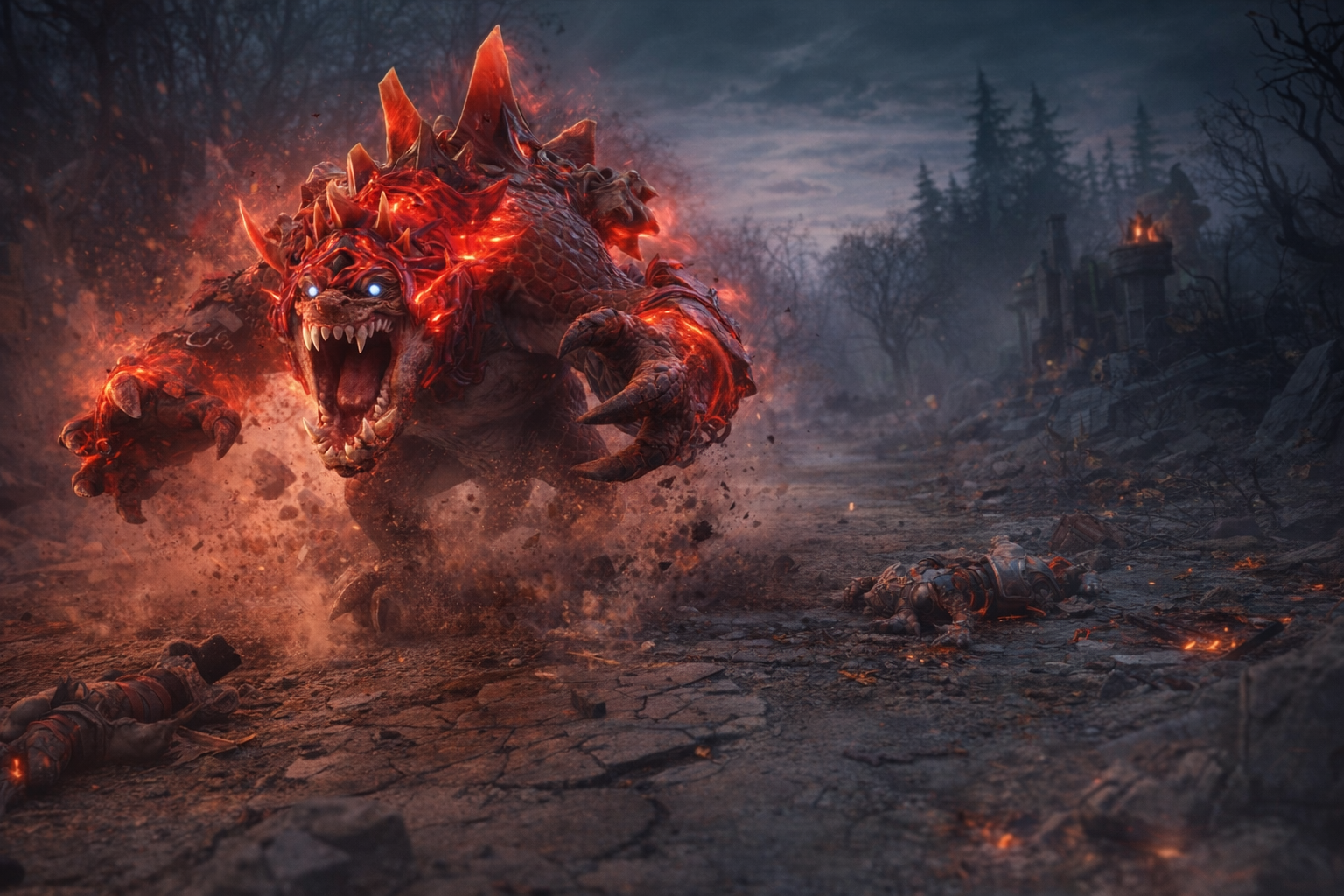
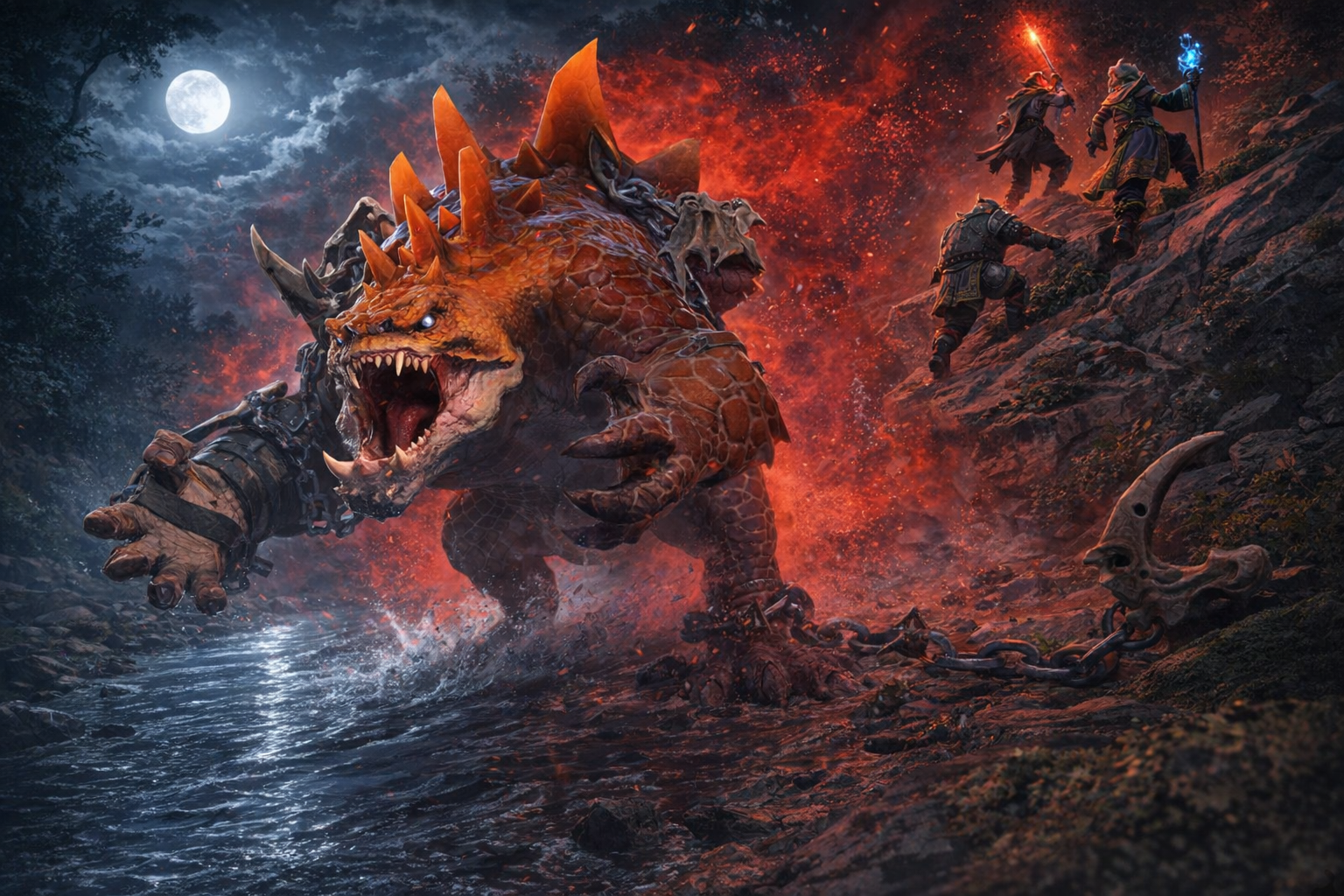
You load into lane already thinking about the usual Primal Beast script. Charge a support, trample the wave, hope the early rotations actually connect, then stare at your inventory while every normal item feels half-right. The game slips the moment you miss one timing and your hero starts looking expensive and slow. What players fixate on is the combo. What actually decides the game is whether Primal Beast can keep moving through the dead minutes between those combos.
That’s where the weird build starts making sense. Mask of Madness on Primal Beast sounds like one of those pub ideas that should collapse the second someone clicks your hero and fights back. Instead, in the right game, it patches several of his ugliest problems at once: farming pace, chase reliability, and the gap between spell rotation and actual threat. It gives Primal Beast a midgame that feels less like waiting for perfect initiations and more like forcing the map to respect you.
Why Primal Beast Still Feels Awkward After a Good Lane
Primal Beast has never struggled to look broken in short bursts. The lane can be oppressive. The first few skirmishes can be even better. You hit the classic spell sequence, somebody disappears, and the hero feels absurd.
Then the game stretches.
That’s the part people underrate when they talk about Primal. His strengths are obvious, so his weak spots get hand-waved away as execution issues. They aren’t. They’re structural. He wants access, he wants targets that can’t disengage cleanly, and he wants the map to stay open enough that every smoke or river movement can turn into a body. When those conditions disappear, his net worth can stall hard.
He also doesn’t slot naturally into the usual acceleration toolkit. Some heroes buy a farm item and suddenly every camp and lane belongs to them. Primal’s kit already clears space in a very particular way. He wants movement, contact, and enough damage overlap that one committed entry becomes a kill. A build that only buffs his spell amp or asks him to stand still channeling a farm pattern often misses what the hero actually needs.
That’s why a cheap bridge item matters so much on him. You’re trying to survive the stretch before the standard BKB, Blink, Aghanim’s progression fully comes online. If you can’t, the game punishes you fast. An underfarmed Primal Beast has one of the saddest profiles in Dota: visible initiation, telegraphed target priority, and no clean way to recover once enemies are ready for him.
Why Mask of Madness Fits Better Than It Looks
Mask of Madness solves a problem Primal actually has instead of pretending he’s some generic bruiser who wants a pile of efficient stats.
The first piece is movement. Primal Beast lives and dies by whether he can stay attached to a target after the first point of contact. If the enemy survives the opening entry and creates even a little space, your damage falls off fast. Extra speed changes that. It helps in the obvious chase scenarios, but the more important effect is how it smooths the hero’s whole map pattern. You move between camps faster, you punish overextended side lanes faster, and you show up to fights before the window closes.
The second piece is that Trample cares a lot about your ability to remain on top of people. Any item that helps Primal maintain contact without needing another spell has real value. Mask of Madness contributes directly there. You feel it against heroes who rely on slight repositioning, movement skills on cooldown, or supports trying to drift out of your radius after the initial stun chain. They don’t need to be fully mobile spirits to ruin your damage. A small gap is enough.
The third piece is farm flow. Primal doesn’t want to spend half the game buying tools that make his camps cleaner while doing nothing for his kill threat. Mask of Madness gives him a practical way to tear through jungle and lane resources in the same build that still enables aggression. That matters because your ideal Primal game is one where every shove of a wave threatens a dive, every river rotation can become a fight, and every minute off cooldown becomes productive. A filler item that only boosts one of those jobs usually leaves you feeling poor anyway.
There’s also a basic truth that gets lost because Primal is branded as a spell hero: he hits hard. Uproar gives him real right-click presence during the windows where people expect him to be harmless after his first cast sequence. If your spells are on cooldown or you’re forced into a messier brawl, Mask of Madness lets those attacks matter instead of looking ornamental.
The Real Timing: MoM Into BKB, Not MoM Instead of BKB
This build becomes dangerous when you understand what role the item is playing. Mask of Madness is a bridge. It creates a timing. It is not permission to delay your defensive core forever.
Primal Beast still needs the ability to enter fights without being chain-controlled into irrelevance. BKB remains the checkpoint that turns many difficult games back into playable ones. The reason MoM works is that it makes the path to that checkpoint far less miserable. You keep your net worth moving while preserving kill pressure, which means your BKB timing arrives with momentum instead of desperation.
That distinction matters because the item has very real risks. Silence on activation is not a footnote. If you use it carelessly in a fight where your next spell cast decides the engagement, you can grief your own entry. Primal Beast is a hero whose value is often compressed into a short sequence. You can’t autopilot an item that temporarily cuts you off from that sequence.
The clean way to think about it is simple: use Mask of Madness when the fight has already reached the point where movement and attacks are the important part. If you still need to cast to secure control, wait. If the enemy has already spent the tools that stop your pursuit, flip it on and run them down.
Where the timing actually bites
Phase Boots, a small utility backbone, then Mask of Madness into BKB creates a stretch where a lot of squishier cores and supports become killable the moment their escape option is unavailable. That includes lanes where a support rotates one step too far, side map situations where a farming core burns mobility to clear a wave, and river fights where the enemy formation breaks for a second.
Primal often looks strongest when everybody is stacked in front of him and he gets the dream engage. This itemization punishes the more common Dota reality: scattered heroes taking greedy farm while assuming your hero only functions as a one-shot initiator.
Matchups That Invite It
You need room to move. That’s the first filter.
Mask of Madness Primal thrives against lineups that can be reached and held onto. Heroes without durable built-in disengage are obvious targets, but the bigger point is how the entire enemy composition handles your entry. If their answer to Primal is mostly surviving the first impact and walking away, the item gets much better. You remove the “walk away” part.
It also shines in games where your team wants chaos early and mid. Primal loves allies who convert the first catch into immediate follow-up damage, because that turns his enhanced chase into a fast numbers advantage instead of a long awkward pursuit. If your draft naturally collapses on side lanes, the extra pace matters a lot.
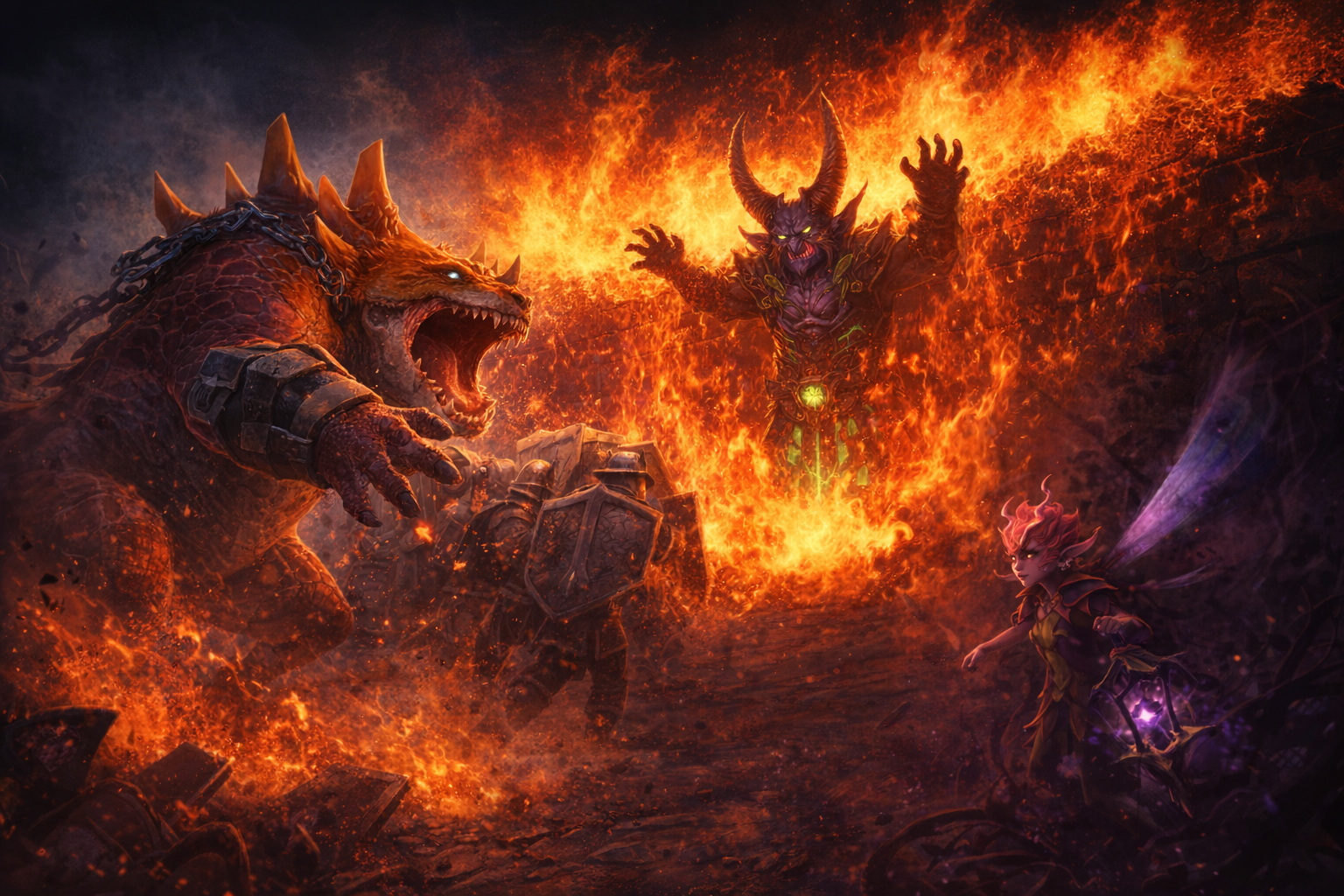
The build loses appeal when the enemy can deny access before you ever start doing your job. Big area control, hard displacement, and heroes that force ugly approach angles all make the purchase riskier. Underlord is a great example of the kind of problem Primal hates. He creates zones you don’t enjoy crossing and turns straightforward runs into clumsy, delayed entries. Enigma brings the same tension in a different form because his teamfight threat warps how directly you can commit. Clockwerk can physically break your route, isolate targets, and make your momentum work against you. Dark Willow is another nightmare profile, because layered control and elusive positioning punish the exact kind of committed chase this build leans into.
Percentage-based damage also deserves respect. Primal wants to feel like a giant body crashing through the fight. Games with heavy max-health punishment cut directly into that identity. If the enemy lineup naturally melts frontliners regardless of your armor or raw HP progression, your margin for greedy midgame itemization gets thinner.
Item counters matter too. Mageslayer in particular is the kind of purchase that can make your game feel miserable if you’re relying on magical output and repeated contact to carry fights. Once opponents have that kind of answer online, the value of your transitions and target selection becomes much stricter.
Why the Right-Click Angle Stops Feeling Meme-Level
One reason people bounce off physical Primal experiments is that many of them ask the hero to become something he isn’t. If you try to play him like a conventional right-click core, you quickly run into the same old issue: he gets kited, his attack pattern feels clunky, and fights become embarrassing once the target survives the first commitment.
Mask of Madness works because it doesn’t ask you to abandon spell-centric Primal. It gives you a stronger second layer after the cast sequence starts. That’s a huge difference.
You still begin with your natural toolkit. You still value access and control. You still care about BKB timings, Blink angles, and eventually the late-game utility of Aghanim’s and high-end durability. The item simply means that when the clean combo ends, you’re not suddenly a spectator. You can keep bodying supports, stick on fragile cores, and turn Uproar-enhanced attacks into real damage.
That makes the build especially nasty in pubs, where fights rarely stay clean. People split targets, overlap disables badly, chase too far, and leave fights on half resources. A hero that remains threatening after the first spell dump farms those errors for free.
Skill build tension
There’s a tempting side road here: if the item gives you more value from standing and hitting, should you start leaning harder into Uproar early?
That depends on lane texture and whether the game is actually giving you those brawl windows. Extra levels in Uproar can make diving and extended trades feel absurd when everything lines up. You become tougher, your attacks hurt, and anyone stuck near you for too long gets punished. The trap is overcommitting to that idea in games where your lane still depends on reliable spell setup and wave control. Primal’s classic skills remain the reason the hero forces reactions in the first place.
Treat the right-click amplification as a weapon you unlock inside the fight, not a new identity for the hero from minute one.
Pub Impact: Why This Wins Games Below Perfect Coordination
Pubs create long stretches where nobody is fully sure whether a fight is happening. Primal Beast loves those stretches when he has the movement to exploit them. A support shows for one extra ranged creep. A mid uses mobility to farm instead of save it. An offlaner drifts into river without backup. Standard Primal can punish some of those moments. MoM Primal reaches more of them and arrives with enough damage to make the catch lethal.
The farm pattern matters just as much. If your lane goes merely okay instead of amazing, the build gives you a way to stay relevant without waiting for ceremonial five-man Dota. You can push a lane, sweep nearby camps, and threaten to appear at speed wherever the map opens. That’s exactly how pub games are won on tempo heroes: by making every empty patch of map feel unsafe.
It also helps with one of the most annoying realities of playing Primal in ranked. When your team doesn’t instantly follow your first initiation, the hero can look awful. Mask of Madness gives you a better chance to salvage those half-commits because you still have pursuit and physical threat after the clean combo window slips. You’re less dependent on everybody else reading the same play at the same second.
Where to be disciplined
There are games where this item will bait you into fantasy Dota. If the enemy can burst you through your first entry, if their lineup is loaded with physical punishment, or if every meaningful fight demands instant spell recasting, skip it. Build for survival and reliable initiation instead.
That’s the whole point of the concept. The strength comes from choosing it in viable games, not forcing it because the hero felt fun the last time you sprinted through river at absurd speed.
The Late-Game Shape Still Looks Familiar
By late game, Primal Beast usually returns to a recognizable profile. You still want the tools that let you start fights on your terms, survive the counterplay, and convert a catch into a decisive disable chain. Blink remains premium. BKB remains premium. Aghanim’s often expands your control in ways enemies hate dealing with. Durable late slots keep you relevant once every fight becomes layered and punishing.
The talent decisions follow that same logic. When a game reaches the point where one successful lock-down can decide everything, extra value on Pulverize becomes a real win condition. Late Dota doesn’t care whether you looked clever at minute twelve. It cares whether your hero can pin somebody important long enough for the fight to snap in half.
That’s why this build is worth respecting. It doesn’t reinvent Primal Beast. It gives him a cleaner road to becoming the hero you already wanted him to be, with fewer dead minutes and far more opportunities to punish the map before everyone is six-slotted and disciplined.