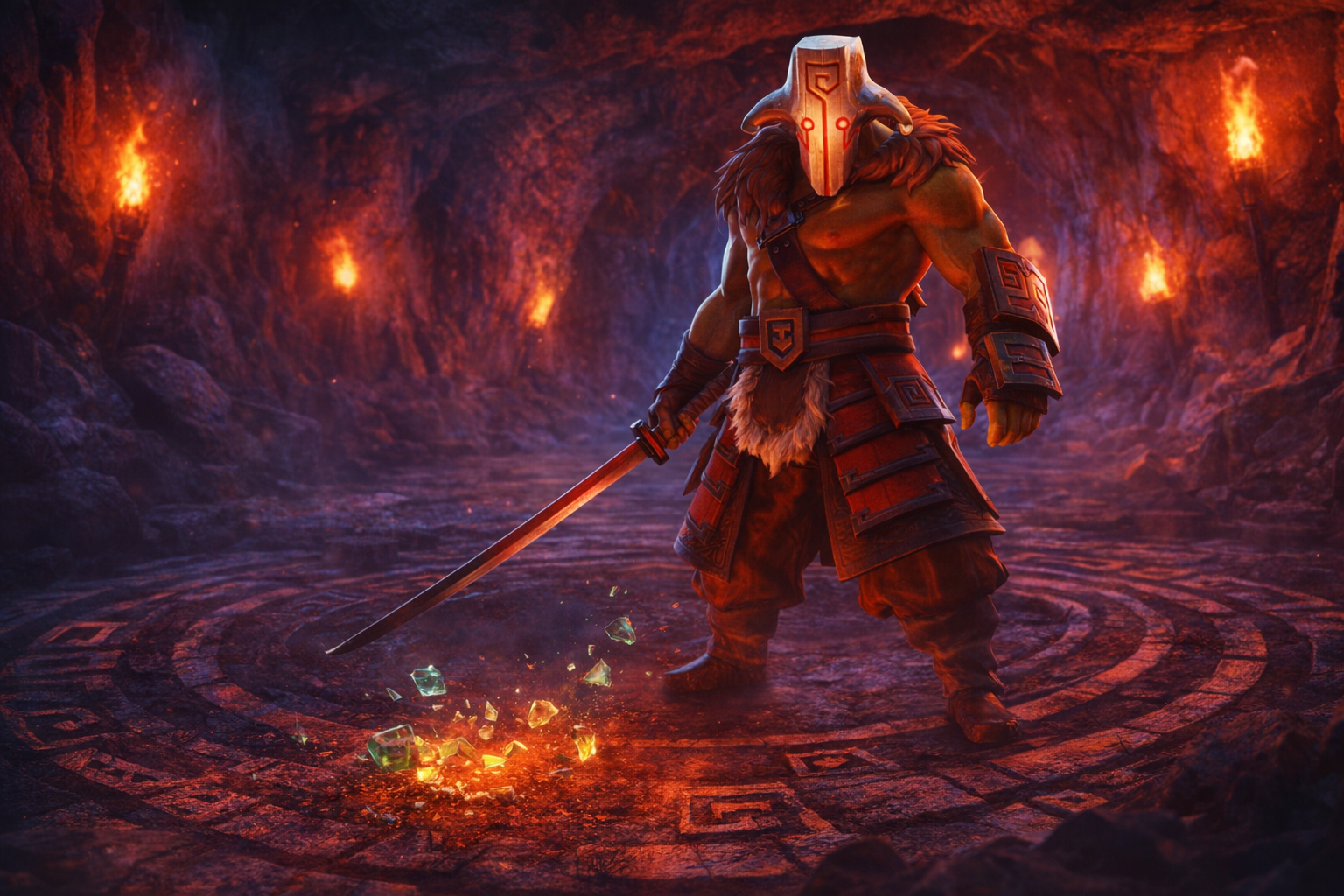
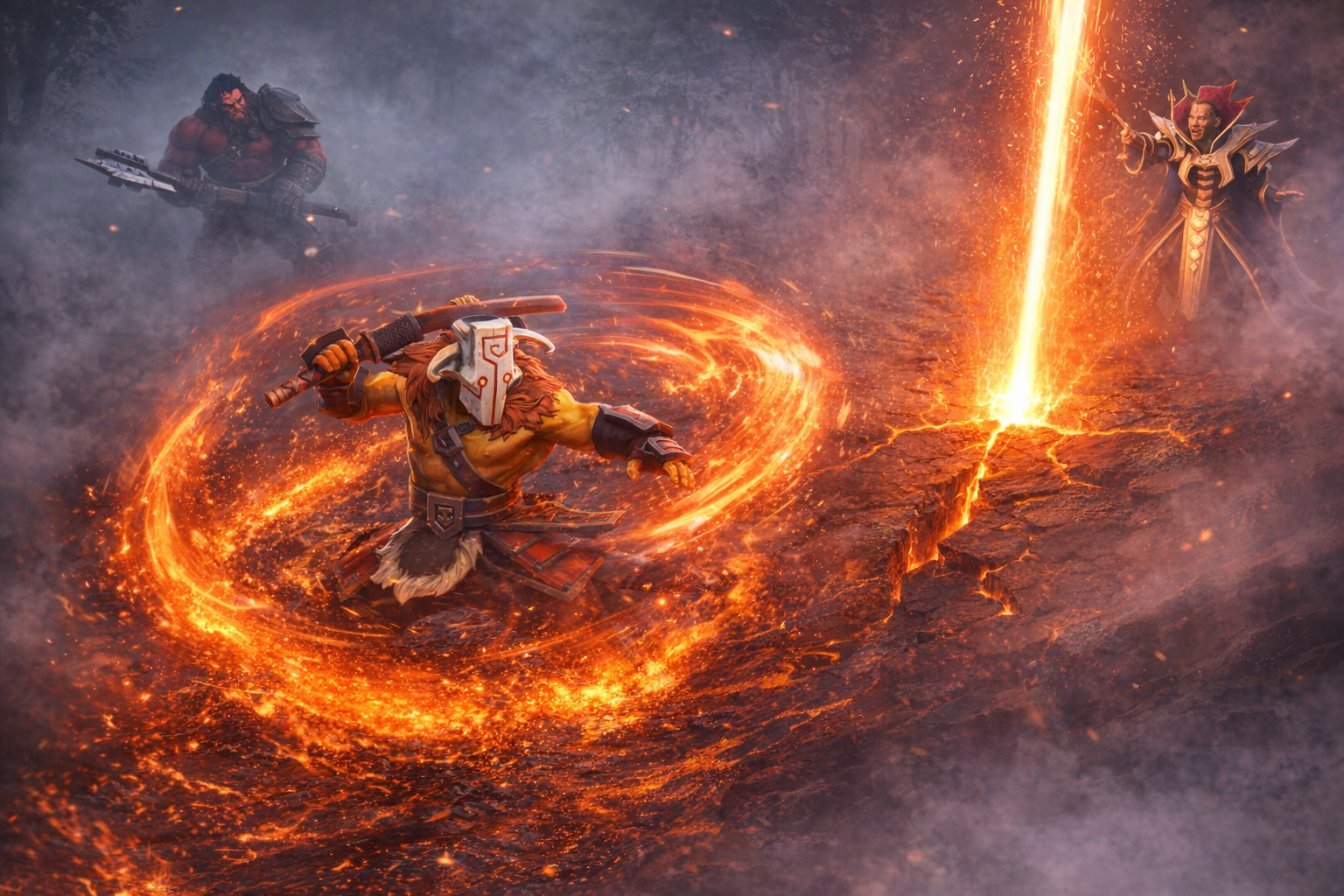
People see Juggernaut in a deciding game and read fear; in practice, the pick often signals a draft trying to buy clean lanes, protected spell windows, and a carry who can fight before the map fully collapses. You know the feeling from your own games: last pick appears, everyone instantly decides whether the carry is a genius or griefing, and then every later death gets traced back to that one portrait. A Healing Ward dies in half a second, Omnislash bounces into the wrong neighborhood, and suddenly the entire draft conversation becomes one hero-shaped punching bag.
That reading is too lazy for a Game 5 played after four games of adaptation. Juggernaut was the visible compromise. The deeper story was how the series boxed both drafts into needing lane stability, initiation, and late-game confidence at the same time.
Game 5 Was Drafted by the First Four Games
A deciding game never starts at zero. By the time both teams reach Game 5, they have already tested each other's greed, lane pressure, smoke timings, Roshan discipline, and willingness to sit in the game when the early plan goes sideways.
The early games of the series created a simple lesson: winning lanes was powerful, but lane advantage alone could slip if the draft lacked a clean way to close or survive the late-game handoff. A team could come out of the lanes looking ahead, take one bad fight around Roshan or overextend into a defensive setup, and suddenly the game state belonged to the side with better scaling and clearer high-ground tools.
That matters because it changes draft priorities. The first layer of the series asks, 'Can we win lanes?' The later layer asks, 'Can we still play if lanes are even?' Once both teams accept that a 20-minute stomp is no longer a reliable win condition, every core pick gets taxed harder. Your carry needs a game. Your mid has to matter after BKBs appear. Your offlaner needs to start fights rather than wander around hoping someone else creates a target.
Game 4 sharpened that lesson. A draft that gets scaling and initiation early can spend the rest of the draft protecting matchups and adding damage. Doom and Keeper of the Light together cover an annoying amount of ground: Doom gives a strong threat against key cores and a frontline presence, while Keeper of the Light can accelerate tempo, defend areas, and make the map awkward to enter. Once that kind of foundation exists, the other team has to spend later picks solving problems the first side already handled.
That is how you end up with mids like Storm Spirit in uncomfortable places. Storm can give reach and late-game playmaking, but he asks for resources and clean entry points. If the answer is Sand King, the comparison gets brutal fast: reliable blink initiation, AoE control, strong farming patterns, and a less fragile path into mid-game fights. That draft exchange matters more than whether one player missed a spell or one support got caught on a ward. It shows the direction of the series.
The early Invoker reveal is the hinge point. Invoker scales, gives global punishment with Sun Strike, and offers a gigantic spellbook if the game slows down. He also asks the rest of the lineup to provide things he prefers to follow rather than supply instantly: dependable initiation, a body to stand in front, and fight structure.
That is why Axe makes sense beside him. Axe gives a clear jump target, forces reactions, and creates Sun Strike opportunities without asking for a five-second argument about who is going first. He also gives the lineup a hero who can stand in waves, threaten blink timings, and punish melee cores that commit too far.
The cost of showing Invoker early is information. Once your opponent knows the mid matchup and understands that the draft still needs front-line initiation, their later picks can be aimed at the shape of the whole composition rather than guessing. They can ban or pick around the heroes that complete the Invoker idea. They can decide whether to outrange it, outscale it, or survive its first contact and hit back.
This is where Juggernaut becomes more understandable. He is a carry who can lane without demanding a perfect babysit, join fights before reaching full luxury status, and pressure objectives with Healing Ward when the draft gets a window. He also has a natural way to play around spell-heavy chaos through Blade Fury, which is valuable when the opponent's setup wants clean disables into layered damage.
What Juggernaut Actually Gives You
Juggernaut gets dismissed because his kit is familiar. Everyone has seen the hero win a lane by spinning on a support, lose a game with a miserable Omnislash, and spend late fights looking weirdly low-impact against disciplined positioning. Familiarity makes him look basic. His actual draft value is more specific.
Blade Fury gives him an early protected window in fights and lanes. That matters against lineups built around spell chains. It lets him disengage from some pressure, secure kills with support help, and avoid being a pure sitting duck when rotations arrive. Against Axe, the details become more delicate because Axe punishes proximity and can begin fights before Juggernaut gets to choose the terms. Still, having a built-in way to play through magical pressure is a real asset.
Healing Ward is the part that gets underappreciated until it wins a siege. A well-placed ward turns chip damage into wasted time and lets a team keep hitting towers after a fight has technically ended. It also forces opponents to either dive awkwardly to kill it or give up space. In elite games, the ward often dies fast because everyone respects it. That quick death can make the spell look useless to viewers, even when the attention spent killing it changes positioning.
Omnislash is the loudest spell and the most misleading one to judge. It can delete an isolated hero and swing a fight instantly. It can also get diluted by creeps, summons, illusions, or good spacing. That volatility is part of the pick. Juggernaut gives you high-threat windows rather than constant, brainless damage from safety. If your lineup can create isolation, Omnislash looks oppressive. If every fight happens in clutter, the spell becomes a lottery ticket with a sword animation.
His itemization also fits the compromise role. Juggernaut can build for farming, early skirmishing, dispel needs, or survivability depending on the game. He rarely has the pure inevitability of the greediest late-game carries, but he reaches useful states without needing the entire map to himself for half an hour. In a Game 5 where lanes and mid-game fights both matter, that flexibility has real draft value.
The Real Tension Is Floor Versus Ceiling
The strongest criticism of the Juggernaut pick comes from ceiling. Against a lineup with Axe initiation and Invoker's scaling toolkit, you can argue for a carry with a more overwhelming late-game profile or cleaner fight dominance. If the game reaches the stage where everyone has defensive items and fights stretch across multiple waves, Juggernaut may feel capped. He can spend Blade Fury defensively, watch Healing Ward get sniped, and struggle to find an Omnislash that hits the target he actually wants.
That criticism has teeth. A deciding-game carry pick carries emotional weight because viewers expect it to solve the draft. They want the last core to look like a win condition, lane stabilizer, damage engine, and matchup answer all at once. Dota rarely gives you that hero unless the opponent has already made a serious drafting mistake.
The safer carry often exists because the greedier carry creates different problems. Pick something that scales harder and you may lose the lane so badly that the theoretical late game never arrives. Pick something with better teamfight reach and you may lack sustain for towers. Pick something that destroys Axe later and you may hand Invoker a free early map because your carry cannot fight until two more items.
Juggernaut sits in that uncomfortable middle. He gives the draft a playable lane and a path into early objectives, while leaving questions about the deepest late game. That is exactly why he becomes polarizing. A high-floor hero in the final game looks cowardly when the game is lost. The same hero looks mature when he wins lanes, joins the first decisive smoke, and ends before the enemy draft blooms.
Axe and Invoker Make the Pick Look Worse on Screen
Some matchups produce ugly optics. Axe into Juggernaut is one of them because Axe punishes the way melee carries naturally want to play. Juggernaut wants to approach waves, threaten supports, and commit during his protected windows. Axe wants to force a reaction, catch heroes before they press buttons, and turn clustered fights into chaos.
Invoker adds another layer. He rewards setup, punishes predictable movement, and thrives when fights develop in stages. Juggernaut prefers cleaner engagements: enter with a purpose, force a kill, heal through retaliation, and convert to an objective. If the fight becomes a long spell-trading mess, Invoker's lineup usually gets more chances to find value.
That visual dynamic is why the blame lands on the carry. When Juggernaut fails, everyone sees it. The spin goes nowhere. The slash fails to decide the fight. The ward dies. When a draft lacks instant initiation from another core, or lacks a second hero who can force enemy formations apart, the failure is quieter. It shows up as hesitation, bad angles, and fights starting three seconds too late.
Carry picks get blamed because their failures have animations.
The Pub Lesson: Stop Copying the Hero, Start Copying the Reason
The worst way to learn from a finals draft is to queue ranked and slam Juggernaut because a pro team picked him in Game 5. The useful lesson is why the hero entered the draft at all.
Pick Juggernaut when your team can actually use his timings. If your supports have slows or stuns that let Blade Fury become a kill threat in lane, the hero gains teeth early. If your lineup can hit towers after won fights, Healing Ward becomes a map spell rather than a decorative green circle. If someone else can start engagements, Juggernaut gets to follow with damage instead of face-checking like a budget offlaner.
Avoid treating him as a universal safety blanket. A pub draft with no initiation, no tower pressure, and no way to isolate targets will make Juggernaut feel terrible. You will farm your first items, walk to a fight, spin because something scary happened, and then watch your team ping Omnislash while five enemy units stand together under a creep wave.
Against Axe specifically, your lane and mid-game discipline matter more than ego. Respect blink timing. Track whether Axe is missing before you hit dangerous waves. Save your defensive options for the moment that actually decides the fight. In pubs, most Juggernaut deaths against Axe come from acting like Blade Fury is a permission slip to stand wherever you want.
Against Invoker, tempo is the pressure point. Let him farm levels and items in peace, and his spell variety will eventually make every fight harder to script. Force him to respond to tower pressure and skirmishes before he is comfortable, and Juggernaut's earlier usefulness starts to matter. The hero wants the game to have shape. Random brawls into prepared high ground waste what he offers.
The Better Read on Game 5
Juggernaut was the compromise pick in a draft that had already been squeezed by the series. The opposing side revealed a scaling mid early, then patched the initiation issue with Axe. The response needed to survive lanes, fight early enough to prevent Invoker from getting a dream game, and still offer some late-game threat if the match went long. Few carries satisfy all of that cleanly.
Blaming Juggernaut alone turns draft analysis into scoreboard astrology. The more honest read is harsher and more useful: by the time the carry was selected, the draft had too many jobs left for one hero. Juggernaut covered several of them decently and none of them perfectly. That is how Game 5 drafts often look when two elite teams have spent four games removing each other's easy answers.
The next time a deciding game ends with a familiar carry looking underwhelming, look at who had to start fights, who could hit buildings, who scaled without help, and which team forced the other to solve everything late. The hero portrait is the easiest thing to blame. The draft squeeze is where the game was really decided.