You queue support after years away, buy wards out of habit, and the map feels like somebody quietly rebuilt your house while you were gone. There’s a gate where your muscle memory says dead space should be. Wisdom runes are changing how lanes recover. You rotate for a kill, come back, and somehow the whole game state has shifted before minute ten.
That feeling is normal. Support in modern Dota asks for more decisions, rewards more initiative, and punishes autopilot faster than it used to. The good news is that the role also gives you more tools than ever. Wards are less of a tax. Map features create real comeback routes. A support who understands where the game wants to be played can still drag disorganized pubs into something that looks almost coherent.
The Job Description Changed
Support used to be easier to describe. Secure lane. Buy utility. Keep vision up. Show up to fights. Those fundamentals still matter, but the role has expanded because the map itself now creates windows that supports are best positioned to use.
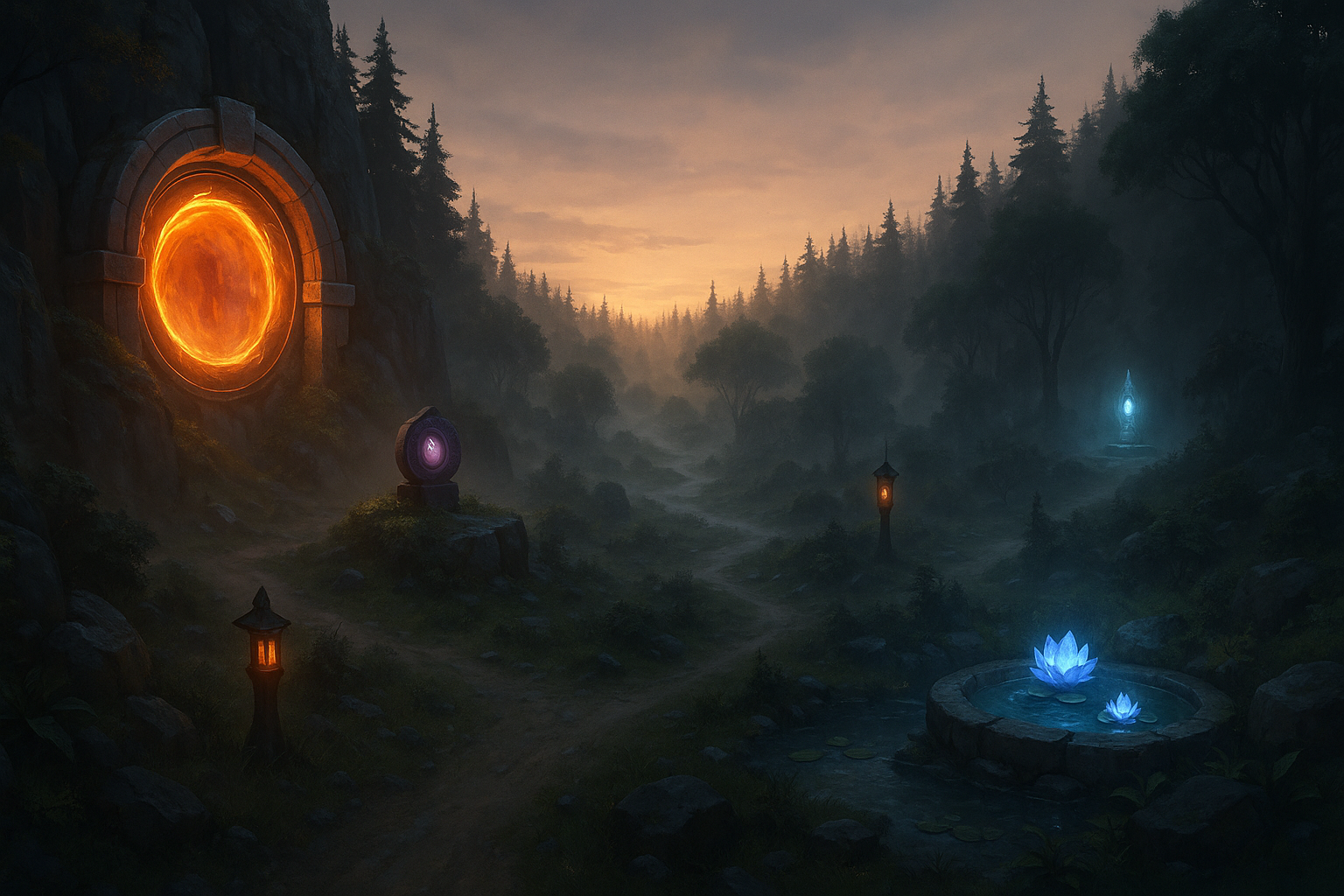
Twin Gates compress distance in ways that make cross-map reads much more relevant. Wisdom runes put a hard timer on experience swings. Lotus pools create sustain patterns around side lanes and make attrition lanes play differently from the old days. Outposts and watcher control mean information itself has become a contestable objective rather than a bonus you get from being disciplined.
That matters because support is no longer just the role that reacts first. It’s often the role that decides first.
If you’re returning after a long break, stop trying to map the current game onto the old one. You’ll only frustrate yourself. Treat modern support as a role built around timed movements and information denial. Your hero still matters. Your lane still matters. Your item build still matters. Your biggest edge comes from reaching the right place before everyone else realizes it matters.
Learn the New Map by Anchoring to Timers
Stop memorizing terrain, memorize reasons to move
Most returning players get overwhelmed because they try to relearn the entire map all at once. That rarely sticks. What sticks is connecting areas of the map to recurring jobs.
The side lane structures and nearby objectives matter because they affect lane sustain, pull access, and rotation speed. Twin Gates matter because they let one support threaten two areas of the map without a full committed smoke. Wisdom rune timing matters because it creates a very obvious experience objective that can reward anticipation and punish laziness. Watchers matter because they smooth out movement for whichever team claims them first.
When you tie each map feature to a purpose, the map stops feeling random.
Your first ten minutes need a script
You don’t need a rigid flowchart, but you do need a default plan. In most pub games, supports lose structure first. A solid opening script keeps you from becoming one of those heroes who drifts from lane to lane accomplishing nothing.
Start from lane matchup. Ask one question immediately: are you playing to win this lane through trading, through pull manipulation, or through survival? That answer decides whether you spend your next minute in the trees contesting small camp access, standing on the wave to threaten spells, or protecting your core while preserving your own health and mana.
Once the lane stabilizes, your next checks are simple. Is a rune fight worth showing for? Can your lane partner be left alone for a short window? Is the opposite side lane vulnerable to a gate rotation? Is there a wisdom timing coming soon that needs setup? Support becomes much cleaner when you think in short scheduled bursts instead of vague map presence.
Warding Isn’t a Chore Anymore
Vision now rewards intent, not just habit
Older Dota trained supports to think of wards as a personal burden. Buy them, place them, pray your team uses the information. Modern Dota gives more room for active vision play because observer wards are less financially punishing and dewarding has become more interactive.
That change should alter how you think. You’re no longer guarding a tiny budget with terrified hands. You’re shaping where your team is allowed to breathe.
Good warding starts with the next play, not a generally useful cliff. If your offlaner wants to pressure a tower, ward the routes that punish the defense rotating in. If your mid is ready to invade triangle space, ward entrances and fallback paths. If your team is weak and needs to stall, use defensive vision that sees movement early enough to split the map before contact.
Blindly placing wards on the most obvious elevated spots still gets punished by competent players and even half-awake pub supports. Use unusual angles when the standard cliff is too readable. More importantly, connect every ward to a movement you expect within the next couple of minutes.
Dewarding is about reading supports, not sentry luck
People talk about dewarding like it’s a casino. It’s much closer to profiling. Which support just disappeared from lane with full mana and no obvious rotation? Which objective is the enemy trying to unlock? Where would vision make their next move feel safe?
That line of thinking gets you further than sprinkling sentries out of insecurity.
A strong support player doesn’t just remove enemy wards. They remove the confidence those wards created. The moment the map goes dark at a crucial choke point, aggressive cores hesitate. Smokes become clumsy. Tower defenses arrive late. That hesitation is often worth more than the gold.
Picking Support in Pubs: Reliability Wins
First-pick heroes need to function with bad information
Pub drafting is messy. You often first-phase your support and spend the rest of the draft hoping your hero still has a game. That makes reliability more valuable than cute counters.
Supports that first-pick well usually share a few traits. They offer lane pressure without needing a specific partner. They contribute in fights even when underfarmed. Their spells remain relevant when the game gets ugly. They can play both from ahead and from behind.
That’s why straightforward teamfight and lane-control supports remain attractive pub choices. Heroes that bring dependable disable, strong harassment, or durable utility tend to survive draft chaos better than specialists who need very specific setups.
If your comfort picks are banned, replace them with a hero that answers a stable pub need. Reliable catch. Reliable save. Reliable lane pressure. Pick one identity and commit to it. The worst replacement is a hero that does a little bit of everything and never swings a fight.
Off-meta supports need a real lane and a real purpose
Weird support picks are fun when they actually solve a problem. They become grief the moment they’re just a flex for the sake of being unusual.
A strong off-meta support usually has one of two selling points. Either the hero crushes certain lane patterns through trading or threat range, or the hero unlocks a midgame map move that conventional supports don’t provide.
That’s the standard you should use. Can this hero secure the first ten minutes with credible pressure? Can this hero contribute once the lanes break without stealing too much farm or needing expensive items just to feel real? If the answer is shaky, the pick belongs in a highlight clip, not your ranked queue.
Heroes with surprising base damage, awkward damage types for lane opponents, long reach on initiation, or natural tower pressure can sometimes slide into support if the patch gives them enough breathing room. The trap is assuming that a hero being annoying equals that hero being useful. Plenty of lane pests turn into decorative creeps after minute fifteen.
Itemization: Stop Building on Autopilot
Your items should answer the game in front of you
Support item builds get butchered by habit more than almost anything else. Players find one comfortable sequence and force it every match, even when the game is begging for something else.
The right way to itemize starts with threat assessment. Are you dealing with gap close that demands save tools or repositioning? Are you facing heavy magic burst that requires survivability and team utility? Does your team lack catch, wave clear, or a way to start fights cleanly?
Buy toward the actual bottleneck.
That means a greed item should justify itself beyond comfort. If you’re on a hero that can accelerate with a farming choice, ask whether your lineup can afford the delayed tempo. Some games absolutely let you get away with it. In plenty of others, you’re effectively telling your team to survive without a real support item while the enemy takes over the map.
Ogre Magi is the perfect example of pub greed
Ogre invites bad habits because the hero can get away with murder in low-pressure games. He’s tanky, his spells are easy to use, and a greed item can snowball into a goofy amount of value. That doesn’t mean every Ogre game should drift into passive farming.
After any early acceleration, Ogre still needs to answer a support question: what does your team need from you right now? Frontline aura carrier? Save utility? Reliable cast range to apply disables from safer positions? A way to survive long enough in fights for repeated spell impact? Build around that answer.
Ogre feels strongest in pubs when he turns gold into immediate fight leverage rather than into abstract future efficiency. If your item doesn’t help your next real engagement, it’s probably too cute.
Playing Into Tanky Lineups as Support
You rarely solve bulk with raw damage
Tanky enemy drafts create the same trap for support players every patch. You start searching for some magical damage item or greedy scaling route that will let you personally burn through huge health pools. That usually leads nowhere.
Supports beat durability through control, layering, and target access. If the enemy frontliners absorb too much, redirect your attention. Control the heroes behind them. Force awkward positioning. Break the fight into segments so the tank arrives alone or arrives late.
For a hero like Techies, this is especially important. Against durable lineups, your value comes less from fantasizing about solo deleting the unkillable core and more from using area control, silence, displacement pressure, and follow-up damage to make the fight unplayable for the enemy’s backline and supports. A tank that can’t walk where it wants and can’t count on support behind it becomes much easier for your team to handle.
Fight geometry matters more than your scoreboard
When people complain that a support hero feels useless into tanky enemies, what they often mean is that straightforward spell dumping didn’t produce kills. That’s a positioning problem disguised as a damage problem.
You want fights in narrow zones, around ramps, chokepoints, towers, and contested vision. You want the enemy to commit through space that punishes grouping. You want your control to hit the heroes enabling the tank, not just the tank itself. This is where good supports separate themselves from stat-check frustration.
The pub-level lesson is simple: stop trying to top damage on support into thick lineups. Make the map ugly. Make the fight awkward. Let your cores hit whatever is left standing in the mess.
The Lane Still Decides Your Day
Every support lane has one resource that matters most
Good lane support isn’t random harassment. It’s identifying which resource wins the lane and playing around it relentlessly.
Sometimes that resource is health. If your duo outtrades, keep the enemy low enough that they can’t stand near creeps. Sometimes it’s wave position, where the entire lane turns on denying or enabling pulls. Sometimes it’s cooldown windows, especially when one side has a brutal level spike and the other side needs to avoid contact until then.
This is where many returning players bleed MMR. They remember the old support instincts well enough to participate, but not sharply enough to dominate. They cast spells because mana is available. They click heroes because they’re in range. They miss the actual objective of the lane.
When you know the resource that matters, your actions become more coherent. You trade to secure pull access. You block camp to preserve wave position. You bodyguard your core during vulnerable cooldowns. Suddenly every small move has a reason.
Pulls are still powerful because they change decisions
People often talk about pulling like it’s just an efficiency trick. The real value is that it forces reactions. It drags enemy supports into bad positions, makes cores choose between experience and safety, and creates windows to reset a lane that was drifting out of control.
A support who understands when to pull and when to stay in lane is doing much more than farming neutrals. They’re editing the lane state.
That remains one of the cleanest ways to create an edge in pubs, because plenty of players still react late. If you can consistently read wave momentum and use camps to manipulate it, your carry gets cleaner farm and your offlaner gets stronger pressure depending on which side you’re on.
What Better Support Play Looks Like in Pubs
You are the role that turns chaos into a sequence
Pub games are full of dead time. Teammates farm without connecting. Smokes happen without vision. Towers get pressured with no wave behind them. A strong support trims that nonsense out of the game.
You do it by creating a sequence your team can actually follow. Ward the area you want to invade. Push the dangerous wave with a spell if your hero can do it safely. Bring a core to the next objective timing. Occupy the area first. Force the enemy to react second.
That sounds basic because it is. Basic Dota done on time wins a lot of games.
Most support improvement comes from reducing wasted movement. Every time you cross the map, know why. Every ward should introduce a play or protect one. Every smoke should target a hero or area that matters for the next minute of game time. Every death should trade for information, space, or a meaningful cooldown.
That’s how the role stops feeling underpowered. You stop measuring your game by KDA and start measuring it by how many favorable decisions your team got to make because you were there first.