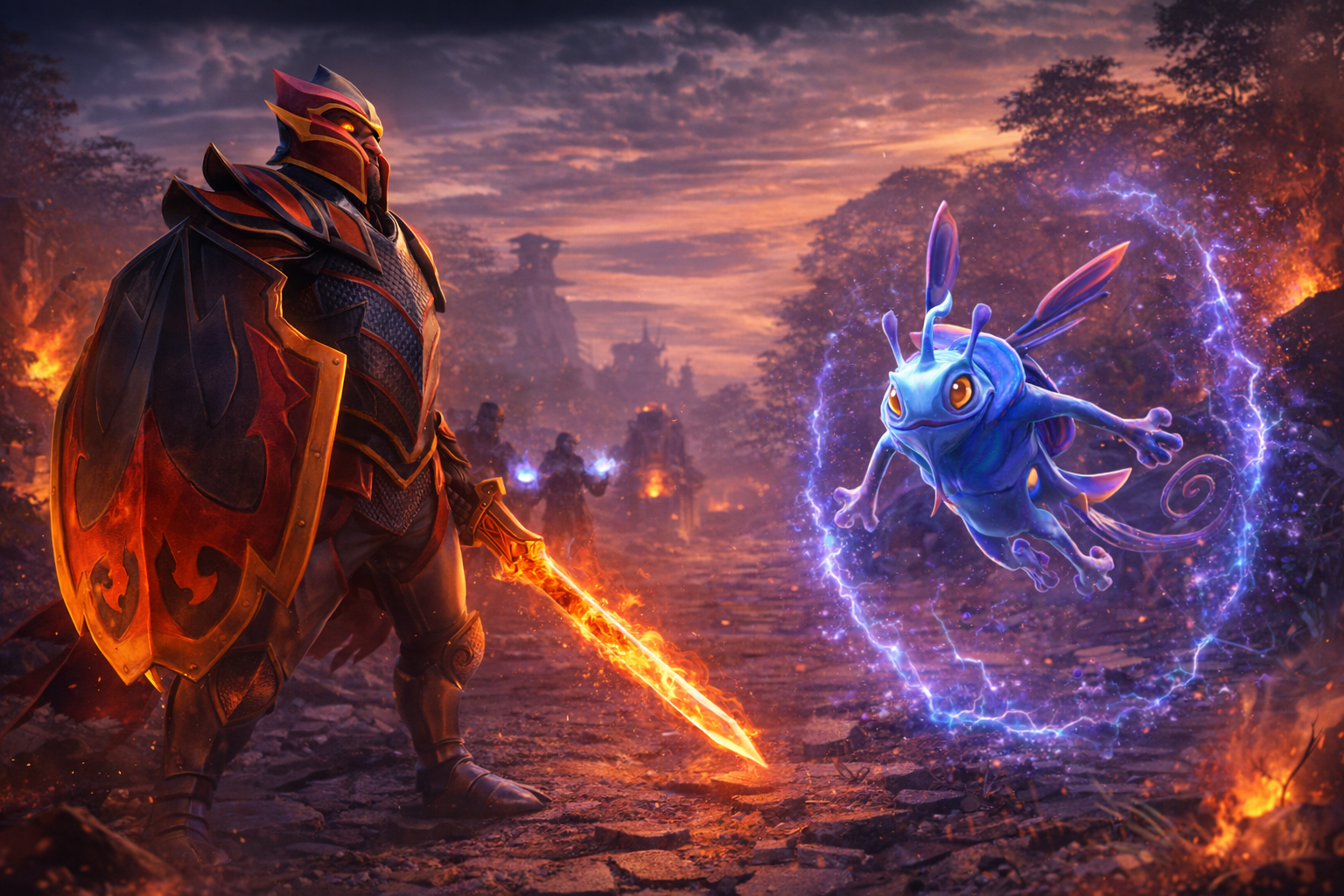
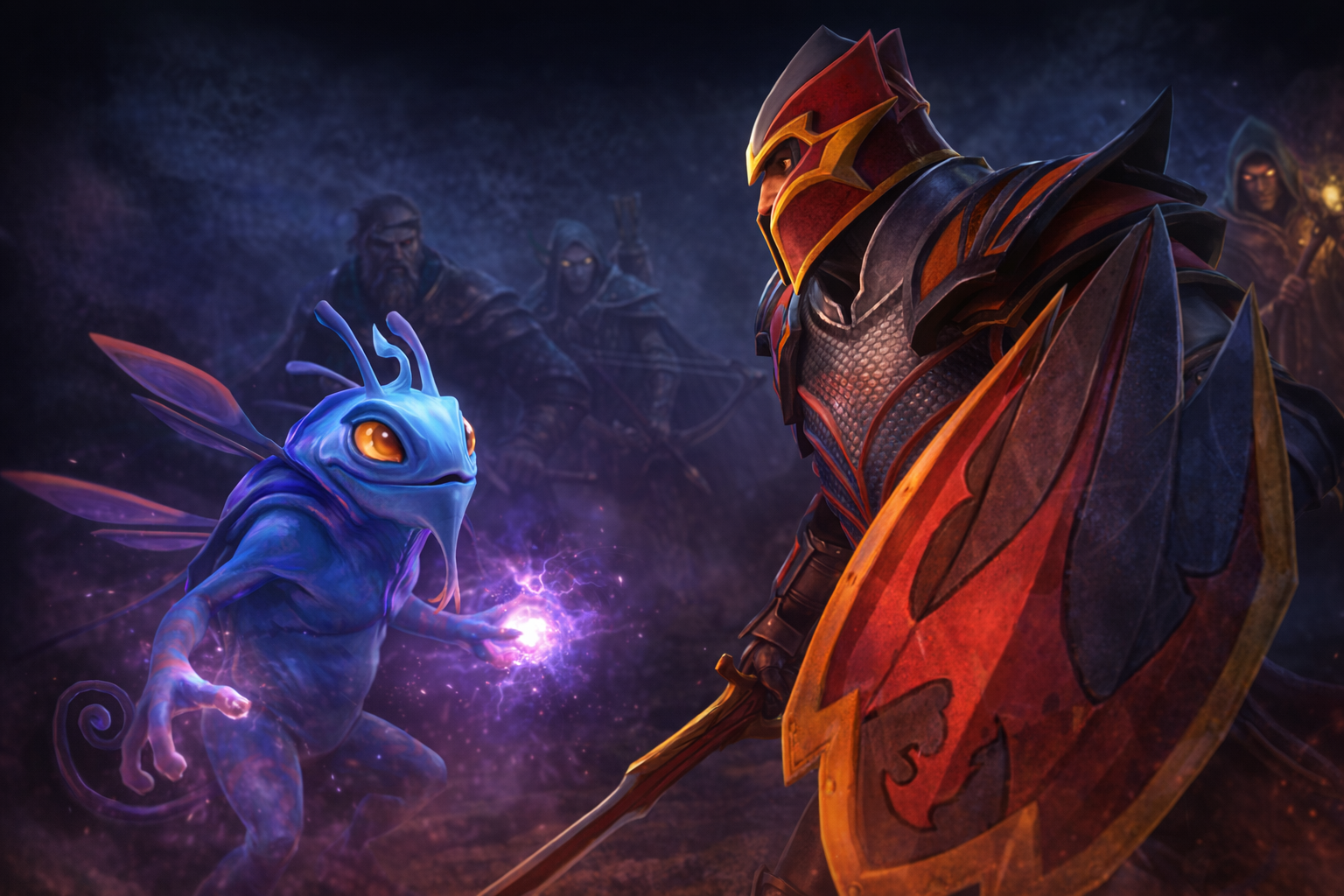
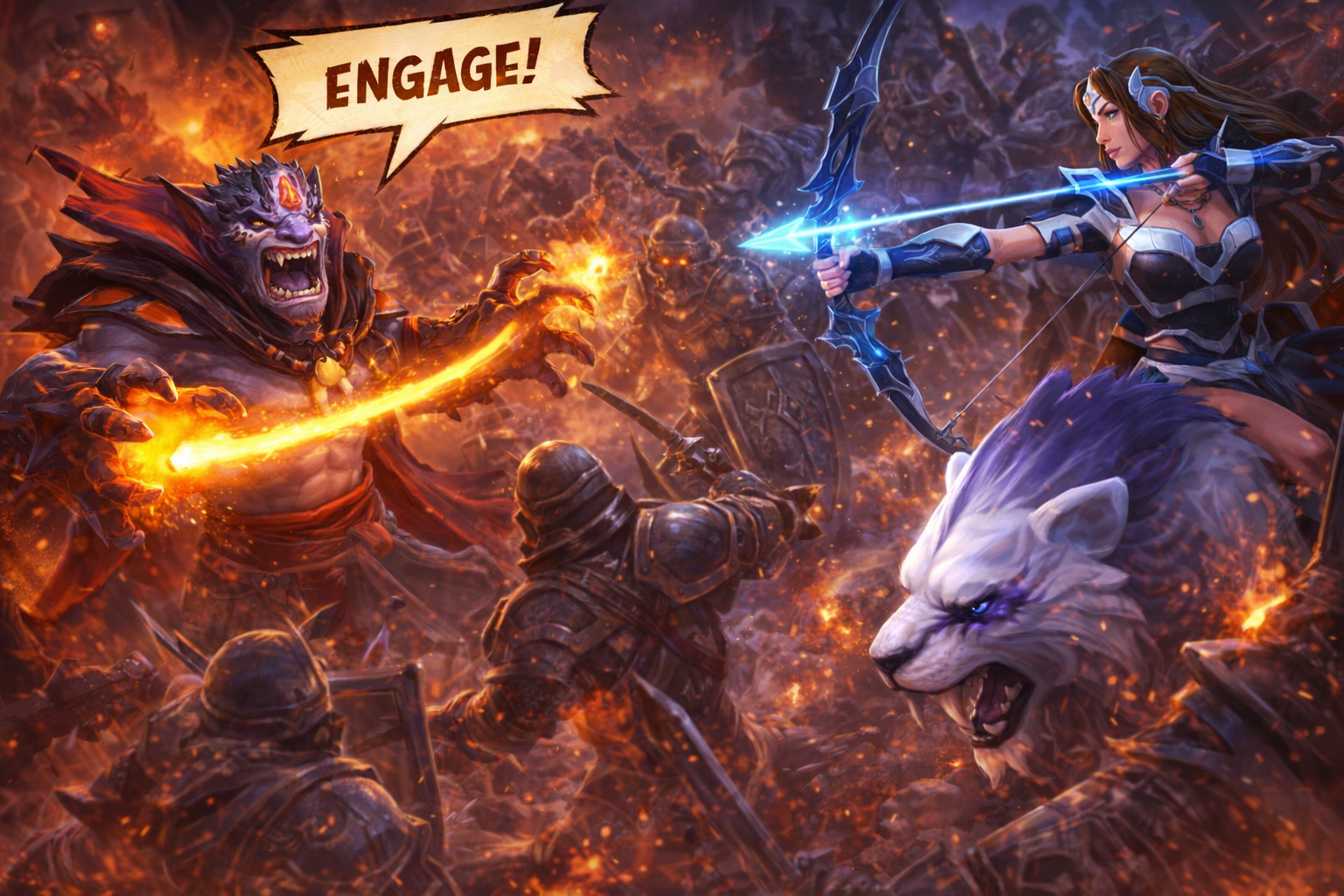
Yeah, you’ve seen this one. A Storm zips in, catches a support, and before the guy can even panic-press a defensive item, he eats a Hex, a follow-up stun, a silence, and some miserable little cleanup nuke from the carry walking over late. The whole thing looks scripted, like five players agreed on a disable spreadsheet before the fight started. Then you queue a pub, two people stun the same target at the same time, Mirana arrows a corpse, and everyone pings everyone.
High-level chain CC looks magical because the visible part is tiny. The actual mechanism is a mix of spell properties, role assignment, fight geometry, and a few blunt voice calls. The best teams are rarely having a full conversation mid-fight. They already know what the first spell should be, which spells are follow-up only, and when someone needs to shut up and hold their disable for the next target.
The First Stun Is Usually the Most Reliable One
The opening disable has the hardest job. It has to start the kill before the target can react, juke into fog, activate a defensive item, cast a mobility spell, or get saved by a teammate. That means the first spell is usually chosen for reliability rather than maximum duration.
Point-target disables, instant disables, and low-commitment initiations naturally climb the priority list. Hex effects, Dragon Tail from Dragon Knight when he is in range, Telekinesis, Storm Hammer, Shadow Shaman shackles after a setup, and similar tools have very different shapes, but they share one important quality: when the caster is in position, the target has limited room to outplay the first contact.
That matters more than people admit. A long stun that misses starts nothing. A delayed area spell that needs the enemy to stand still is often a follow-up tool. A skillshot that becomes easy after the target is already disabled belongs later in the chain unless the angle is free.
This is why pro fights so often open with the boring button. Boring wins. The flashy part comes after the target loses agency.
Cast Point, Travel Time, and Human Reaction Decide the Order
Disable order is not just “longest stun first” or “support stuns before cores.” Dota spells have different cast points, projectile speeds, ranges, and targeting rules. Those hidden-feeling details shape the chain.
A spell with a crisp cast point and direct targeting is excellent for starting. A delayed ground-target stun is usually better after someone else has already pinned the victim. Lina’s Light Strike Array, Leshrac’s Split Earth, Mirana’s Sacred Arrow, and similar spells become much more reliable when another disable creates the timing window.
Projectile travel also matters. If a projectile stun is coming from range, the follow-up player has to release it early enough that it lands as the previous disable is ending. If the spell has a wind-up, the player often begins casting while the current stun is still active. Clean chain CC is rarely a neat sequence of “stun ends, next stun begins.” The cast begins before the gap appears.
Good players learn the feel of this. They know when the target is about to move again because they have eaten these disables thousands of times. They watch the animation, the status bar, the enemy model, and the positioning of allies. Nobody needs to recite the remaining duration out loud.
Status resistance complicates this. Some targets do not stay disabled as long as your muscle memory expects. That changes the rhythm. Against tanky heroes with status resistance or dispel support behind them, chaining becomes less about perfect elegance and more about front-loading enough control to force a kill before the save arrives.
The Pre-Fight Agreement Does Most of the Talking
The cleanest teams communicate before the fight breaks out. They know the expected opener. They know who is holding the counter-initiation spell. They know which hero must die first if they overstep.
That preparation can be very simple:
“Lion starts if he sees Puck.”
“Save arrow for DK stun.”
“Hold Ravage until BKBs.”
“Don’t stack on the first support.”
Those calls sound obvious, which is the point. The less you need to solve during the fight, the faster everyone plays. Dota teamfights move too quickly for committee work. If the smoke breaks and a priority target appears, hesitation kills more plays than bad mechanics.
Pre-fight planning also prevents the classic pub disaster where every disable gets dumped into the first visible hero. High-level teams think in waves. One spell starts the kill, one spell confirms it, and other disables stay available for the save hero, the blinking initiator, or the core who has to be controlled after spell immunity ends.
That restraint is the part pubs struggle with most. Pressing your stun feels useful. Holding your stun while your teammate finishes the chain feels terrifying. Strong teams trust the chain enough to keep resources for the next second of the fight.
In-Fight Comms Are Short, Ugly, and Specific
When the fight starts, voice comms shrink. The useful calls are tiny.
“Hexing.”
“Stun next.”
“Arrow after.”
“No stun.”
“Hold.”
“Kill this guy.”
That is the language of chain CC. Nobody is giving a lecture about optimal disable layering while a Morphling is waveforming through the backline. The caster of the first spell often announces the action as it happens. The follow-up player either confirms or simply casts because the pairing was already understood.
The most important call may be the absence of a spell. “No stun” tells the next player that the chain will break unless they cover. “Hold” tells everyone that the target is already dead or that a bigger threat is about to enter. These calls save games because they prevent overlap and panic.
There is also a hierarchy of voices. The player with the key initiation often drives the opening. The player with the save or counter-initiation may call restraint. The carry usually communicates whether they can hit, because a beautiful stun chain means very little if the damage is stuck behind terrain, creep waves, or fear of buyback punishment.
Target Priority Changes the Chain
Disable order depends heavily on who is being killed. Catching a mobile mid hero requires different sequencing than killing a strength core walking up a ramp.
Against slippery heroes, the first disable has to deny escape immediately. You value instant control, silence, leash-type effects, or anything that prevents the hero from pressing the one button that ruins the gank. Follow-up disables need to cover the moment after the first control ends, because those heroes are built to punish even a tiny gap.
Against tankier frontline heroes, the chain often needs to account for saves. The first stun may be less about killing instantly and more about forcing reactions. If Oracle, Shadow Demon, Dazzle, or a defensive item is in play, someone has to watch the saver. Blowing every disable into the target while the save hero stands free is a classic way to lose a won initiation.
Against supports, the calculation can be brutally efficient. Use the minimum control needed. If one stun plus damage kills the warding support, spending two more disables is a donation to the enemy cores. Great teams delete supports quickly and keep the real fight resources available.
This is where “perfect chain CC” separates from “everyone pressed buttons.” The outcome may look the same on the kill feed, but the spell economy decides the next ten seconds.
Range and Fog Decide Who Gets to Start
Sometimes the “right” first stun belongs to the player who can actually reach. Range rewrites theory.
A Rubick hiding in fog may have the cleanest opener because Telekinesis can start from a safer distance. A Dragon Knight stun may be ideal mechanically, but if he has to walk through a warded choke to use it, the play becomes obvious. A Tiny combo might be devastating, yet useless if the enemy formation never gives him the angle.
Fog makes delayed spells stronger when paired with vision control. If the enemy does not see the follow-up hero, they cannot easily dodge the second layer. This is why smoke ganks and night-time movements produce such nasty chains: the victim reacts to the first hero they see while the real follow-up is already casting from darkness.
High-level teams also use body positioning as communication. If your Mirana is standing in arrow angle behind the initiator, you know what she wants. If your Leshrac is hugging the edge of the fight, he is waiting for the setup. If your Earth Spirit is postured to roll or kick through a controlled target, the chain is already half-declared without a word.
Cooldowns Create the Real Discipline Test
The hardest part of disable chaining is resisting the urge to make the first kill prettier than it needs to be.
A long-cooldown teamfight spell has a different value than a short support stun. A BKB-piercing disable, a huge area stun, or a save-canceling spell can decide the entire engagement. Throwing it into a target that was already dead can turn a pickoff into a lost fight.
This is especially obvious around objectives. Near Roshan, towers, or high ground, teams need disables for multiple phases. The first catch might start the fight, but the buyback, teleport return, or counter-initiation often determines who actually wins. A team that spends every stun on a position five may get the kill and immediately lose two cores to the response.
Good chain CC respects cooldown tiers. Cheap disables confirm. Premium disables swing fights. The art is knowing when the target is important enough to spend the expensive one.
Why High-MMR Pubs Can Look Surprisingly Clean
You can see excellent stun chaining in high-MMR pubs with almost no voice communication because the players share the same assumptions. They know the common pairings. They understand which spell sets up which spell. They recognize when a target is already controlled enough.
A Shadow Shaman holding Hex while a teammate lands the easier opener is not mind reading. It is pattern recognition. A Mirana waiting for a lift, toss, or stun before arrowing is playing the percentages. A Lina casting Light Strike Array slightly before the current disable ends is trusting the timing she has practiced for years.
The difference between a coordinated pub and a professional team is consistency under pressure. Pros build the same intuition, then reinforce it with drafts, role clarity, vision plans, and repeated scrims. They know the exact pairings their lineup wants before the horn. Pubs get moments of elegance. Teams manufacture them.
How to Bring This Into Your Own Games
You do not need five-stack comms to improve your chain CC. You need cleaner habits.
Start by identifying whether your spell is an opener or a follow-up. If you play a hero with a delayed stun, stop throwing it raw unless the target is trapped, slowed, distracted, or pathing predictably. If you play a hero with reliable instant control, understand that your button may be the green light for everyone else.
Call your spell before or as you cast it. One word is enough. “Stunning.” “Hex.” “Lift.” The follow-up player now has permission to time their spell instead of guessing whether you are committing.
Watch the target rather than your own hero after you cast. Many players press a stun and immediately think about their next damage spell. Better players track the disable duration and decide whether the enemy still needs control. If the target is dead to right-clicks, save your next stun. If the target has a mobility spell ready, cover the gap.
Use pings before fights. Ping your stun, ping the enemy escape hero, ping the ally spell you want to pair with. It feels crude, but Dota rewards crude clarity. “My stun into arrow” wins more games than five people silently hoping everyone understands the movie playing in their head.
Most of all, stop treating overlap as harmless. Two stuns landing at the same time can be fine when burst damage is instant and the target must die through saves. In most pub fights, overlap is wasted control. Wasted control gives the enemy one extra spell, one extra Force Staff, one extra blink out. That is all Dota needs to turn a clean pick into a feed clip.
The Best Chains Feel Boring on Purpose
Great disable chains look effortless because the choices are made before panic enters the room. Reliable spells start. Delayed spells follow. Expensive spells wait for targets that justify them. Voice comms stay short enough to survive the noise.
The next time a top team deletes a hero through what looks like impossible coordination, watch the order rather than the kill. Who showed first? Which spell made the next spell guaranteed? Who held their stun while everyone else was already pressing buttons? That restraint is the difference between a chain and a dogpile.
Your pubs will still have double-stuns, missed arrows, and the occasional Lion who Fingered a creep-adjacent illusion with full confidence. That is part of the ecosystem. But if you start thinking of disables as a sequence with jobs instead of buttons with damage attached, your fights get cleaner fast. The enemy does not need to be stunned forever. They only need to be stunned for exactly long enough to die.