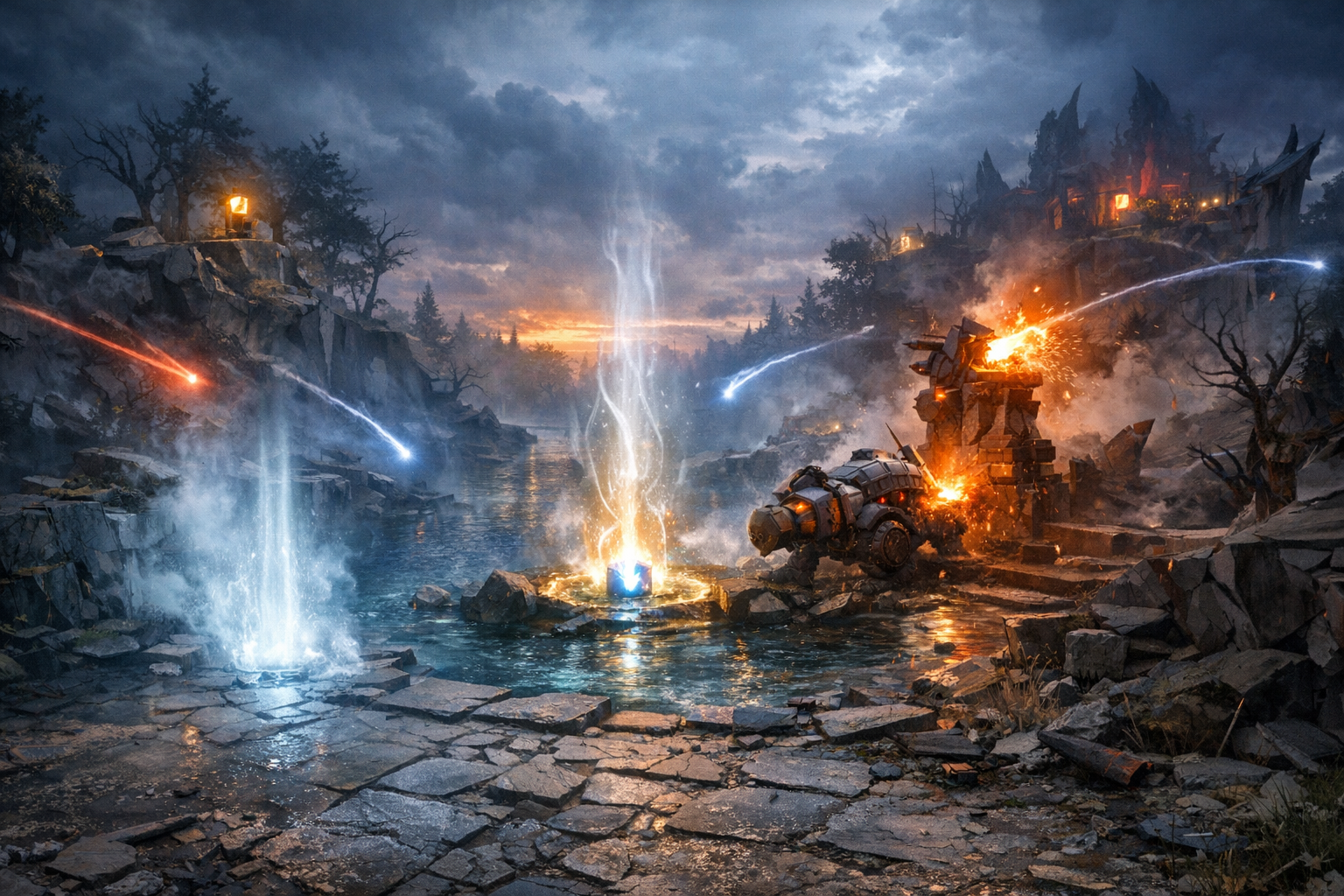
How Mid Stopped Being a Private Duel and Became Dota’s Fastest Job
Midlane used to give you stretches of silence. You’d trade hits, drag creep aggro, maybe sneak a camp between waves, and spend a few minutes building a lead that belonged almost entirely to you. These days the lane feels like a transit hub. Runes spawn, supports appear, side lanes start screaming for help, and your tower becomes vulnerable the second you leave the wave alone.
That shift matters because “mid” no longer describes a location as much as a responsibility. The role has been pulled away from isolated greed and toward immediate influence. If you’ve been gone for a while, that’s the first adjustment you feel in your bones.
A useful definition helps here: a modern mid is usually the hero that converts lane control into map pressure earliest. Sometimes that means kills. Sometimes it means tower damage, rune abuse, or forcing reactions. The common thread is tempo. The lane now rewards heroes who can win space quickly and punish every small opening.
The Lane Got Narrower, Even as the Map Got Bigger
For all the talk about Dota’s map getting larger, mid has become more compressed in the ways that matter. The river-to-tower distance is shorter than many veterans remember. That changes how punishment works. You get fewer of those old extended chases where one bad step means a full-screen death. A lot of classic lane domination patterns lost some bite because the losing mid can retreat to safety faster.
That sounds like it should make greedier mids more viable. In practice, it did the opposite. A shorter lane means wave clear matters more because your opponent can shove and threaten your tower earlier. If you spend too long doing anything else, the lane starts billing you immediately.
A slow-farming, lane-dodging mid used to have more room to blur the line between lane and jungle. Push, disappear, hit a nearby camp, come back, repeat. Modern map geometry asks for more commitment. The camps that matter are farther from your lane pattern, and the punishment for missing a wave is cleaner. The enemy clears, walks up, chips your tower, and now your “efficient” route has cost structure as well as creeps.
Why that killed a whole class of mids
The old semi-carry mid worked when the lane could be treated like a resource stream rather than a constant obligation. Heroes that wanted levels and a stable economy could justify staying self-contained because the enemy mid often couldn’t cash in hard enough on your absence.
That’s a lot tougher now. If your hero can’t rapidly clear waves, threaten with runes, or show up to nearby fights, you’re asking your team to absorb pressure while you build toward relevance. Sometimes that still works. In pubs, mastery covers a lot of sins. As a default shape for the role, it’s been pushed to the margins.
Bottle Became a Declaration of Intent
Bottle used to be one valid approach to mid. Now it’s close to the role’s native language.
That doesn’t mean every mid must buy it, and it doesn’t mean unconventional mids are unplayable without it. It means the lane is built around recurring refill points and moments of contest. Once that structure exists, heroes that can exploit it naturally rise.
Water runes changed more than sustain. They changed the emotional rhythm of the lane. Instead of the first few minutes being a pure test of trading, creep control, and resource attrition, you get scheduled relief and scheduled incentives to move. If your hero loves bottle charges and can threaten around rune timings, the lane hands you momentum. If your hero mainly wants to sit still, preserve HP through stats or lifesteal, and deny the enemy opportunities, the lane keeps asking a question you don’t want to answer.
There’s an important nuance here. Water runes actually reduce some of the brutal all-or-nothing swing that old early rune luck could create. What they also do is normalize bottle play. The lane stops being a place where one hero shrugs at runes and farms through the matchup. It becomes a place where recurring rune interaction is part of basic competence.
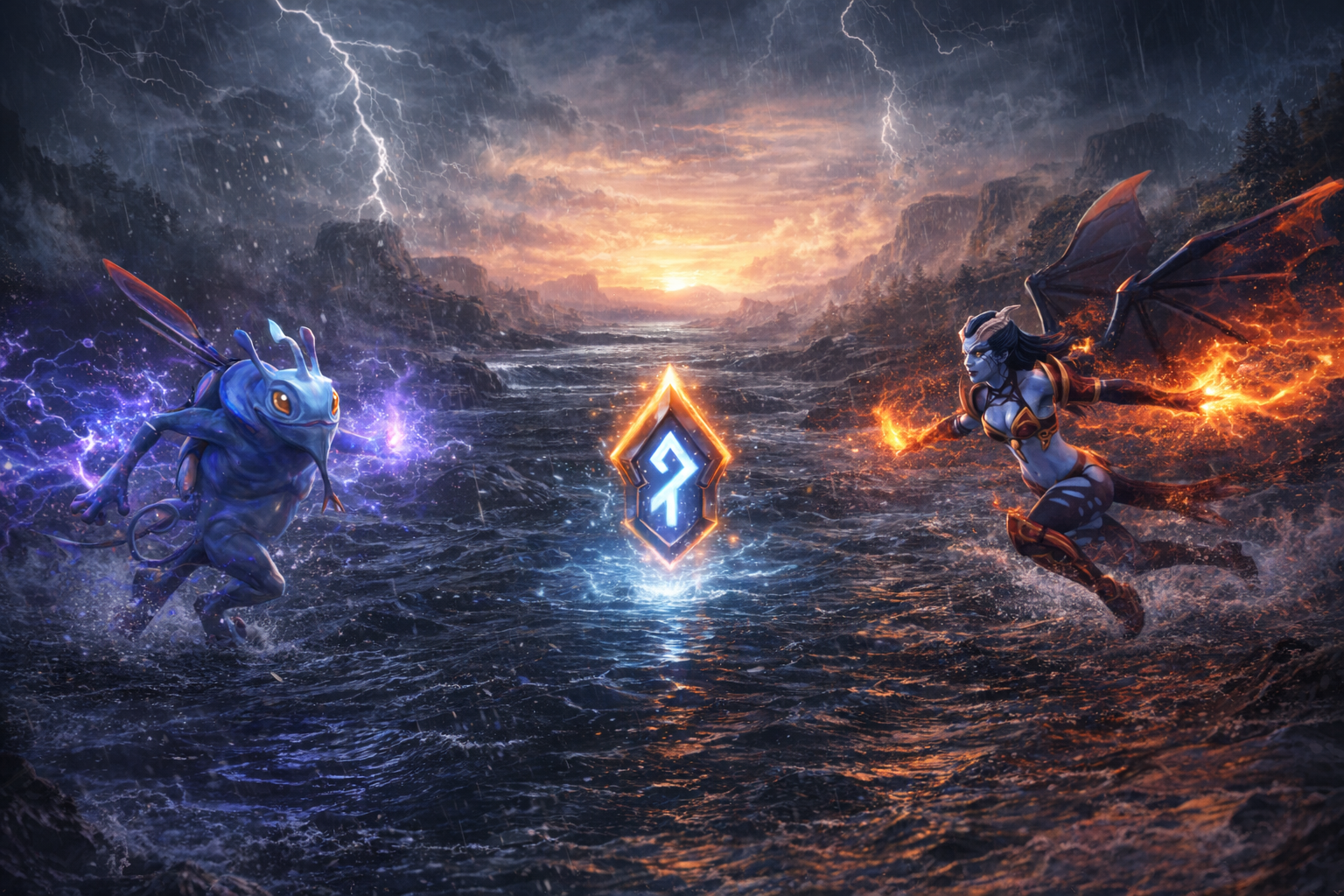
That favors heroes like Puck, Ember Spirit, and Queen of Pain for obvious reasons. They already want the same things the lane now supplies: refill, mobility, wave access, and quick transitions from lane control into action elsewhere.
Rune control is really about permission
The real reward of runes isn’t just mana or health. It’s permission.
A bottled-up tempo mid gets permission to spam the wave, posture aggressively, and rotate without arriving empty. The opposing mid, if stuck on a slower pattern, spends the same minute defending rather than deciding. That gap snowballs because modern mid is less about solo killing your counterpart and more about making your hero the first one with freedom.
Freedom to gank. Freedom to invade. Freedom to threaten tower damage. Freedom to arrive first when a side lane scraps near an objective.
Supports Changed the Job Description
A lot of returning players look at midlane itself and feel that something has been streamlined. They’re right, but the lane didn’t change in isolation. Supports got richer, faster, and far more active. That alone rewired what mid is supposed to do.
A support now has more tools to influence the first ten minutes without turning into a ward mule who explodes on contact. Rotations come earlier. Vision arrives more reliably. Contesting map resources matters sooner. When side objectives pull heroes out of static laning, the mid who can connect to those movements becomes disproportionately valuable.
Twin gates, lotus control, wisdom fights, and the general rise in early skirmish density all reinforce the same principle: your mid isn’t just laning against another mid. Your mid is the hinge for the whole early map.
That’s why the old “I’ll hold center and outscale” style puts so much strain on a lineup now. If your safelane is under pressure and your offlane is trying to convert a lead, a non-participating mid creates dead air exactly where modern Dota expects acceleration.
Tempo is a team resource now
A classic farm-heavy mid can still post great numbers and still win games. The problem is timing mismatch. Your team needs someone who can either defend pressure or amplify it while supports are strongest relative to the map. If your mid hero comes online after that window has passed, your lineup may already be ceding towers, runes, or key zones.
This is where experienced players get irritated with nostalgia for old mid patterns. They remember the greed. They forget the tax it placed on everyone else.
When a mid monopolizes the easiest safe farm routes after lane while offering little rotation threat, either your carry gets squeezed, your offlaner is forced to cover too much map, or your supports become firefighters. Dota still allows that draft shape. It just charges more interest on it.
Cheese Lost Its Cushion
“Cheese mid” used to mean more than surprise. It meant a hero could force the entire lane into a warped script and survive there long enough to make the script stick. That identity has eroded.
Part of it is broader itemization. Survivability patterns that once felt oppressive now run into more answers across more roles. Part of it is hero redesign over time. Several historically miserable lane tyrants or matchup abusers no longer function as untouchable exam questions. They can still dominate specific lanes. They just don’t lock the game in the same way.
Huskar is a good example of how the role changed around a hero even before you get into exact patch details. There was a time when his threat pattern felt almost self-sustaining. He could bully, tank through return damage, and create fights where the enemy’s response options felt fake. In modern games, target selection and entry angle matter much more. You feel that in how often Huskar players look for cleaner jump setups instead of simply occupying space by existing.
Broodmother carries a similar story. The old version of lane corruption, where a specialty pick could turn mid into an alternate game mode, shows up less often because map movement, tower access, and team responses all arrive faster.
Why dominant lane picks feel less absolute
The lane used to offer more room to convert matchup superiority into repeated solo punishment. With towers closer and the map asking more from the winning mid, a lead often gets spent elsewhere sooner. That makes the role healthier for the game and less romantic for anyone who loved those ugly, personal mid matchups where one hero got to keep a boot on the other’s throat for ten minutes.
There’s also a mechanical side to this. Wave clear became one of the cleanest midlane currencies in Dota. If you can reliably remove the wave, you gain agency even from parity. If your hero’s selling point is mostly single-target lane bullying, you need that bullying to produce immediate value. Otherwise the opponent clears, stabilizes, and the map moves on.
The Modern Mid Hero Template
You can see the preferred template without needing a spreadsheet. The successful modern mid usually checks several boxes.
They secure or contest runes well. They shove waves without crippling their own resources. They move quickly or threaten from fog. They contribute before expensive items. They can convert one won skirmish into tower pressure or map control.
That doesn’t reduce the role to three heroes and one build. It does explain why certain archetypes keep reappearing. Mobility is strong because distances between decisions are small and every timing overlaps with another. Wave clear is strong because it buys movement. Early spell impact is strong because the game offers many reasons to fight before traditional farming cores are comfortable.
Invoker, Viper, and a handful of more static mids still carve out space because they satisfy some of the same structural demands in different ways. You don’t need to be a spirit hero to function. You do need to justify your lane occupation with pressure, control, or efficient response.
What This Means for Pubs
In pubs, the consequences are harsher because coordination is uneven and everyone notices mid first. If you pick a slower, greedier hero, your team immediately feels every missed rotation as betrayal, even when the map state didn’t really allow it. Some of that blame is unfair. Most of it comes from a real structural expectation: mid is the lane best positioned to intervene.
You can still win with off-template mids if you understand what debt you’re taking on. You need lane security. You need reliable wave management. You need to know which fights you can skip and which ones will define the next five minutes. You also need a lineup that can tolerate delayed central pressure.
That last part gets ignored constantly. A farming mid beside a farming carry can still work if your offlaner and supports are built to start the game for you. If they aren’t, your draft becomes a relay team with nobody willing to take the first lap.
Returning to mid after years away
The worst adjustment is trying to play modern mid with an old emotional model. You’re waiting for solitude that never arrives. You’re treating runes as optional garnish. You’re viewing side-lane movement as a bonus rather than part of your lane conversion. That’s why the role can feel formulaic when you come back. The formula is really a set of structural demands that have become impossible to ignore.
Once you accept that, mid opens back up. The creativity moved from “how long can I isolate this lane” to “how many different ways can I turn one won wave into map leverage.” That’s a less theatrical role than the old duel-heavy mid. It’s also more honest about where games are decided.
The lane still rewards mechanics. You still need matchup knowledge, creep control, spell discipline, and nerves. You just need them in service of a job that starts earlier and belongs to more than one lane.