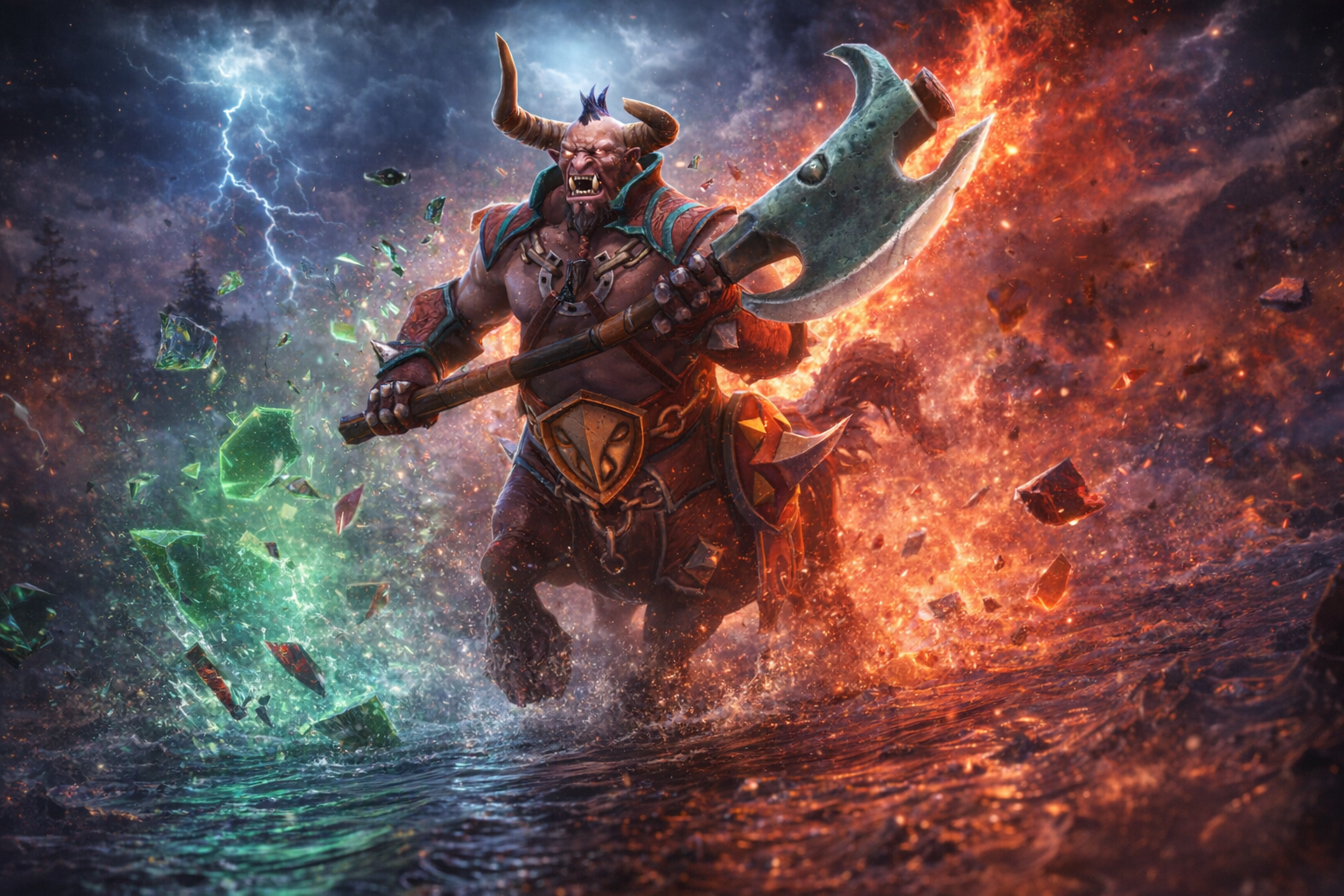
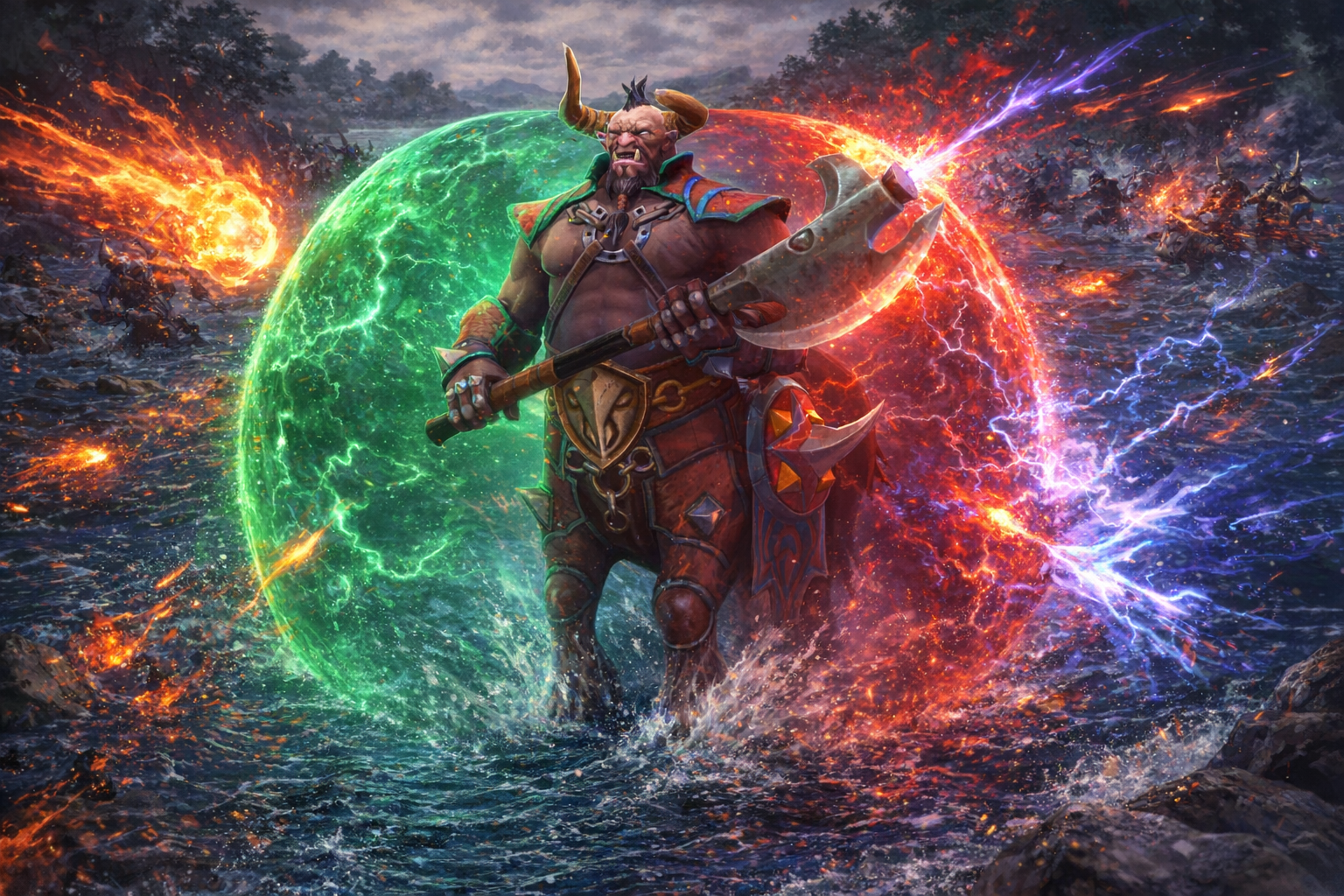
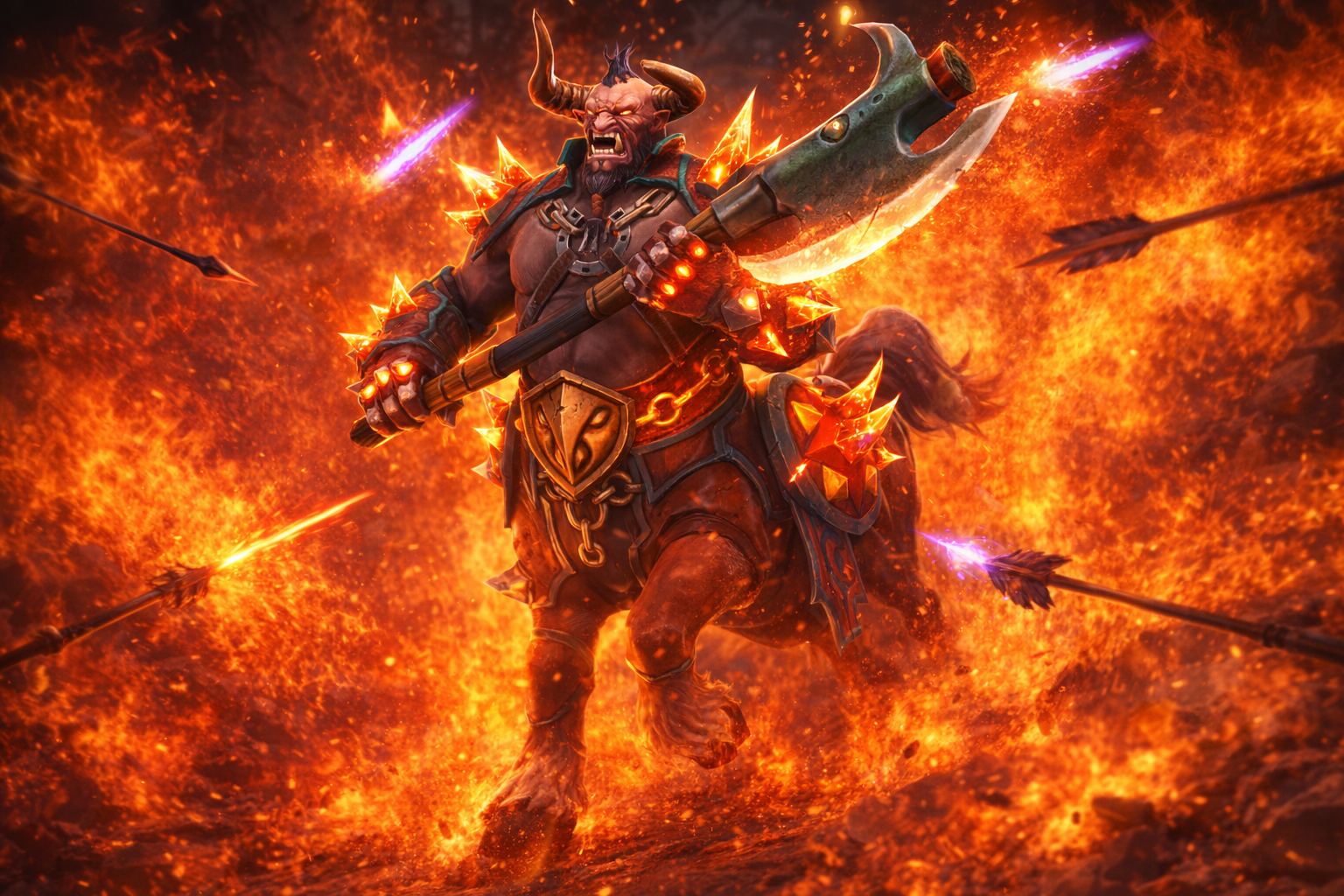
You blink in, press Hoof Stomp, soak the first wave of spells, and somehow your health bar still gets deleted before the fight has even chosen a shape. Your Pipe goes off, your Crimson goes off, your supports are still screaming, and the enemy carry is chewing through you like you bought recipes instead of items. The old fantasy was simple: be huge, be first, make everyone else harder to kill. Centaur Warrunner can still do that job, but the way you get there has changed.
Centaur’s problem right now is an identity hangover. A lot of players still build him like the classic offlane aura brick: Bracer, Vanguard, Blink, Pipe, Crimson, then maybe Heart or Shiva’s if the game allows it. That build used to feel natural because Centaur could turn early durability into a teamwide timing. Walk at towers, protect the backline, absorb the punishment, let your cores play Dota.
Now that same path often leaves you with a Centaur who has plenty of item icons and very little actual threat. You are hard to ignore for about two seconds, then surprisingly easy to kite, shred, or walk around. The hero has not lost his purpose. The item map around him has shifted.
The Old Aura Centaur Has a Timing Problem
Aura Centaur works when your defensive items arrive before the enemy damage curve becomes disgusting. Pipe has to blunt the spell burst that matters. Crimson has to actually reduce meaningful physical pressure. Blink has to come early enough that you dictate fights instead of reacting to them.
The issue is that traditional aura progression asks for too many medium-impact purchases before Centaur becomes scary himself. Bracers and Wand are fine. Blink is mandatory in many games because Hoof Stomp without initiation access turns into wishful thinking. Vanguard can stabilize lanes and build toward Crimson, but it delays the items that make Centaur scale as a hero rather than as a walking buff dispenser.
That delay hurts more in modern pubs because damage is rarely clean. The enemy lineup with four magical heroes still has a carry who will eventually hit you. The lineup with one obvious right-clicker still has spell amp, slows, saves, break effects, mobility, and enough chip damage to cancel your Blink from across the screen. Building only for the damage type shown on the draft screen often leaves you underprepared for how fights actually play out.
Centaur wants to stand in front, but standing in front requires more than effective HP. You need armor against the carry, magic resistance against the burst, movement to avoid being treated like a neutral creep, and enough damage or counter-damage to make people regret focusing you. Aura stacking gives pieces of that puzzle. It rarely gives the whole thing quickly.
Vanguard Is the Comfort Item That Can Betray You
Vanguard feels correct on Centaur because the hero loves taking creep waves, eating harassment, and playing like a slab of meat in lane. Damage block smooths out the early game. If your lane is scrappy and physical, it can absolutely be the difference between staying on the map and getting bullied into jungle cosplay.
The trap appears after lane. Vanguard gives no initiation, no armor spike, no movement solution, and no answer to magic burst. On a hero whose spells already ask him to spend health aggressively, that matters. Double Edge turns Centaur’s own health pool into damage, so buying raw durability can feel efficient, but if that durability only helps against one slice of the enemy output, you get the classic Bradwarden experience: huge health bar, dead anyway.
Crimson Guard still has games. Illusion pressure, summon spam, and lineups built around lots of small physical hits can make it valuable. The mistake is treating Vanguard into Crimson as automatic. Centaur’s inventory slots are too contested for autopilot. Every early item must either win your lane so hard that the map opens, enable your Blink timing, or scale into a fight-winning midgame. If Vanguard does none of those in the specific match, skip the nostalgia tax.
Phase Boots deserve more respect in this conversation. Centaur’s innate movement scaling makes strength feel better as the game goes long, but the early map still punishes slow heroes. Phase gives armor and an active movement tool, which means you can actually connect for Stomp angles, disengage after Double Edge trades, and avoid lumbering through fights like a siege creep with feelings. Greedy bootless Centaur looks cute until every support can keep you at arm’s length.
Why Helm of the Dominator Makes Sense on Bradwarden
The Helm of the Dominator direction sounds weird if you still picture Centaur as a pure aura mule. In practice, it fixes several problems at once without forcing him into passive play.
A dominated creep gives you map pressure. You can shove waves more safely, threaten towers with another body, scout dangerous areas, and bring useful neutral abilities into skirmishes. That matters because Centaur’s natural farming pattern can get clunky when he is forced to choose between showing on waves and holding Blink fog. A creep lets you influence the map while your hero stays ready to jump.
The build also changes how opponents treat you. Aura Centaur can become ignorable after he presses his buttons. Dominator into Heart Centaur becomes a scaling raid boss who keeps occupying space and forcing commitment. If the enemy pours spells into you, your team gets to play. If they ignore you, you keep stunning, body-blocking, Double Edging, and walking deeper than a normal offlaner should be allowed to walk.
Heart is the natural endpoint because Centaur loves strength-based scaling. More health makes Double Edge less punishing in practical terms, makes you harder to burst through, and pairs cleanly with the hero’s desire to reset between engagements. The regen profile of Heart has changed over the years, but the broad truth remains: once Centaur has a serious Heart timing, poking him before the real fight becomes much less rewarding.
This also lines up with his movement identity. Strength is not just meat on Centaur anymore. His innate gives him a movement payoff from building the stat he already wants. That turns late-game Centaur into a strange kind of heavy cavalry: enormous, fast enough to matter, and annoying to disengage from. Treating that innate like a six-slot unlock is the right mindset. Early on, buy the tools you need to function. Later, let the hero’s stat scaling take over.
Blade Mail Gives You a Reason to Be Hit
A frontliner who cannot punish focus fire eventually becomes a health sponge with a stun. Blade Mail helps Centaur restore the threat of being targeted.
It works because Centaur’s job already puts him in the damage path. You Blink in, force spells, eat right-clicks, and create the first chaotic few seconds where everyone has to decide whether to commit. Blade Mail turns that decision into a tax. Carries hesitate. Nukers have to respect their own output. Supports cannot freely dump everything into you without checking their health bar.
It also gives you a midgame fighting item that does something immediately. Aura builds can feel like accounting. You buy components, wait for recipes, finish an item, and hope your team groups in the right area at the right time. Blade Mail is brutally simple: jump, press it, make the enemy deal with the consequences.
That simplicity is valuable in pubs. Your teammates may misuse aura windows. They may farm when you have Pipe. They may not stand close enough to benefit from your defensive investment. Blade Mail never asks your Juggernaut to understand your timing. It asks the enemy Lina whether she wants to press buttons into a giant horse covered in knives.
Aghanim’s and BKB Are Game-State Items, Not Decorations
Aghanim’s Scepter on Centaur has become more appealing because it gives him a direct way to affect ally positioning and saves rather than only amplifying his own initiation. That matters in games where your core is the real win condition and the enemy lineup is built to isolate them. If you are already strong, an Aghanim’s timing can turn you from starter pistol into fight controller.
The key phrase is already strong. Rushing expensive utility while you are behind can leave you with a clever button on a hero who dies too fast to use it well. Centaur still needs a baseline of survivability and access. Blink plus some way to endure the first exchange usually comes first. After that, Aghanim’s becomes attractive when the game hinges on saving one hero, breaking a formation, or extending Stampede’s value beyond the initial charge.
BKB sits in a similar category. Centaur players sometimes resist it because the hero is supposed to be tanky. That mindset loses games. Tanky means you survive relevant damage long enough to perform your job. If chain disables, silences, or magic burst prevent you from getting spells off, BKB becomes functional durability. It lets you choose the fight instead of donating your health bar to five different control effects.
There are games where Pipe covers enough magic damage and BKB can wait. There are also games where Pipe makes your team slightly happier while you personally get stun-locked into uselessness. Buy for the fight you need to execute, not for the role fantasy on the loading screen.
When Aura Centaur Still Has a Place
Aura Centaur has not vanished. It just demands a sharper read.
Pipe is still strong when the enemy’s major fight damage is spell-based and your team wants to group around a timing. It is especially valuable when your supports or tempo core are dying before they can cast. Crimson still earns its slot against specific physical patterns where damage block changes the fight. Greaves-style team sustain can be justified when your draft wants prolonged skirmishes and you are the natural carrier.
The problem begins when you buy all of them because offlane muscle memory says you should. Auras are best when they answer a clear enemy plan or enable a clear allied one. If your carry wants to split farm, your mid wants pickoffs, and your supports are playing from fog, stacking defensive team items may give you fewer winning moves than one selfish survivability item and one hard initiation spike.
There is also the awkward double-defense issue. Pipe plus Crimson can make you feel responsible, but if both are arriving late, neither changes the decisive minute of the game. Meanwhile the opposing carry has progressed into real damage, enemy supports have better positioning tools, and your Blink reveal becomes easier to manage. Centaur cannot afford to spend twenty minutes becoming a mediocre insurance policy.
The Pub Build Philosophy: Be Useful Without Permission
Pubs reward offlaners who create obvious fights. Centaur is good at that when his items let him operate independently. Blink creates the start. Phase helps you connect before and after. Blade Mail punishes commitment. Dominator applies map pressure while you hold your hero in threatening positions. Heart turns your lead into a body the enemy cannot casually remove.
That package gives you agency. You are no longer waiting for four players to group inside aura range. You can shove a lane with your creep, smoke with Blink, cut a wave when safe, start Roshan-area fights, or force reactions around towers. Your hero becomes a problem on the map rather than a defensive radius.
The micro burden of Helm of the Dominator is real, but it does not have to be beautiful. You do not need Chen hands. Start with simple habits: keep the creep behind your hero when danger is missing, use it to push lanes you do not want to show on, and do not feed it for free before an objective. If you grab a neutral with a useful aura or active ability, great. If all it does is help waves move and give vision around a fight, it has already done work.
Lower-MMR games especially punish passive aura timing. Players farm through your strongest window, then take a random fight thirty seconds after your cooldowns or item reveal mattered. A more selfish Centaur build sounds less noble, but it often protects your team better because it keeps you alive and threatening for longer. Dead aura carriers have terrible aura uptime.
Practical Item Rules for Current Centaur
Start with lane reality. Bracer and Wand are still clean early purchases when trading is constant. Phase Boots should be the default in games where armor, chase, or body positioning matters. Blink remains the classic accelerator, but delaying it can be acceptable if your lane item lets you completely dominate the map before rotations begin.
Be suspicious of Vanguard unless the lane and next ten minutes justify it. If you are only buying it because Centaur used to buy it, the item is already winning the argument against you. If it lets you crush a physical lane, take tower pressure, and turn into a relevant Crimson game, go for it.
Choose between aura and threat. Pipe is often the aura that still makes the most sense because magical burst decides so many midgame fights. Crimson is more matchup-bound. Blade Mail should enter the conversation whenever enemies are forced to hit you or burst you through initiation. Helm of the Dominator into Heart is the scaling path when you want to become the centerpiece of the map rather than the courier for defensive recipes.
Aghanim’s belongs in games where ally rescue and fight extension are premium. BKB belongs in games where your spells and positioning are being denied by control. Shiva’s is your later armor and anti-heal style purchase when the enemy carry or sustain profile demands it. Heart is the big transformation item when you have enough tools to actually stay involved in fights.
Centaur still wants to keep allies safe. The difference is that safety now comes from being a credible initiator, a durable map presence, and a hero enemies hate committing into. The pure aura mule version asks too much from items that no longer carry the same pub weight on their own.
Bradwarden is at his best when the enemy has to answer him first and hates every option. Build toward that feeling. The horse still runs people over when you stop dressing him like a support with more health.