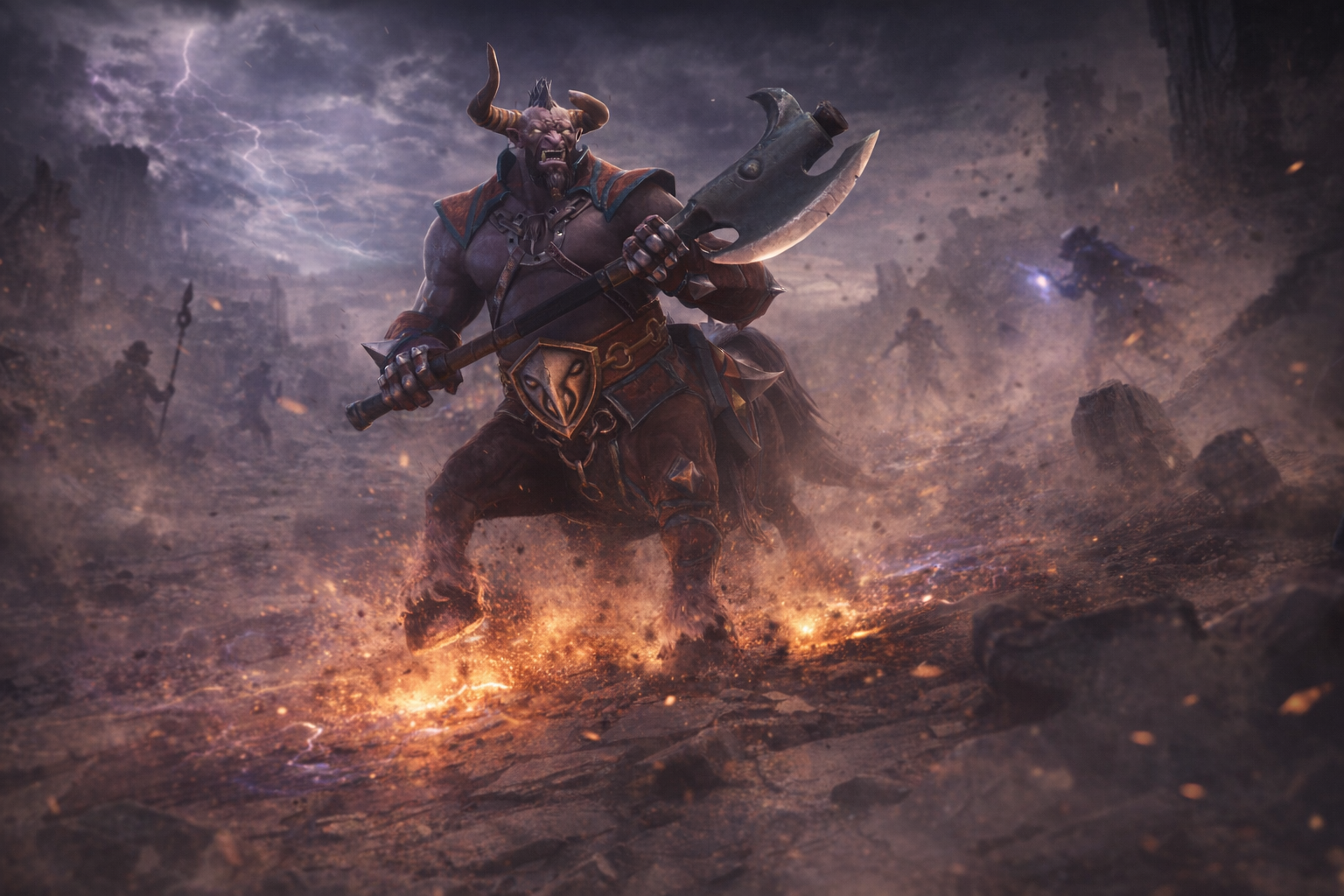
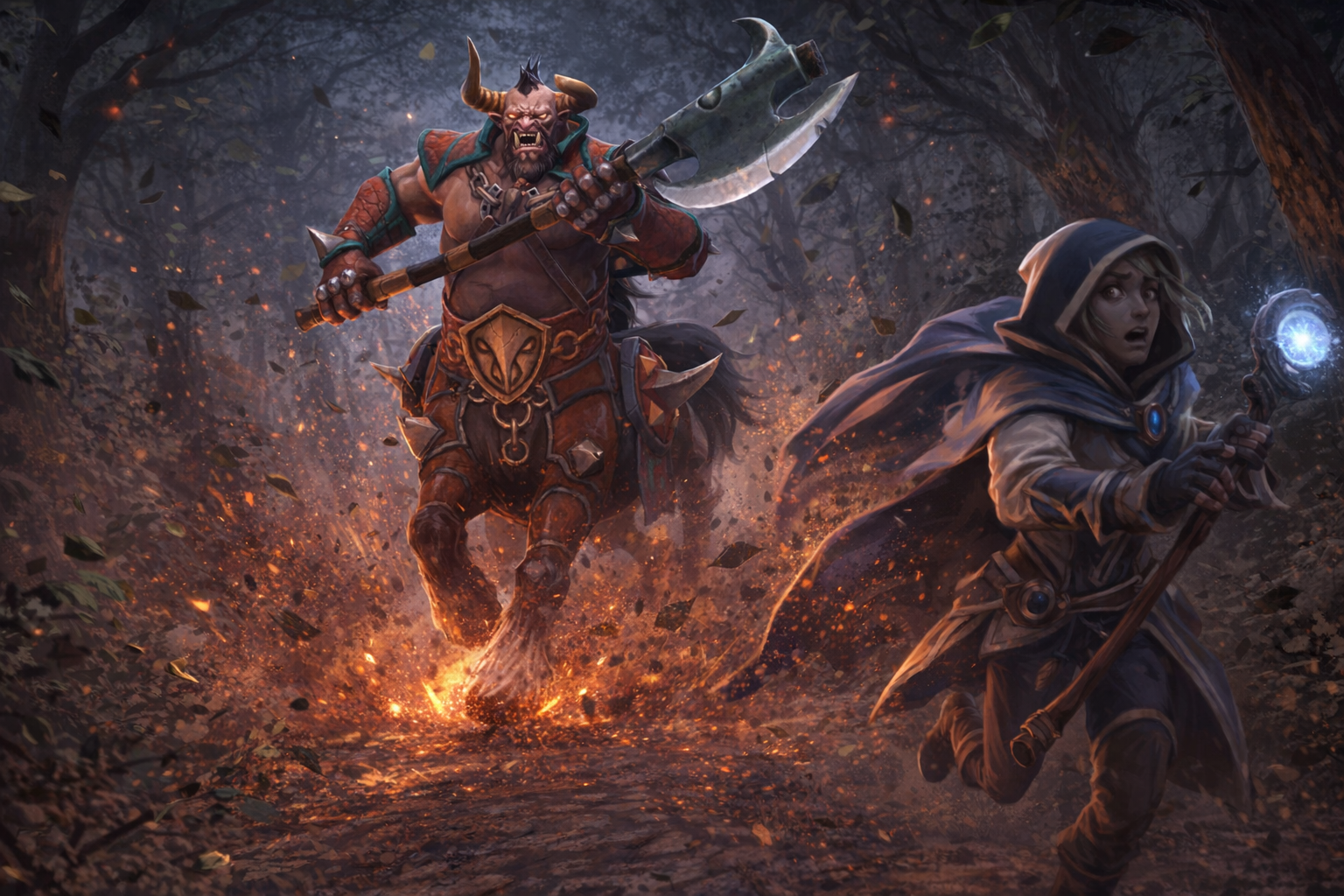
Why does Centaur feel fine in lane and miserable once the map opens up?
You’ve seen the game. You body the safe lane for ten minutes, soak harassment like it’s a resource, and force awkward pulls because nobody wants to trade into Retaliate. Then the map breaks open, the enemy cores finish their first real items, and your giant horse suddenly feels like a very polite speed bump. You blink in, land the stun, press your buttons, and the fight keeps going without you.
That gap between a good lane and a weak midgame is the whole Centaur story right now. The hero still does recognizably Centaur things. He stands in front, starts fights, and gives his team a powerful movement tool. The problem is that the patch has made those strengths feel narrower while several competing offlaners bring broader value with less effort.
The old Centaur contract stopped paying
Centaur has always lived on a simple contract. You accept that your hero is straightforward and somewhat linear, and in return you get a lane bully who turns early net worth into map access for the whole team. Blink plus Hoof Stomp is clean initiation. Double Edge gives immediate burst. Stampede changes who gets to start a fight and who gets to escape one.
That formula still sounds good on paper. Dota rarely rewards paper value for long.
The current game asks more from an offlaner than “be durable, start first, buy aura stuff if needed.” The role has become brutally competitive. If you pick a frontliner, that hero often needs to do one of these jobs at a high level: threaten solo kills, scale as a real damage source, lock down elusive cores without perfect setup, dominate lanes while also taking towers, or become impossible to ignore in extended fights. Centaur currently hits pieces of that checklist without owning enough of it.
Tidehunter gives you a teamfight reset button that always matters. Slardar threatens armor collapse and punishes anyone who gets caught near him. Axe creates constant fear around positioning and farming patterns. Legion Commander offers pickoff pressure that converts directly into scaling. Even when those heroes have bad games, their identities stay dangerous.
Centaur’s identity is more conditional. He looks best when your team already has reliable lockdown, already has damage, and mainly needs a durable connector who can force the first contact and give everyone a better angle. That is useful. It is also a much narrower drafting window than you usually want from a comfort offlaner.
The lane still works
Retaliate remains real pressure
A lot of Centaur’s early game still feels familiar because the lane fundamentals are intact. Melee carries hate sustained trading into Retaliate. Supports can’t casually chip him forever if he has any kind of lane partner who punishes overextension. His base kit still creates that classic offlane tension where every creep contest carries a tax.
He also remains easy to execute in lane. There’s value in heroes that let you focus on wave position, pull timings, body blocking, and punish windows rather than mechanical overhead. Centaur gives you that. You can win honest Dota with him for the first phase of the game.
That part matters because his numbers don’t need to be disastrous for the hero to feel weak. A hero can have a stable lane and still lose his place in the patch if the payoff after the lane is too small.
Winning lane used to mean more
Centaur once converted a good lane into a terrifying timing. You got tanky enough, early enough, that enemy supports felt useless trying to chip you down. You had enough immediate damage that squishier heroes had to respect every fog angle around a Blink Dagger. If they grouped, Stampede let your team choose when the fight happened.
Now that conversion feels softer. The reward for your good lane often ends up being a decent Blink timing on a hero who still needs more from the rest of the draft than some of his competitors do. You jump, stun, and create contact. Then the fight asks who is actually killing people, who is controlling the next five seconds, and who can survive the response after BKBs, saves, and mobility spells come online. Centaur increasingly feels like he starts the sentence and somebody else has to finish it.
The health loss changed the texture of the hero
The most obvious feeling with modern Centaur is that his body does not carry the same authority into the midgame. When players talk about missing the old health profile, they’re describing more than just nostalgia for a stat line. They’re describing the way fights used to unfold around him.
Centaur’s kit is built to spend his own health aggressively. Double Edge has always asked him to trade his body for tempo and burst. Frontlining with this hero means you are volunteering to absorb the first wave of spells. A reduction in how much raw punishment he can comfortably take changes every layer of the experience.
You feel it when diving towers is less forgiving. You feel it when your first initiation leaves you lower than expected, so the re-engage becomes dangerous. You feel it when enemy supports need one fewer spell cycle to push you into retreat. On a hero whose fantasy is “massive beast that doesn’t care,” even modest durability loss can make the whole kit feel off-rhythm.
That matters more on Centaur than on plenty of other offlaners because his damage pattern is so front-loaded. He wants to enter, unload, and continue being a huge problem by simply occupying space. If the occupying-space part weakens, the hero’s follow-through weakens with it.
The innate doesn’t patch the hole
One reason Centaur feels behind is that the newer systems around heroes are supposed to smooth rough edges or open up fresh power windows. His current innate doesn’t do enough of that in ordinary games.
An innate can succeed in a few ways. It can sharpen your early lane identity. It can cover a weakness that used to require awkward itemization. It can create a real scaling hook. Centaur’s current version tends to feel delayed and low-impact unless the game stretches to a point where every extra layer of value matters more.
That leaves the hero in an awkward place. He gave up a chunk of the visceral tankiness players associate with him, and what replaced it doesn’t reliably make the first twenty-five minutes feel better. On a role as tempo-sensitive as offlane, that’s a brutal exchange.
The real issue is damage density
Blink-stun-burst no longer scares enough heroes
Centaur still has burst. He just doesn’t have enough of it relative to what the game now expects. Too many cores survive his first pass unless your allies are already in range and already ready to commit. That turns him from a playmaker into a setup piece.
There’s nothing wrong with setup pieces. The problem is that offlane setup pieces are competing against heroes who set up kills and also threaten to become the primary reason a target dies.
When Centaur jumps a support with limited defensive tools, the sequence still looks great. When he jumps a modern core with sustain, a save behind him, or enough stats to live the combo, the fear drops off fast. If your draft lacks extra lockdown or immediate damage, the initiation often becomes a reveal rather than a kill.
Extended fights expose him
Centaur prefers decisive engagements. Quick entry, immediate spell impact, strong positional advantage for allies. Extended fights create ugly questions. His cooldowns are committed. His damage over time falls off compared to many brawling offlaners. If he survives, he often survives in a state where he is present but not truly threatening.
That distinction is everything in midgame Dota. “Hard to kill” is useful. “Hard to kill while still forcing terrible choices” is what wins skirmishes. Right now Centaur too often lands in the first category.
Stampede is still elite, but it’s draft-dependent value
Stampede remains the skill that keeps Centaur relevant in more games than his raw body probably deserves. Teamwide movement changes Dota at a fundamental level. It turns hesitant support rotations into catches. It turns overextended dives into escapes. It gives slower heroes access to angles they normally never get.
That power is real enough that Centaur can still look excellent in the right lineup.
The catch is that Stampede shines brightest when your team already knows what to do with the movement. If your supports are aggressive roamers with reliable control, Centaur becomes the bridge that gets them on top of targets before the opponent can reset. If your mid hero wants help forcing chaotic engagements, he can provide it. If your lineup has enough lockdown already, Centaur’s comparatively modest control package stops being a liability.
That creates a strange paradox around the hero. He often looks better when your team needs less from its offlaner in terms of independent catch. The more your draft is starving for a hero who can solve lockdown problems alone, the worse Centaur tends to look.
Itemization doesn’t rescue him the way it rescues others
A lot of offlaners survive weak patches because new items hand them a fresh script. One pickup suddenly patches mana issues, farming speed, damage output, or initiation consistency. Centaur hasn’t gotten that kind of generous tailwind.
His item progression still makes sense in theory. Blink remains central in many games because the hero needs reliable initiation range. Durable follow-up items still matter because you need to live through your own entry. Utility purchases are often attractive because your personal scaling has limits and your team benefits from the slot efficiency.
The issue is that many modern offlane item paths feel explosive on other heroes and merely acceptable on Centaur. “Acceptable” is a dangerous word in a role where every successful patch hero has at least one item timing that feels disgusting.
Why area amplification can matter
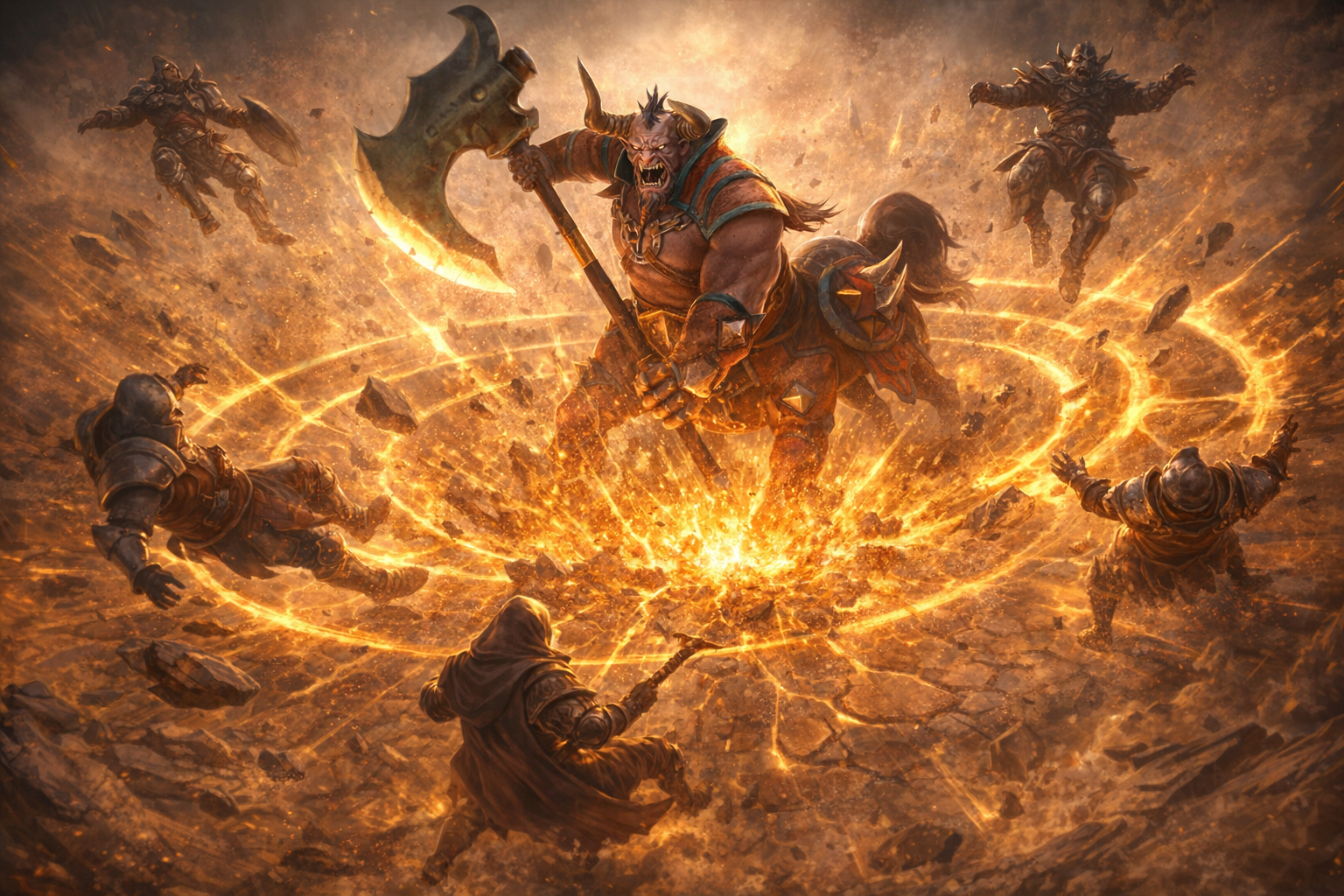
One underappreciated angle is leaning into tools that increase the practical value of Hoof Stomp. Extra effective area on a point-blank stun can clean up one of Centaur’s recurring frustrations, which is landing the initiation on the exact heroes you need in crowded fights. When the stun catches just a bit more space, your Blink entries become less binary and your follow-up from teammates gets easier.
That doesn’t transform the hero into a top-tier monster. It does make sense if you’re trying to maximize the one thing he still does cleanly, which is force immediate contact in a defined zone.
Where Centaur still wins pubs
Pair him with aggressive supports
Centaur likes supports who can move. If your four and five want to gank, invade, and chain disables, he becomes much more coherent. He supplies frontline presence and connection speed. They supply the extra seconds of control and damage that his kit increasingly relies on.
That pub pattern is important because plenty of ranked games are decided by support activity in the first twenty minutes. When your side actually uses Stampede to collapse on side lanes and punish greedy map positioning, Centaur looks alive again.
Draft him when your team already has catch
This is where a lot of bad Centaur games begin. Players see a durable initiator and assume he can be the main lockdown pillar of the draft. That usually leads to miserable midgame fights, especially against mobile heroes or lineups with layered saves.
Centaur improves once your team already has catch elsewhere. Then his job becomes simpler and stronger: soak vision, start contact, threaten burst on anyone your allies pin down, and give your team the movement edge that turns almost-catches into kills.
Use him as an answer, not a default
There are still games where Stampede alone changes the matchup. Against lineups that depend on controlling when fights start, or heroes that hate sudden gap-close from multiple angles, Centaur can be exactly the offlaner you want. He’s just a poor blind comfort pick at the moment.
That distinction matters for pub climbing. If you treat him like an every-game stable offlaner, you will feel his weaknesses constantly. If you hold him for games where his ult warps the map and your team already covers catch, he becomes much easier to justify.
Why higher-skill games punish him harder
Centaur’s problems get sharper as players get better at spacing, saving, and identifying where a hero’s contribution ends. Better teams respect Blink angles more carefully. Supports position with purpose. Cores are less willing to show in places where Stampede creates easy collapses. Once Centaur’s first jump is handled, stronger opponents immediately understand how much threat remains.
That makes his post-initiation drop-off more visible. Lower level games often gift him sloppy follow-up opportunities because players panic or fragment. Cleaner games expose how dependent he is on coordinated damage behind him.
You can still win plenty with him through fundamentals. Offlane players with good lane control and sharp initiation will always steal games. The hero just asks for more exact conditions than his old reputation suggests.
Centaur needs a reason to be feared again
The current version of the hero feels like a collection of useful qualities that no longer add up to a commanding offlaner by default. He lanes well. He starts fights reliably enough. His ultimate is still game-changing in the right draft. That package used to be plenty. The modern offlane pool demands a stronger threat profile.
He needs one of two things to reclaim real space in the patch. Either his body has to matter more again so entering first feels powerful instead of dutiful, or his payoff after initiation has to hit harder so surviving the first jump isn’t comfortable for enemy cores. Without one of those levers moving, Centaur stays trapped in the role of situational enabler while other offlaners get to be enablers and win conditions at the same time.
If you love the hero, the path is still there. Pick him with active supports. Pick him when your lineup already has catch. Pick him when Stampede warps the game. Just stop expecting the old horse to carry average drafts through sheer mass. This patch asks for sharper edges than Centaur currently brings.