Carry Farming Routes That Survived the Map Expansion
So you clicked this article expecting a nostalgia trip through the old triangle loops and 10-minute tower trades, but the current map rewards movement and pressure over those rigid cycles.
You finish your starting items and settle into the safelane. The offlaner stacks the hard camp and drags the wave back, denying you every other creep. Your support rotates away for a rune. By minute eight the enemy five-man shows up to take the tower while you still sit on two items. That used to signal the start of your ancient farming loop. Now it signals the moment you lose the game if you do not adapt.
Holding the Safelane Tower Matters More
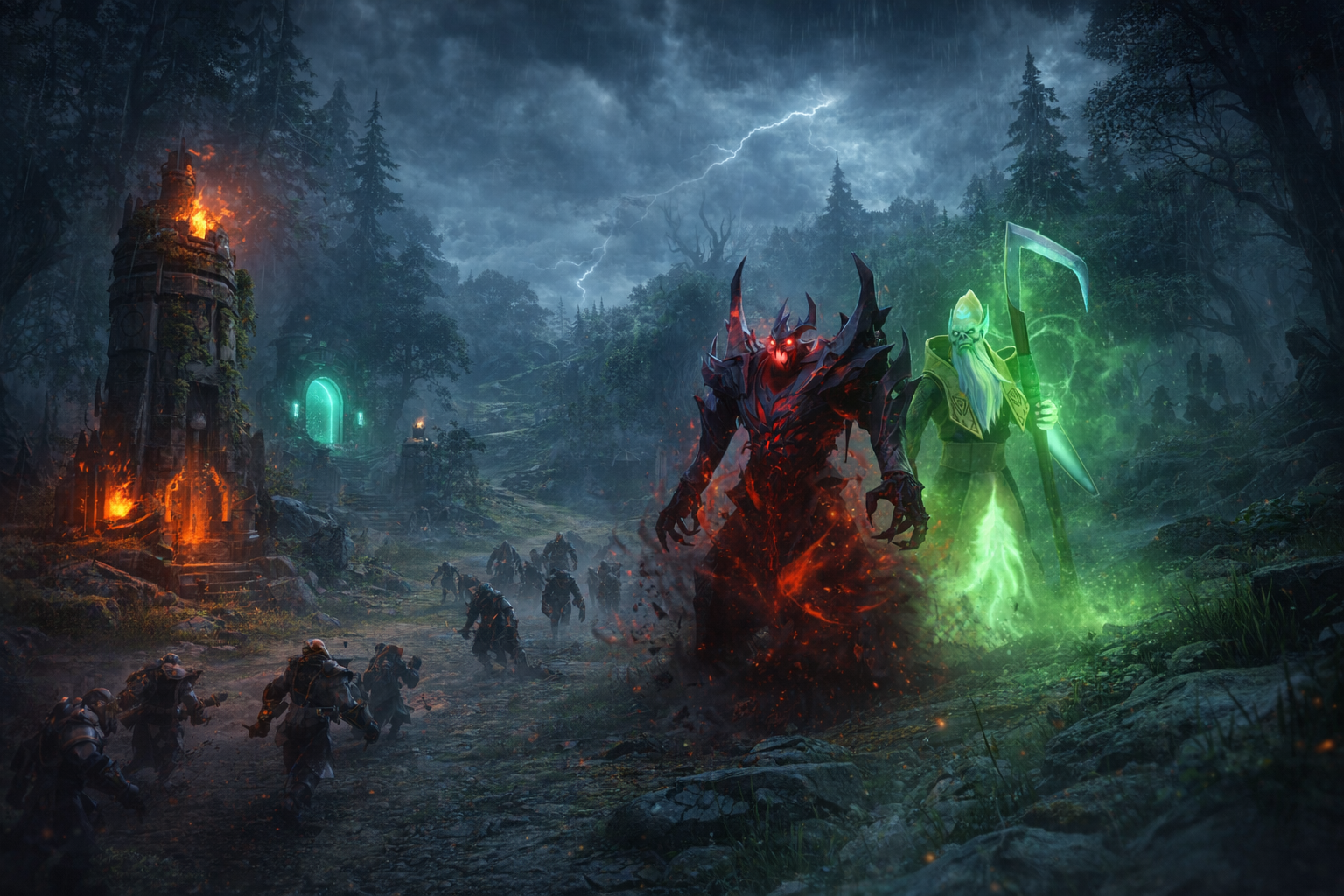
Modern carries win by occupying space around their tier-one rather than abandoning it at the first sign of pressure. Heroes like Shadow Fiend and Necrophos can force the enemy to commit five bodies just to push the lane, turning a defensive stand into a teamfight win. Giving the tower up freely hands the enemy free map control and lets their offlaner freely stack and pull against you for the rest of the laning stage.
In pubs the same dynamic appears at lower MMR. When you refuse to leave the safelane early, your supports are more likely to contest stacks and your midlaner sees the space to rotate down. The tower itself becomes a vision and gold anchor instead of a disposable structure.
Gating Replaces Static Rotations
Twin Gates turned lane-to-lane movement into a constant tool instead of an occasional TP play. Shove the wave, glance at the minimap, and gate across if your team is already applying pressure on the opposite side. The old habit of parking in the triangle after the tier-one falls now leaves you static and easy to read.
The choice still depends on the hero. Juggernaut wants to gate the moment his ultimate comes off cooldown so he can join fights. Phantom Assassin prefers to stay on the map longer to build Desolator stacks before rotating. Riki can use the gates to set up pickoffs once he hits level six and Blink. Sitting in one jungle quadrant while your team dies elsewhere is the fastest way to fall behind on net worth and map presence.
Bad Lanes Require Active Responses
Offlaners now routinely stack the hard camp and pull the wave under their own tower. You cannot simply afk in the lane and wait for the next wave. Asking your team to contest the stack or using your own sentries to block pulls becomes part of the laning plan. When the lane is truly lost, the move is still to shove and gate rather than retreat to the tier-two jungle and hope for catch-up farm.
Fighting on Cooldowns and Item Spikes
Observer wards are free vision. Placing them only where you intend to deward turns a support habit into carry gold and experience. The same principle applies to fights: rotate when your ultimate or key item is ready, not because the clock says it is time to move.
Juggernaut looks for every Omnislash window. Phantom Assassin waits for the Desolator or the first big item power spike. The pattern is less about fixed minutes and more about matching your hero’s cooldowns to the current state of the map.