Bounty Runs and No Jungler: Breaking Mobile MOBA Habits in Your First Dota Games
By the end of this piece you'll understand exactly why your team sprints river at the horn, how stacking and pulling replace the jungle role you expect, and which objectives actually dictate where you play instead of waiting for a lord or turtle to spawn.
You load into your first real match after years of Mobile Legends. The horn blows, four icons streak toward the river while you stay on lane ready to last-hit. Pings flood the minimap. Someone types "bounty" and the first death happens before creep equilibrium even settles. That single moment exposes the gap between the two games.
River Timing and Bounty Gold
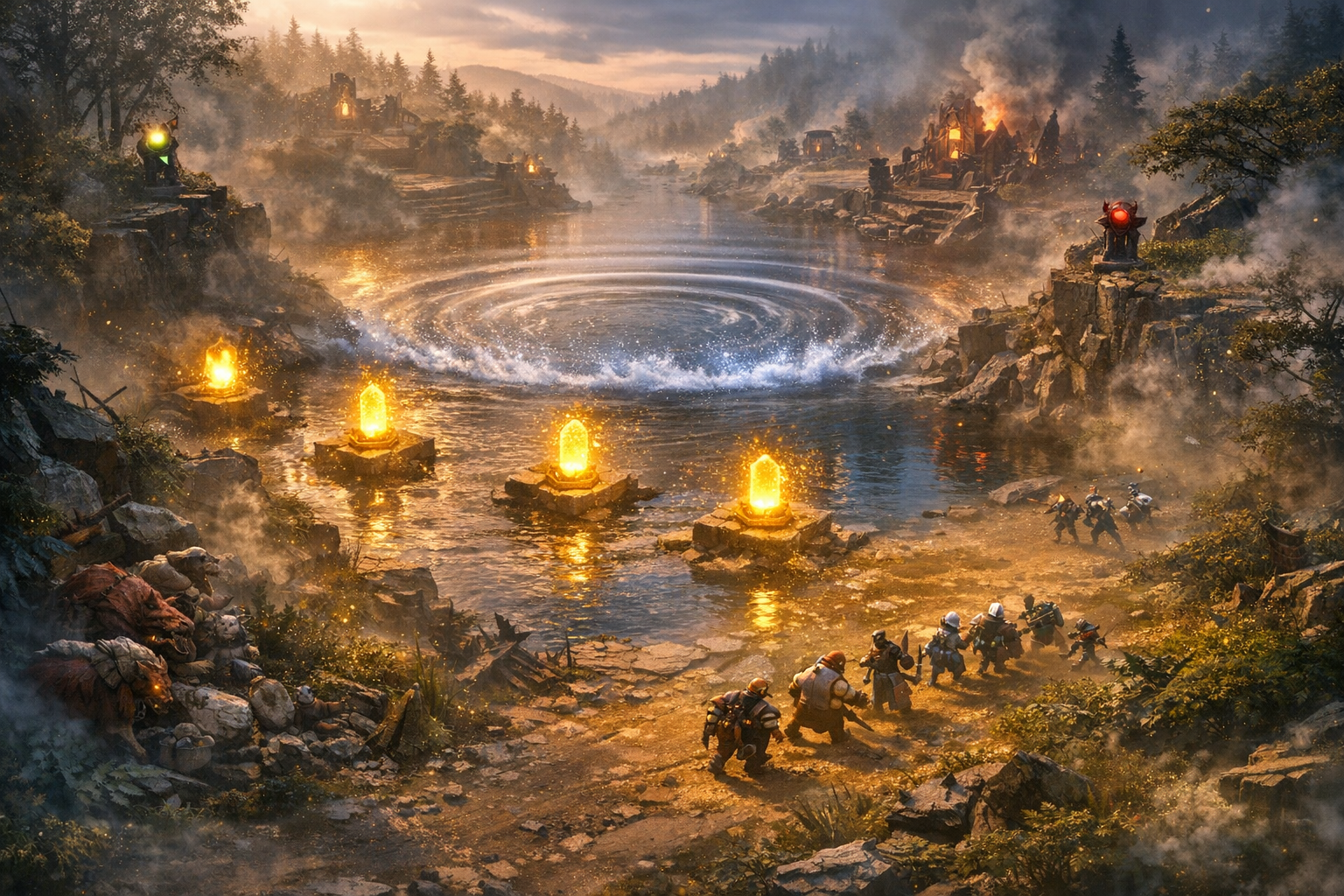
Four bounty runes spawn the instant the horn sounds. Each grants 40 gold to the entire team when collected. The value compounds because every player receives the bonus, turning a quick rotation into early item spikes. Mobile MOBA players treat river fights as optional skirmishes; in Dota the runes are scheduled income that forces early movement. Skipping them hands the enemy team a collective lead that shows up in the first wave of items.
The runes also reset every five minutes. Learning the spawn windows trains you to check the clock instead of reacting only to hero icons. Missing one or two is rarely worth dying for, yet overcommitting for them is how new players feed. Watch the timer, rotate when safe, and treat the river as a scheduled stop rather than a random brawl.
Stacking, Pulling, and the Missing Jungler
Dota has no dedicated jungler. Two supports share the lane and create space by pulling neutral camps into lane creeps. This denies the enemy offlaner experience while accelerating your own carry's farm. Mobile MOBA players expect a permanent jungle presence that clears camps nonstop; here the jungle exists to be manipulated, not occupied full-time.
Stacking requires timing. Hit a camp just before the :53 second mark so an extra wave spawns. Pull at :15 or :45 so lane creeps meet the neutrals away from the tower. These micro-objectives replace the constant jungle farming loop and directly affect lane equilibrium. Mastering them turns two supports into active map players instead of ward bots.
Objectives That Dictate Positioning
Lotus pools, wisdom runes, tormentor, and Roshan all broadcast where the next fight should happen. Lotus gives team-wide sustain and vision denial. Wisdom runes grant experience that accelerates levels for supports. Tormentor rewards the team that can rotate four heroes safely. Roshan remains the highest-stakes objective because Aegis changes death timers for an entire push.
Mobile players chase lord or turtle spawns on a fixed schedule. Dota objectives overlap and compete for attention. Choosing between a wisdom rune and an early tormentor requires reading the map state, not just waiting for a timer. The team that consistently hits the highest-value objective first gains incremental edges that snowball into base sieges.