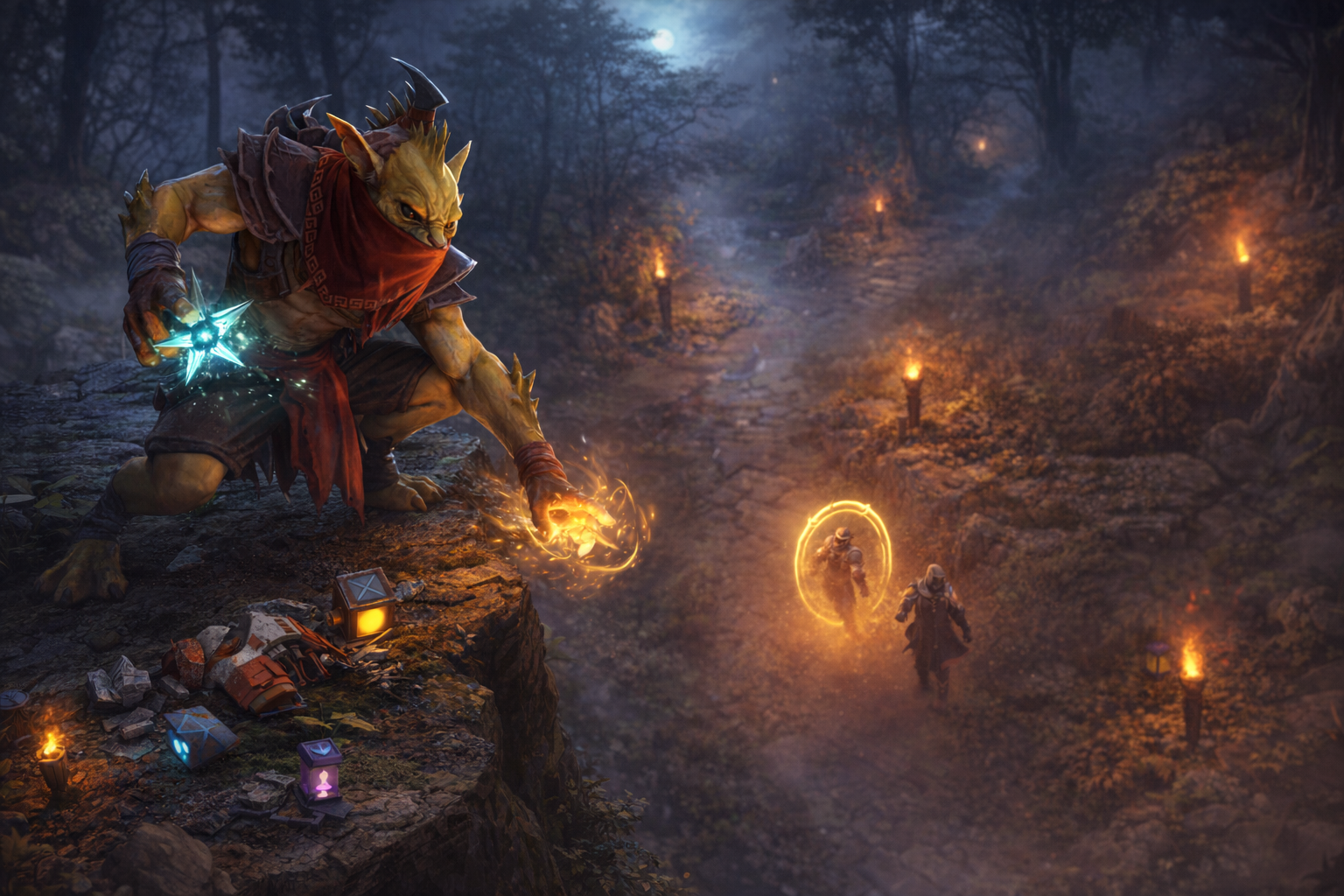
Bounty Hunter Wins by Making the Whole Map Smaller
Juggernaut plus a ranged five in lane. You trade a few hits, eat one badly timed stun, and suddenly your offlane feels unplayable. Then the game shifts. Bounty Hunter vanishes from lane, shows mid out of nowhere, snipes a courier path, forces detection, and turns every half-extended hero into a tax audit with daggers. By minute fifteen, the enemy supports are broke, your cores are rich, and the map feels claustrophobic.
That’s the real answer to Bounty Hunter’s win rate. The hero stopped pretending to be a solo-kill assassin and doubled down on what actually wins pubs: tempo, information, and money. If you’re still judging him by whether he can delete someone alone from invis, you’re evaluating the wrong hero.
The Hero Changed, the Job Got Clearer
Bounty Hunter has gone through enough versions that plenty of players still carry an outdated picture of what he’s supposed to do. People remember the greed, the opportunistic kills, the old feeling of turning one isolated support into free gold and snowballing from there. That version had a cleaner solo identity.
The current successful version plays a broader game. He pressures lanes early because he moves fast, he arrives before people expect him, and he punishes sloppy positioning with very little setup. Once Track comes online, he shifts from nuisance to economic engine. That matters more in average ranked games than flashy pickoff potential ever did.
A support that creates gold on kills will always have a place when games are messy. Pubs are full of split fights, delayed TPs, heroes farming one wave too far out, and supports trying to steal thirty seconds to place a ward. Bounty Hunter lives on those mistakes. He doesn’t need every fight to be perfect. He needs a skirmish somewhere on the map and teammates willing to hit the hero he marked.
Shadow Walk Turned Him Into an Early-Game Courier Missile
Movement is the whole story
The biggest reason the hero feels stronger is simple: he gets around the map faster, earlier, and with less friction. That sounds boring until you’ve played against it.
Movement speed on Shadow Walk changes the texture of the first ten minutes. Bounty Hunter used to have windows where he felt threatening but still had to spend real time crossing the map. Now he reaches side lanes in timings that punish natural pub habits. Mid shoves one extra wave. Safe lane support steps up to unblock a pull. Offlane core tries to drag the lane. Bounty Hunter is suddenly there.
That speed does two jobs at once. It creates real gank pressure before six, and it lets him maintain vision pressure without fully sacrificing presence. A lot of position fours have to choose between roaming and handling support chores. Bounty Hunter gets to blur the line because his travel time is lower and his pathing is safer.
The lane is only the opening scene
Strong Bounty Hunter games often start with a stable offlane and then explode once he gets permission to move. You don’t need to crush lane outright. You need enough footing that your offlaner can survive a minute alone while you go alter another lane.
That’s why sentry play matters so much on this hero. If the enemy five buys out the lane and removes your invis angle, your pressure drops hard. If you win that little detection war, your movement suddenly becomes oppressive. You don’t have to kill every time. Forcing respect is already value. An enemy lane that has to hug tower, spend on extra detection, or call for a TP is losing efficiency.
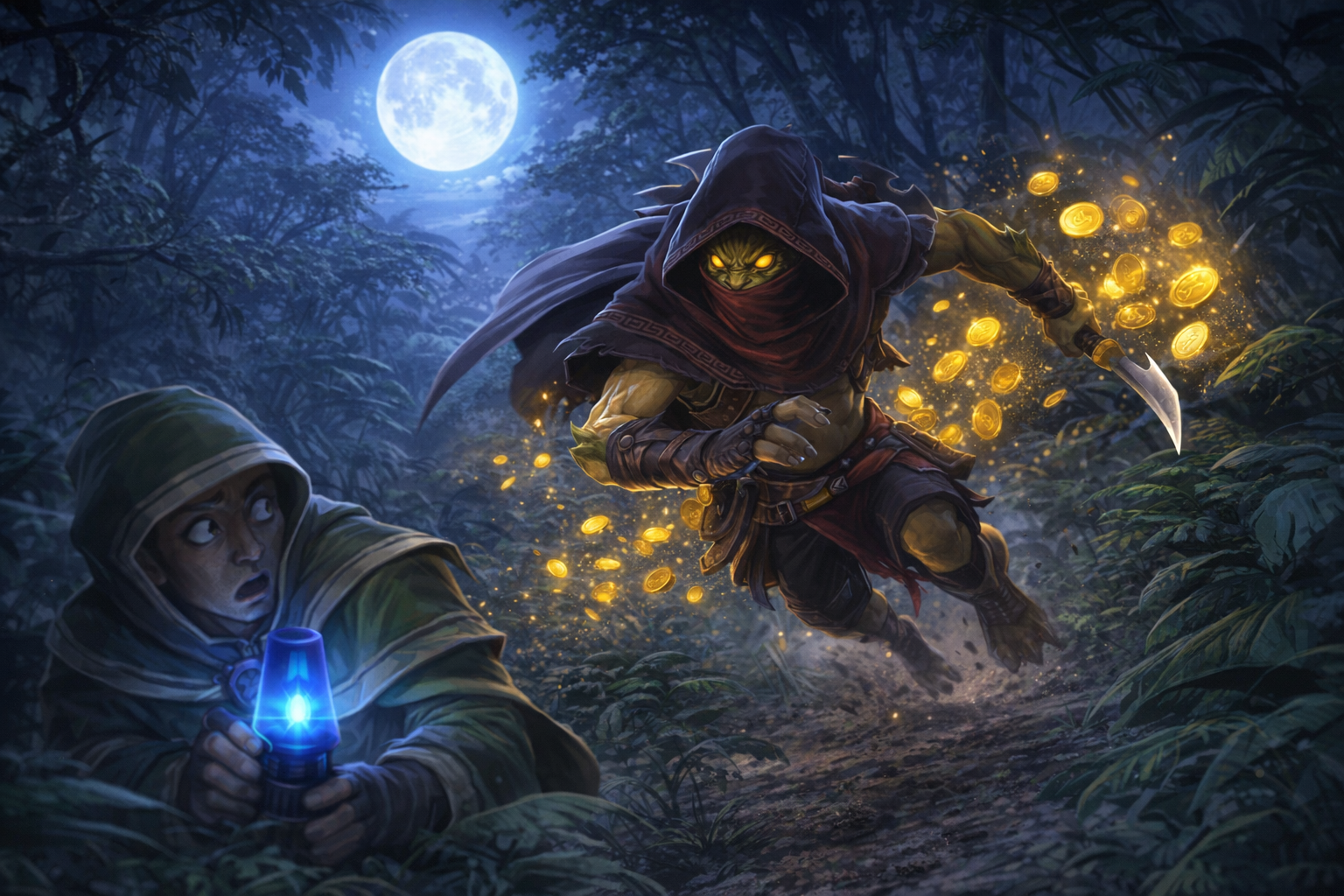
Track Is Still One of the Best Pub Ultimates in Dota
It gives more than gold
Track remains the reason the hero scales past the point where other roamers start to feel decorative. The obvious part is bonus gold. Everybody knows that. The less appreciated part is how many pub problems it solves in one button.
Track gives vision on the target. That changes chases, jukes, and high-ground approaches. It exposes heroes trying to disengage through trees or fog. It turns slippery cores into manageable targets. It gives your team confidence to commit because the target is visible and the kill has a bigger payoff.
That vision component is a huge deal in chaotic fights. Plenty of heroes are balanced around abusing fog, mobility, or brief windows where they break line of sight and reset. Track cuts through that. Even when Bounty Hunter’s personal damage feels modest, his teamfight contribution is very real because he removes uncertainty.
It makes teammates richer for doing normal Dota things
A lot of supports need their teammates to play around them in very specific ways. Bounty Hunter often works the other way around. He rewards your team for taking the kills they were already going to take.
That’s a big reason his pub win rate stays healthy. You don’t need five players executing a layered combo. You need a fight to start, a target to get marked, and bodies nearby when the target dies. Suddenly your scaling improves. Your blink timing arrives earlier. Your BKB is less delayed. Your support inventory becomes less tragic.
Heroes that cash in on ordinary skirmishes tend to overperform in ranked because ranked is full of ordinary skirmishes.
The Real Strength Is Economic Pressure
Bounty Hunter cheats the support economy
Every support player knows the feeling of spending the first twenty minutes buying utility, trading HP for lane stability, and staring at an inventory that still looks like minute six. Bounty Hunter bends that rule.
He earns extra gold himself, but the bigger effect is systemic. A successful Bounty Hunter game creates richer supports and earlier utility across the team. That can snowball quietly. The enemy lineup may have stronger spells on paper, but your side hits real item timings sooner and gets to play faster because of it.
This matters even more in games where your draft scales. If your carry and offlaner are natural late-game heroes, Bounty Hunter amplifies that trajectory. He doesn’t need to become the carry. He just needs to make sure the actual scaling pieces reach their power spikes first.
He taxes the enemy in ways the scoreboard barely shows
Against Bounty Hunter, the enemy support economy gets stressed from multiple angles. They need sentries. They often need more defensive positioning. They lose freedom to deward alone. Their couriers and side-map movement become riskier. A support stuck playing under that pressure spends less time making proactive moves.
That hidden tax is part of why the hero can feel miserable to face even when his KDA looks ordinary. He distorts where enemy heroes are allowed to stand. He turns routine support tasks into dangerous errands.
Why He Feels Weak in Some Games Anyway
He still hates passivity
Bounty Hunter’s bad games usually share one trait: nothing is happening. If your team refuses to connect for skirmishes, the hero can look stranded. You’re warding, dewarding, poking lanes, and trying to create opportunities, but your income stalls if kills never materialize. That’s the same broad problem snowball supports have always had. Their toolkit rewards action.
When the game slows into five heroes hitting waves and dodging each other, Bounty Hunter loses access to the mechanic that justifies his slot. Track is strongest when fights break out often enough to chain gold into map control. Without that, you’re left trying to squeeze value from vision, harassment, and occasional pickoffs.
Five-man deathball is awkward
Enemy teams grouping early can make Bounty Hunter feel paper-thin. Walking into a prepared five-man unit as a melee support with limited hard control is a fast way to feed. That tension is real and it’s part of the hero’s design.
The answer is rarely to frontally engage. You play the edges. You mark targets before the fight fully starts, scout approaches, break smokes if you have to, and force the enemy to reveal more than they want. If your lineup can split the map, Bounty Hunter becomes much stronger. If your team insists on static front-to-back fights into a tighter five-man draft, his impact gets compressed.
That’s why he feels better with teammates who naturally skirmish and collapse. Spirit heroes, mobile mids, aggressive offlaners, and carries willing to show up to side fights make his game easy. Lineups that want to afk farm three lanes for fifteen minutes leave him with very little to cash in.
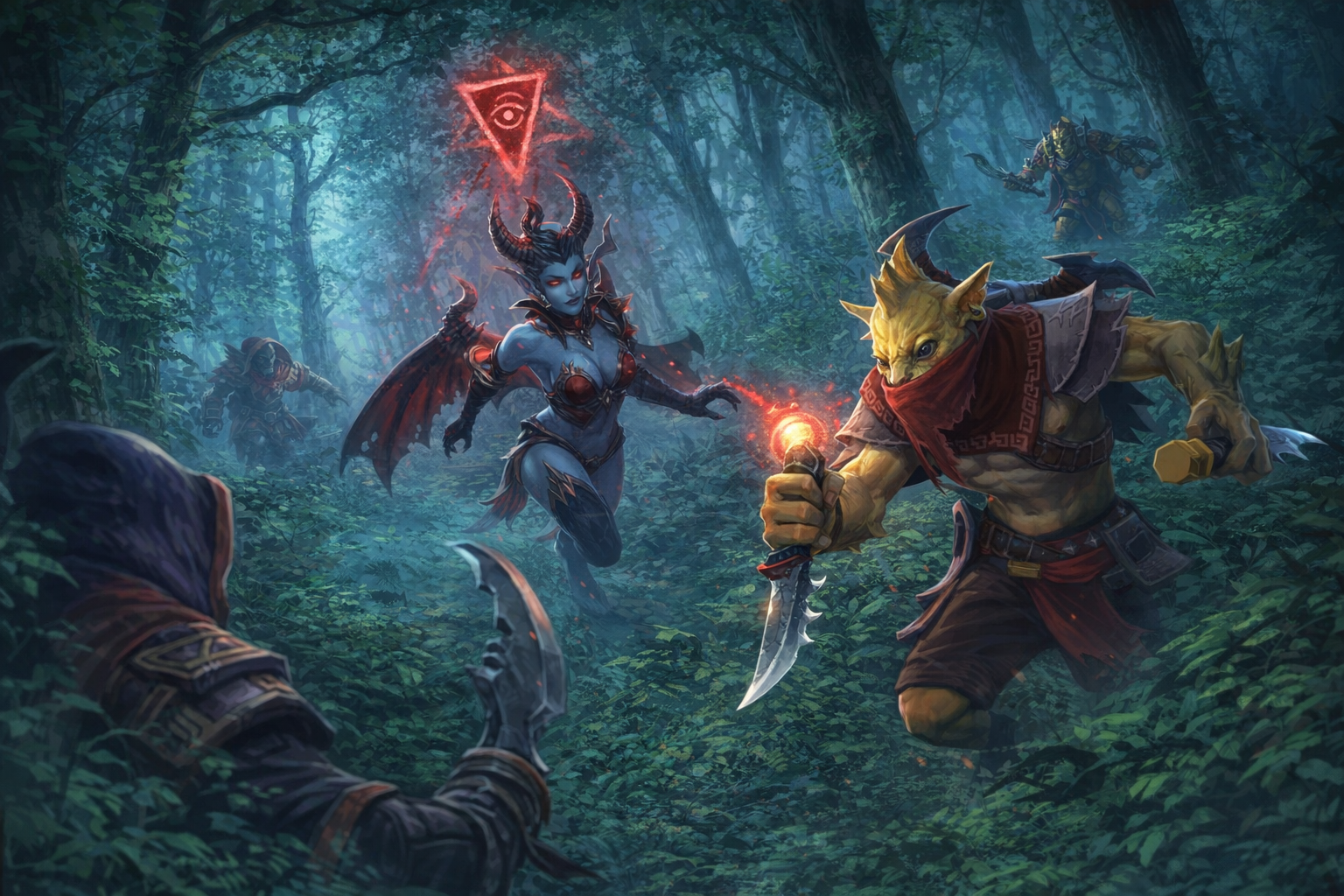
Pub Players Misread His Kill Threat
You’re not drafting Riki with bookkeeping
A lot of frustration with Bounty Hunter comes from expecting him to behave like a solo assassin. He can still punish low-health heroes and vulnerable supports. He can still clean up. He can still burst softer targets when the game lines up. Building your whole understanding around 100-to-0 potential misses why he’s winning.
His current pressure is cumulative. Jinada trades well. Shuriken Toss adds reliable poke and setup for skirmishes. Shadow Walk lets him choose his moments. Track changes the reward structure of every kill. Put those together and you get a hero that excels at making every fight slightly unfair in your favor.
That’s a support identity with teeth. It just isn’t the old fantasy of freely hunting alone all game.
Vision is part of the damage
Players often separate information from combat impact, as if one is utility and the other is real contribution. On Bounty Hunter, they’re fused together. Seeing the target means spells land. Seeing the retreat means one more hit. Seeing the support behind the core means your team picks the correct jump.
The hero gets value from going deep because he can collect information without always paying with his life. Few supports are as comfortable living in the enemy half of the map, sniffing out movement, and making every smoke feel a little unsafe.
How to Actually Win Pubs With Him
First, treat level six like a team timing
The biggest mistake on Bounty Hunter is playing Track as a personal bonus instead of a team objective. Once you hit six, your map should tighten around killable lanes and active cores. Ping your timing. Move where your teammates can follow up. You want chain kills, not isolated farm patterns.
If your mid can rotate, play with them. If your offlaner has catch, orbit that lane. If your carry is one of those greedier farmers who still joins nearby scraps, use that. The goal is to turn one successful move into two more while Track gold is still flowing.
Second, respect detection as a resource battle
You are never just invisible. You are making the enemy spend attention and gold. Lean into that. Fight for sentry control in the lane where you plan to operate. Read where they’re comfortable standing and assume that area is covered. Shift your paths instead of stubbornly replaying the same angle.
Good Bounty Hunter games often look like the enemy is paranoid. That paranoia didn’t appear by magic. It was purchased through early map movement, punishments for sloppy warding routes, and constant uncertainty about where you might show up next.
Third, itemize to keep your body relevant
Bounty Hunter needs to survive long enough to get multiple rounds of spells and marks off in fights. Utility and durability matter a lot here. Cheap support items that let you keep running in and out of engagements often do more than trying to force greedy damage choices. You’re strongest when you stay annoying for the entire fight.
There’s also a pub truth here: living supports place more wards, contest more space, and create more second chances. Dying for one Track cast on the enemy offlaner is rarely impressive.
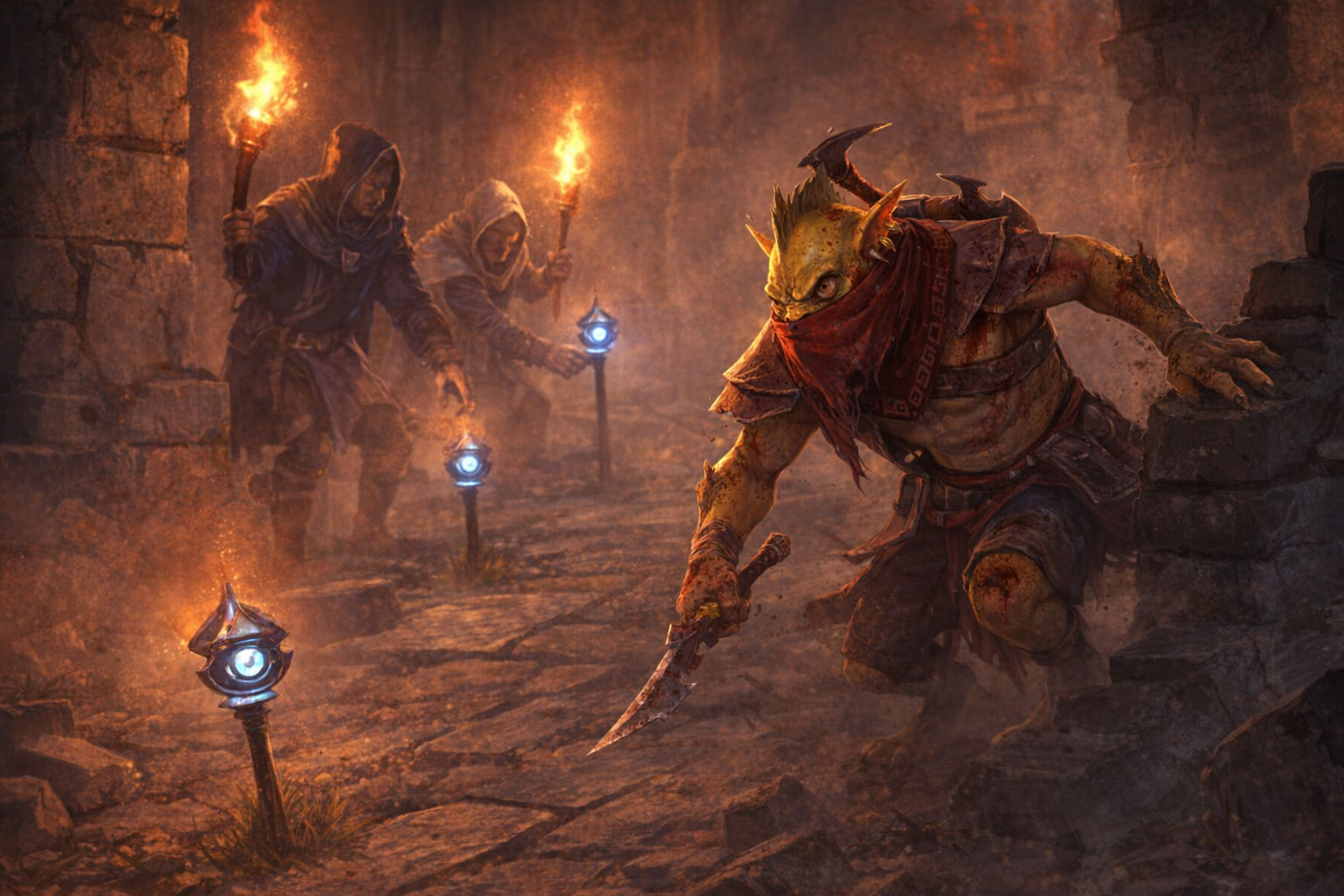
Why the Win Rate Holds Up
Bounty Hunter’s success makes sense once you stop measuring him by the tools he lost and start measuring him by the games ranked players actually play. He reaches lanes faster, he turns ordinary scraps into gold swings, he supplies vision in moments where fog usually decides everything, and he pressures support resources from minute one. That package wins a lot of ugly Dota.
You don’t pick him to be the star of the replay clip. You pick him to make the enemy support miserable, make your team richer, and make every overextended hero pay twice.