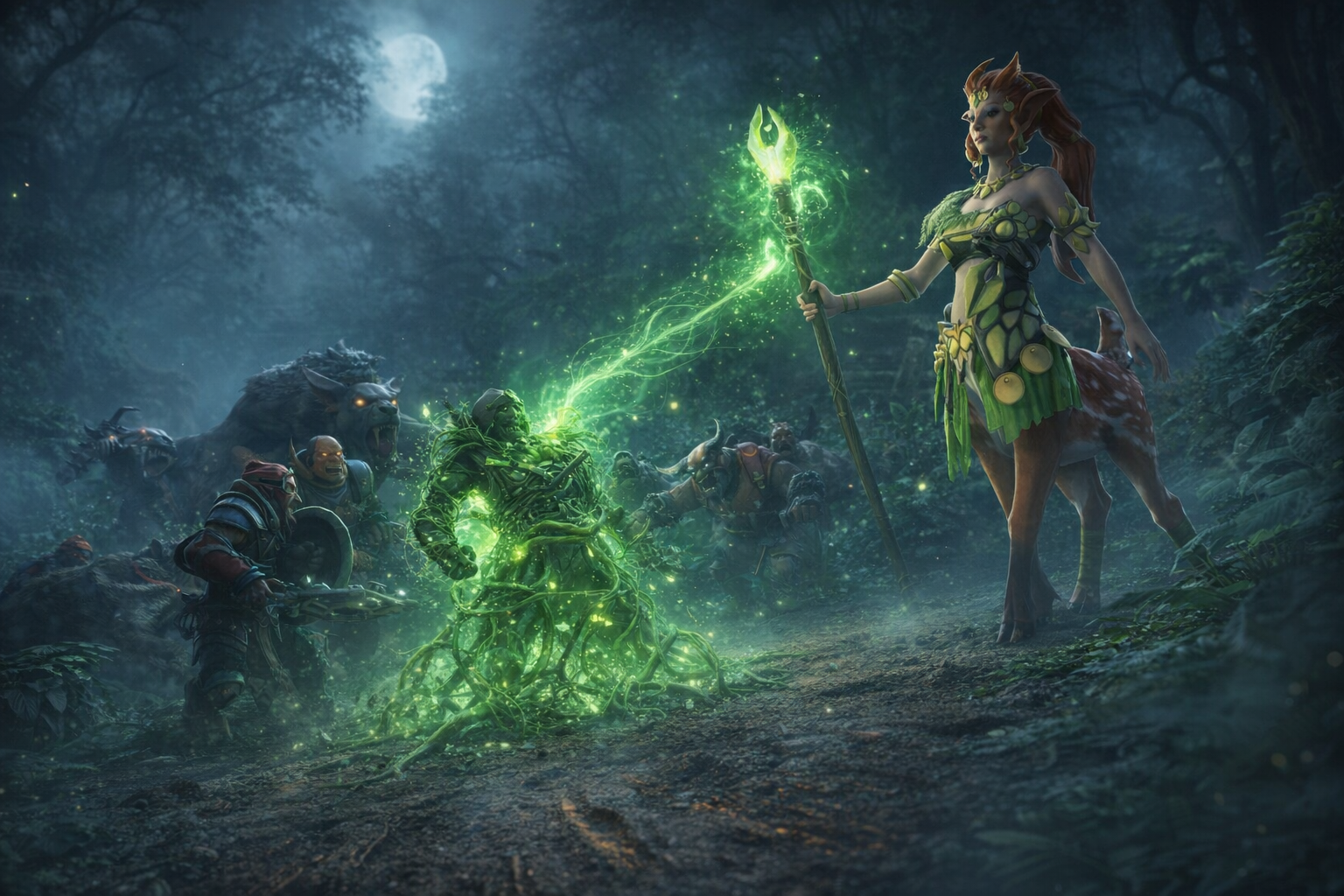
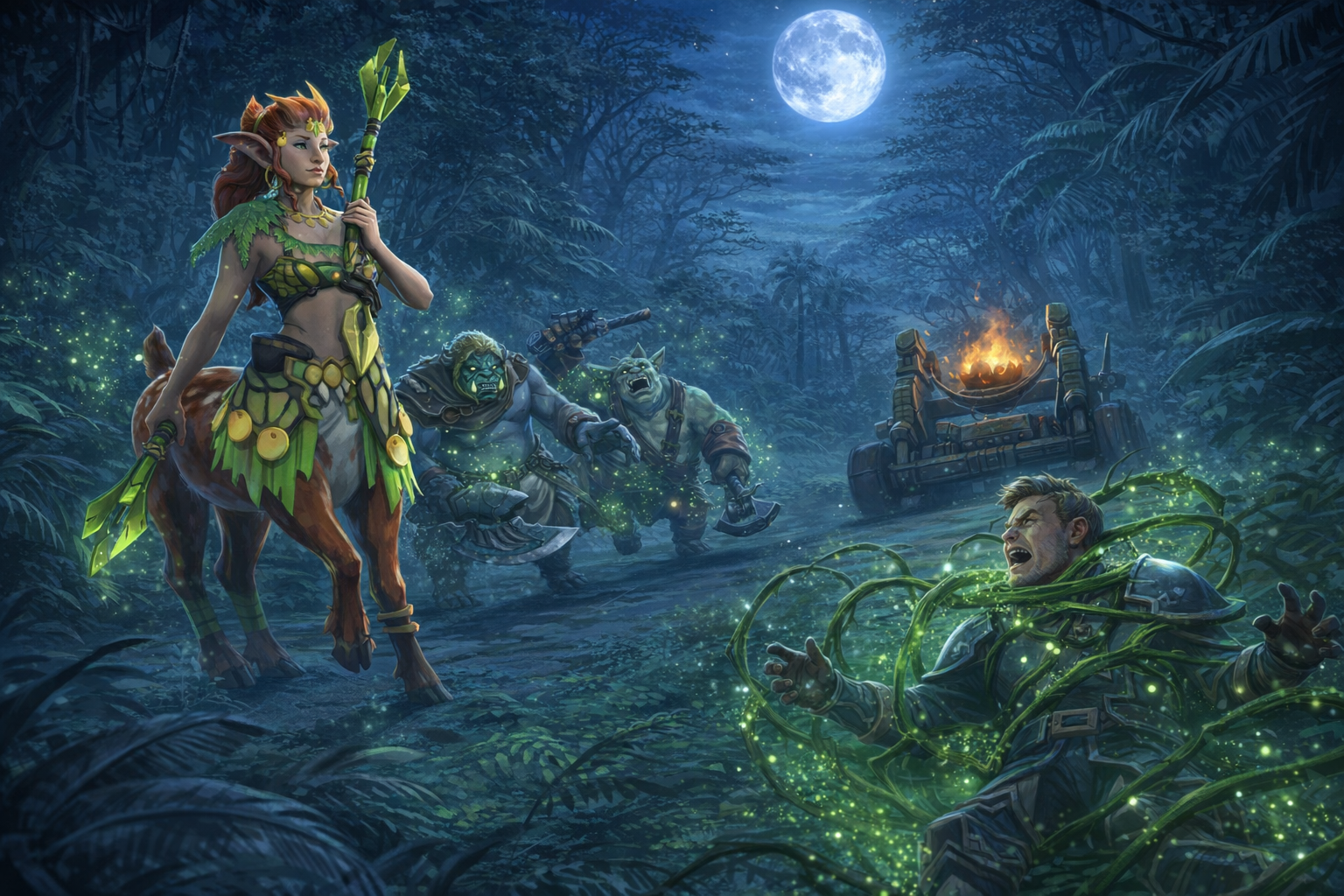
The lane ends, the map opens, and your hero suddenly feels unfinished. You have one strong creep, some annoying right-click pressure, and a body that melts the second the wrong spell touches you. Then Enchantress hits Aghanim’s Scepter, walks near a wave and a neutral camp, and a core gets pinned in place while half the map starts chewing on them. That swing is why this build keeps coming up.
Why the Aghs question matters
Enchantress has always created awkward item decisions because the hero scales in unusual directions. Your damage profile doesn’t behave like a normal ranged core, your survivability is heavily matchup dependent, and your contribution changes a lot based on whether fights happen around creeps, open ground, or vision control. Aghanim’s Scepter pulls all of that into one item.
On paper, it looks seductive. You get extra stats that Enchantress appreciates because raw health patches one of the hero’s oldest problems. You also unlock Little Friends, which turns nearby creeps on a target and applies a root that can last long enough to completely ruin a core’s fight. The effect becomes especially nasty in the exact kind of messy midgame skirmishes pubs are full of: side lanes with a wave present, jungle entrances with neutrals nearby, towers where summons and creeps are already stacked up.
That sounds like a rush item. Sometimes it is. The trap is assuming the ceiling is the average case.
What the Scepter actually changes
Little Friends is a real catch tool
The selling point is simple: Enchantress gains a long-range way to lock a target in place in a form that many heroes hate dealing with. The root matters on its own, but the real pressure comes from what happens around it. Lane creeps stop being background noise. Neutral camps stop being scenery. Every disposable body in the area turns into damage, pathing problems, and visual chaos.
Against mobile cores, that’s brutal. Heroes who love weaving in and out of fights can suddenly get held in a position they never planned to occupy. If their preferred defensive itemization doesn’t naturally include debuff immunity, they can feel stranded. That changes target priority for both teams. It also changes how aggressively Enchantress can posture around objectives, because one overstep from the enemy can become a full commitment window.
The second creep matters more than people admit
Aghanim’s Scepter also improves Enchant itself by letting Enchantress control another creep. That sounds like a side note until you play with it for a few games and realize how much it smooths the hero’s map impact.
Two creeps means better shove. It means more annoying side-lane pressure. It means your farming pattern stops depending entirely on whether your hero can stand and hit creeps safely. It means your push timing gets harder to ignore because your lane pressure exists even before heroes fully commit.
For a core Enchantress, this is huge. The hero often feels rich in lane and strangely poor later if the map gets dangerous. Extra creep control helps bridge that gap.
Enchantress does not scale from generic stats the way some universal bully would, but pretending the Scepter buildup is meaningless misses the point. Health on Enchantress has real value because it gives you margin for error. Untouchable can make right-click heroes miserable, but spells, burst, and chain disable still kill this hero fast when she gets caught.
The item gives enough bulk to survive moments that previously forced you out of the fight. That matters because Enchantress wants time. Time to kite, time to keep attacking, time for Impetus hits to add up, time for enemies to commit badly into her zone.
Why rushing it can feel incredible
Midgame fights are full of ammunition
Little Friends is strongest when the battlefield is crowded. That describes a lot of pub Dota from minute ten onward. People brawl around towers. They defend waves late. They posture around camps they should have already surrendered. Every one of those habits feeds the spell.
A rushed Scepter lets Enchantress show up to these fights with a threat profile opponents often misread. They see a squishy ranged hero and expect a long chase. Instead they get rooted in the middle of lane traffic while every creep in the area joins in. If your team has follow-up, the fight can end before it really starts.
It creates kills without perfect setup
Enchantress is strongest when she already has a front line, vision, and enough room to keep hitting. Aghanim’s Scepter helps solve a piece of that by giving the hero initiation-by-proximity. You still need decent positioning, but you no longer rely entirely on someone else to hold a target still.
That’s a big reason the item looks so good in games where Enchantress is ahead. If your lane went well and you reached the first major item timing on schedule, Scepter converts that advantage into direct kill threat. It gives the hero agency instead of just more sustained damage.
Some cores are deeply uncomfortable into it
There are carries and mids who want to itemize for tempo, mobility, or damage and treat debuff immunity as a later concession. Little Friends punishes that greed hard. The root can force a defensive response that feels awful to buy or awkward to use. Even when it doesn’t directly secure the kill, it can warp enemy item choices and fight decisions.
That kind of pressure has value far beyond the tooltip. Dota is full of items that are strong because of what they force before they are even cast.
Why the rush can also be a grief
The buildup is clunky for how Enchantress wants to fight early
This is the cleanest argument against rushing it. Enchantress often wants mobility, range management, or utility before a big commitment item. The path into Scepter doesn’t always help her dominate the specific windows that matter most.
If you’re playing core, there are many games where a mobility item does more practical work. You get safer positioning, better chase, a cleaner answer to gap close, and more consistency in fights where creeps are sparse or irrelevant. Aghs can be stronger on the perfect screen. Pike is often stronger over twenty minutes of actual Dota.
If you’re playing support, the opportunity cost gets even harsher. Enchantress support frequently needs to solve team problems first. Save, aura, dispel, survivability, anti-burst tools, and movement utility all compete for the same early gold. A support Enchantress who tunnels on Scepter can hit a flashy timing while the team still lacks the item that would have prevented every fight from collapsing.
The spell is terrain and context dependent
Little Friends can look absurd around lanes and objectives, then feel dramatically less impressive in broken-up fights where the target is isolated from creeps. That doesn’t make it bad. It makes it conditional.
And Enchantress already struggles when she has to force action into bad terrain. If your team lacks catch, lacks vision, or keeps taking skirmishes in dead areas of the map, the Scepter won’t magically fix structural problems. You still need a game state where Enchantress can stand in the right place and punish people.
A rooted target still needs to die
This is the part people gloss over when they get seduced by the root duration. Control is only as valuable as the damage or follow-up attached to it. If your lineup doesn’t meaningfully exploit that window, Scepter can collapse into an expensive single-target annoyance.
That is the line between “broken setup spell” and “slightly better utility item.” In lineups with burst, chain disable, or heroes that love hitting stationary targets, the item can decide fights. In lineups that already struggle to finish kills, you can spend a huge chunk of gold for an ability that looks stronger than the outcome it creates.
Core Enchantress versus support Enchantress
Offlane and mid can justify the greed
Core Enchantress has the best argument for a fast Scepter because she can reach it before the game asks impossible questions. A decent lane gives her farm, levels, and enough map presence to convert the item into pressure. You also care more about the second creep and the acceleration it brings, because your game plan includes occupying dangerous lanes and making the enemy respond.
From offlane or mid, the rush becomes a tempo statement. You’re saying the game will be played around waves, outer towers, and repeated skirmishes. If that read is correct, Scepter can snowball hard.
Support usually wants to arrive later
Support Enchantress loves the effect, but support economy makes the timing less forgiving. The hero often needs smaller, more immediate answers before reaching for the expensive payoff. If the enemy has heavy magical burst, if your team lacks save, or if your cores need utility to function, rushing Aghs can leave too much undone.
That doesn’t mean support Enchantress should ignore it. It means the item usually lands better once you’ve handled the basic survival checks of the game. Third or fourth item Scepter often looks more stable because you can finally afford to buy a high-impact luxury instead of pretending luxury is survival.
When you should actually buy it early
Green lights for the rush
Buy it fast when the map will naturally supply creeps to your fights, your lane has already gone well enough to support greed, and the enemy has key heroes who hate being locked down this way. It gets even better when your own lineup has clean follow-up and doesn’t need you to spend early gold covering defensive holes.
This is also the kind of item that shines when you can keep the game flowing. Enchantress hates stagnation. A fast Scepter wants repeated skirmishes, lane pressure, and objective fights where enemies are forced to stand near your ammunition.
Red lights that should stop you
Skip the rush when your team desperately needs utility first, when your lineup lacks damage to punish roots, or when fights are likely to happen in areas with little creep presence. Avoid it when you’re already under pressure and need a cheaper item to keep playing Dota at all.
If your game is one long retreat and every fight starts with you being jumped, the Scepter timing can become a fantasy purchase. Enchantress with a greedy item and no protection dies with a full spellbook.
Pub reality: real build, fake autopilot
The clean answer is that Aghanim’s Scepter rush on Enchantress is real. It is also one of those builds that turns into a meme the second people start treating it like a default.
That distinction matters. Dota is full of item choices that are overpowered only when they are selective. Enchantress Aghs lives in that category. The item gives the hero bulk, catch, farm acceleration, side-lane pressure, and one of the most irritating punish tools available against the wrong cores. It can absolutely take over games from core roles.
It also asks you to judge the shape of the game correctly. You need enough tempo to reach it, enough support from your draft to capitalize on it, and enough awareness to fight where the spell is loaded instead of firing blanks in empty terrain.
If you queue Enchantress and rush Scepter every game, you’re gambling. If you identify the right lobby for it, you’re abusing one of the nastiest midgame spikes the hero has.