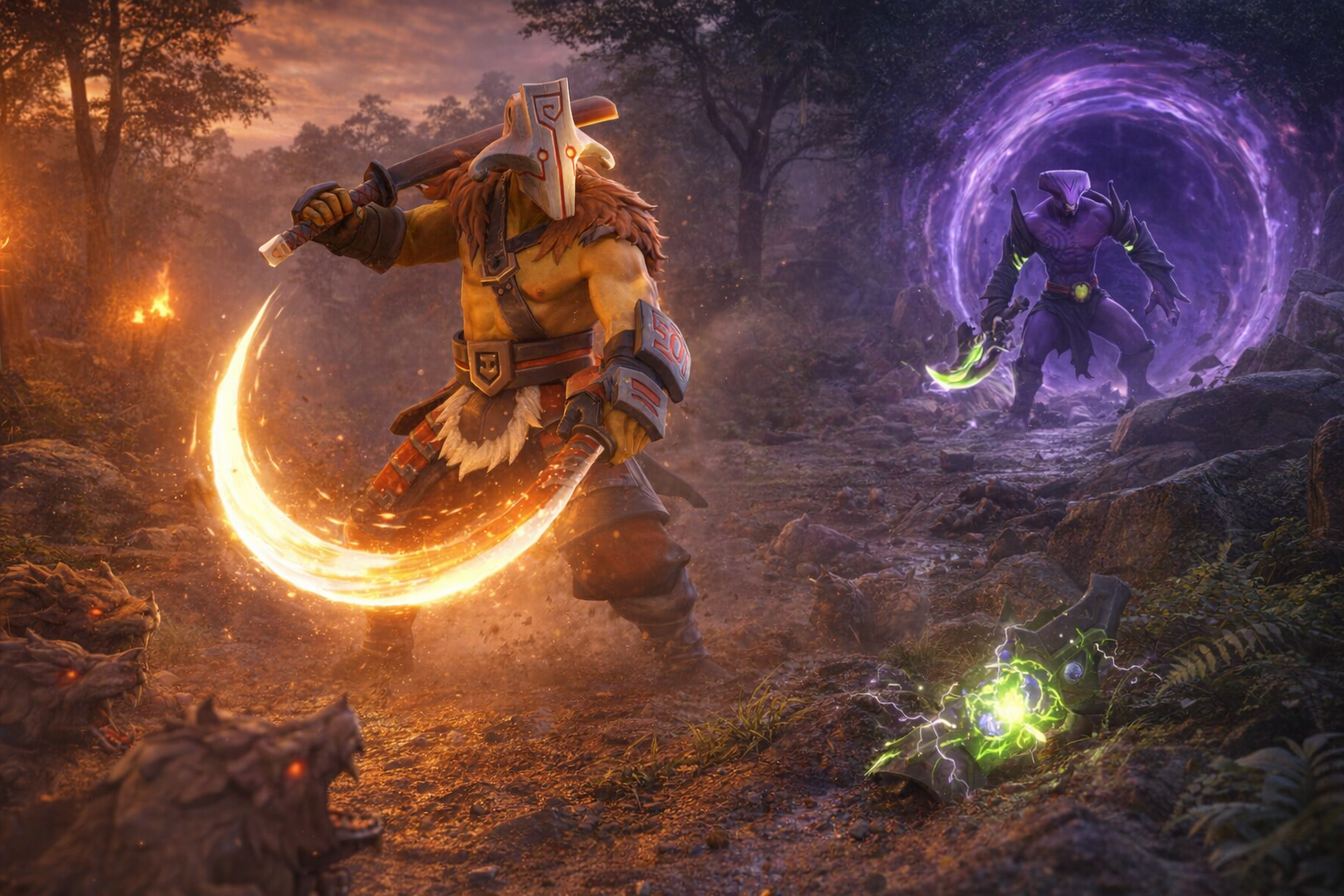
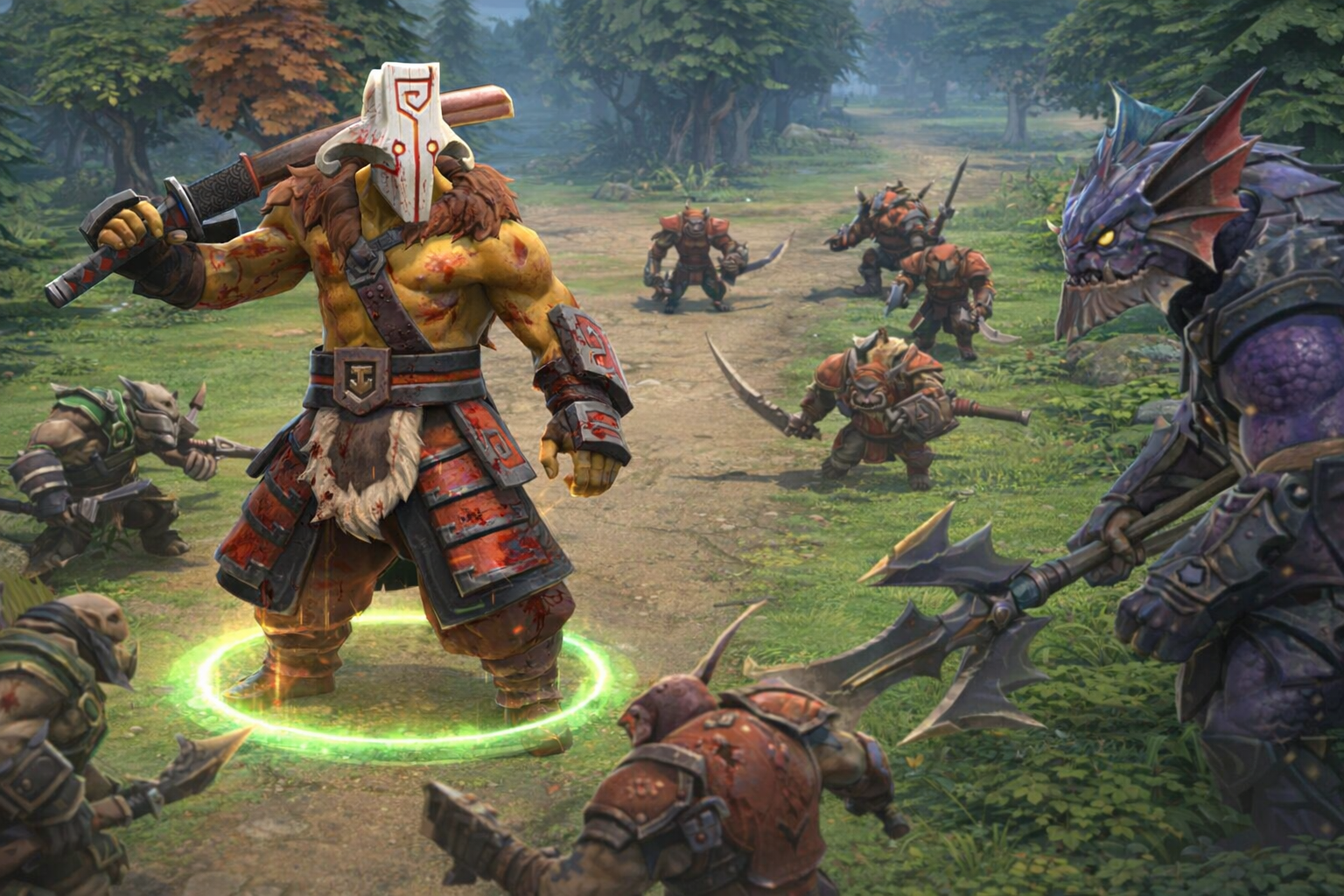
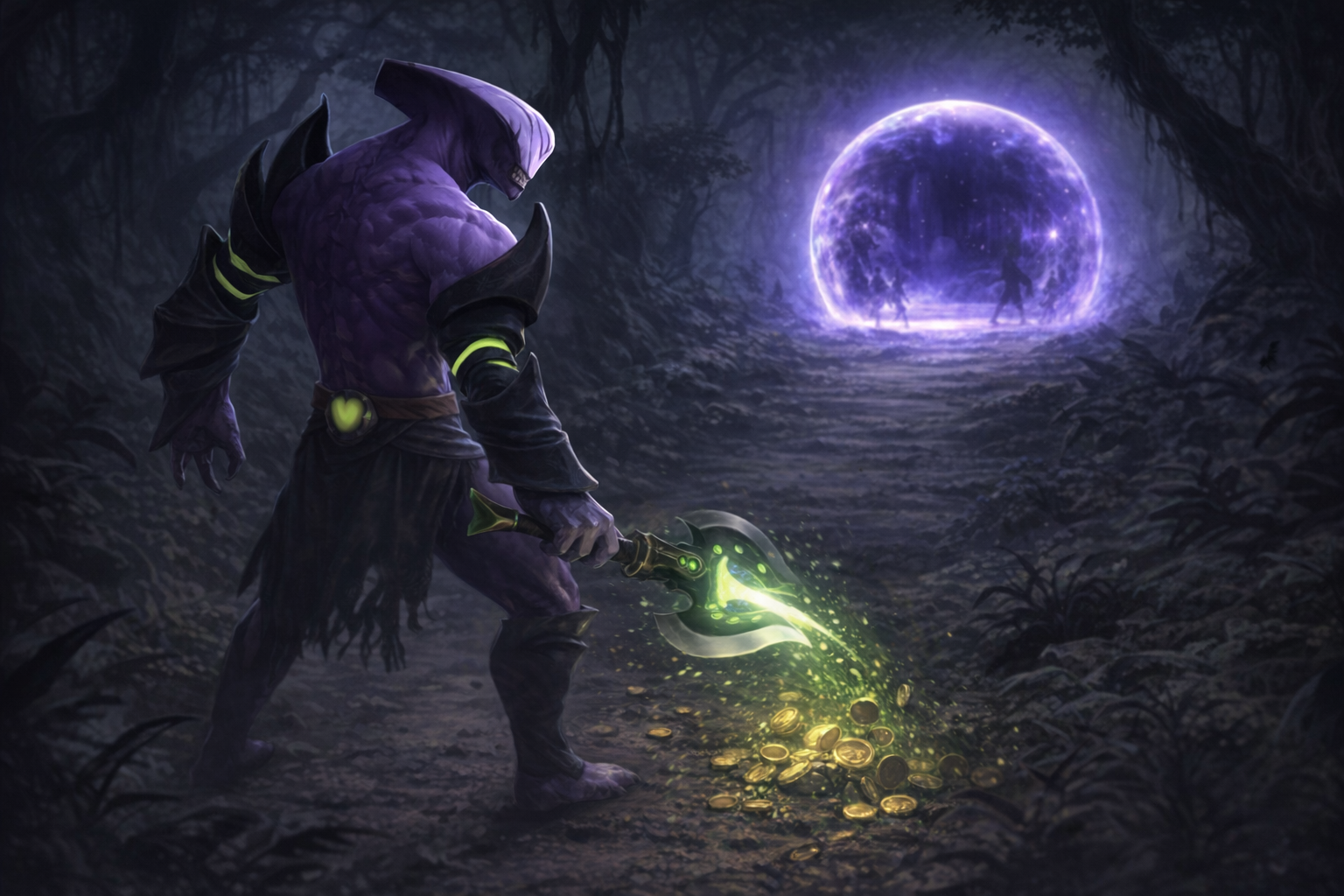
Minute seven on Juggernaut, you clear the small camp, see 900 gold in the bank, and queue up Gloves of Haste out of pure muscle memory. The offlaner is spamming spells into the wave, your support has already wandered mid, and every trip back to base feels like donating a plate of creeps. Ten minutes later you have a Maelstrom, half a Yasha, and a Faceless Void on the enemy team who somehow has Battle Fury plus the entire triangle vacuumed clean. That first component choice snowballs harder than it looks.
Battle Fury has pushed Maelstrom out of the default slot on melee carries like Juggernaut and Faceless Void because the item changed from a greedy luxury into a lane-stabilizing accelerator. The old question was simple: can you afford to buy the farming sword? The newer answer is uglier for Maelstrom: on the right heroes, you can barely afford to skip it.
The Old Maelstrom Habit Made Sense
Maelstrom became the comfortable carry purchase because it solved a lot of practical problems with one relatively cheap item. It gave farming speed without asking you to disappear for an eternity. It gave mixed damage, which mattered when enemy cores started stacking armor. It also let heroes show up earlier with damage that did not require a second or third major item to feel useful.
Juggernaut liked that curve because he could threaten fights around Omnislash timings while still clearing camps. Faceless Void liked it because attack speed and lightning procs fit the fantasy of hitting people inside Chronosphere until the screen turned into electricity. Mjollnir added a later upgrade path and a defensive active that could make high-ground sieges and messy front-to-back fights awkward for the other team.
That logic still exists. Maelstrom did not become a meme. The issue is that Dota itemization is never judged in a vacuum. A first carry item has to answer the lane, the jungle, the next ten minutes of map movement, and the scaling profile of the hero. Battle Fury started winning more of those answers.
Battle Fury’s Build Became the Real Buff
The most important Battle Fury change is the boring one: the buildup became livable again.
When Battle Fury’s path gives access to early health regeneration through Ring of Health and a Perseverance-style buildup, the item stops being a pure greed tax. That early regen is a lane item. It lets you absorb harassment, stay for extra waves, cut down on courier dependence, and turn awkward dead time into nearby neutral camps. On melee carries, that matters more than another small damage component that looks better on a damage-per-gold chart.
Juggernaut and Void both hate being forced out of lane before their first real farming item. Jugg can sustain with Healing Ward, but relying on it for every bad trade is expensive and punishable. Void has Time Walk, yet repeated pressure still drains resources and can make every creep wave feel like a negotiation with disaster. Ring of Health changes the texture of those lanes. You stop playing around the next salve and start playing around the next wave.
The rest of the buildup also matters. Smaller damage pieces are easier to assemble than a single awkward cliff of gold. A carry who can buy useful components on the way to the full item gets punished less by deaths, rotations, and forced TPs. That difference is invisible in the finished-item tooltip and extremely visible in an actual pub where the enemy Spirit Breaker has decided your safe lane is a tourist attraction.
Cleave Scales With the Carry You Already Want to Become
Battle Fury’s farming speed is only half the story. The bigger reason it feels so natural on these heroes is how it scales with the items they already want.
Cleave benefits from your growing right-click profile. More damage makes the splash matter more. Crit makes the cleave more threatening when the big hit lands. Attack speed means more cleave instances across camps and waves. Battle Fury rewards the classic melee carry arc: survive lane, accelerate through the map, then let every later damage purchase multiply the threat.
Maelstrom scales differently. It loves attack frequency and upgrades into Mjollnir, but the proc damage has a more fixed shape. It does not care about your crit in the same way Battle Fury does. It does not turn every future damage item into a bigger farming and wave-clear tool. When a hero plans to buy stats, crit, survivability, and eventually become a late-game right-click problem, Battle Fury lines up cleanly with that plan.
That is especially relevant in modern Dota, where map control is often decided by how quickly your carry can delete the safe farm and move to the next pocket. A Battle Fury carry who clears triangle, cuts a wave, and returns to a camp chain can quietly create a net worth gap without showing on the map for long. Maelstrom clears well, but Battle Fury on a melee hero with good damage growth turns the whole map into a conveyor belt.
Juggernaut is a hero of timings, and bad first-item choices make those timings feel fake.
With Battle Fury, Jugg gets a stable way to clear stacked camps and lane waves without spending every important cooldown to farm. That matters because Blade Fury and Healing Ward are also survival and fighting tools. If you use your entire kit just to keep up in farm, you arrive to fights with less leverage than the hero is supposed to have.
Battle Fury also plays nicely with the way Jugg tends to grow. He frequently wants items that improve his right-click threat, keep him alive during commitments, or let him choose targets more reliably. The cleave keeps paying rent as those items arrive. A Jugg with Battle Fury can shove side lanes quickly, pressure the map without fully committing, and threaten to become a real physical damage core rather than a hero fishing for early proc value.
Maelstrom Jugg still has games. If your team is built to fight early and you need cheaper damage to join skirmishes, the lightning build can be correct. If the enemy cores are stacking armor early and your lineup lacks magical pressure, Maelstrom gives you a damage type Battle Fury cannot provide. The problem is that the default pub game gives Jugg plenty of empty farm and plenty of reasons to value sustain. Battle Fury fits that reality.
Void’s Battle Fury Looks Greedy Until Chrono Is on Cooldown
Faceless Void used to feel like the poster child for Maelstrom logic. He attacks fast enough to enjoy procs, he has one of the best lockdown spells in the game, and Mjollnir inside a big fight looks spectacular when everything lines up. The argument was always easy to understand: get a faster damage item, fight with Chronosphere, scale into attack speed.
Battle Fury attacks Void’s real weakness from another angle. Chronosphere has a long cooldown, and Void often has stretches where he would rather convert time into net worth than force a low-quality fight. Battle Fury makes those stretches productive. It lets him clear waves and camps faster while building toward the next item that makes Chrono actually lethal.
The sustain matters for him too. Void can undo chunks of damage with Time Walk, but lane harassment still creates pressure on mana, positioning, and creep access. A regen-heavy buildup gives him permission to stay in the lane longer, contest pulls more comfortably, and transition into jungle patterns without limping.
There is also a psychological trap with Void. Players overvalue the first Chrono damage item and undervalue the second and third item timing. A Maelstrom can help you kill someone in an early Chrono. Battle Fury can help you arrive at the next two major items faster, which turns Chronosphere from a hopeful setup into a fight-ending spell. In pubs, that second version wins a lot of games because coordination around early Chronos is rarely clean.
The Lightning Line Lost Some Shine
The Maelstrom-to-Mjollnir path has taken enough balance hits over time to lose its automatic status. Proc reliability and illusion-clearing power have both been tuned down in recent patches, which matters because the entire item line is built around the value of repeated lightning triggers. When that value drops, even slightly, carries feel it in farming patterns and teamfights.
The illusion matchup is a good example. Mjollnir used to have a stronger reputation as the premium answer to illusion floods. It can still help, especially when the active is placed well and fights are forced into repeated hits. Battle Fury also clears clustered units through physical cleave, and on heroes building real damage, that answer can be more consistent across waves, camps, and fights.
This is where players get baited by memory. Old Maelstrom habits came from old numbers and old item roles. If the lightning item is less explosive than you remember while Battle Fury is easier to build than you remember, your internal carry calculator is out of date.
The Real Choice Is Timing Versus Territory
The Battle Fury versus Maelstrom decision is a map question.
Battle Fury claims territory over time. You buy it when your hero can survive the buildup, your team can avoid collapsing before your next timing, and the map has enough accessible farm to reward acceleration. The payoff is huge because every minute after completion becomes cleaner. Camps disappear faster. Waves become safer to shove. Your next item arrives while the enemy is still arguing over whether to smoke into your triangle.
Maelstrom buys earlier participation. You buy it when the game demands fighting before Battle Fury pays off, when your lane was damaged badly enough that the full greed route invites disaster, or when magical proc damage has special value against the enemy draft. It also makes sense when your team has strong control and only needs you to provide damage into reliable setups.
The tension is simple in practice and brutal in execution. Battle Fury asks your team to live through your acceleration window. Maelstrom asks you to make your earlier window matter. A lot of pub carries choose the item they want to play, then blame the team when the game demands the other one.
Pub Dota Rewards the Greedier Item More Often Than It Should
Battle Fury is thriving in pubs because pub games are inefficient in ways that favor farming speed.
Teams fail to invade on time. Supports leave stacks uncontested. Offlaners win lane, take the tower, then wander into random fights instead of choking the enemy jungle. Mid players farm the safest wave while the carry gets access to the entire back half of the map. Every one of those mistakes is a gift to Battle Fury.
Modern Dota also has a lot of farm. The expanded map gives carries more places to disappear, especially if they understand lane equilibrium and teleport discipline. A Battle Fury Juggernaut cutting a side wave and clearing two camps on the retreat can generate pressure without committing to a fight. A Battle Fury Void can dodge bad skirmishes, farm through Chrono downtime, and return with a real item advantage.
This is why the item can look overpowered in regular games even when the draft conditions are only decent. The enemy has to punish the buildup with purpose. They need wards in the right farming entrances, smoke movement before the second item arrives, and pressure on towers that shrinks the map. Most pubs deliver a few angry pings and a late smoke into an already-empty triangle.
When Maelstrom Still Deserves the Slot
Maelstrom remains the better buy in specific games, and recognizing those games is part of playing carry above autopilot level.
Buy it when your lineup wants to fight early and already has the disables to make your damage count. A Void with allies that can chain stuns around Chronosphere may get more from a quicker combat item than from a farming delay. A Juggernaut with strong tempo supports can use Maelstrom to keep joining fights instead of spending the midgame in the woods.
Buy it when enemy armor makes physical damage feel miserable. Lightning procs give you a way to pressure heroes who are shrugging off your basic hits. That does not solve every tank problem, but it changes the damage mix enough to matter.
Buy it when the lane is ruined and the game is too fast for a greed recovery. Battle Fury from a stable lane feels amazing. Battle Fury from a dead lane with no map can become a 15-minute apology letter. Maelstrom’s lower commitment can keep you relevant when the enemy is already breaking towers and your jungle is unsafe.
Buy it when Mjollnir’s active has clear fight value. Some games involve a frontliner who will be hit constantly, or defenses where enemies have to run into your formation. In those spots, the upgraded lightning item still creates ugly fight math for the other team.
Your First Component Is a Game Plan
That minute-seven component choice says more than players admit. Ring of Health says you plan to stay on the map, absorb pressure, and turn time into a larger carry curve. Gloves into Maelstrom says you plan to reach a cheaper damage timing and make fights matter sooner.
Juggernaut and Faceless Void are leaning Battle Fury because the current version gives them what melee carries crave: lane durability first, acceleration second, late-game scaling after that. Maelstrom still has sharp games where it is the correct punish. The lazy habit is treating either item as automatic.
Queue the item that matches the map you are about to play. The snowball starts before the recipe ever arrives.