By the end, you’ll know when Arc Warden support is a sharp draft weapon, when it turns into four reports with a courier snipe on top, and how to play it without griefing your lanes.
You’re five minutes into a safelane that should be normal, and the enemy offlaner keeps eating ghost damage from fog because he walked two steps too far from his creep wave. Your carry wants to hit creeps, the lane is slow, and every pull camp feels like a minefield. Ten minutes later, two support items are coming out twice in the same skirmish, and the enemy has to decide whether walking uphill into Spark Wraiths is really worth a Tier 1 tower. That is the Arc Warden support dream.
The Appeal Is Real, but the Job Changes
Arc Warden has always been one of Dota’s greediest heroes by reputation. Midas brain. Split-push brain. Six-slot anxiety simulator. The hero attracts players who see every fight as an interruption between two farming patterns.
Support Arc Warden only works when you throw that instinct in the bin.
The support version is built around spell value, terrain control, and duplicated utility. You are taking a hero with obnoxious long-range harassment, a siege-enabling defensive zone, and a second body that can cast spells and use items. That second body is the reason the idea keeps coming back. A Glimmer Cape or Force Staff is already good on a normal support. On Arc Warden, those items can become fight-warping because the enemy has to chew through the same kind of save twice.
That sounds broken until the draft starts moving. Arc Warden brings no hard initiation. He has no instant stun. He does not blink into fog and start the fight. He does not naturally rescue a teammate who got jumped from full screen away unless his items are already online and his positioning is clean. You are picking a support that makes a good formation miserable to break. You are giving up a lot of the classic support toolkit to get there.
That trade can win games. It can also lose them in the pick phase.
What Support Arc Actually Does
Arc Warden’s support kit is easiest to understand as pressure without commitment.
Flux punishes isolated targets. In lane, that means you care deeply about spacing. If the enemy offlaner or roaming support separates from allied units, Flux becomes a nasty slow-and-damage button that lets your carry keep hitting or lets you chase through the side lane. If they stand with creeps, summons, or their lane partner, the spell loses bite. Good opponents will play around that. Bad opponents will donate health every wave and call the hero stupid.
Spark Wraith is the spell that makes the lane and river annoying. It controls small areas, scouts dangerous paths, delays movement, and makes predictable chases expensive. A support Arc can use it to protect pulls, contest bounty areas, punish rune movement, or create a no-walk zone behind a tower. The damage matters, but the hesitation matters more. Dota fights often turn on half a second of indecision. Spark Wraith manufactures that indecision for cheap.
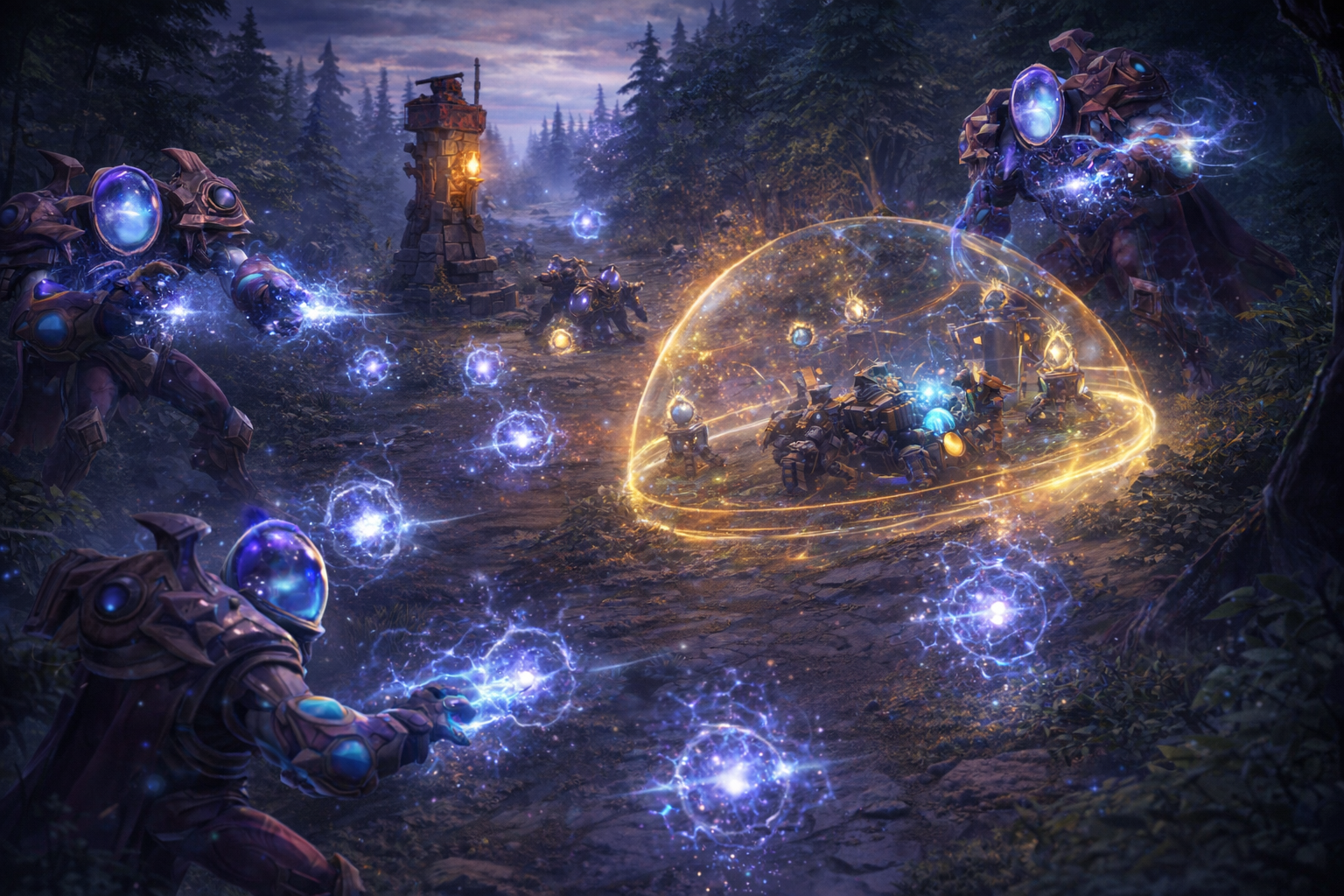
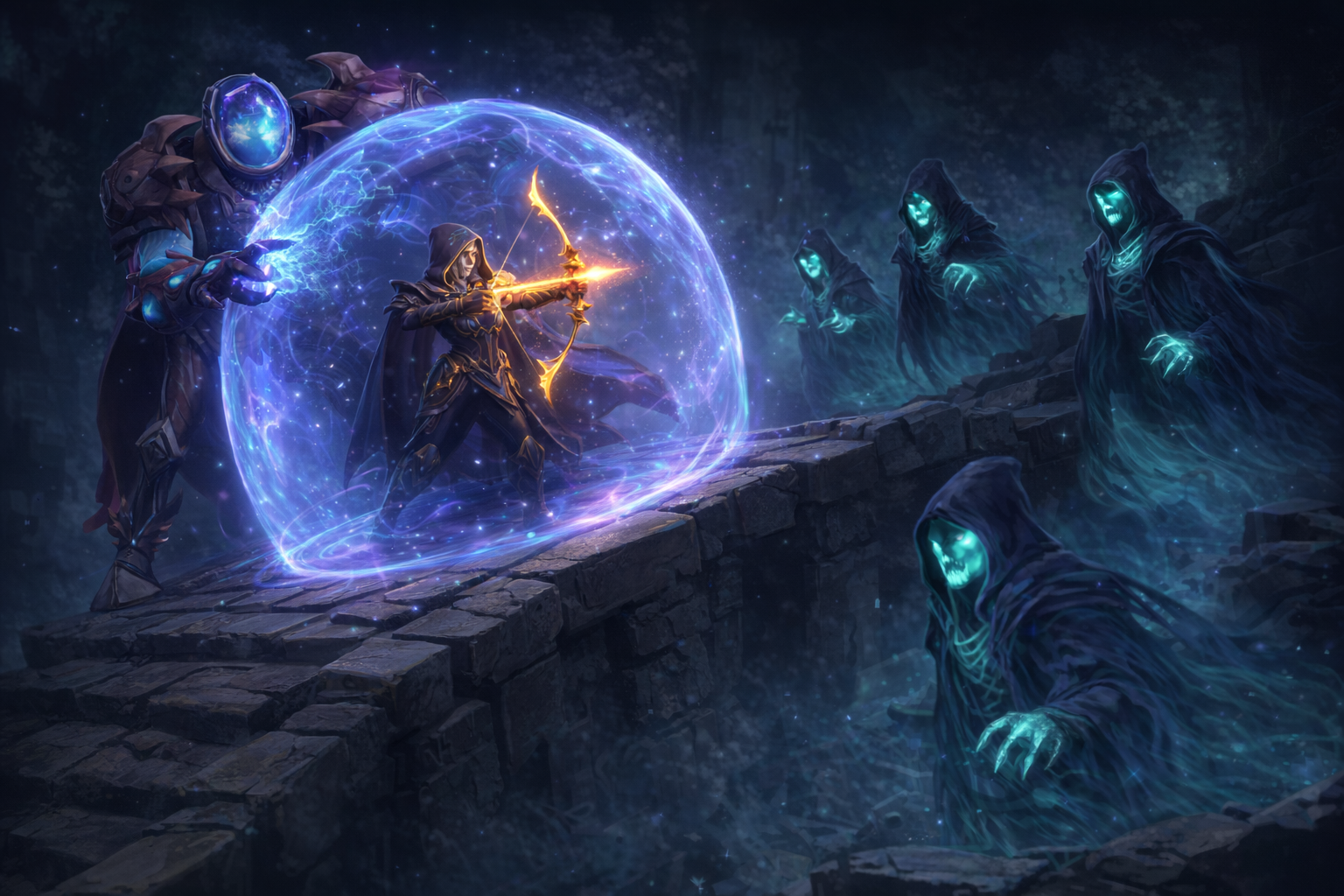
Magnetic Field is the big reason the pick has a real support identity. Around the right ranged core, it changes the shape of a siege. Drow Ranger, Shadow Fiend, Luna, Sniper-style lineups, and other heroes that want to stand their ground can turn the bubble into a tempo tool. Towers become awkward to defend. High ground becomes less inviting for the enemy to poke. A carry who wants to plant feet and hit gets a zone that says: fight us here or give the building.
Tempest Double ties everything together. The clone gives you another round of spells and, once you have items, another round of active utility. That is where support Arc becomes more than a lane gimmick. Two Forces can reposition multiple heroes or save the same target through layered chase. Two Glimmers can waste absurd amounts of enemy detection and spell commitment. Two rounds of zoning spells can make a ramp feel cursed.
The catch is simple: the clone requires attention. If your Tempest Double walks forward like a donated neutral creep, the hero loses half his argument.
The Lane Is the First Test
Arc Warden support can win certain lanes in a way that feels illegal. Low-mobility melee heroes hate being slowed and chipped when they separate. Greedy offlaners who need levels before they fight can get zoned hard if your carry also threatens them. Any lane where the enemy has to walk through predictable paths gives Spark Wraith room to be more than a damage spell.
The ugly lanes are very ugly.
Strong dual-lane kill combos can run at you before you have enough levels. Heroes with reliable gap close, instant disables, or heavy early burst can make Arc look like a ranged creep with lore. You also have to respect lanes where the enemy naturally stays grouped. Flux loses a lot of its bullying power when nobody ever gives you the isolation window.
Your safelane partner matters. Arc support wants a carry who either benefits from zone control or can use slows to keep hitting. Ranged cores are the obvious pairing because Magnetic Field and Spark Wraith both reward fixed fighting positions. A melee carry that wants a stun support to start trades may feel abandoned. You can still lane with one, but the lane plan becomes more delicate: pull better, harass from angles, and accept that your kill threat may arrive later than usual.
The biggest pub mistake is treating Arc as a lane dominator every game. He has oppressive matchups, then he has matchups where he must play like a disciplined position five. That means blocking camps, protecting pulls, ferrying regen, and keeping your carry’s wave playable. If you pick a weird support and then refuse to do normal support labor, the weird part gets blamed when the real issue is laziness.
The Item Build Has One Giant Trap
Support Arc Warden should be judged by the items he duplicates, not by how quickly he cosplays as a core.
The greedy temptation is obvious. Hand of Midas has always had a special place in Arc Warden’s cursed little economy fantasy. On a support, that path is usually a disaster unless the game is already absurdly slow and your team can survive without your first real item. A support who delays saves, detection, and fight utility to chase personal scaling is asking the rest of the map to cover his ego.
The clean support build prioritizes actives that matter immediately. Force Staff is one of the best examples because positioning wins fights at every bracket. Glimmer Cape has the same appeal because it buys time, breaks target focus, and forces detection discipline. Solar-style protective items can make sense when your team has a ranged damage dealer who wants to stand and hit. Mana sustain matters because double casting burns resources quickly, and Arc hates being present with empty blue bar syndrome.
The rule is practical: buy items whose first use can change a fight. Then your clone makes the second use unfair.
Some expensive luxury items are only justified after your team already has the basics covered. Aghanim-style upgrades, control items, and heavier scaling choices can be game-winning in long matches, especially if the current patch gives Arc an especially obnoxious upgrade effect. They should come after the support foundation. If your team has no Force, no Glimmer, no detection, and you are queuing some grand late-game science project, your teammates are allowed to ping you.
Always check current Tempest Double item restrictions before committing to anything exotic. Valve has changed clone interactions enough over the years that muscle memory can betray you. The concept remains stable: cheap, high-impact actives are the backbone.
The Draft Has to Cover Your Missing Pieces
Arc Warden support is strongest when your lineup already has ways to start fights. If your offlaner is a blink initiator, your mid can force rotations, and your carry wants to siege, Arc fits beautifully. He stands behind the action and turns every committed enemy movement into a tax.
If your team has no reliable catch, the pick becomes painful. Flux and Spark Wraith punish movement, but they do not replace a real stun. You can slow people all day while they BKB, jump your backline, and kill your cores before your layered utility matters. Arc support amplifies structure. He struggles when he has to create structure from nothing.
He also prefers games where your team’s plan includes hitting buildings. Magnetic Field has real value when your lineup can group and threaten towers. The enemy must choose between walking into prepared zones or bleeding map control. That is very different from chaotic pub lineups where everyone farms opposite sides of the map until someone dies near a wisdom rune.
Pick Arc support when your draft says: we can stand somewhere important and make the enemy come to us.
Avoid it when your draft says: someone please press a button first.
The Micro Requirement Is Higher Than It Looks
Arc Warden support sounds easier than core Arc because you have fewer farming patterns to manage. In fights, the opposite can be true. A core Arc often uses clone for damage, split pressure, and item burst around his own timings. A support Arc has to use the clone for saves, spacing, spell layering, and baiting enemy commitment without feeding it uselessly.
That demands clean control groups and calm hands.
Your clone can scout dangerous approaches, stand in annoying positions, and force reactions. It can also die pointlessly before the fight starts because you were staring at your courier. The difference between good and bad Arc support is rarely theory. It is execution under pressure.
The most important habit is separating your hero’s safety from your clone’s aggression. Your real hero should usually be positioned like a fragile backline support. The clone can take risks, draw spells, and walk into areas your real hero should never enter. If both bodies stand together, you are giving the enemy one clean jump target with extra steps.
Spell sequencing matters too. Do not dump everything because buttons are available. Use one layer of control to force movement, then punish the movement. Use one save to draw the next enemy commitment, then use the second. Arc support wins through irritation turning into overextension.
Pub Reality: Your Team Will Judge the First Five Minutes
Off-meta support picks live under a microscope. A conventional Crystal Maiden can die twice and still get treated like a support. Arc Warden dies twice, and the entire draft becomes evidence in a criminal trial.
That means your opening minutes need to look professional. Buy support items. Place useful wards. Contest pulls. Share regen if the lane requires it. Do the boring stuff loudly enough that your carry understands you are playing position five, not farming role queue tokens with a science experiment.
Communication helps. A quick pregame line like: playing save/zoning Arc, buying Force/Glimmer, we need someone else to start fights can prevent tilt before it spawns. Dota players hate surprises in their draft almost as much as they hate losing the courier to a midlaner buying two Wraith Bands.
The pick is more reliable in parties because you can draft around it. In solo queue, it becomes a read on both teams. If your lineup already shows initiation and a ranged damage core, Arc can slot in. If your team is hovering four greedy heroes with no stun, locking Arc support turns the game into a sociology experiment.
Skill with the hero also matters more than usual. A player with hundreds of Arc games can squeeze value out of awkward lanes and messy fights. A tourist who likes the idea of two Glimmers may discover that controlling two units while warding, stacking, and tracking smokes is actual work.
Where Arc Support Sits Among Weird Picks
Dota has room for strange supports because roles are jobs, not hero labels. Huskar can bully certain lanes and soak spells if itemized for utility. Lone Druid can abuse the bear for lane control and map work in specific drafts. Invoker support became accepted because the hero offers range, disables, and scaling spell impact without needing to be the main farmer.
Arc Warden belongs in that same conversation when the draft gives him a purpose. He offers siege reinforcement, long-range nuisance, and duplicated utility. He asks for levels, clean positioning, and teammates who understand that someone else has to press the go button.
The danger with weird supports is falling in love with possibility instead of responsibility. Every off-meta pick needs a sentence that explains its job. For Arc, that sentence is simple: protect a ranged formation, punish isolated movement, and double the value of key support actives.
If that sentence fits the game, pick it with confidence.
If the game needs instant lockdown, lane muscle, or a sacrificial body to start fights, leave the magnetic wizard in the lab.
The Verdict
Arc Warden support is playable, dangerous in the right draft, and absolutely capable of looking broken when the enemy lacks jump or discipline. The hero turns slow sieges into nightmares and makes standard support items feel heavier than they should. He also exposes every missing piece in your lineup. No initiation means no initiation. Weak early matchups stay weak. Greed still smells like grief even when the clone is holding the receipt.
Play him as a real support first and a scaling trick second. Buy the items your team needs, use the clone with intent, and draft him next to heroes who want to stand behind a wall of annoying magic and hit buildings. That is when Arc Warden support stops being a meme pick and starts feeling like one of those pub ideas nobody respects until their barracks are gone.